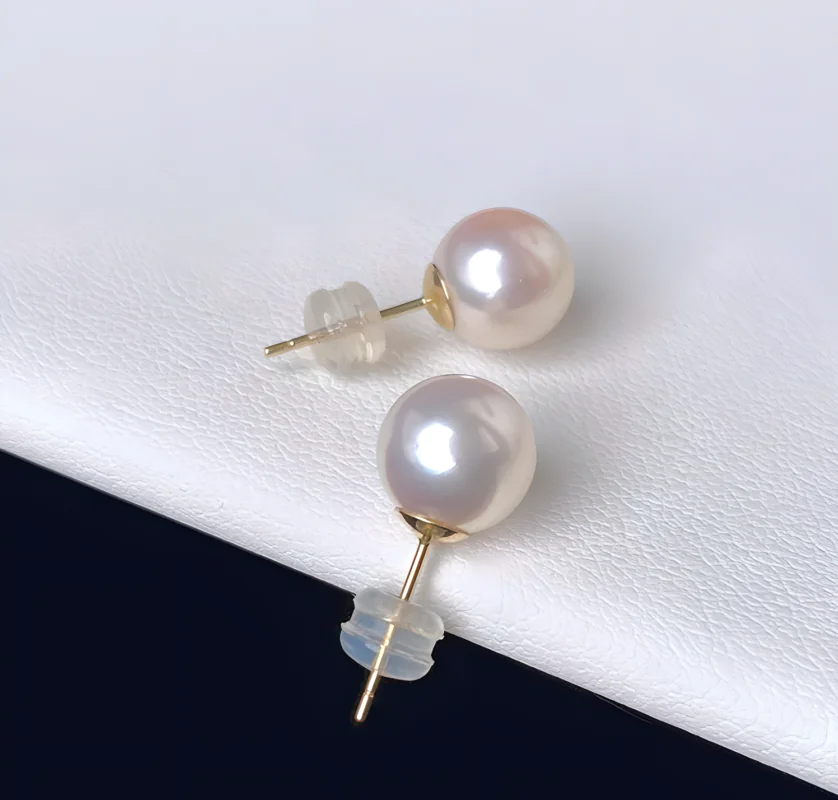
No. Rounder pearls are not always better. Roundness is an important pearl value factor because truly round cultured pearls are relatively difficult to produce. When two pearls are otherwise comparable in type, size, color, luster, surface quality, nacre quality, and overall condition, the rounder pearl will generally command a higher price.
But that does not mean the rounder pearl is automatically the better pearl. A near-round pearl with excellent luster and a clean surface can be more beautiful and more desirable than a perfectly round pearl that looks dull or has serious surface problems. A symmetrical drop may be the better choice for an earring, and a distinctive baroque pearl may be the entire reason a designer chooses the pearl in the first place.
The useful distinction is simple: roundness affects rarity and conventional market value, but overall pearl quality depends on several factors working together.
Quick Answer: When Does Roundness Matter?
| Question | Practical answer |
|---|---|
| Is a rounder pearl usually more valuable? | Yes, when the pearl type and all other important quality factors are genuinely comparable. |
| Is a rounder pearl automatically higher quality? | No. Luster, surface, nacre, color, size, and matching still matter. |
| Is a rounder pearl always more beautiful? | No. Beauty also depends on luster, color, design, proportion, and personal preference. |
| Is round always the best shape for jewelry? | No. Drops, buttons, ovals, and baroque pearls can be better suited to particular designs. |
| Should you pay more for perfect roundness? | Only when the classic spherical look matters to you and the pearl's other quality factors justify the premium. |
Why Are Round Pearls Usually More Expensive?
The Gemological Institute of America (GIA) lists shape as one of the seven major pearl value factors. GIA notes that round is the most difficult cultured pearl shape to produce and that, when all other factors are equal, round pearls are generally the most valuable.
Those last words matter. The statement does not mean that any round pearl outranks every near-round, drop, oval, or baroque pearl. It means that if you could hold the other variables constant, greater roundness usually adds value.
Imagine two pearls of the same type, similar size, comparable luster, equally clean surfaces, similar color, and similar nacre quality. If one is clearly round and the other is noticeably off-round, the round pearl will usually receive the stronger shape premium.
Now change the comparison. Make the round pearl dull and heavily blemished, while the near-round pearl has bright reflections and a much cleaner surface. You are no longer measuring the effect of roundness alone. The second pearl may be the more attractive and more sensible purchase even though it is less spherical.
This is why our Pearl Shape Guide treats round, near-round, drop, button, oval, and baroque as shape descriptions rather than a simple ladder from “good” to “bad.”
“Better” Can Mean Four Different Things
Most confusion around this question comes from using the word better without defining it. In practice, buyers may be asking four different questions.
1. Better in market value?
Roundness often helps. A highly round pearl is rarer within many cultured pearl categories, so it commonly receives a price premium when the comparison is otherwise like-for-like.
2. Better in overall quality?
Not necessarily. GIA evaluates pearls using multiple value factors: size, shape, color, luster, surface quality, nacre quality, and matching for pieces containing multiple pearls. Shape is important, but it is not the entire quality assessment.
3. Better looking?
That depends on the pearl and the viewer. Round pearls give a balanced, classical appearance. Baroque pearls create more irregular light patterns and visual character. Drops and ovals introduce direction and movement. A pearl can be less round yet more visually compelling because of superior luster, color, or form.
4. Better for the intended jewelry?
Again, not always. A perfectly round pearl is excellent for many classic strands and studs, but a drop shape may make more sense in a pendant, a button pearl may sit closer to the ear in a stud, and an expressive baroque pearl may work better in contemporary jewelry.
Roundness Is Only One Part of Pearl Quality
When you evaluate a pearl, shape should be considered alongside the other characteristics that control how the pearl actually looks and performs.
Luster
Luster is the strength and quality of the light reflected from the pearl. GIA describes luster as potentially the most important of its pearl value factors. A high-luster pearl shows bright, relatively sharp reflections; a low-luster pearl can look hazy, chalky, or visually flat.
This is why a buyer with a fixed budget should be cautious about sacrificing obvious luster simply to move from near-round to perfectly round. If you want a practical method for comparing reflection quality, see our Pearl Luster Guide.
Surface quality
Most pearls show some natural surface characteristics. What matters is their number, severity, position, and whether they affect appearance or durability. A round outline does not cancel out deep pits, cracks, peeling, or distracting blemishes.
Nacre quality
Nacre quality affects appearance and, in relevant cultured pearl types, durability. A pearl can be beautifully round yet still have poor nacre development. Shape should not distract from the structure of the pearl itself.
Color
Bodycolor, overtone, and orient can contribute strongly to a pearl's visual appeal. A slightly off-round pearl with an attractive natural color and lively overtone may be more desirable to a particular buyer than a rounder pearl with less appealing color.
Matching
For strands, pairs, and multi-pearl jewelry, matching matters independently of the shape of any single pearl. A well-matched near-round strand can look more refined than a strand of nominally round pearls that vary noticeably in size, color, luster, or surface quality.
Our Pearl Grading Guide explains how these factors work together instead of treating one characteristic as a complete grade.
Should You Choose a High-Luster Near-Round Pearl or a Duller Round Pearl?
For many buyers, the high-luster near-round pearl will be the better visual choice.
That is not a universal rule, because the importance of shape depends on the design and the buyer's preferences. But luster affects the way light moves across the entire visible surface. A small deviation from perfect roundness may be difficult to notice at normal viewing distance, while dull luster can make the entire pearl look lifeless.
This trade-off is especially relevant when the near-round pearl still looks broadly spherical when worn. If the difference in roundness is subtle but the difference in luster is obvious, paying for the more perfectly round but visibly duller pearl can be poor value.
A useful buying principle is: do not pay for a shape upgrade that forces you to accept a quality downgrade you can actually see.
When Is Paying More for Roundness Worth It?
The roundness premium makes the most sense when the spherical appearance is central to the design or to what you personally want from the jewelry.
Paying more for greater roundness can be reasonable when:
- you want a traditional, highly symmetrical pearl necklace;
- you are buying classic round pearl studs and want a spherical profile from multiple angles;
- you are comparing pearls that already have similarly strong luster and surface quality;
- you are building a matched set where consistent roundness contributes strongly to the overall look; or
- rarity and conventional pearl value matter to you as much as visual appearance.
Paying a large premium makes less sense when the extra roundness is difficult to see in the finished piece, when the design hides part of the pearl, or when the more expensive pearl is weaker in luster, surface quality, color, or matching.
When Can a Non-Round Pearl Be the Better Choice?
Drop pearls for earrings and pendants
A balanced drop naturally creates a vertical line. For dangling earrings and pendants, that direction can be more elegant than a sphere. GIA also recognizes well-formed symmetrical drops as highly valued shapes.
Button pearls for low-profile settings
Button pearls have a rounded face with a flatter profile. In studs or some ring and pendant settings, that shape can sit closer to the mounting surface and look visually full from the front.
Baroque pearls for design character
Baroque pearls are intentionally valued for irregularity. Their ridges, curves, asymmetry, and changing reflections can make each pearl distinctive. Calling a baroque pearl “worse” simply because it is not round misses the design reason people buy baroque pearls at all.
If you want to explore that distinction further, our guide to baroque pearl shape and value explains why irregular form should not automatically be treated as low quality.
Near-round pearls for classic appearance at a different price point
Near-round pearls can be one of the most practical compromises for buyers who want a traditional look but do not require perfect geometry. Slight deviations often become much less obvious once the pearls are worn, especially at normal social distance.
Does Pearl Type Change How Important Roundness Is?
Yes. Shape should always be judged within the context of the pearl type.
Akoya pearls
Akoya cultured pearls are strongly associated with classic round and near-round forms, and shape standards are traditionally strict. Buyers choosing a conventional Akoya strand may therefore place more weight on roundness and matching than someone buying an organic baroque design.
Freshwater pearls
Freshwater cultured pearls occur in a particularly broad range of shapes, from high-quality round and near-round pearls to buttons, rice shapes, drops, baroques, and specialty forms. Here, the design possibilities are much wider, and non-round shape is often a deliberate buying choice rather than a defect to tolerate.
Tahitian and South Sea pearls
Fine round Tahitian and South Sea pearls can receive strong premiums, especially at larger sizes. But beautifully formed drops, ovals, circled pearls, and baroque examples also have established demand. Color, size, luster, surface, and the individual character of the pearl can matter greatly alongside shape.
The key is to avoid comparing shape in isolation across completely different pearl categories. A round Akoya pearl and a large baroque South Sea pearl are different products with different size ranges, appearances, rarity patterns, and market expectations.
How to Judge Whether a Pearl Is Truly Round
One front-facing photograph is not enough. A pearl can look circular from one angle while being slightly flattened or elongated from another.
For a more reliable assessment:
- Check multiple viewing angles. Front, side, and rotated views reveal flattening or elongation that a single photo can hide.
- Watch the pearl rotate. Video is especially useful online because you can see whether the silhouette stays consistent.
- Compare dimensions. For loose pearls, measurements can help show whether one axis is noticeably different from another.
- Look at the whole strand. Some pearls may be rounder than others even when the listing uses one shape label for the entire strand.
- Do not confuse surface bumps with overall shape. A surface characteristic and an off-round silhouette are separate evaluation issues.
For a deeper visual framework, our Pearl Shape Guide covers roundness, side views, roll testing, and common shape families in more detail.
A Better Buying Order Than “Choose the Roundest Pearl”
If you are comparing pearls and want to avoid overpaying for shape, use this order:
- Confirm the pearl type. Compare freshwater with freshwater, Akoya with Akoya, and so on whenever possible.
- Check luster. Look for strong, lively reflections rather than a dull or chalky appearance.
- Check serious surface or nacre problems. Separate minor natural marks from issues that noticeably affect beauty or durability.
- Check size and color. Decide what actually suits the design and your preference.
- Choose the shape family. Round, near-round, drop, button, oval, or baroque should fit the intended jewelry.
- Then decide how much extra roundness is worth to you. This is where you judge the premium rather than assuming the highest-roundness option is automatically the best.
- For multiple pearls, check matching. Consistency can affect the finished piece as much as the shape of one pearl.
This approach puts visible quality and design suitability ahead of a single label. For a broader first-purchase framework, see our Pearl Buying Guide.
Are Rounder Pearls Always Better for Investment or Resale?
Roundness can support value because rarity and traditional demand are part of pearl pricing, but it should not be treated as a standalone investment rule.
Resale or collector interest can depend on pearl type, provenance, size, natural color, luster, surface quality, nacre, matching, condition, documentation, fashion demand, and the quality of the finished jewelry. An exceptional non-round pearl can be more desirable than an ordinary round pearl.
For ordinary jewelry buyers, it is usually more useful to ask whether the price is justified by the pearl's complete set of characteristics. Our guide to evaluating pearl value gives a broader framework for that decision.
Frequently Asked Questions
Are perfectly round pearls always the most valuable?
Perfectly round cultured pearls are generally the most valuable shape when all other value factors are equal. But real-world comparisons rarely hold every other factor constant. A larger, more lustrous, cleaner, or more desirable non-round pearl can be worth more than a weaker round pearl.
Is a near-round pearl low quality?
No. Near-round describes shape, not overall quality. A near-round pearl can have excellent luster, a clean surface, attractive color, and good nacre quality. It may also offer a very similar visual effect to a round pearl once worn.
Are baroque pearls lower grade than round pearls?
Not automatically. Baroque describes irregular shape. Baroque pearls can still have excellent luster, color, surface quality, and nacre. They usually do not receive the same conventional roundness premium, but they may be highly desirable for design and individuality.
Should I choose luster or roundness first?
If the difference in luster is obvious and the difference in roundness is subtle, many buyers will get a more attractive pearl by protecting luster first. If a perfectly spherical look is essential to the design, roundness deserves more weight. The best decision depends on the intended jewelry and the rest of the quality factors.
Do round pearls look better in necklaces?
Round pearls create the most classic and continuous spherical rhythm in a strand, but they are not the only attractive option. Near-round strands can look very similar at normal viewing distance, while oval, baroque, and mixed-shape strands intentionally create different visual effects.
Can you tell if a pearl is round from one photo?
Not reliably. A pearl may look circular face-up but appear flattened or elongated from another angle. Multiple views or a rotating video provide better evidence of true roundness.
Final Takeaway
Rounder pearls are usually rarer and can be more valuable, but they are not automatically better pearls.
The right comparison is not “round versus non-round” in isolation. Compare the same pearl type, then look at luster, surface quality, nacre, color, size, shape, and matching together. After that, decide whether the extra roundness improves the appearance or suitability of the jewelry enough to justify the premium.
If two pearls are otherwise equal, choose the rounder one if you value classic symmetry. If the rounder pearl asks you to give up visibly better luster, cleaner surface quality, more attractive color, or a shape that better suits the design, then rounder is not necessarily better—it is simply rounder.