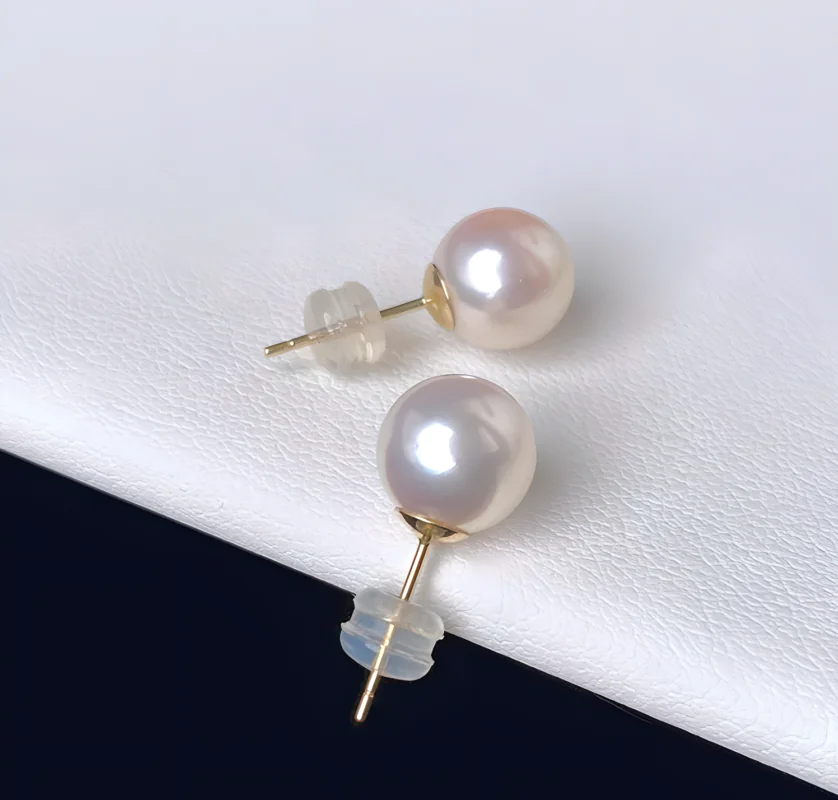
Yes—strong luster is usually worth prioritizing. It is one of the first qualities that makes a pearl look lively rather than flat, and it can have more visual impact than a small increase in size or a slightly cleaner surface. But luster is not a complete quality grade. A pearl can reflect light beautifully and still have serious surface damage, weak matching, an undesirable shape for the design, or other problems that affect what it is worth to you.
The most useful rule is simple: use luster as your first filter, not your final verdict.
Why strong luster matters so much
Pearl luster is not just “shine.” It describes the intensity and sharpness of the light reflected from the pearl and its nacre. A high-luster pearl shows bright, defined reflections and a sense of depth. A lower-luster pearl tends to look softer, hazier, or more chalky.
The Gemological Institute of America (GIA) includes luster among its seven pearl value factors and notes that it may be the most important of them. The full framework also includes size, shape, color, surface quality, nacre quality, and matching for multi-pearl pieces. You can see the GIA Pearl Quality Factors for the formal terminology.
That is why, when two pearls are otherwise similar, the one with stronger luster will often look more expensive even before you inspect the details. If you want to learn how to judge reflection sharpness rather than relying on seller adjectives, see our Pearl Luster Guide.
First, make sure you are comparing the same kind of luster
A common buying mistake is to expect every fine pearl to look equally mirror-like. Different pearl types have different characteristic appearances, so luster should be judged within context.
- Akoya pearls are especially associated with crisp, bright, mirror-like reflections.
- South Sea pearls can show a softer, satin-like glow while still being very fine pearls.
- Tahitian pearls may combine strong luster with dark bodycolor and complex overtones.
- Freshwater pearls cover a very broad range, from soft luster to extremely sharp, metallic-looking reflections.
So “more mirror-like” does not automatically mean “better” when you are comparing different pearl families. GIA also cautions that different pearl varieties have different standards for luster. Compare like with like whenever possible: the same pearl type, a similar size range, and the same lighting.
What else should you check besides luster?
1. Surface: distinguish harmless marks from serious problems
Real cultured pearls commonly have small pits, wrinkles, spots, growth marks, or other surface characteristics. A tiny mark does not automatically make a pearl poor quality. What matters more is the mark's size, depth, location, and effect on the overall appearance.
In practical buying, a high-luster pearl with one small, low-visibility blemish can be a better choice than a duller pearl with a cleaner-looking surface. The eye often notices brightness and reflection before a tiny natural mark.
Deep cracks, peeling nacre, large damaged areas, or defects in a highly visible position deserve more caution. Our Pearl Surface & Blemishes Guide explains how to separate normal surface characteristics from more concerning issues.
2. Nacre: related to luster, but not identical to it
Luster and nacre quality are closely related, but you should not treat visible shine as a precise measurement of nacre thickness. Nacre quality also involves how well the nacre has formed and whether its surface remains sound.
This matters especially with bead-nucleated cultured pearls. Obvious chalkiness, visible structural problems, peeling, or signs that the surface is breaking down are more important warnings than a few ordinary blemishes. If a seller makes a specific claim about nacre thickness, ask what that claim is based on rather than assuming it can be confirmed from a bright photograph.
3. Matching: one dull pearl can change the whole strand
Matching matters whenever you are buying earrings, a necklace, a bracelet, or any piece containing multiple pearls. Compare not only size and color, but also luster. A strand can contain individually attractive pearls yet still look uneven if several pearls reflect light much more weakly than the others.
Good matching does not always mean perfect sameness. Graduated sizes, mixed colors, and intentionally irregular shapes can be part of the design. The important question is whether the variation looks deliberate and harmonious.
4. Shape: do not pay for roundness unless you want it
Round pearls generally command a premium because true roundness is relatively rare. But shape is not the same thing as luster, and it is not a universal ranking of beauty.
A slightly off-round pearl with excellent luster can be an excellent value if you like how it looks. Baroque, oval, button, and drop pearls can also be the right choice when their shape suits the jewelry design. If your budget is fixed, relaxing roundness before sacrificing luster is often a sensible trade-off.
5. Size: bigger is not automatically better
Size affects rarity, visual presence, and price, but a larger pearl is not automatically a better pearl. When other factors are equal, larger pearls of the same type are generally more valuable. In real shopping, however, the other factors are rarely equal.
If your choice is between a slightly smaller pearl with crisp luster and a larger pearl that looks flat, the smaller pearl may give you the more attractive piece. Decide first how much visual presence you want, then protect the quality features you will actually notice when wearing it.
6. Color: judge beauty and disclosure separately
Pearl color includes bodycolor and, in many pearls, overtones or iridescent effects. Color preference is personal, while rarity and market demand can also affect price.
The practical buying question is whether the color is accurately described. If natural versus treated color materially affects the price or your preference, ask the seller directly. A beautiful treated-color pearl can still be enjoyable jewelry; the problem is not treatment itself but unclear disclosure.
7. Grade labels: ask what the grade actually means
Terms such as “AAA,” “AAAA,” “top grade,” and “strong luster” are not automatically comparable between unrelated sellers. A grade is useful only if the seller explains the criteria behind it.
Instead of buying the label, compare the visible factors: luster, surface, shape, size, color, nacre, and matching. Our Pearl Grading Guide explains why the same grade letters can mean different things in different systems.
When is a strong-luster pearl a smart trade-off?
Strong luster becomes especially valuable when you are deciding which imperfections you are willing to accept. The following trade-offs often make sense:
- Strong luster + a few minor blemishes can be preferable to a cleaner but noticeably duller pearl.
- Strong luster + near-round shape can offer better visual value than paying a large premium for perfect roundness.
- Strong luster + slightly smaller size can look more refined than a larger pearl with weak reflections.
- Strong luster + natural variation can be ideal for baroque or character-driven jewelry where perfect uniformity is not the goal.
There are limits. High luster should not persuade you to ignore deep cracks, peeling, major surface damage, visibly poor matching, or vague claims about what the pearl actually is. A beautiful reflection cannot compensate for every other problem.
A 30-second checklist for buying high-luster pearls
- Confirm the pearl type. Do not compare Akoya, South Sea, Tahitian, and freshwater pearls as if their ideal appearance were identical.
- Compare under the same light. Different exposure, studio lighting, and phone processing can make luster look stronger or weaker.
- Look for reflection definition. A bright white hotspot alone is not enough; check whether reflections have clear edges and remain lively as the pearl moves.
- Rotate the pearl. Strong luster on one angle should not hide a damaged or dull area on the other side.
- Scan the surface. Separate small natural marks from deep cracks, peeling, or major visible damage.
- Check the whole piece. On earrings and strands, compare the pearls with each other rather than judging only the best pearl.
- Ask what the grade means. Confirm size, shape, color, treatment when relevant, and the seller's grading criteria.
For a broader decision process that also covers pearl type, budget, size, and online comparison, use our Pearl Buying Guide.
So, are strong-luster pearls worth buying?
Usually, yes. If two pearls are reasonably comparable, stronger luster is one of the best places to put your budget because it directly affects how vivid and luminous the pearl looks.
But the best purchase is not simply “the shiniest pearl.” Check whether the surface is sound, the nacre looks healthy, the shape and size suit the design, and multiple pearls are well matched. Then decide which imperfections you are comfortable accepting.
A useful buying order is: protect luster first, reject serious structural problems, then balance surface, shape, size, color, and matching according to the piece you actually want to wear.
If you are ready to compare finished pieces, you can browse our pearl jewelry collection with those factors in mind.
FAQ
Does strong luster mean a pearl has thick nacre?
Not necessarily. Luster and nacre quality are closely related, but visible luster alone does not give you an exact nacre-thickness measurement. Strong luster is a positive sign, while specific thickness claims should be supported by appropriate evaluation or documentation.
Is a high-luster pearl with blemishes worth buying?
It can be. Minor, low-visibility surface marks are common in cultured pearls and may be a reasonable trade-off for excellent luster. Deep cracks, peeling, or major damage are different and deserve more caution.
Is mirror-like luster always the best?
No. Mirror-like reflections are especially associated with fine Akoya pearls, while other pearl types can have a different characteristic luster. South Sea pearls, for example, are often appreciated for a softer satin-like glow. Compare luster within the pearl type rather than using one visual standard for every pearl.
Should I choose better luster or a larger pearl?
If the size difference is modest and your budget is limited, better luster is often the more visible upgrade. But size still matters for design and personal preference, so the right choice depends on how you want the finished jewelry to look.