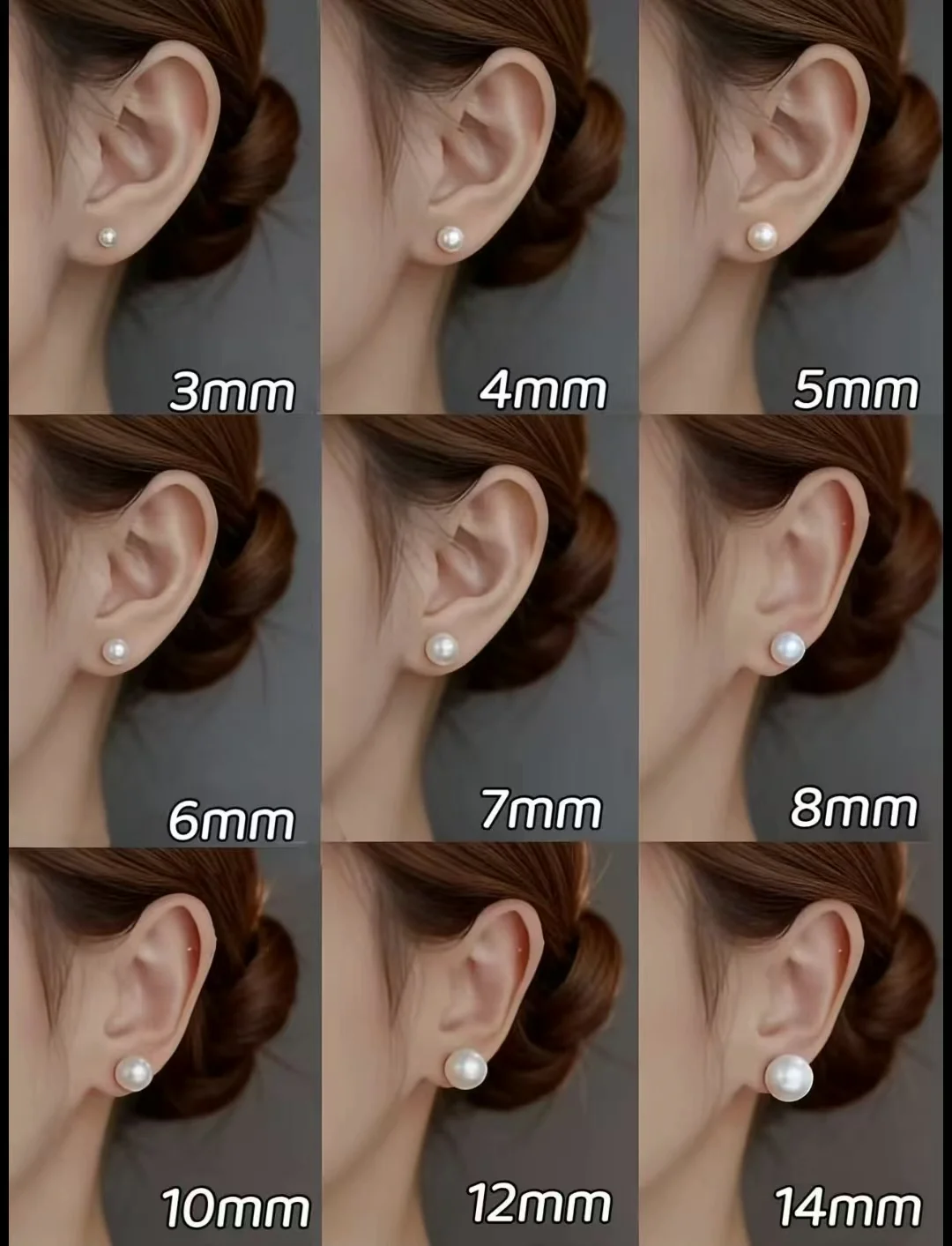
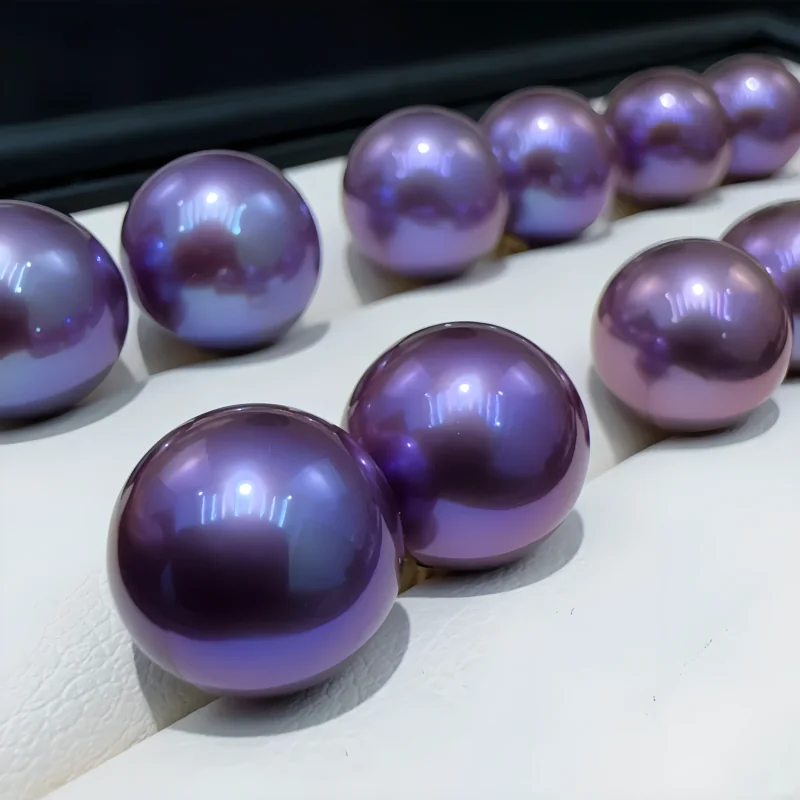
Buying pearls becomes much easier once you stop looking for one universal “best” pearl. A useful buying decision has several parts: identify the pearl type, decide the look and size you want, judge the visible quality, set a realistic budget, and verify exactly what the seller is offering.
For most first-time buyers, one rule is especially useful: protect luster before paying extra for larger size, perfect roundness, or an almost flawless surface. A smaller pearl with lively, sharp reflections often looks better in jewelry than a larger pearl that appears dull.
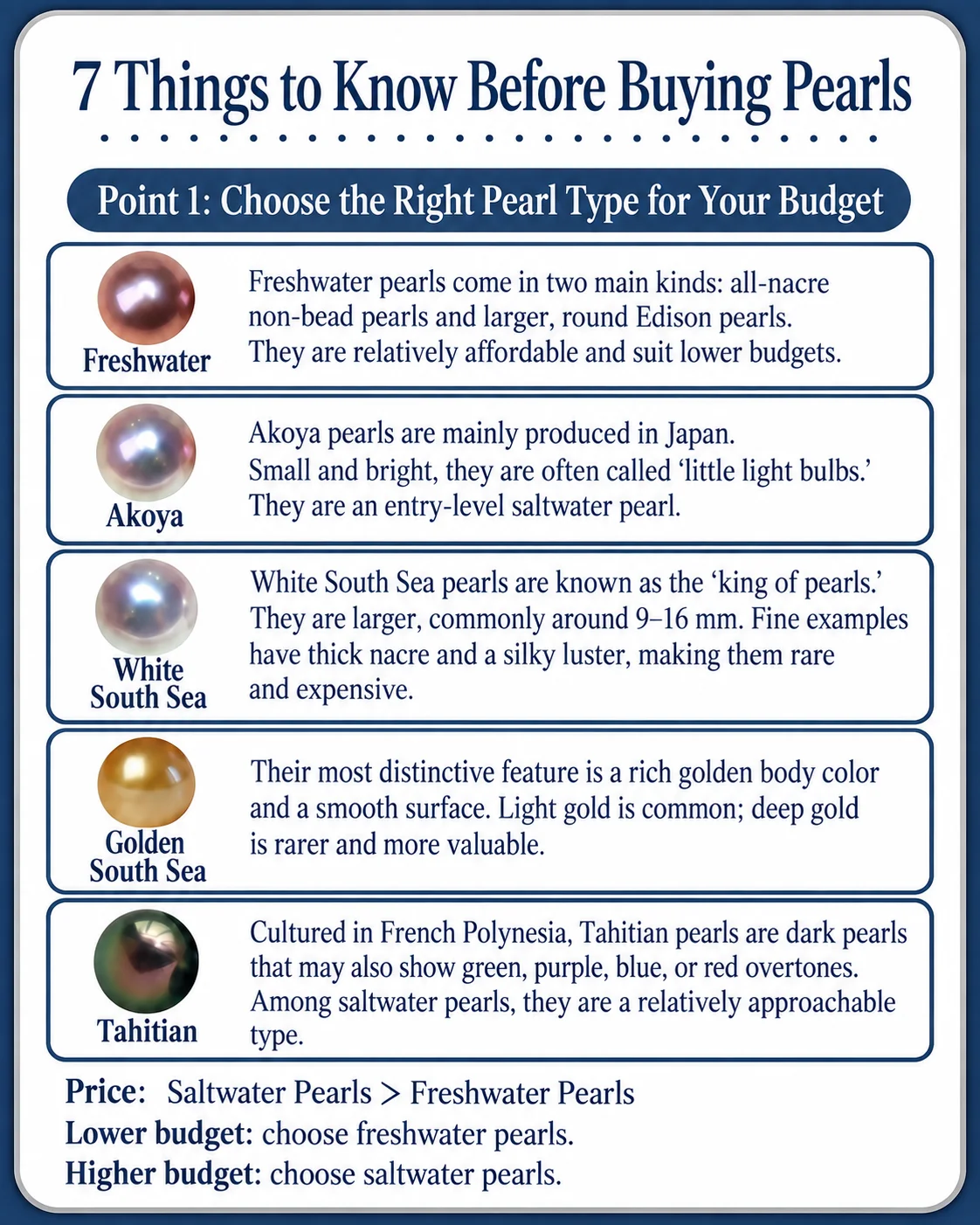
A simple pearl-buying framework
| Step | What to ask | Why it matters |
|---|---|---|
| 1. Pearl type | Freshwater, Akoya, Tahitian, or South Sea? | Type strongly influences typical size, color, appearance, rarity, and price. |
| 2. Jewelry and size | Earrings, strand, pendant, ring, or bracelet? Subtle or statement? | The same millimeter size can look very different in different jewelry. |
| 3. Visible quality | How strong is the luster? How clean is the surface? Is the shape desirable? | These are the qualities you actually see when wearing the pearl. |
| 4. Budget | Which premium features matter most to you? | Good buying is about trade-offs, not simply maximizing size. |
| 5. Verification | Cultured or imitation? Natural or treated color? What does the seller's grade mean? | Clear disclosure makes meaningful comparison possible. |
First, understand what “real pearls” means
Cultured pearls are real pearls. They form inside a mollusk after human assistance starts the pearl-forming process. Natural pearls form without deliberate human initiation and are much rarer. Imitation pearls are manufactured products made to resemble pearls, often using glass, plastic, shell, or composite materials.
For an ordinary jewelry purchase, the useful distinction is therefore usually cultured pearl versus imitation pearl, not “cultured versus real.” If authenticity materially affects the purchase, use a dedicated identification guide or laboratory report rather than relying on one home test.
1. Start with the pearl type
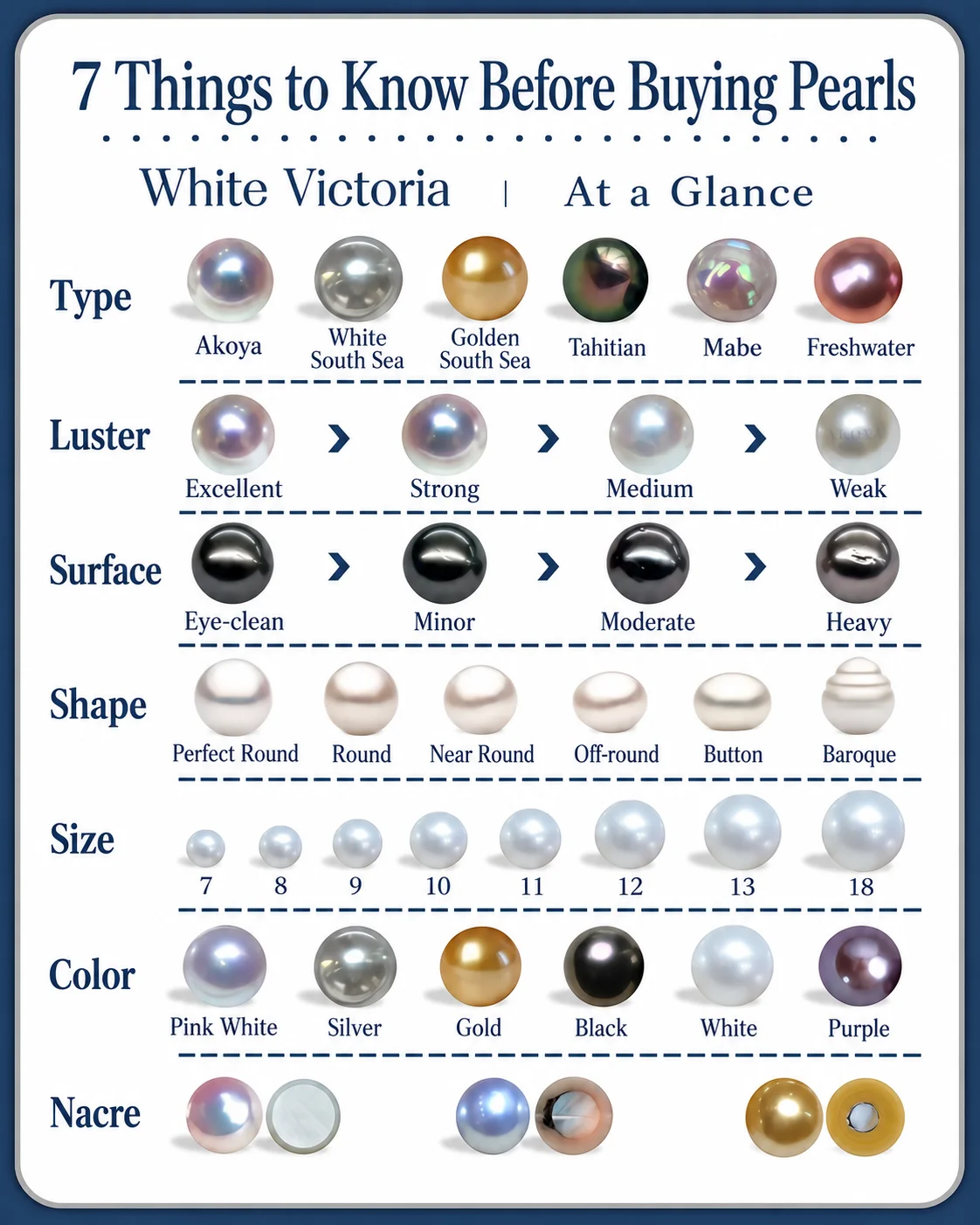
The four major cultured pearl categories most buyers encounter are Freshwater, Akoya, Tahitian, and South Sea. None is universally best.
Freshwater pearls
Freshwater cultured pearls offer the broadest mix of price, shape, size, and color. They are often the easiest starting point for a new buyer because a limited budget can still buy attractive luster and a useful jewelry size. Modern freshwater pearls can also be very round and highly lustrous, so “freshwater” should not be treated as a synonym for low quality.
Akoya pearls
Akoya pearls are strongly associated with the classic white round pearl look. Fine examples are prized for sharp luster, roundness, and close matching. Choose Akoya when refinement and crisp reflections matter more than getting the largest possible pearl for the money.
Tahitian pearls
Tahitian pearls are saltwater cultured pearls best known for naturally dark bodycolors. They are rarely a flat jet black; gray, green, blue, aubergine, and multicolor overtones are common. Dark freshwater pearls can also be attractive, but many achieve their color through treatment, so color origin should be described accurately.
South Sea pearls
White and Golden South Sea pearls are generally larger and rarer. Their appeal is often a combination of size, thick nacre, color, and a softer satin-like glow. They normally occupy a higher price range, so a first-time buyer should compare overall beauty rather than assuming “South Sea” automatically means the best-looking pearl.
2. Look at luster before almost anything else
Luster describes how strongly and sharply light returns from the pearl. High-luster pearls look lively, with clear reflections and a sense of depth. Lower-luster pearls appear softer or chalkier.
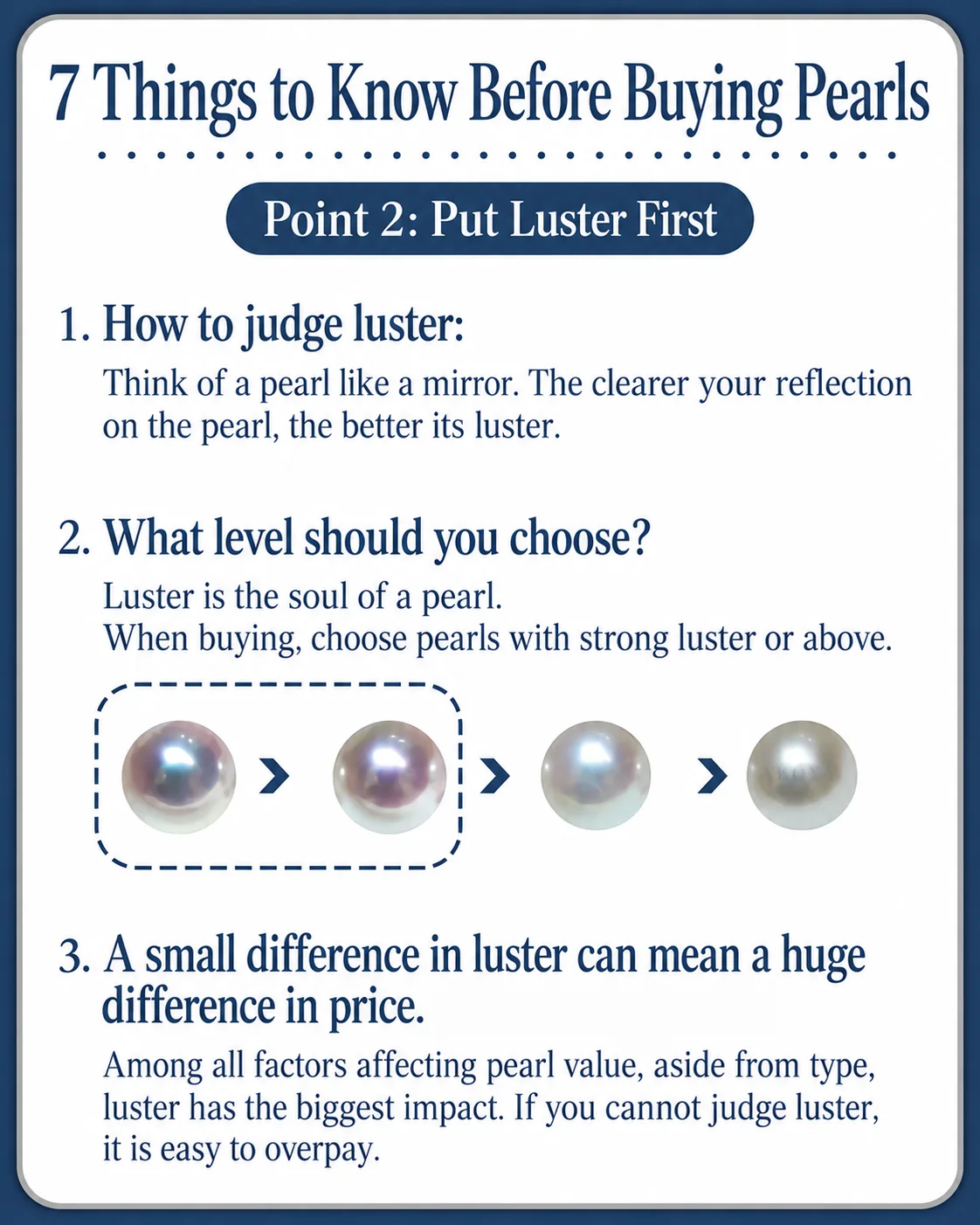
When comparing two pearls of the same general type, hold them under the same neutral light. Ask whether reflections look crisp or blurred and whether the pearl still looks lively away from direct highlights. For a limited budget, better luster is usually a more visible upgrade than one extra millimeter of size.
3. Judge surface quality by severity and location
Real cultured pearls can have small pits, wrinkles, growth marks, spots, or other natural surface characteristics. The question is not simply whether a mark exists. Consider how large it is, how deep it is, where it sits, and whether it creates a durability concern.
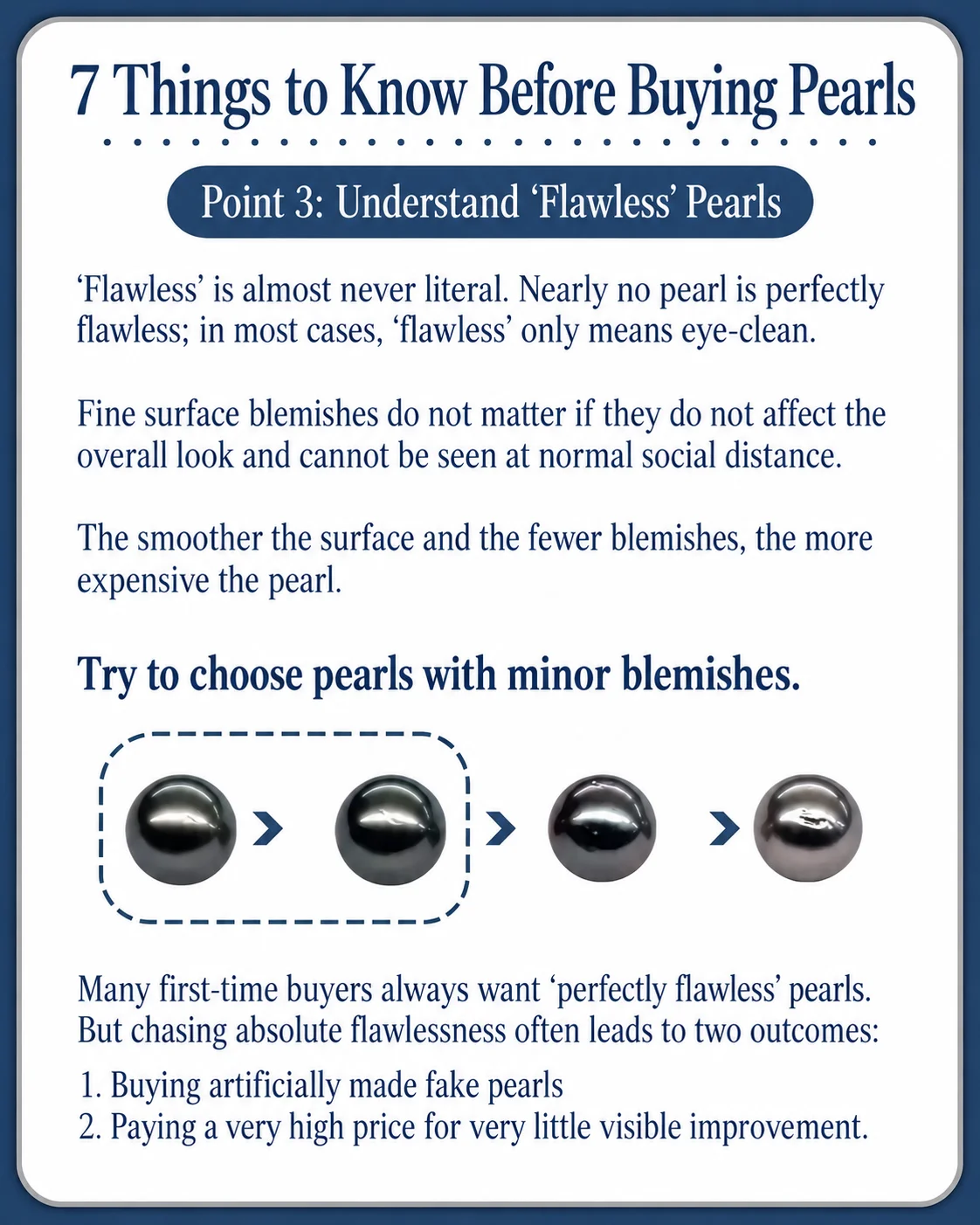
A tiny mark hidden near a drill hole may matter very little in a finished piece. A deep crack, peeling nacre, or a large blemish in the most visible area deserves more caution. “Eye-clean” is often more useful to a jewelry buyer than “absolutely flawless.”
4. Choose shape deliberately
Round pearls usually command a premium because true roundness is relatively rare, especially in larger sizes. But round is not the only desirable shape. Near-round pearls can give a classic look at a better price, drops are naturally suited to pendants and earrings, and baroque pearls can make the shape itself the design feature.
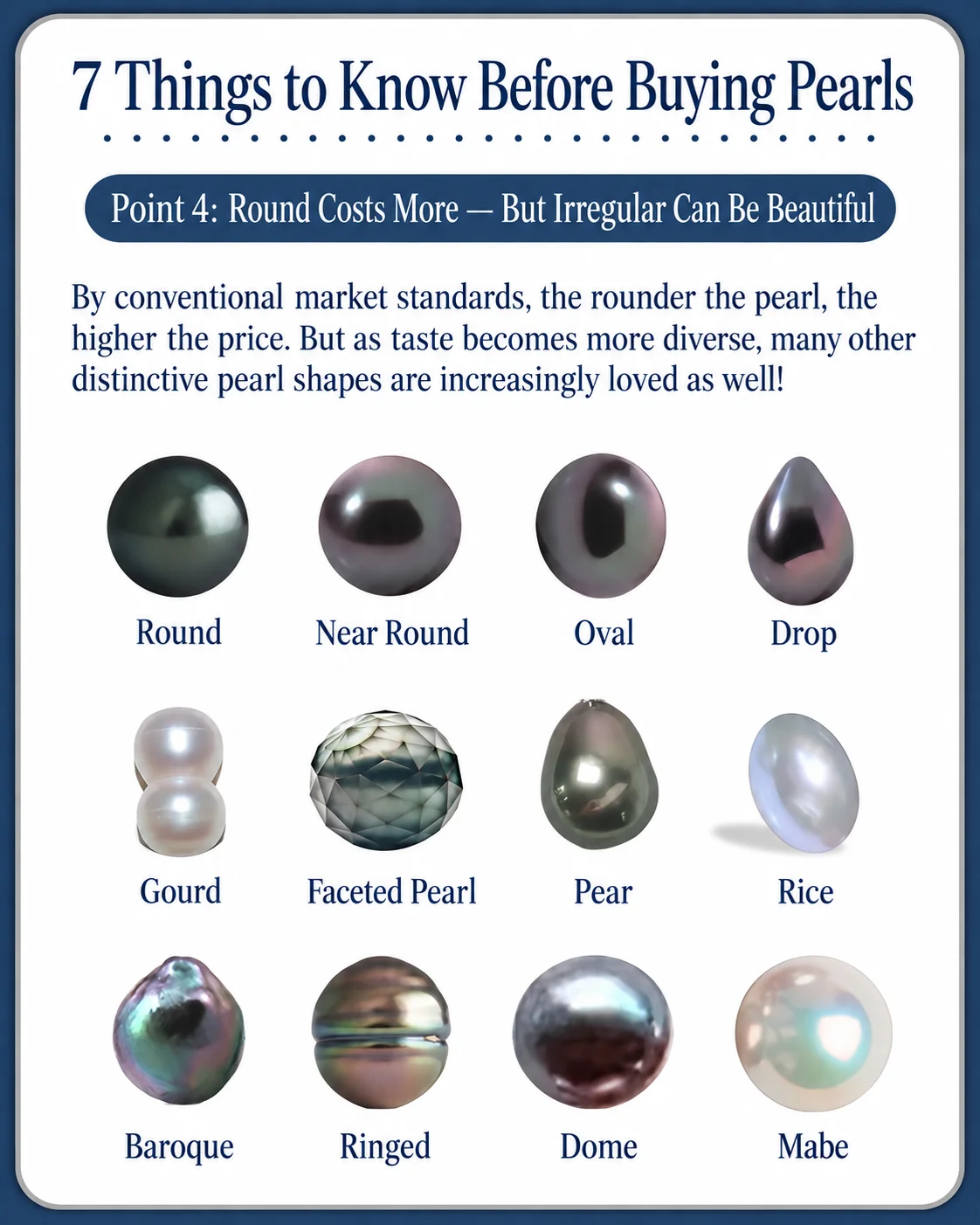
Do not confuse shape with surface quality. A clean baroque pearl is still baroque; a blemished round pearl is still round. They are separate evaluation questions.
5. Choose size after you understand quality
A difference of only 1–2 mm can change both visual presence and price. The effect is especially strong in a full strand because the diameter is repeated around the entire necklace.
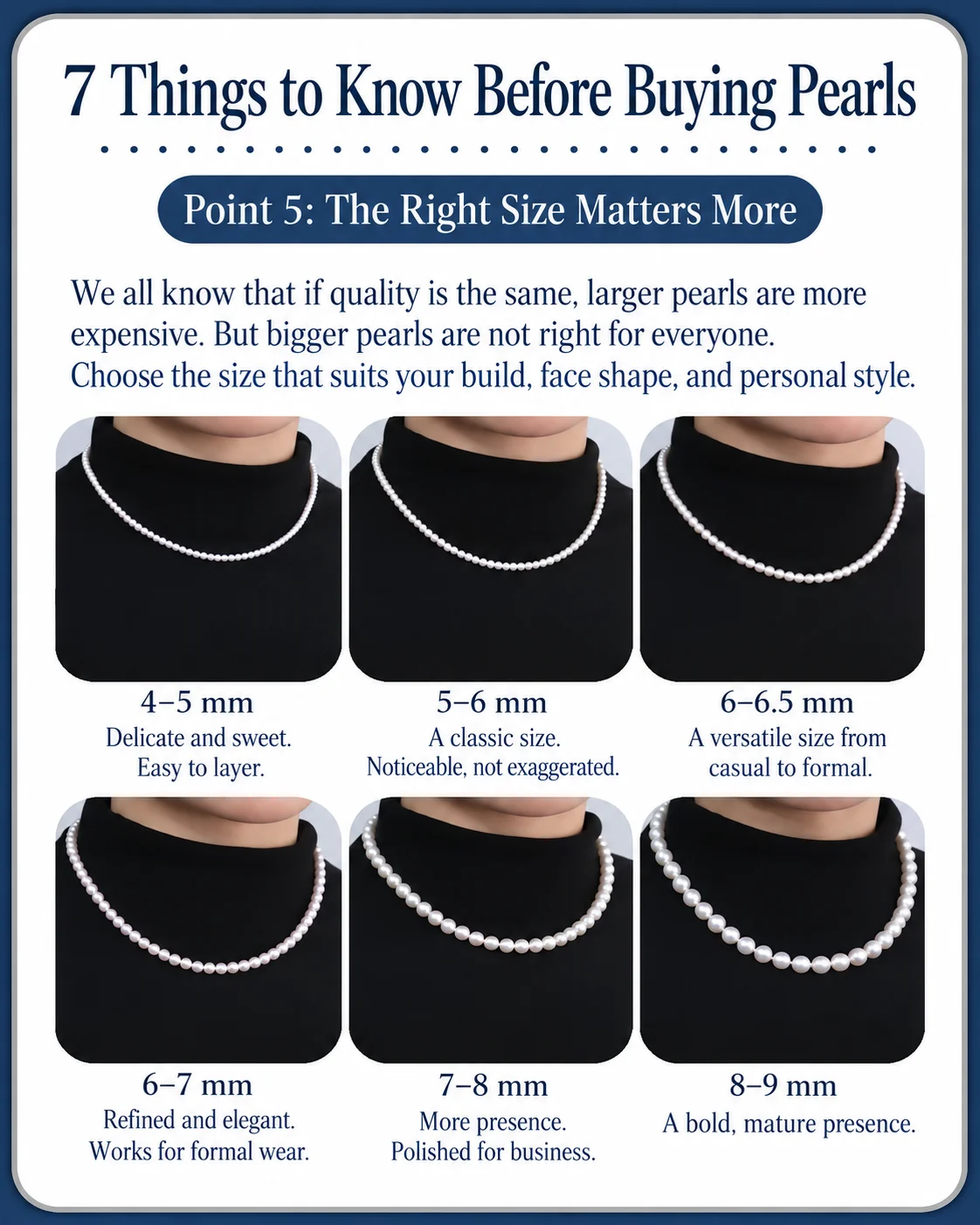
For everyday jewelry, medium sizes are often easiest to wear, but there is no age rule that says younger buyers need small pearls or older buyers need large pearls. Use the intended design, personal style, and budget. If choosing a gift and you do not know the recipient's preference, a moderate size is usually safer than an extreme one.
6. Understand color: bodycolor, overtone, and treatment
Pearl color is more complicated than “white, pink, gold, or black.” A pearl has a bodycolor, may show an overtone, and can sometimes display orient or iridescent color effects. Lighting and photography can change how these appear.
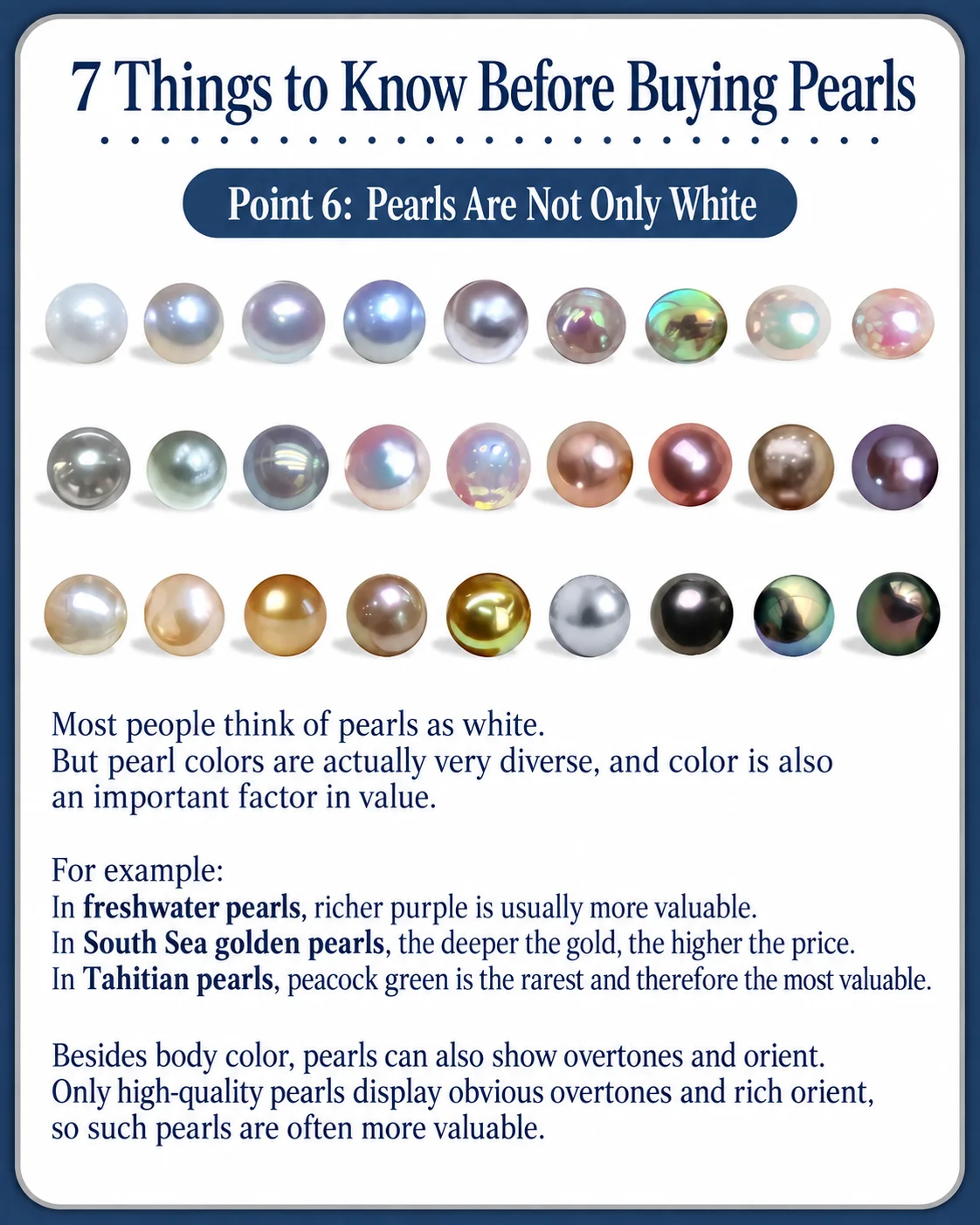
Color is partly preference and partly market rarity. It is also a disclosure issue. Dyed or otherwise treated pearls can be perfectly wearable, but they should not be represented as naturally colored when they are not.
7. Do not ignore nacre quality
Nacre affects luster, surface appearance, and durability. You usually cannot measure exact nacre thickness just by looking at a finished pearl, but obvious chalkiness, poor surface integrity, peeling, or a weak appearance can be warning signs.
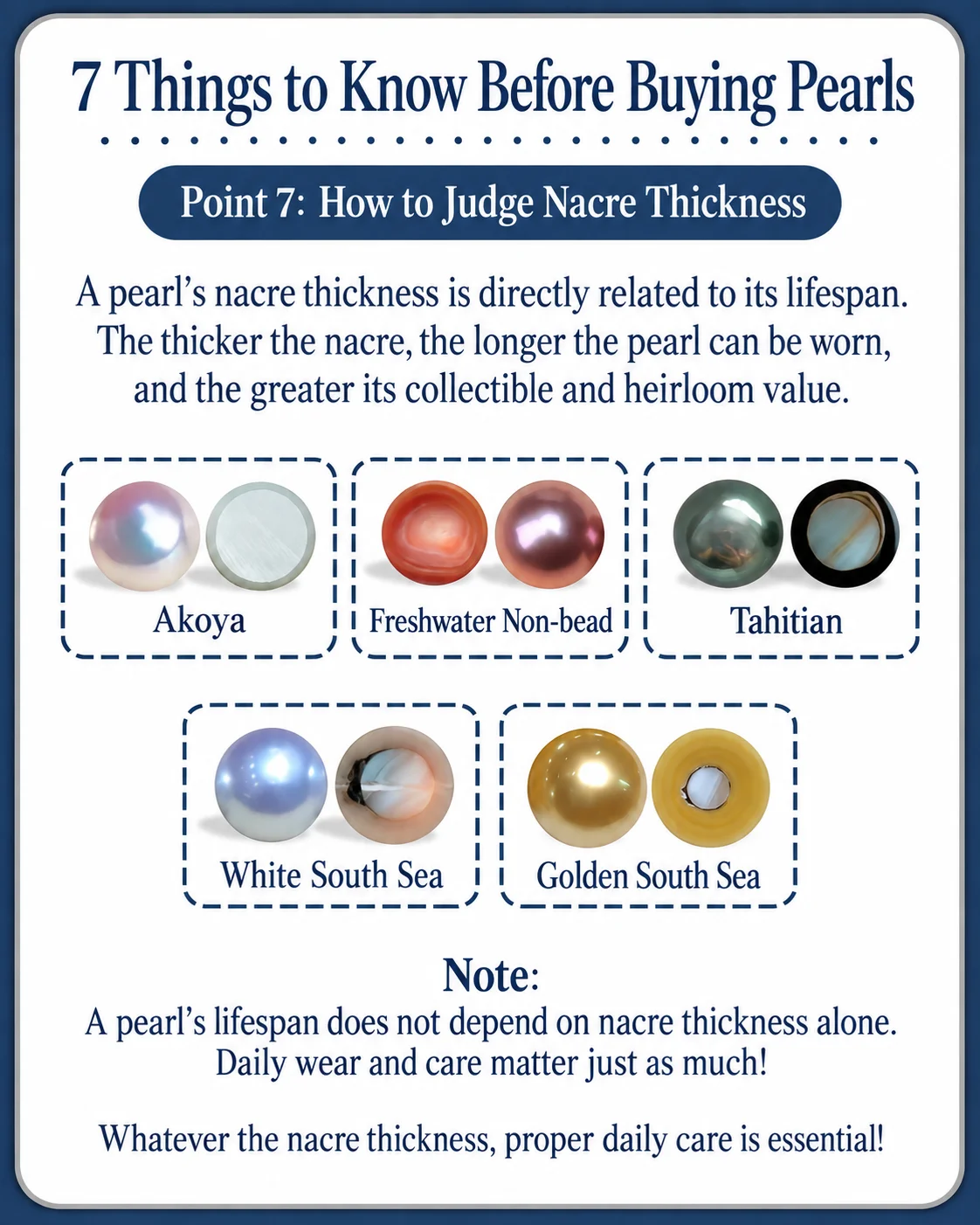
Nacre should be considered together with pearl type. Different cultured pearl categories have different internal structures and cultivation methods, so one simplified thickness rule does not apply equally to all of them.
8. Check matching when buying pairs or strands
Matching becomes important when multiple pearls are meant to look like one piece. Compare size, shape, bodycolor, overtone, luster, and surface quality across the pair or strand. Fine matching can add substantial cost because the seller must sort many pearls to assemble a harmonious set.
Perfect sameness is not required. The goal is visual compatibility. A strand can contain subtle natural variation and still be very well matched.
What should you prioritize if your budget is limited?
A practical order for many buyers is:
- Protect luster. Dull pearls rarely become exciting just because they are bigger.
- Avoid serious structural problems. Deep cracks, peeling, or weak nacre are different from harmless small marks.
- Choose a size appropriate to the design. Do not buy size simply for prestige.
- Relax roundness before luster if the design allows it. Near-round and baroque pearls can offer excellent value.
- Accept minor low-visibility blemishes before sacrificing overall beauty.
This order is not absolute. A designer intentionally buying baroque pearls, for example, may care about silhouette and color more than roundness.
Do not buy pearls based only on AAA, AAAA, or another grade label
There is no single universal A/AA/AAA/AAAA grading law used by every seller. A grade is useful inside a seller's own system only when the criteria are explained consistently. Compare the actual luster, surface, shape, nacre, size, color, and matching instead of assuming two “AAA” labels from different sellers mean the same thing.
Eight common buying mistakes
- Paying for the largest pearl while ignoring luster.
- Treating every surface mark as equally serious.
- Assuming perfectly round is always the best design choice.
- Assuming cultured means fake.
- Assuming all dark pearls are naturally colored Tahitian pearls.
- Comparing grade labels without comparing the seller's grading criteria.
- Judging color from one heavily edited photograph.
- Buying a matched strand or pair without checking consistency across the whole set.
A practical online pearl checklist
Before paying, confirm the pearl type, approximate size range, shape description, color and any relevant treatment, whether the item is a single pearl/pair/strand, and what the seller's quality grade actually describes. Ask for neutral-light photographs or video when the purchase is significant.
When comparing two products online, try to keep the variables controlled: same pearl type, similar size, similar jewelry category, and similar lighting. Otherwise you may think you are comparing quality when you are actually comparing different pearl categories or photography styles.
FAQ
What is the most important thing to look for when buying pearls?
For most jewelry buyers, luster is the first quality factor to protect. It has a strong effect on how alive and attractive the pearl looks. But luster should still be considered together with surface integrity, nacre, and the intended jewelry design.
Are larger pearls always better?
No. Size is a rarity and style factor, not a standalone quality grade. A smaller pearl with better luster and surface quality can be more attractive and sometimes more valuable than a larger lower-quality pearl.
Are flawless pearls necessary?
No. Small natural surface characteristics are normal. Focus on visibility, severity, location, and whether a mark indicates a structural risk.
Are round pearls always the best?
No. Roundness often carries a price premium, but drops, buttons, ovals, and baroque pearls may be more appropriate for particular designs.
Should I trust A, AA, AAA, or AAAA grades?
Use them only within a clearly defined seller grading system. Do not assume the labels are directly comparable across unrelated sellers.
Do I need a pearl grading certificate?
Not for every ordinary pearl purchase. A laboratory report is most useful when identity, treatment, origin, or a high-value claim materially affects price. A seller grade and a laboratory identification report are not the same thing.