Follow the 24 lessons in order, or choose a topic below. Each lesson links back to this course directory and to the preceding and following lesson.
Formation and Cultivation
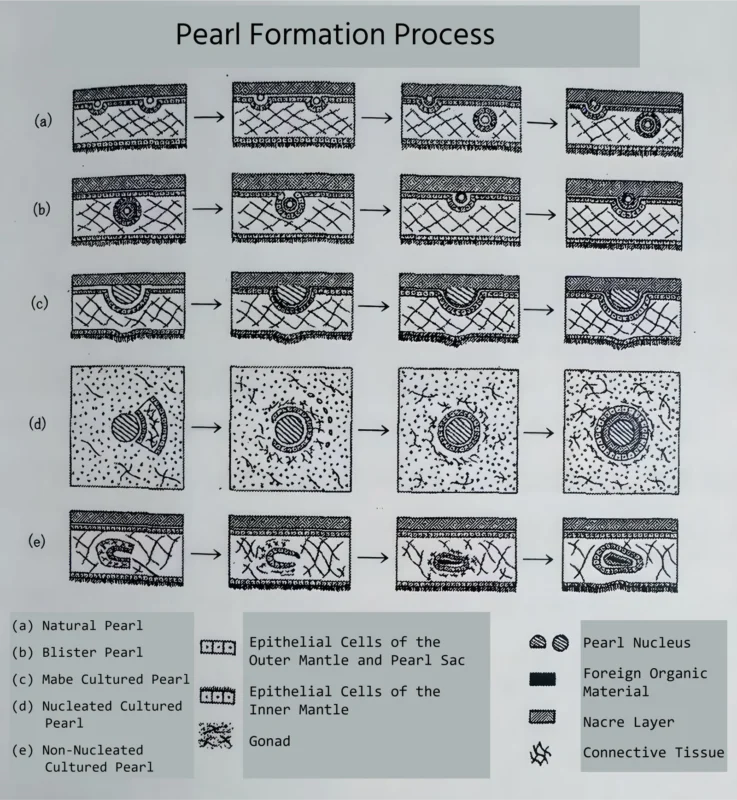
- Lesson 1: Formation of Pearls — How Pearls Form Naturally and in Culture
- Lesson 2: Pearl Cultivation — How Cultured Pearls Are Grown
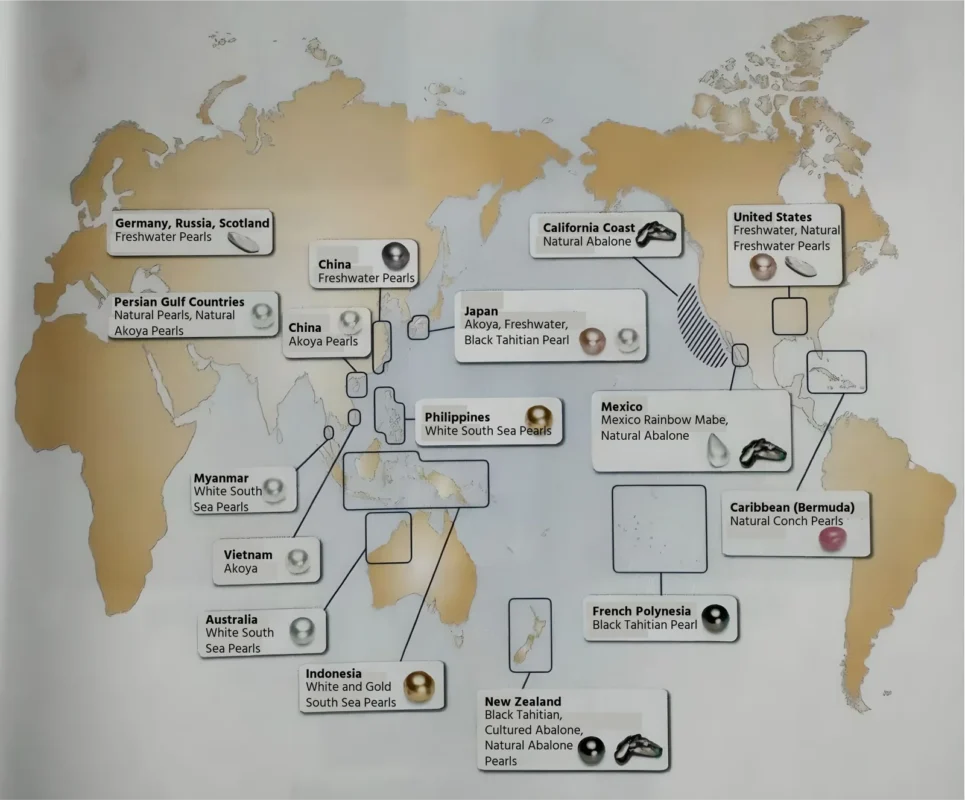
- Lesson 3: Global Pearl-Producing Regions — Where the World’s Cultured Pearls Come From
Processing and Enhancement
- Lesson 4: Pearl Processing Workflow — What Happens to Pearls After Harvest
- Lesson 5: Pearl Color Enhancement
- Lesson 6: Pearl Coating Techniques | Coated Pearls Explained
Properties and Care
- Lesson 7: The Physical and Chemical Properties of Pearls
- Lesson 8: Pearl Care and Maintenance — How to Clean, Store, and Wear Pearls Properly
Pearl Types
- Lesson 9: Pearl Classification — Natural, Cultured, and Imitation Pearls
- Lesson 10: Conch Pearls — Origin, Flame Structure, and Rarity
- Lesson 11: Abalone Pearls — Origins, Colors, Shapes, and Rarity
- Lesson 12: Melo Pearls
- Lesson 13: Akoya Pearls — Luster, Color, Size, and Nacre Quality
- Lesson 14: Tahitian Black Pearls — Origin, Natural Colors, Shapes, Sizes, and Nacre
- Lesson 15: South Sea Pearls — White and Golden Pearls from Pinctada maxima
- Lesson 16: Freshwater Non-Nucleated Pearls
- Lesson 17: Freshwater Nucleated Pearls | Edison and “Freshwater AK” Pearls
- Lesson 18: Mabé Pearls — How Blister Pearls Are Formed and Processed
- Lesson 19: Keshi Pearls: What They Are and How They Form
- Lesson 20: Artificial Pearls
Styles and Brands
- Lesson 21: Timeless Pearl Selection: Classic Styles and Designs
- Lesson 22: Introduction to World-Renowned Pearl Brands
Identification and Value
- Lesson 23: Pearl Identification — How to Tell Real, Dyed, and Imitation Pearls
- Lesson 24: Pearl Value Evaluation
Further Reading: Pearl Certificates
For laboratory reports and their limits, see Pearl Grading and Do Pearls Always Need a Certificate?.