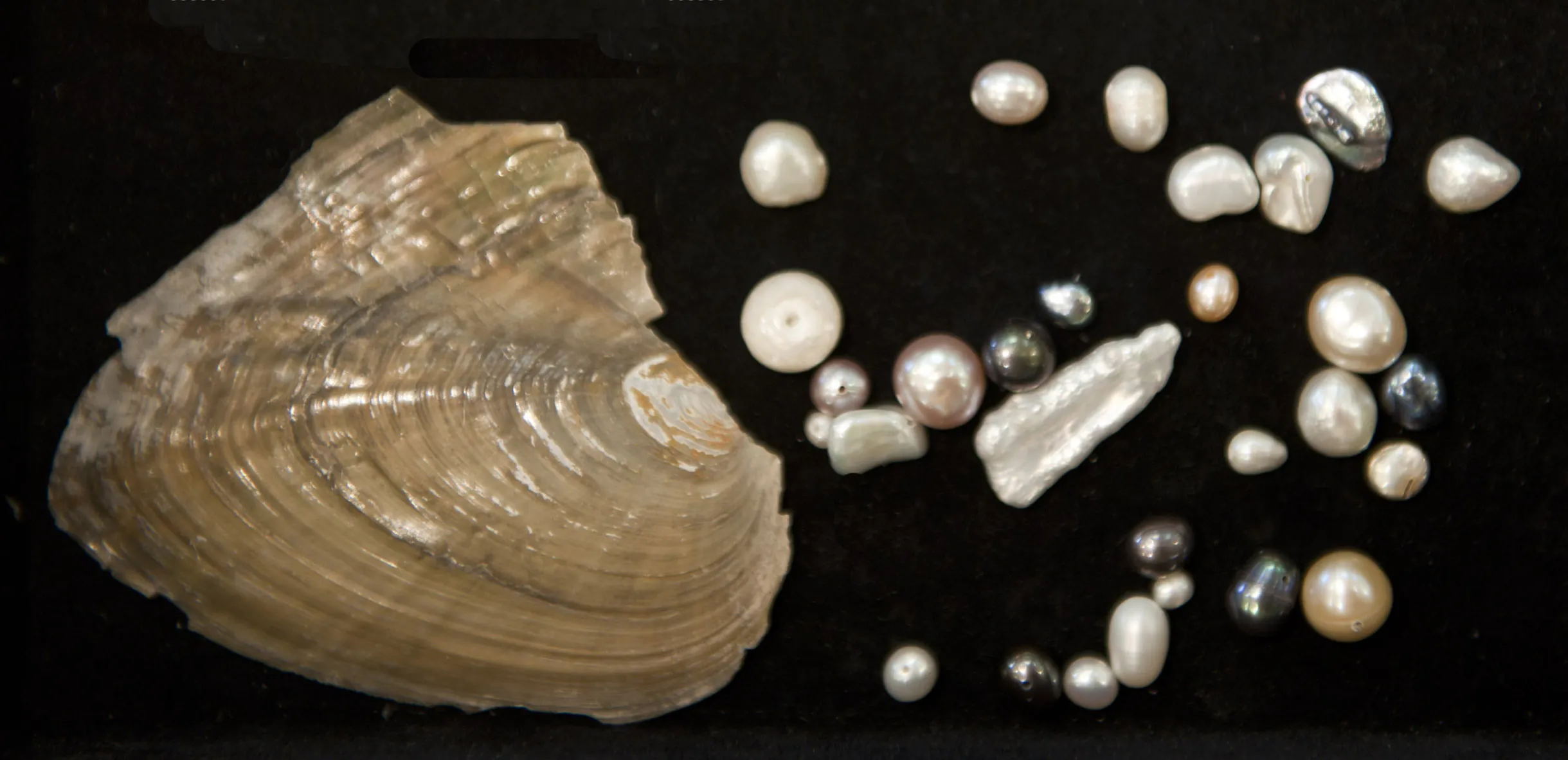
Pearl shape changes the character of a piece more than many buyers expect. A round pearl feels classic, a drop pearl naturally suits a pendant, and an irregular baroque pearl can become the design itself. Shape is also a rarity factor, but shape and quality are not the same thing: a baroque pearl can have excellent luster and surface quality, while a round pearl can still be dull or heavily blemished.
The main pearl shape families
Most shapes can be understood by looking at three things: how spherical the body is, whether it is elongated or flattened, and whether the outline is regular or irregular.
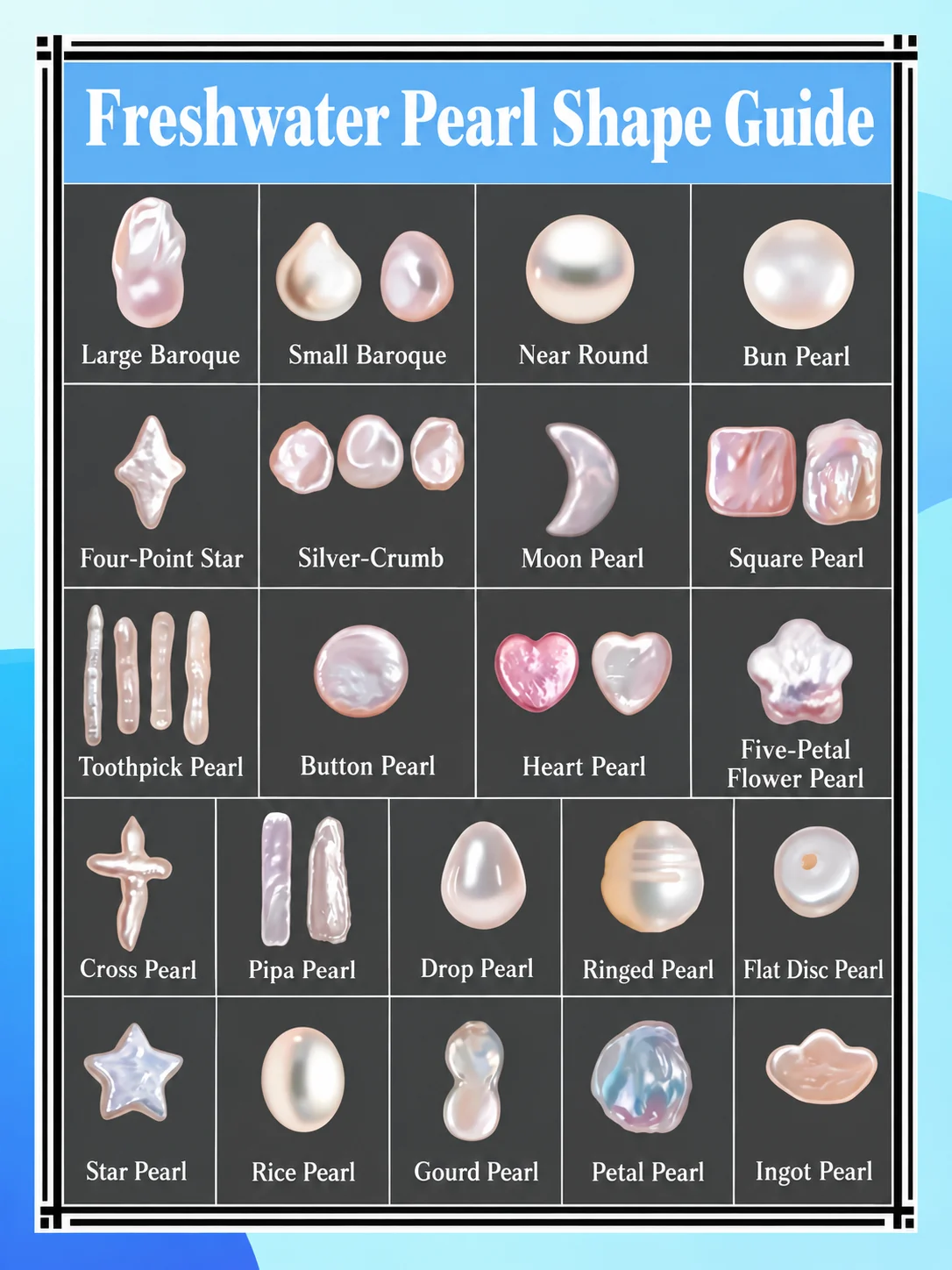
Common families include round, near-round, oval, drop, button, ringed/circled, baroque, and specialty freshwater shapes.
Round, near-round, and baroque are not simply three quality grades
A round pearl approaches a spherical form when viewed and rotated from multiple directions. A near-round pearl looks round at first glance but shows a measurable or visible deviation when rotated. Baroque describes an intentionally irregular form rather than “failed roundness.”
A pearl can be beautiful in any of these groups. Greater roundness usually increases rarity and price within a comparable pearl type and quality level, but it is not automatically the best design choice.
How to evaluate true roundness
Check more than the face-up view
A pearl can look circular from one angle while being slightly flattened or elongated from another. Rotate it and compare several axes. This is especially important when buying loose pearls intended for studs or matched pairs.
Use the roll test carefully
On a flat, clean, soft surface, a round loose pearl tends to roll more smoothly. A near-round pearl may wobble or change speed; a strongly baroque pearl follows a more irregular path. The roll test is only a supporting clue because drilling, surface features, and the testing surface can influence movement.
Measurements help, but no single percentage is universal
Calipers can compare maximum and minimum diameters. The closer those dimensions are, the more spherical the pearl may be, but the trade does not use one universal percentage that cleanly separates “round” from “near-round” across every seller and pearl type.
Button, oval, drop, and square pearls
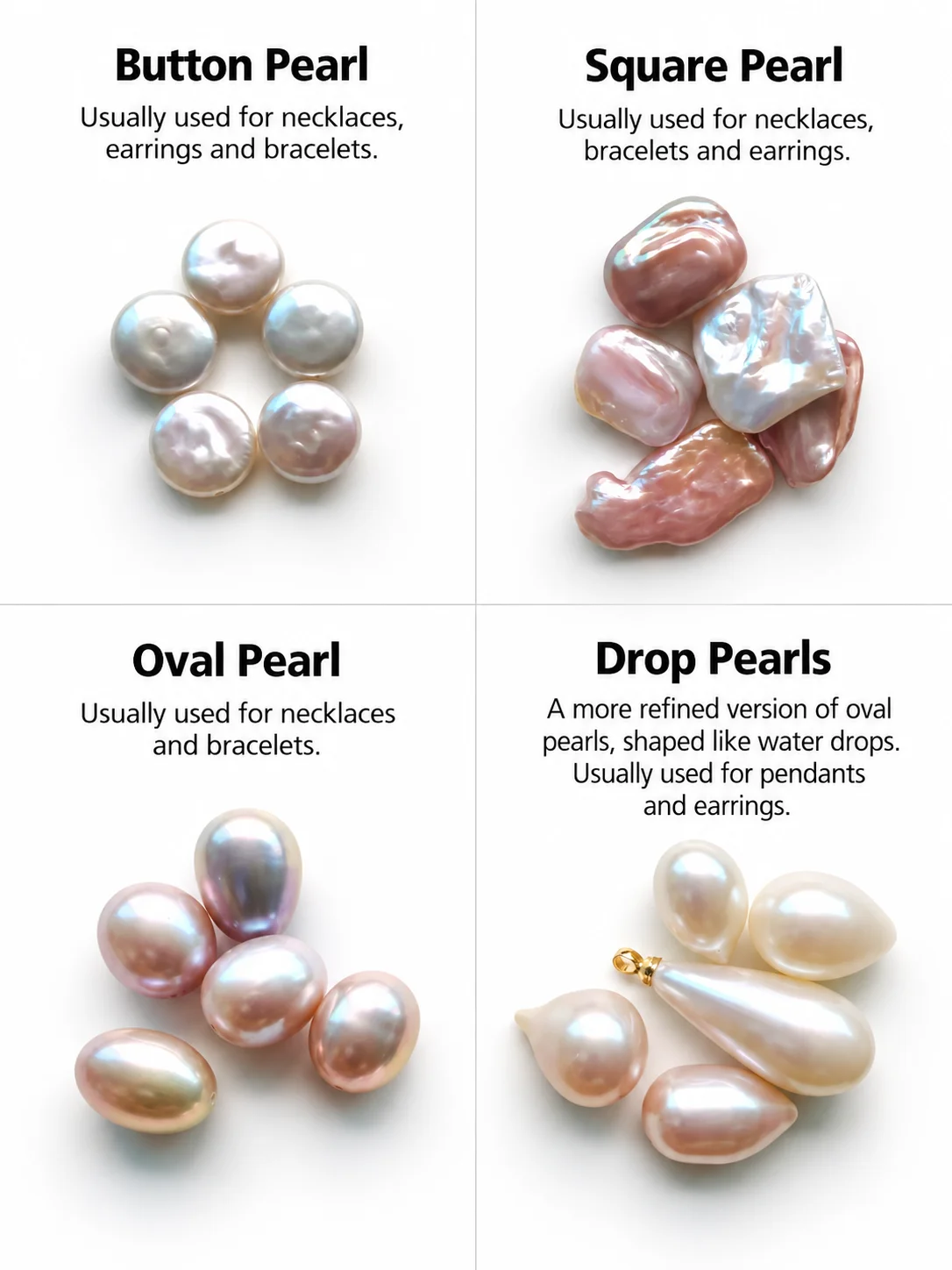
Button pearls keep a round-looking face but are flatter in profile, which can be useful in earrings and rings. Oval pearls elongate the round form without a pointed end. Drop pearls taper more clearly and naturally suit jewelry that hangs vertically. “Square” pearls are less standardized and usually refer to a visibly block-like or rectangular outline rather than a mathematically perfect square.
Baroque does not mean “badly shaped”
Baroque pearls are valued for individual outline, texture, and design character. Some are softly irregular; others have dramatic sculptural forms. The relevant questions become whether the silhouette is attractive, whether the luster is good, whether the surface is structurally sound, and whether the shape works for the intended jewelry.
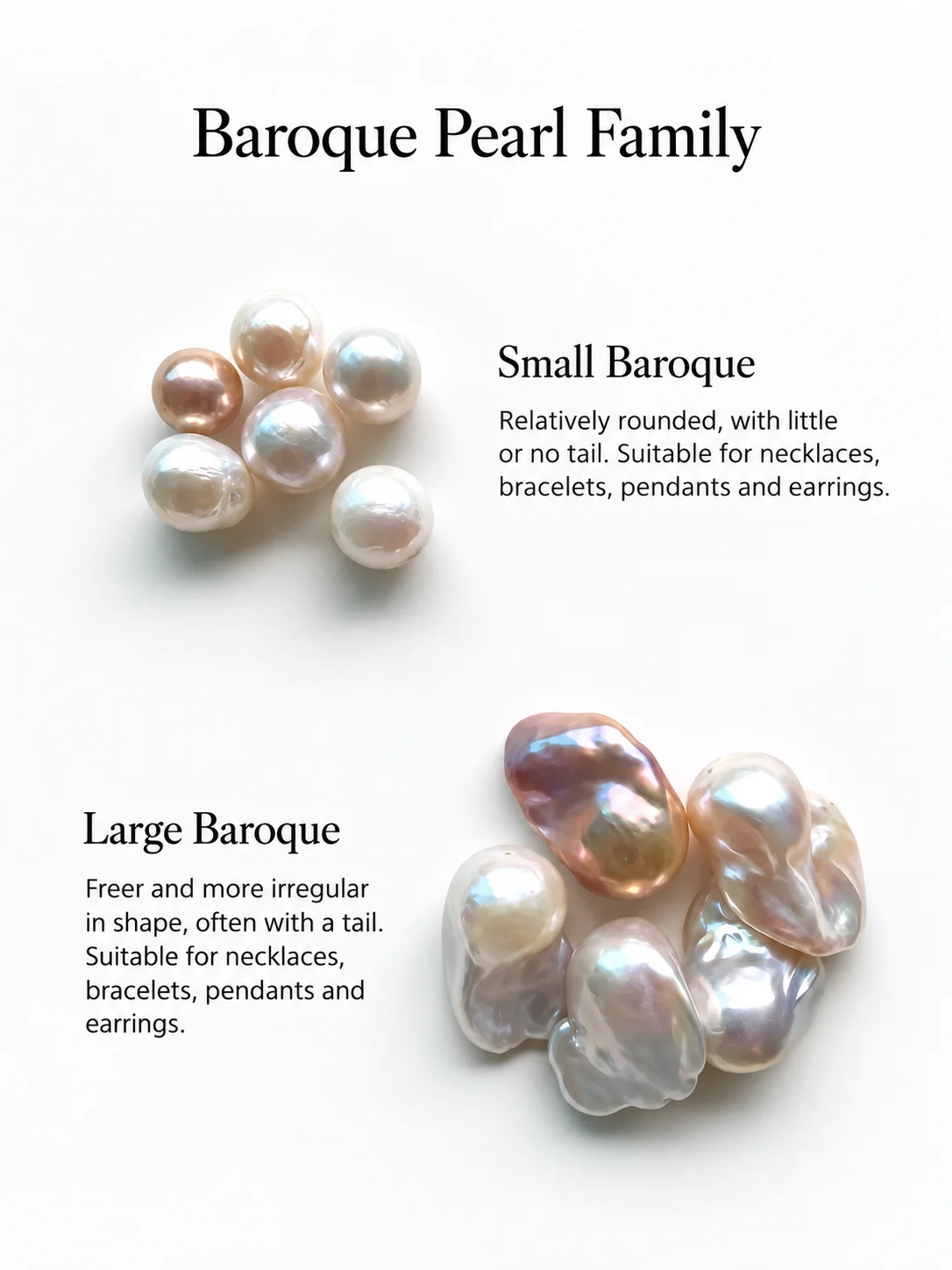
Do not confuse a natural contour with a blemish. A ridge that defines the pearl's body is a shape feature; a pit, crack, abrasion, or damaged area is a surface-condition question.
Ringed and circled pearls
Ringed or circled pearls show one or more grooves around the body. The rings can be part of the pearl's natural growth form and may be desirable in casual, organic, or designer jewelry. They should not automatically be described as surface defects.
Specialty freshwater shapes
Freshwater cultivation and processing produce a wide vocabulary of trade shapes. Names can vary by supplier and market, so photographs and dimensions are often more reliable than a name alone.
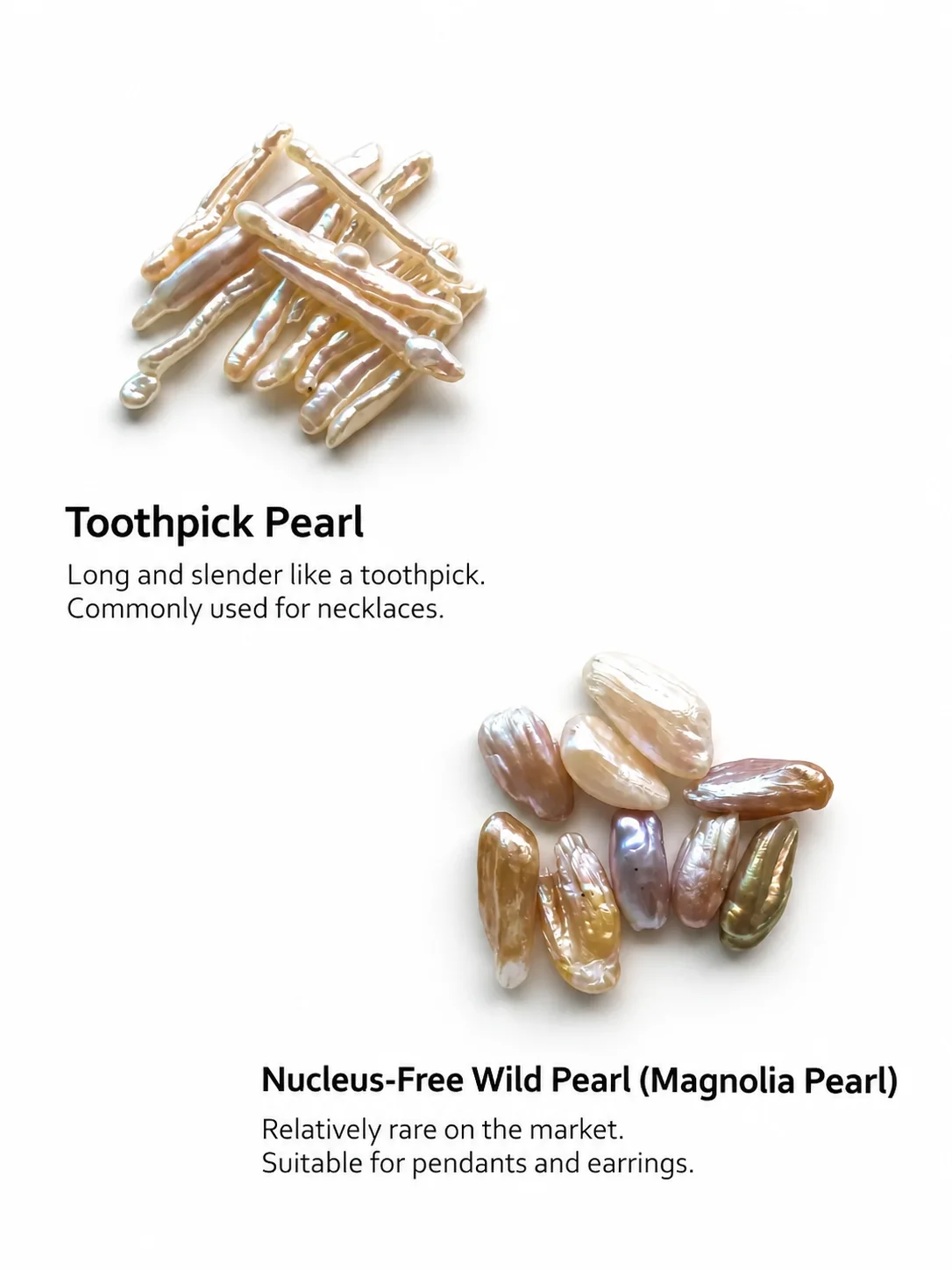
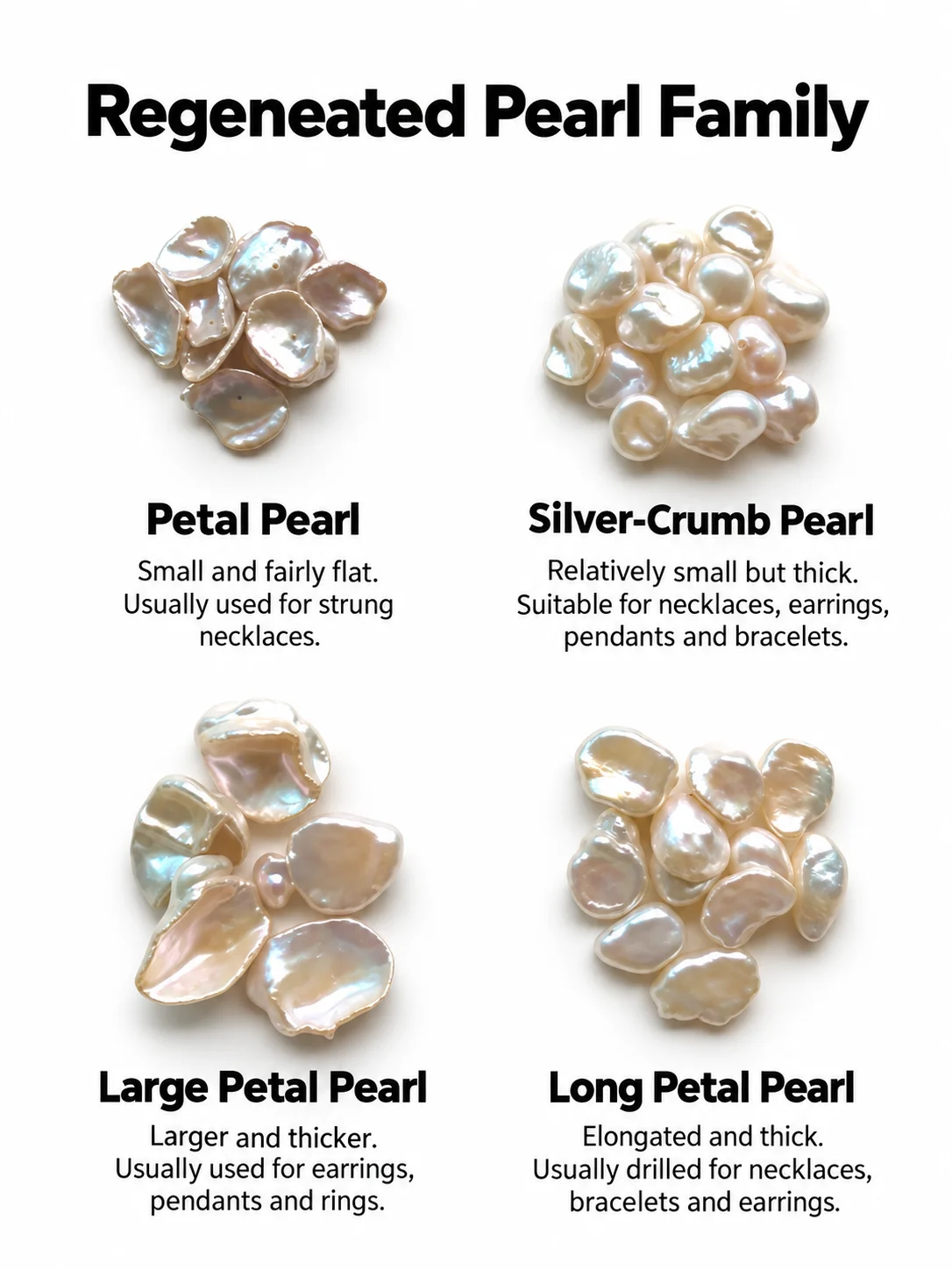
Use these specialty names as practical trade language rather than assuming they are globally standardized gemological categories.
Two-side-view and four-side-view pearls
Some freshwater trade terms describe how attractive or symmetrical a pearl appears from several sides. They are shape and viewing terms, not grades of luster.
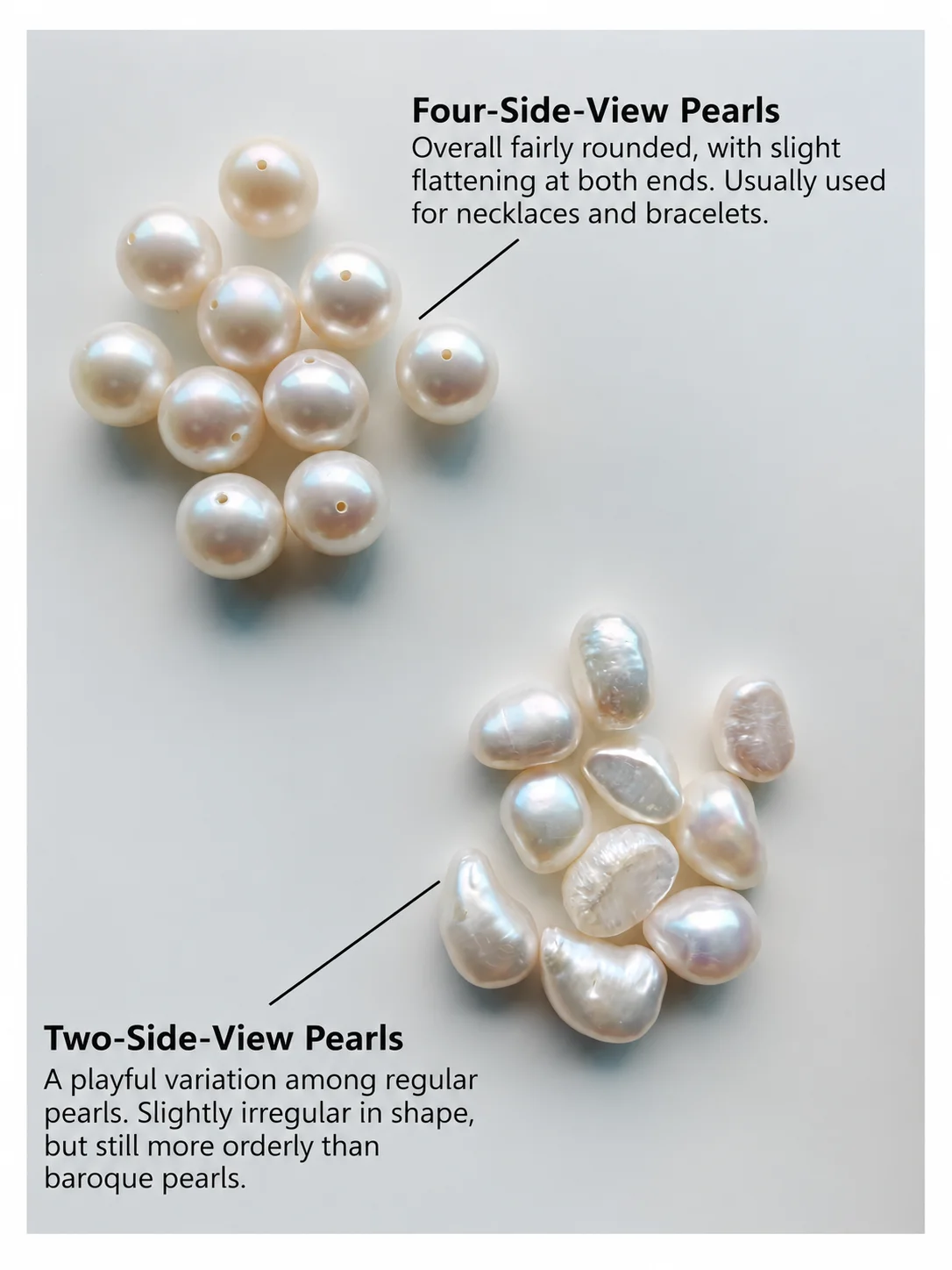
When translating or comparing supplier descriptions, it is often safer to describe the actual oval/potato-like form and show multiple views rather than treating the literal trade phrase as a formal international shape category.
Which shapes work best for different jewelry?
Stud earrings
Round and near-round pearls create the classic look. Button pearls can sit closer to the ear and may be comfortable in larger diameters.
Drop earrings
Drops, ovals, and elongated baroque pearls naturally emphasize vertical movement.
Pendants
A single drop, oval, pear-like, or distinctive baroque pearl works well because the viewer can appreciate the whole silhouette.
Strands
Round and near-round pearls create formal continuity. Baroque and ringed strands create rhythm through repeated natural variation. Matching matters even when the pearls are intentionally irregular.
Rings
Round, button, and compact baroque pearls are common, but the setting must protect the pearl because rings receive more contact than earrings or pendants.
Designer jewelry
Baroque and specialty freshwater shapes often give the designer more to work with because no two pearls are exactly alike.
How to judge shape when buying online
- Ask for a side view. A face-up photo can hide flattening or elongation.
- Request a rotation video for expensive round or matched pearls.
- Ask for maximum and minimum dimensions when roundness matters.
- For strands, request a full laid-flat image so you can judge consistency across the whole piece.
- Be cautious with undefined shape grades. “Perfect round” or “top round” is only meaningful if the seller explains or demonstrates the standard.
How to choose a pearl shape
Choose shape in this order:
- Start with the jewelry design and how the pearl will be viewed.
- Decide whether symmetry or individuality matters more.
- Judge luster and structural condition separately from shape.
- Pay a roundness premium only when the visual difference matters to you.
- For pairs and strands, judge matching as well as individual shape.
FAQ
Are round pearls always the most valuable?
Within the same pearl type, size, luster, surface quality, and other conditions, round pearls often carry a premium because true roundness is rare. But pearl value is multi-factor, and some exceptional baroque pearls are highly desirable.
What is the difference between round and near-round pearls?
A round pearl approaches a sphere across multiple viewing angles. A near-round pearl may look round face-up but shows slight asymmetry, flattening, or elongation when rotated or measured.
Are baroque pearls lower quality?
Not inherently. Baroque is a shape category. Luster, surface integrity, nacre, color, and overall attractiveness still need to be judged separately.
Can I judge roundness accurately from one photograph?
Usually not. One angle can hide flattening or asymmetry. Multiple views, rotation video, or dimensional measurements are more useful.
Do two-side-view and four-side-view describe luster?
No. They are trade descriptions related to shape and how the pearl presents from different directions.