A limited pearl budget does not mean you need to accept a dull or unattractive pearl. It means you have to decide which qualities are worth protecting and which premiums you are willing to give up.
The most useful rule is simple: protect luster and structural condition first; trade down in size, perfect roundness, or minor surface cleanliness before sacrificing the life of the pearl.
What changes as the budget increases?
Higher budgets do not simply buy “whiter” or “bigger” pearls. They can buy a better combination of luster, surface cleanliness, roundness, size, matching, pearl type, and rarity. At lower budgets, the smartest purchase is usually the pearl that makes a deliberate compromise rather than trying to imitate every premium feature at once.
| Budget idea | Sensible target | Common compromise |
|---|---|---|
| Around $50 | Small freshwater pieces, baroque designs, simple pendants or earrings | Size, roundness, metal/setting complexity |
| Around $150 | Better everyday freshwater jewelry and some smaller classic options | Perfect roundness or premium rarity |
| Around $300 | Stronger matching, cleaner surfaces, better settings, selected Akoya/freshwater options | Very large size or top rarity |
| Around $1000 | Fine strands, larger saltwater options, higher matching and quality combinations | Exact result varies greatly by pearl type and jewelry design |
These are shopping frameworks, not universal price promises. Pearl and metal prices, design, origin, brand, and market conditions can change what each budget buys.
1. Spend on luster before chasing extra size
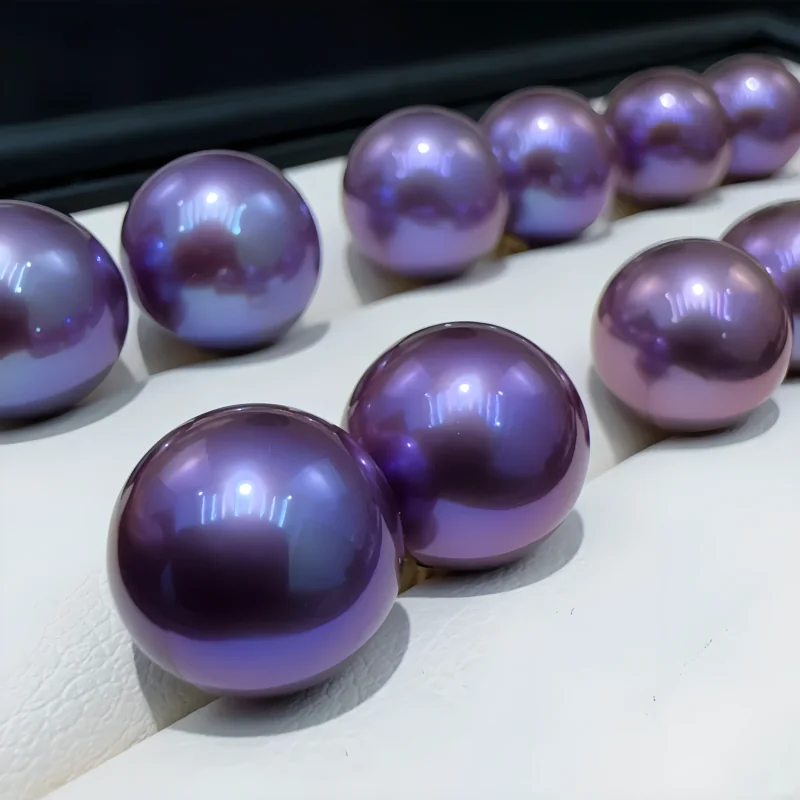
Luster is often the first thing people notice when a pearl is worn. A strongly lustrous pearl has crisp, lively reflections; a weak one looks flat even if it is large.
If two pearls cost the same, a slightly smaller pearl with stronger luster is often the safer choice for earrings, pendants, and classic strands. Size deserves higher priority when the design specifically depends on scale—for example, a statement pendant or oversized baroque piece.
2. Do not treat every blemish as equally important
Surface quality is not a simple “blemish/no blemish” question. Compare the size, depth, number, location, and type of marks.
A tiny mark near a drill hole or on the back of an earring may be almost invisible in wear. A deep crack, peeling nacre, or a prominent central pit is different because it can affect durability or dominate the face-up appearance.
For a budget buyer, small low-visibility marks are often one of the most rational places to compromise.
3. Perfect roundness is valuable, but it is not always necessary
True roundness carries a rarity premium. Near-round pearls can often give a very similar classic impression for less money. Baroque pearls go further: instead of hiding irregularity, they use shape as part of the design.
Roundness matters most when symmetry is central to the look, such as classic stud earrings or a very formal matched strand. It matters less when the design celebrates organic shapes.
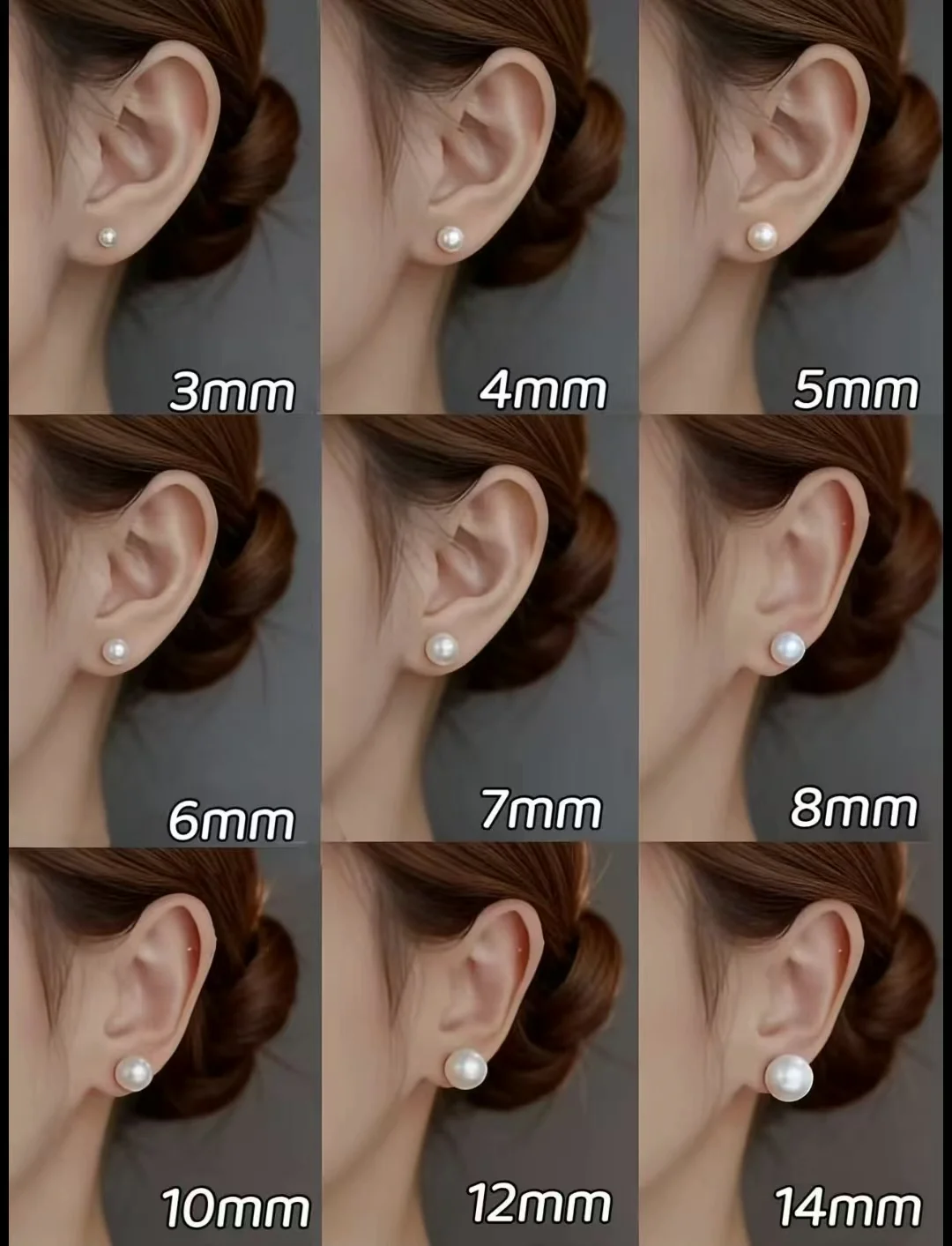
4. Size is a luxury upgrade, not a standalone quality grade
Large pearls are usually rarer within the same pearl type and quality range, but larger does not automatically mean better. A large dull pearl with poor surface integrity does not become high quality because of its diameter.
If increasing size forces you to sacrifice too much luster or durability, step down one size range. A 1 mm reduction can sometimes free enough budget to improve several visible quality factors at once.
5. The best compromise depends on the jewelry type
Earrings
Luster and pair matching are highly visible. You can often accept a minor mark on the side or back more easily than poor matching between the two pearls.
Full pearl necklaces
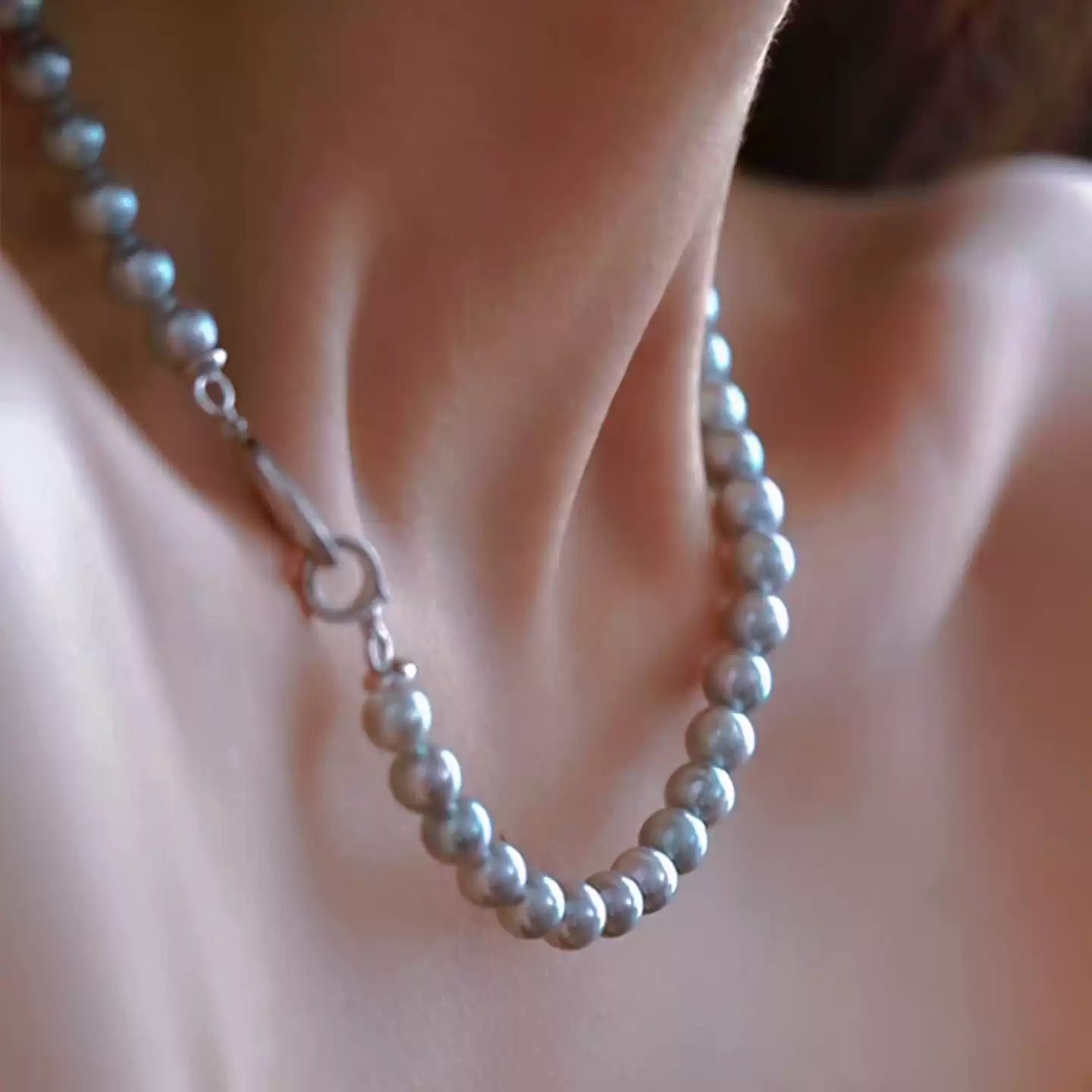
Matching, luster, and overall harmony matter because many pearls are seen together. Slightly smaller or near-round pearls can be an effective way to keep quality without pushing the strand into a much higher price range.
Pendants
Because the piece may use only one pearl, you can often spend more of the budget on the quality of that single visible pearl. A pendant also allows a somewhat larger pearl without paying for an entire strand of that size.
Rings and bracelets
Think about wearability and exposure. Pearls on hands and wrists receive more contact and abrasion, so structural condition and secure settings matter as much as appearance.
Four strategies that usually give better value
Buy slightly smaller pearls with better luster
This is the most reliable general trade-off. The pearl remains visually lively even if the size is more restrained.
Choose near-round instead of perfectly round
If the difference is subtle when worn, the price saving can be more useful than paying heavily for geometric perfection.
Accept small blemishes in low-visibility areas
Do this only when the mark is cosmetic rather than structural. Surface location matters.
Consider freshwater cultured pearls when pearl type is flexible
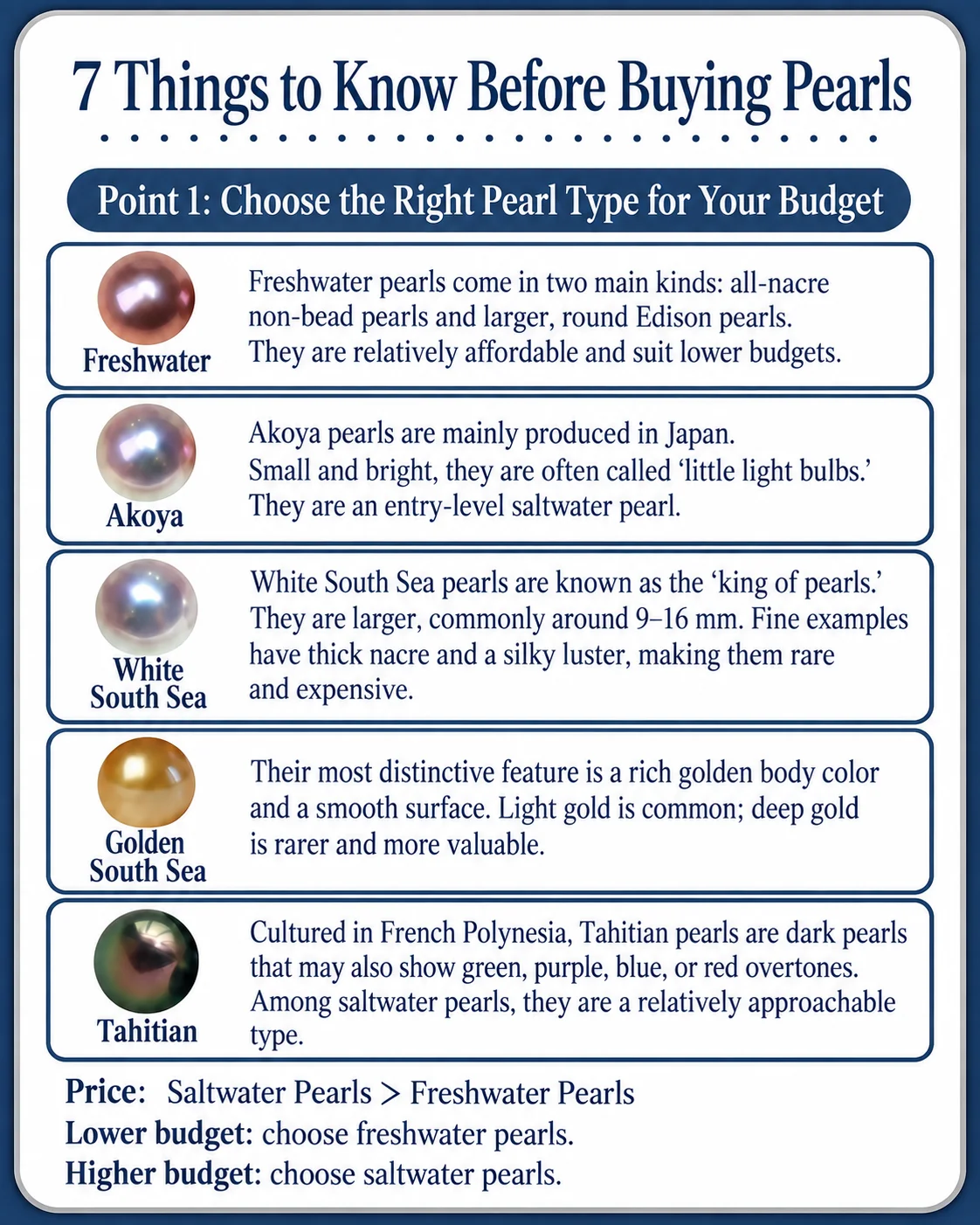
Freshwater pearls offer a wide range of colors, shapes, and sizes at accessible prices. If you do not specifically need the traditional Akoya look, naturally dark Tahitian color, or the size and rarity of South Sea pearls, freshwater can provide strong visual value.
What should you refuse to sacrifice just to get a lower price?
Do not chase a bargain by accepting serious nacre damage, deep cracks, active peeling, misleading treatment disclosure, or a product description that does not clearly say what you are buying. A lower grade is one thing; uncertainty about identity or durability is another.
How to compare two pearls at the same price
Use the same order each time:
- Compare luster under similar lighting.
- Check for structural problems before counting minor surface marks.
- Compare shape based on what the jewelry design actually needs.
- Compare size only after the first three factors.
- For pairs or strands, compare matching across all pearls.
- Confirm pearl type, treatment disclosure, and seller grading definitions.
A practical priority ladder
For many budget-conscious jewelry purchases, this is a useful default:
Luster → structural condition/nacre → appropriate size → matching → surface cleanliness → perfect roundness.
This is not a universal grading order. It is a spending strategy. A buyer who specifically wants perfectly round Akoya studs may reasonably move roundness and matching higher.
Quick anti-regret checklist
- Am I paying for size at the expense of luster?
- Is the blemish actually visible when worn?
- Is the pearl near-round rather than round, and would I notice the difference?
- Does the product clearly disclose pearl type and important treatments?
- For a pair or strand, do the pearls look harmonious together?
- Am I comparing actual appearance rather than just grade labels?
FAQ
What is the most important pearl quality when my budget is limited?
Luster is usually the best visible quality to protect, provided the pearl does not have structural problems such as deep cracking or serious nacre damage.
Is it better to buy smaller high-quality pearls or larger lower-quality pearls?
For most everyday jewelry, slightly smaller pearls with stronger luster and sound surfaces are the safer choice. Choose larger lower-grade pearls only when size is intentionally the main design feature.
Are blemished pearls bad?
Not necessarily. Small natural marks can be acceptable and may create good value. Judge severity, location, and durability risk rather than simply counting marks.
Are near-round pearls a good choice on a budget?
Yes. Near-round pearls can look very close to round in jewelry while avoiding part of the rarity premium attached to truly round pearls.
Are freshwater pearls always the cheapest choice?
They are often more accessible, but high-quality freshwater pearls can still be expensive. Pearl type is only one part of price.
Does AAA or AAAA mean the pearl is definitely better?
Not across different sellers. Grade labels are not globally standardized. Compare the seller's grading criteria and the actual pearl.