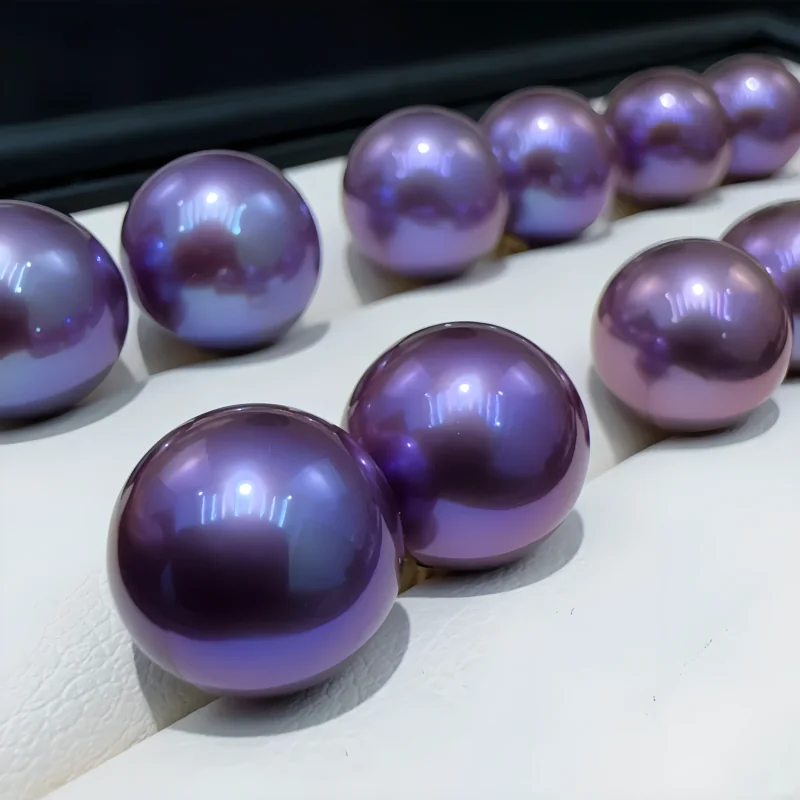
Pearls become expensive when several desirable qualities are difficult to find at the same time. A large pearl is not automatically costly. A round pearl is not automatically fine. And a real pearl is not automatically valuable. The highest prices usually appear when pearl type, size, luster, surface quality, shape, color, nacre quality, and matching all line up in a scarce combination.
That is the simplest way to understand pearl pricing: you are usually paying for rarity multiplied by quality, not for one feature alone.
Why Can Two Real Pearls Have Completely Different Prices?
“Real pearl” only tells you that the material is a genuine pearl rather than an imitation. It does not tell you whether the pearl is natural or cultured, what type of mollusk produced it, how large it is, how strong its luster is, how clean its surface is, or how rare that particular combination may be.
This is why two genuine pearls can sit in very different price categories. The Gemological Institute of America (GIA) describes pearl quality through seven value factors: size, shape, color, luster, surface, nacre, and matching. These factors help explain why pearls that look broadly similar at first glance can differ sharply in desirability and value.
If you want a step-by-step method for comparing those characteristics, see our guide to evaluating pearl value. Here, the more important question is why the best combinations become scarce enough to command high prices.
1. Pearl Type Sets the Starting Point
Before quality is compared, the pearl category already changes the supply structure.
Natural pearls form without deliberate human initiation and are far rarer in today’s market than cultured pearls. Cultured pearls are also genuine pearls, but pearl farmers intentionally begin the cultivation process. Because cultured production makes pearls far more available, natural pearls—especially important examples with documented identity or provenance—can occupy a very different value category.
Among cultured pearls, freshwater, Akoya, Tahitian, and South Sea pearls also have different typical sizes, colors, cultivation structures, and market availability. GIA notes that South Sea cultured pearls have greater potential for large sizes because they grow in a larger mollusk, while different pearl types have their own normal appearance and quality expectations.
So a useful rule is: compare like with like first. A 9 mm freshwater pearl and a 9 mm South Sea pearl should not be assumed to have the same rarity simply because their diameters match.
2. Luster Is One of the Biggest Visual Reasons a Pearl Becomes Valuable
Luster is the quality of the light reflected from a pearl’s surface and underlying nacre. Fine luster makes reflections look bright, sharp, lively, and dimensional. Weak luster can make a pearl look flat, hazy, or chalky even when the pearl is large and round.
GIA describes luster as potentially the most important of the seven pearl value factors. Within the same pearl type, stronger luster generally supports higher value when the other factors are comparable.
This matters because size is easy to advertise, while luster is harder to reduce to one number. A buyer who shops only by millimeters can therefore pay more for a larger pearl that is visually less impressive than a smaller pearl with exceptional luster.
For a more practical visual method, our pearl luster guide explains how to compare reflection sharpness, contrast, and consistency rather than relying on vague words such as “high luster.”
3. Large Pearls Become Expensive When Quality Survives the Increase in Size
When other factors are equal, larger pearls of the same type are generally rarer and more valuable. But “larger” does not work as a price rule by itself.
The difficult part is finding a large pearl that is also attractive in the other important dimensions. As size rises, buyers still want good luster, acceptable nacre, an attractive shape, a reasonably clean surface, and—if the pearl belongs in a strand or pair—good matching.
That creates a scarcity filter. A large pearl may be uncommon; a large, round, clean, high-luster pearl is less common still. Add a desirable natural color and a close match to many other pearls, and the pool narrows again.
This is why pearl pricing often feels nonlinear. The price premium is not simply “one more millimeter.” It is the difficulty of finding the larger size without losing the other qualities buyers want. For more context on comparing diameters across pearl types, see our pearl size guide.
4. Roundness and Surface Cleanliness Are Expensive Because Nature Does Not Produce Them on Command
Pearls grow inside living mollusks, so variation is normal. Their surfaces may show pits, wrinkles, growth features, abrasions, or other characteristics. Their shapes may be round, near-round, oval, drop, button, circled, or baroque.
GIA notes that perfectly spherical cultured pearls are rare and that round pearls are generally the most valuable shape when other factors are equal. Cleaner surfaces also tend to support higher value because severe or numerous surface characteristics can reduce beauty and, in some cases, affect durability.
But this does not mean every non-round pearl is low quality. A beautifully formed drop, an attractive oval, or a dramatic baroque pearl can be highly desirable. Shape should be judged within its intended category, not against a rule that says every good pearl must be round.
Our pearl shape guide goes deeper into those distinctions.
5. Color Can Add a Premium, but Only When the Market Actually Values It
Pearl color is more complicated than “white is good” or “rare color is expensive.” Bodycolor, overtone, orient, intensity, evenness, pearl type, and whether the color is natural or treated can all matter.
GIA specifically notes that supply and demand can influence the value of certain pearl colors, and that fashion and cultural preferences also affect desirability. This means color premiums are partly market-dependent rather than fixed forever.
A scarce natural color with strong luster may command a premium in one pearl category, while an unusual color that buyers do not particularly want may not. Color should therefore be understood as rarity plus desirability, not rarity alone.
6. Nacre Quality Matters Because Beauty and Durability Are Connected
Nacre is central to the appearance of nacreous pearls. Its structure contributes to the visual depth and luster that make pearls distinctive, and poor nacre quality can also create durability concerns.
GIA has expanded its nacre classification approach to describe nacre continuity and quality more precisely. In practical buying terms, chalkiness, obvious nucleus visibility, broken nacre, or other signs of poor nacre deserve more attention than a simple marketing grade.
Nacre should not be reduced to one universal thickness rule for every pearl type. Different cultured pearl categories have different structures, so comparisons should be made in the right context.
7. Matching Is a Hidden Scarcity Multiplier
A single fine pearl can be rare. Finding two that look right together is harder. Finding dozens that form a harmonious strand is harder again.
GIA treats matching as a separate value factor for multi-pearl jewelry because a strand, pair, or set must be considered as a group. Matching may involve size, shape, color, luster, surface appearance, nacre, and even drilling alignment.
This is one reason a well-matched necklace can cost much more than the simple sum of a group of roughly similar loose pearls. The material had to be sorted from a much larger population before the final set could exist.
Matching also explains why small differences that seem trivial when looking at one pearl can become obvious across an entire necklace. Consistency itself is a scarce quality.
The Real Price Jump Happens When Rare Qualities Stack Together
The most important idea is that pearl value factors do not operate in isolation.
Imagine four pearls of the same general type:
| Pearl | What It Has | Why the Price May Differ |
|---|---|---|
| A | Large size, but soft luster and visible surface marks | Size alone does not create top quality |
| B | Smaller size, excellent luster, clean surface | May look finer despite being smaller |
| C | Large, round, strong luster, clean surface | Several desirable traits are scarce together |
| D | Same strengths as C, plus rare desirable color and close matching in a strand | The scarcity compounds again |
This “stacking” effect is why the top end of a pearl category can become disproportionately expensive. You are not paying independently for size, then roundness, then luster. You are paying for the shrinking probability of finding all of them in the same pearl—or across every pearl in the same piece.
Does a Higher Grade Automatically Mean a More Expensive Pearl?
Not necessarily.
Seller grades such as A, AA, AAA, or AAAA are not one universally enforced global standard. A grade is most useful when you know what the seller means by it and when you compare pearls within a similar type, size, and shape category.
A smaller AAA pearl can therefore cost less than a larger AA pearl. A high-grade freshwater pearl can cost less than a lower-grade South Sea pearl. A baroque pearl with extraordinary color may be more desirable than a round pearl that looks lifeless.
Our pearl grading guide explains how MJ Pearls uses A–AAAA ranges and why grade is only one part of price.
Finished Pearl Jewelry Includes Costs Beyond the Pearl Itself
When you buy a finished necklace, ring, pendant, bracelet, or pair of earrings, the retail price is not just a valuation of the pearls.
The final price can also reflect precious metal, clasps, diamonds or other stones, drilling, matching, stringing, knotting, setting, design work, labor, quality control, packaging, certification, distribution, retail overhead, and brand positioning.
This distinction is important: an expensive piece of pearl jewelry is not automatically evidence that the pearl itself is equally rare. Conversely, a relatively simple setting can contain exceptionally fine pearls.
If your goal is to buy finished jewelry, compare both the pearl specifications and the construction of the piece. You can browse our pearl jewelry collection to see how pearl type, size, shape, and design can create very different finished products.
Are Expensive Pearls Always Better?
No. “More expensive” and “better for you” are different questions.
If your priority is mirror-like luster, you might prefer a smaller pearl with exceptional reflections over a larger but softer-looking pearl. If you love organic shapes, paying a premium for perfect roundness may add little value to your enjoyment. If you are designing jewelry, a slightly less clean surface may be perfectly acceptable when the setting hides the marks.
The best purchase is therefore not automatically the pearl with the highest theoretical value. It is the pearl whose expensive characteristics are the ones you actually care about.
How Can You Tell Whether a High Pearl Price Is Justified?
Start by asking what is genuinely scarce about the pearl. Compare the pearl with others of the same type and similar size. Look closely at luster, surface, shape, color, and nacre rather than relying only on a grade label. For pairs and strands, judge the quality of the matching. Ask whether color treatment or other relevant treatments have been disclosed. For unusually valuable, rare, or identity-sensitive pearls, independent laboratory documentation may also be appropriate.
Most importantly, separate pearl quality from retail price. A high price can be justified by rarity and quality, but it can also include jewelry materials, craftsmanship, distribution, and brand markup. Understanding those layers makes comparison much easier.
What Makes Pearls Expensive? The Short Answer
Pearls become expensive when desirable characteristics are difficult to obtain together. Pearl type creates the baseline; size, luster, surface quality, shape, color, nacre, and matching narrow the available supply. Natural origin can add another major rarity premium, while finished jewelry adds material, craftsmanship, and retail costs.
So the useful question is not simply, “Why is this pearl expensive?” It is:
“Which parts of this pearl are genuinely rare, and do those rare qualities matter to me?”
Once you can answer that, pearl prices become much easier to understand.
FAQ
Are all real pearls expensive?
No. Genuine cultured pearls are available across a wide range of prices. Pearl type, quality, size, rarity, matching, and jewelry construction all influence the final cost.
Why are natural pearls more expensive than cultured pearls?
Natural pearls form without deliberate cultivation and are far rarer in the modern market. Fine natural pearls with confirmed identity, attractive quality, and important provenance can therefore command very high prices.
Why are South Sea pearls often expensive?
South Sea cultured pearls have a high market position partly because they can reach large sizes and fine examples combine size with attractive luster, surface, shape, color, and nacre quality. The strongest price premiums appear when several of those scarce qualities occur together.
Are perfectly round pearls always the most expensive?
Round pearls are generally more valuable when other factors are equal, but the other factors are rarely exactly equal. A round pearl with weak luster or poor surface quality can be less desirable than a fine drop, oval, or baroque pearl.
Does a certificate make a pearl expensive?
A laboratory report does not create the pearl’s quality. Its value is in independently documenting characteristics such as identity, origin, treatments, or classification when those facts matter to the purchase. Certification is most useful when the information being verified is important enough to justify it.