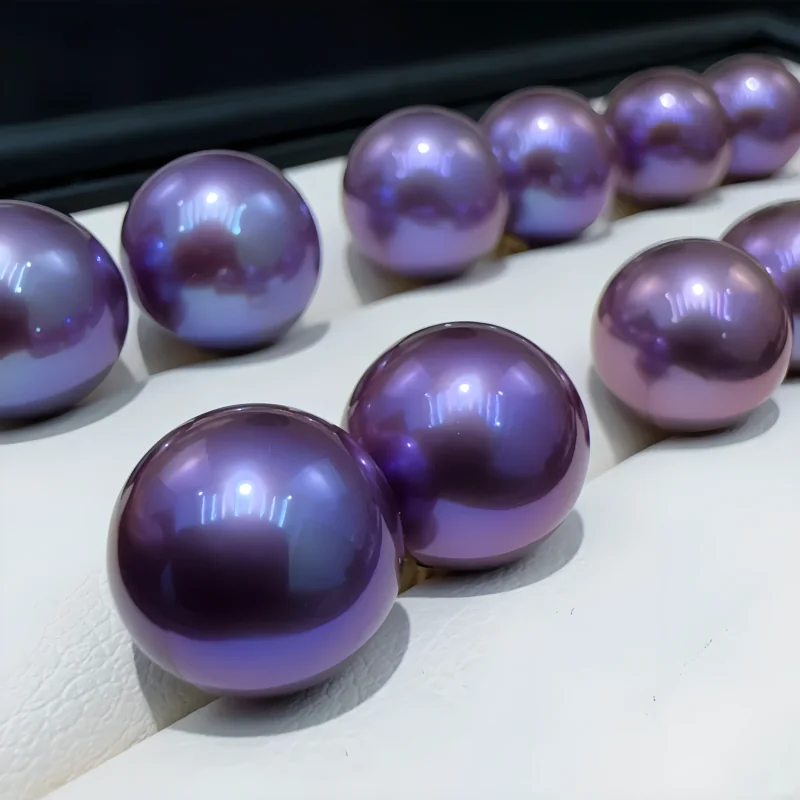
Two sellers can quote very different prices for pearls that seem identical on paper: the same pearl type, the same millimeter size, the same color, and even the same “AAA” grade. That does not automatically mean one seller is overpriced or the other has found a bargain.
The more common explanation is that the two quotes are not actually describing the same product standard. Pearl pricing depends on a combination of visible quality, rarity, matching, treatment status, preparation, quantity, and commercial terms. Short descriptions often hide those differences.
The practical rule is simple: compare the specification behind the quote, not just the headline grade and price.
Why apparently similar pearl quotes are often not comparable
Pearls are natural organic gems, not standardized manufactured components. Even within one harvest or size category, individual pearls can vary in luster, surface cleanliness, roundness, color, nacre appearance, and overall consistency.
GIA describes pearl quality through seven value factors: size, shape, color, luster, surface, nacre, and matching. These factors help explain why two lots with the same basic label can still have very different value. You can see the framework in GIA's Pearl Quality Factors guide.
For a buyer, this means “8–9 mm white freshwater pearls” is not yet a complete specification. It identifies a broad category, but not the quality level inside that category.
The grade name may be the same while the seller's standard is different
This is one of the biggest reasons pearl quotations become confusing.
Terms such as A, AA, AAA, AAAA, “top quality,” or “gem quality” are often commercial grading labels. They can be useful inside one seller's inventory, but the letters are not enough to make a reliable cross-seller comparison. Different sellers may set different thresholds for luster, blemishes, roundness, and matching.
That is why an “AAA” strand from Seller A should not automatically be treated as equivalent to an “AAA” strand from Seller B. The useful question is not how many A's appear in the description, but what visible standard those letters represent.
Our Pearl Grading Guide explains the quality ranges MJ Pearls uses and why seller-assigned grades should always be read together with their actual grading criteria.
Small quality differences can create large price differences
When pearls are already in the better part of a harvest, improvement becomes progressively harder to obtain. Moving from an ordinary commercial strand to a brighter, cleaner, rounder, more evenly matched strand can require rejecting many more pearls during sorting.
This is why price does not always rise in a smooth, linear way. A modest visual improvement may represent a much scarcer selection.
For example, two strands may both be described as 8–9 mm round white freshwater cultured pearls. One may have slightly softer luster, more visible surface marks, and noticeable variation from pearl to pearl. The other may have sharper reflections, cleaner faces, tighter roundness, and stronger matching. Those differences can be difficult to communicate in a short product title but very obvious in a side-by-side inspection.
If you want a deeper explanation of how these characteristics affect value, see our Pearl Value Evaluation guide.
Matching can add cost even when the individual pearls look similar
Matching is especially important for earrings, pairs, bracelets, and full strands. GIA treats matching as a separate value factor because a multi-pearl item is judged not only by the quality of each pearl, but also by how consistently the pearls work together.
A seller assembling a tightly matched strand may need to sort through far more pearls to obtain consistent size, shape, color, luster, and surface appearance. A cheaper quote may allow a wider tolerance. Neither option is automatically wrong; they are simply different specifications.
This is particularly important in wholesale buying. A buyer ordering pearls for repeat production may care as much about lot-to-lot consistency as about the appearance of one sample strand.
Treatment and color origin can change what is being quoted
Two pearls can share a similar finished color without having the same color origin or post-harvest history. Pearls may undergo processes or treatments such as bleaching, dyeing, irradiation, coating, or other appearance-enhancing procedures.
A treated cultured pearl is still a cultured pearl, but treatment information can matter to value, care, and buyer expectations. The U.S. Federal Trade Commission specifically advises sellers to disclose pearl treatments when they are not permanent, create special care requirements, or significantly affect value. See the FTC's guidance on advertising gemstones and pearls.
When color has a meaningful effect on the quote, ask whether it is natural or treated and what exactly has been done. Our Pearl Treatments Guide explains the main processes in more detail.
The quote may include different levels of preparation and service
A pearl quote is sometimes a price for the raw material only. In other cases, the seller may already be including work that another quotation lists separately.
Depending on the order, the quoted scope may include:
- sorting to a tighter quality range;
- matching pairs or complete strands;
- full drilling, half drilling, or a specified hole size;
- selection for a particular color or overtone;
- custom size tolerances;
- re-sorting or replacement of unsuitable pearls;
- certificate or laboratory-report costs;
- jewelry assembly, findings, or precious metal;
- custom packaging, branding, inspection, or production services.
If one seller is quoting undrilled loose pearls and another is quoting carefully matched, drilled, production-ready material, the price difference is not a clean comparison of the pearls alone.
Quantity and tolerance can change the unit price
Wholesale quotations also depend on how difficult the requested quantity is to fill.
A seller may be able to offer a lower unit price when the buyer accepts a broader range of shape, color, or surface characteristics. A very narrow specification can be more expensive because fewer pearls from the available stock qualify.
The same applies to quantity. A small sample order, a one-off matched pair, a repeat production lot, and a large mixed-grade order do not necessarily carry the same sorting cost or commercial structure.
When requesting wholesale prices, it is therefore useful to state both the quantity and the acceptable tolerance. You can browse examples of material specifications in our wholesale pearl selection.
Business model affects price, but price alone does not reveal quality
Seller prices can also reflect different sourcing chains, inventory risks, service levels, return policies, labor costs, branding, showroom overhead, and target customers. A retail jewelry brand, a specialist pearl dealer, and a material wholesaler are not operating the same business model.
However, this should not be simplified into “the cheaper seller is closer to the source” or “the more expensive seller has better pearls.” Either conclusion can be wrong.
A low quote may be excellent value, or it may reflect a wider quality tolerance. A high quote may reflect exceptional selection, or it may include costs unrelated to pearl quality. The quote itself cannot tell you which explanation is correct.
You need the specification.
How to compare pearl quotes fairly: use the same checklist for every seller
Before deciding that one quote is high or low, normalize the information. Ask each seller to quote the same specification.
| What to confirm | Why it matters |
|---|---|
| Pearl identity and type | Freshwater, Akoya, Tahitian, South Sea, natural, cultured, and imitation products are not equivalent categories. |
| Exact size range | A narrow size tolerance may be harder to supply than a broad nominal range. |
| Shape standard | Round, near-round, oval, button, and baroque material have different rarity structures. |
| Luster | Brightness and sharpness of reflection can create a major difference in appearance and value. |
| Surface quality | Ask how much visible blemishing is acceptable and whether structural defects are excluded. |
| Color and overtone | Confirm the target color range and whether treatment or natural-color status matters. |
| Nacre / overall condition | Nacre quality is part of pearl evaluation, especially for bead-cultured pearls. |
| Matching | Pairs and strands can cost more when size, shape, color, luster, and surface must be tightly coordinated. |
| Drilling and preparation | Undrilled, half-drilled, full-drilled, and custom-drilled pearls are not the same deliverable. |
| Quantity and unit | Confirm whether the quote is per pearl, per pair, per strand, per lot, or for finished jewelry. |
| What the price includes | Certificates, findings, metal, matching, custom work, packaging, shipping, duties, or taxes may be included differently. |
Reference photos and videos can make this comparison much more reliable, especially when the seller shows the actual lot rather than a generic representative image. For repeat wholesale orders, a retained physical sample or clearly documented reference standard can be even more useful.
Three warning signs when a quote is difficult to evaluate
1. The seller gives only a grade label
“AAA” without a grading definition tells you very little about how the pearl will actually look. Ask for the seller's criteria and close-up images.
2. Important specifications change when the price is challenged
If a lower price suddenly comes with a wider size range, lower roundness, more blemishes, weaker matching, or different drilling, it is a different quote rather than a true price reduction on the same item.
3. The seller avoids questions about treatment, identity, or what is included
Not every pearl needs a laboratory report, but a professional seller should still be able to explain what is being sold and what the quoted price covers. For high-value or unusually represented pearls, independent laboratory documentation may be appropriate. GIA's pearl identification and classification overview shows the types of characteristics a laboratory can evaluate.
A lower quote is useful only if it is for the same requirement
The best pearl quote is not automatically the cheapest one. It is the quote that meets the required appearance, consistency, treatment expectations, preparation, quantity, and service level at a price that makes sense for the buyer.
When two quotations differ sharply, first assume that something in the specification may be different. Put both offers into the same comparison framework, request missing information, and then judge the price.
Once the specifications are genuinely aligned, a remaining price difference becomes much more meaningful. At that point, you are comparing sellers rather than accidentally comparing different pearls.
Frequently Asked Questions
Does a cheaper pearl quote always mean lower quality?
No. A lower quote can come from a different sourcing or business model, a broader quality tolerance, different included services, or simply more competitive pricing. You need to compare the actual pearl specification before drawing a conclusion.
Is AAA quality the same from every pearl seller?
No. Commercial letter grades are not reliably comparable unless the seller defines the standards behind them. Compare luster, surface, shape, size, color, nacre, and matching rather than relying on the grade label alone.
Why can two 8–9 mm pearl strands have very different prices?
Size is only one part of value. The strands may differ in pearl type, luster, surface cleanliness, roundness, color, nacre quality, matching, treatment status, strand length, drilling, or overall selection standard.
Do I need a certificate to compare pearl quotes?
Not for every purchase. Clear specifications, grading criteria, and representative images are often enough for ordinary commercial buying. Independent laboratory reports become more useful when identity, treatment, natural origin, or a high-value quality claim materially affects the purchase.
What should I send suppliers if I want truly comparable quotes?
Send one specification sheet covering pearl type, size range, shape, luster, surface tolerance, color, matching, treatment requirements, drilling, quantity, and included services. Reference images or an approved sample can further reduce ambiguity.