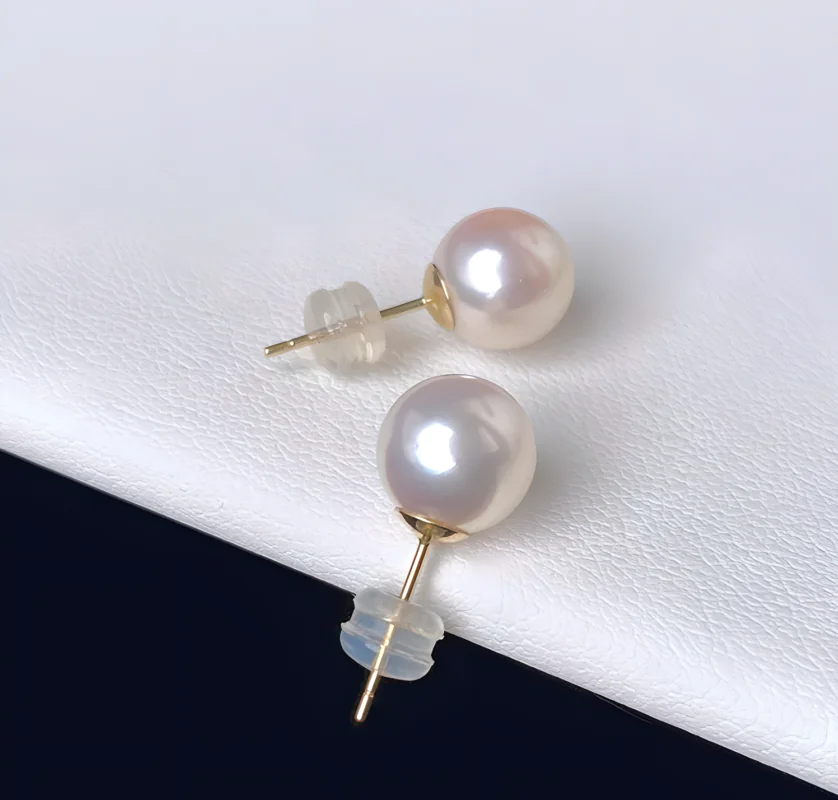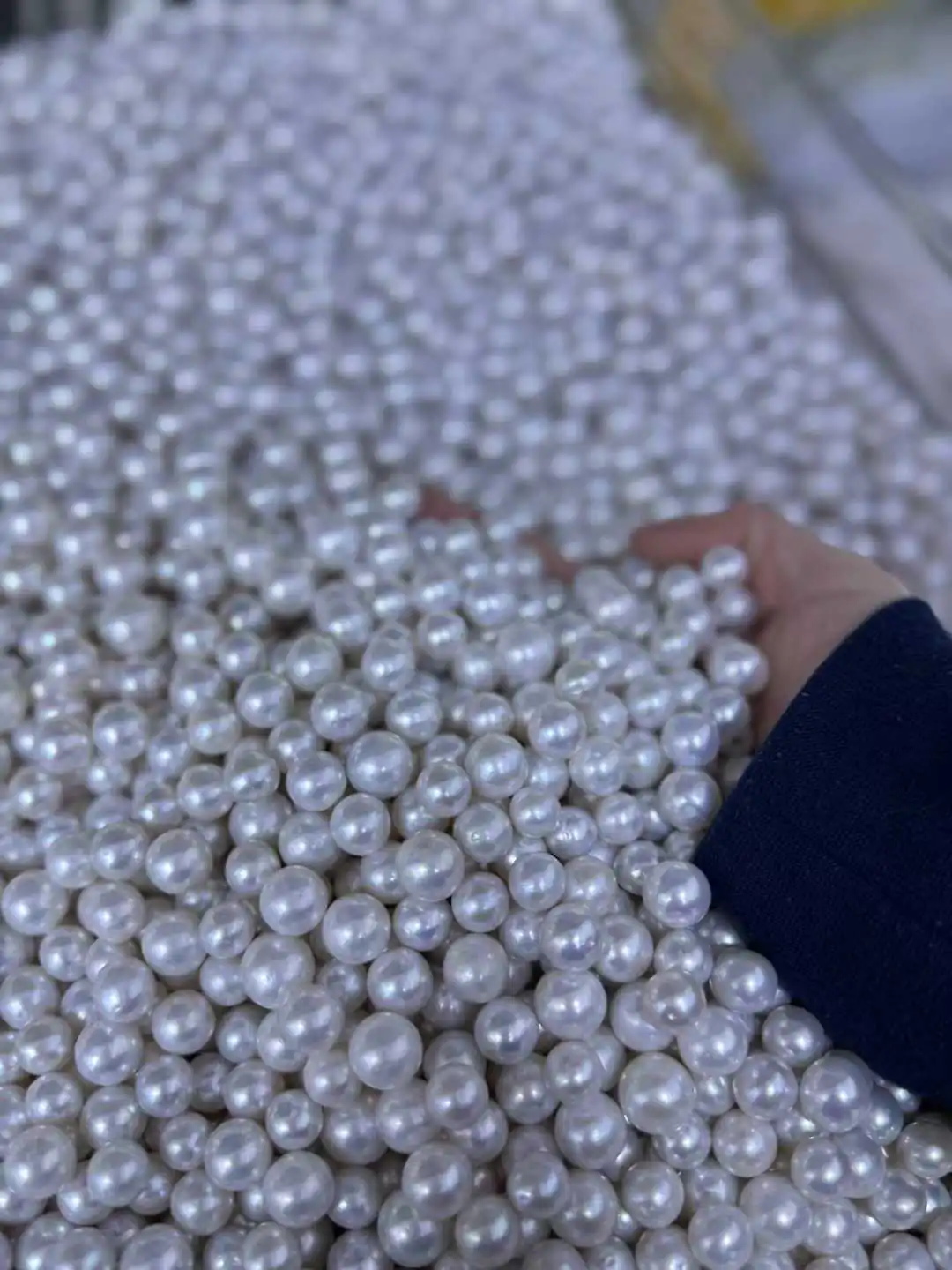
If you are trying to decide whether a pearl is real, start with the terminology. Cultured pearls are real pearls. The practical comparison in most jewelry shopping is between a genuine pearl formed by a mollusk and an imitation pearl manufactured to look like one.
Visual inspection can screen out many obvious imitations, but no single home test proves authenticity, and appearance alone cannot answer every pearl-identification question.

What “real pearls” actually means
A natural pearl forms in a mollusk without deliberate human initiation. A cultured pearl also forms in a mollusk, but people intentionally start or assist the process. An imitation pearl is a manufactured product—often glass, plastic, shell, or another bead with a pearlescent coating.
That means “cultured” does not mean fake. It also means that identifying a pearl as genuine does not automatically tell you whether it is natural or cultured, freshwater or saltwater, untreated or treated, or valuable.
What visual inspection can realistically tell you
Visual methods are most useful for detecting manufacturing clues: a separate coating, exposed bead core, repeated molded texture, suspicious drill-hole edges, or mechanically identical surface patterns across a strand. They become more useful when several independent clues point in the same direction.
1. Examine the surface under good light and magnification
Genuine nacre commonly shows subtle texture and layered optical behavior. Imitations may appear unusually glassy, molded, grainy, glittery, or coated. But do not use “imperfections mean real” as a rule: fine cultured pearls can have very clean surfaces, and sophisticated imitations can deliberately include irregularity.

A stronger warning sign is repeated manufacturing texture—for example, many beads sharing the same surface character in a way that looks mechanically reproduced rather than biologically variable.
2. Judge luster by depth, not simply by shine
Real pearl luster often looks layered, with reflections seeming to come from within the nacre as well as the surface. Some imitation pearls have a flatter, paint-like shine.
However, luster is not proof. Good imitation coatings can produce convincing iridescence. Use luster together with surface, drill-hole, and strand-level clues.
3. Inspect drill holes and worn edges carefully
Drill holes are among the most useful visual areas because they interrupt the outer surface. Look for:
- a thin film lifting from a different core,
- chipped or ragged coating around the opening,
- pooled coating,
- a sharp change between a pearlescent skin and the bead underneath,
- wear exposing a non-pearl core.
A clean drill hole does not prove authenticity, and a damaged surface does not automatically prove imitation. Genuine cultured pearls can themselves be coated or damaged. The key question is what material appears underneath.
4. Compare the whole strand, not one pearl
Real cultured pearl strands can be extremely well matched, so uniformity alone is not proof of imitation. What deserves more scrutiny is mechanical repetition across many beads: identical texture, identical coating behavior, repeated molded marks, or an unnaturally uniform finish with no biological variation.
Conversely, small differences in overtone, surface character, shape, or reflection can support the interpretation that a strand contains biological pearls, but those differences still do not prove authenticity by themselves.
5. Treat color as a question, not a verdict
Real cultured pearls can be naturally white, cream, pink, peach, lavender, golden, gray, green, or dark, depending on pearl type. They can also be dyed, irradiated, coated, or otherwise treated.
Therefore, an unusual color does not mean “fake.” Color concentration around drill holes, cracks, or pits may raise a treatment question, but a dyed cultured pearl is still a real pearl. Authenticity and color origin are separate questions.
6. Weight and temperature are supporting clues only
Glass imitations can feel cool and heavy. Plastic can feel light. Real pearls also vary in weight according to size and internal structure. Temperature changes quickly once a bead is held.
Use these clues only as supporting observations, never as a final verdict.
7. The tooth or friction test is not proof
Gently rubbing a pearl against the edge of a tooth or against another pearl may produce a slightly gritty sensation because of surface structure; some imitations feel very smooth. But coatings and surface wear can confuse the result, and repeated rubbing can damage jewelry.
If the pearl is valuable, skip casual friction tests and use non-destructive professional examination.
Stronger, moderate, and weak clues
Stronger clues for imitation
- A clearly separate pearlescent film peeling from a glass/plastic/non-pearl core.
- Repeated molded or coating features across many beads.
- Wear that exposes obviously different manufactured material beneath the surface.
Moderate clues
- Unnaturally repetitive surface texture.
- Suspicious coating buildup around several drill holes.
- Very uniform paint-like surface behavior combined with other manufacturing clues.
Weak clues when used alone
- Perfect roundness.
- A clean surface.
- High shine.
- Cool temperature.
- Heavy weight.
- Grit in a tooth test.
- Slight differences between beads.
A safe at-home screening sequence
- View the pearl under neutral light and rotate it.
- Magnify the surface if possible.
- Inspect every available drill hole and worn edge.
- Compare several pearls rather than one bead.
- Note luster, color, weight, and temperature only as supporting clues.
- Combine the evidence instead of relying on one “trick.”
- Stop when visual evidence stops; do not use destructive tests.
What visual inspection cannot reliably determine
Natural versus cultured
A genuine pearl may be natural or cultured. Internal growth structure is often needed to separate them confidently, and laboratories use methods such as X-radiography.
Freshwater versus saltwater in every case
Some pearls have typical visual tendencies, but appearance alone is not a universal proof of environment or species.
Exact nacre thickness
You may notice obvious nacre problems, but a casual visual check does not provide a precise nacre measurement.
Natural color versus every treatment
Some treatments leave clues; others may require laboratory methods. A photograph cannot reliably establish all treatment history.
Value
Authenticity is only one part of value. Luster, surface, nacre, shape, size, color, matching, rarity, and jewelry construction all matter.
Can a jeweler tell if pearls are real?
An experienced jeweler or pearl dealer can often identify obvious imitations by surface and construction clues and can advise whether laboratory testing is warranted. But “real pearl” is only the first identification level. High-value questions about natural origin, treatment, or specific pearl type may still require a specialist laboratory.
How to tell if freshwater pearls are real
Use the same non-destructive workflow: surface, drill holes, luster behavior, and comparison across the strand. Do not assume irregular shape means freshwater or that roundness means saltwater. Modern freshwater cultured pearls can be extremely round and lustrous.
Avoid destructive pearl tests
Do not scratch, burn, cut, dissolve, or aggressively scrape a pearl to “prove” what it is. Those methods can permanently damage genuine pearls and still may not answer the more important identification questions.
When home tests are not enough
Professional testing is appropriate when the result materially affects value—for example, a claimed natural pearl, an expensive strand, a significant natural-color claim, or a disputed treatment/origin question. A laboratory can examine internal structure and other properties that are not visible at home.
FAQ
How can you tell if pearls are real or fake at home?
Use several non-destructive clues together: inspect the surface under magnification, examine drill holes and worn edges, compare the entire strand, and evaluate luster. No single home test is definitive.
Are cultured pearls real pearls?
Yes. Cultured pearls are genuine pearls formed in a mollusk with human assistance.
Do real pearls always have imperfections?
No. Fine cultured pearls can have very clean surfaces. Surface perfection or imperfection alone does not establish authenticity.
Does the tooth test prove a pearl is real?
No. It is only a rough texture clue and can be misleading. It should never override stronger visual or laboratory evidence.
Are shell pearls real pearls?
“Shell pearl” is commonly used for manufactured imitation products made from a shell-based bead or material with a pearlescent coating. The term should not be confused with a genuine cultured pearl simply because shell material is involved.
What is the most reliable test for expensive pearls?
For high-value or ambiguous cases, professional gemological examination is more reliable than home screening, especially when natural-versus-cultured status, treatment, or origin materially affects value.