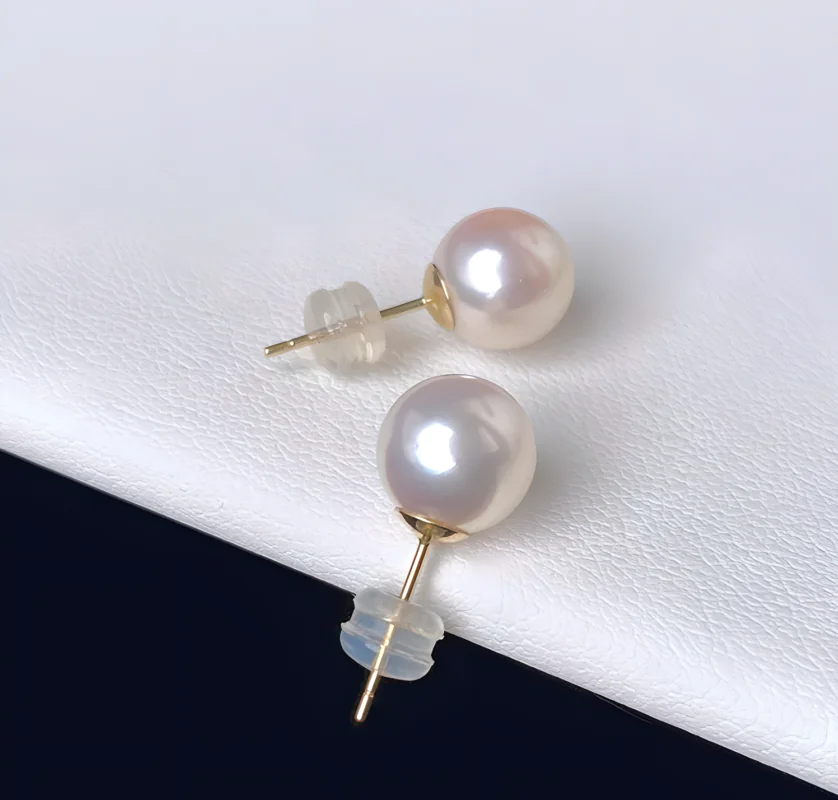
The most commonly discussed pearl treatments are bleaching, tinting or toning, dyeing, irradiation, heating or maeshori-type lustre enhancement, optical brightening, coating, and filling or impregnation. They do not all do the same thing. Some make a pearl look whiter or more even, some deliberately change its color, and others alter the surface or make imperfections less visible.
That distinction matters because the word treated can sound more alarming than it should. A treated cultured pearl is still a real cultured pearl. The useful questions are what was done, what part of the appearance it changed, how stable the result is, and whether the treatment was described honestly.
GIA notes that pearls may undergo routine post-harvest processes such as bleaching, maeshori and optical brightening, while laboratories also test for treatments including dyeing, irradiation, coating, filling and impregnation. In other words, “pearl treatment” is not one single process or one single level of intervention.
First, Separate Routine Processing From Appearance-Changing Treatment
Most pearls are not taken straight from the mollusk and placed into finished jewelry without any preparation. They may be washed, sorted, drilled, matched, and polished before sale. Those steps are better understood as normal processing or manufacturing.
Treatment becomes more important to the buyer when a process intentionally changes a pearl’s color, lustre, surface appearance, or the visibility of defects. The boundary is not always identical in every trade standard. For example, light polishing may be regarded as ordinary finishing, while more aggressive surface working or the application of a coating is a different matter.
If you want the broader background first, our guide to cultured pearl treatments and enhancements explains how post-harvest processing fits into the pearl trade.
The Main Pearl Treatments at a Glance
| Treatment | Main purpose | Typical visual effect | What buyers should know |
|---|---|---|---|
| Bleaching | Reduce stains, pigments, or uneven color | Cleaner, lighter, more uniform appearance | Very common in light-colored cultured pearls |
| Tinting / toning | Subtly adjust hue | Often a softer rose or warmer tone | Often discussed in connection with Akoya processing |
| Dyeing | Add or substantially change color | Black, blue, gold, vivid fashion colors, and more | Important when natural color affects value |
| Irradiation | Modify color | Often gray, blue, or darker effects | Visual identification alone may be unreliable |
| Heating / maeshori-type processing | Improve color or lustre | Cleaner color or brighter presentation | The exact process can vary |
| Optical brightening | Increase apparent whiteness or brightness | Whiter, brighter appearance under light | Different from simply removing stains by bleaching |
| Coating / lustre enhancement | Improve surface appearance | Higher gloss or altered surface effect | Stability and care may depend on the method |
| Filling / impregnation | Reduce visibility of surface defects | Smoother-looking pits, fissures, or damaged areas | Less routine and more important to understand before buying |
1. Bleaching
Bleaching is one of the most common treatments used on cultured pearls. Its purpose is usually to reduce organic stains, unwanted pigment, or uneven coloration so the pearls appear lighter and more consistent.
This is especially relevant to white and light-colored cultured pearls. A strand may contain pearls that emerged from cultivation with slightly different cream, yellowish, or patchy tones. Controlled bleaching can help create a cleaner and more matchable commercial appearance.
Bleaching does not mean the pearl is imitation, and it does not automatically mean the pearl is poor quality. However, bleaching is still an alteration to the original appearance. Excessive or poorly controlled treatment can also be more damaging than careful processing, which is one reason the actual treatment history matters more than the word “bleached” alone.
2. Tinting, Toning, or “Pinking”
Tinting is a subtler color adjustment than full dyeing. In the Akoya trade, buyers may encounter terms such as toning, pinking, or the Japanese term choshoku. These generally refer to a light color adjustment used to create a more desirable or more consistent overtone, often in the pink-to-rose range.
The practical difference is degree. Dyeing may deliberately create a clearly different body color, while tinting is often intended to make a relatively small adjustment to an already light-colored pearl.
That does not make tinting irrelevant. If one pearl is being marketed specifically for a rare natural color while another receives its color from post-harvest adjustment, those are different product claims even if the two pearls look similar.
3. Dyeing
Dyeing introduces color to the pearl after harvest. It can deepen an existing hue, improve color uniformity, or create colors that would be uncommon or expensive in naturally colored pearls.
Dyed cultured pearls can be attractive and perfectly suitable for jewelry. The important issue is description. A black, blue, gold, chocolate, green, or other strongly colored pearl should not be assumed to have grown in that color simply because the surface looks convincing.
Some dyed pearls show clues such as color concentration around drill holes, fissures, or surface irregularities, but those signs are not a dependable universal test. Modern treatment can be subtle, and naturally colored pearls can also show uneven color. Our guide on how to judge whether pearl color is natural explains why visual clues are useful for screening but not proof.
4. Irradiation
Irradiation is used to modify pearl color, often producing gray, bluish, or darker effects. GIA research shows that the result can depend on pearl structure: in freshwater cultured pearls, irradiation can affect material within the pearl, while in bead-cultured Akoya pearls the freshwater-shell bead nucleus may darken and influence the visible appearance through the nacre.
This is one reason irradiation cannot be reduced to a simple rule such as “irradiated pearls always look black.” The result depends on the pearl type, starting material, and treatment conditions.
Irradiation also illustrates why appearance alone can be misleading. GIA has documented irradiated Akoya pearls whose treatment required a combination of microscopy and advanced analytical techniques to evaluate. A pearl may look naturally gray or blue without giving a casual observer a conclusive visual clue.
5. Heating and Maeshori-Type Lustre Enhancement
Heating can be used to alter undesirable color or improve presentation. GIA also uses maeshori as a broad term for certain post-harvest lustre-enhancement processes. The exact method is not one fixed recipe; different processors may use different combinations of heat, solvents, or other controlled steps.
This category is easy to misunderstand because “lustre enhancement” can refer to more than one thing. A process that improves the appearance of the nacre through controlled post-harvest treatment is not the same as applying a separate glossy coating on top of the pearl.
For buyers, that distinction matters more than memorizing a workshop formula. Ask whether the pearl’s lustre is primarily the result of its nacre quality or whether an additional surface-applied treatment contributes significantly to the final look.
6. Optical Brightening
Optical brightening is different from ordinary bleaching. Bleaching works by reducing or altering unwanted coloration. Optical brighteners work by absorbing ultraviolet light and re-emitting visible light, which can make a pearl appear whiter or brighter.
GIA has specifically studied optical brightening in Akoya and Chinese freshwater cultured pearls. This is a useful example of why a pearl can look “cleaner white” without the treatment simply being a stronger version of bleaching.
Optical brightening is not something most consumers can reliably identify by normal room-light inspection. Gemological laboratories may use fluorescence and spectroscopic methods when treatment identification matters.
7. Coating and Other Surface Lustre Enhancements
A coating places material on the pearl surface to change appearance. Depending on the product, it may increase apparent gloss, modify color, or mask a weaker underlying surface.
This category deserves more attention than routine whitening because the beauty of the pearl may depend partly on an added surface layer. A coating may also have different durability and care requirements from untreated nacre.
Do not assume that every bright pearl has been coated. High natural lustre comes from fine nacre structure, and excellent pearls can be intensely reflective without a surface film. Conversely, a glossy appearance by itself does not prove high nacre quality. If you are comparing quality rather than treatment, our pearl grading guide explains how lustre, surface, shape, color, size, and nacre should be judged together.
8. Filling, Impregnation, Oil, Resin, and Wax Treatments
Some treatments are used to make pits, fissures, fractures, or damaged areas less visible. Laboratories may describe these processes using terms such as filling or impregnation. Depending on the method, oils, waxes, resins, or other substances may be introduced into or applied over surface features.
These treatments are not as central to everyday pearl buying as bleaching or color enhancement, but they can matter more to durability and care. A filled or resin-treated area is not the same thing as intact nacre, and the long-term behavior of the treatment may depend on the material used.
GIA currently lists filling and impregnation among the pearl treatments it tests for. That does not mean they are present in most pearls; it means they are established enough to be part of professional treatment examination.
What About Peeling or Surface Working?
Pearls can also be physically worked. Historically and in certain repair or improvement contexts, an outer nacre layer may be removed, a blemished area may be worked, or the surface may be altered to improve appearance. GIA includes peeling among the treatment categories it can examine.
These methods are better treated as specialized or less-common interventions rather than placed beside bleaching and dyeing as equally routine treatments. Their importance lies in the fact that they remove or modify pearl material rather than merely changing color.
Are Treated Pearls Still Real Pearls?
Yes. A genuine cultured pearl does not become an imitation pearl merely because it has been bleached, dyed, irradiated, brightened, or otherwise treated after harvest.
“Real versus fake” and “treated versus untreated” answer different questions:
- Real or imitation? What is the object actually made from, and did it form as a pearl?
- Cultured or natural? Did pearl formation involve human cultivation?
- Treated or untreated? Was the pearl altered after formation or harvest?
- Natural color or treated color? Did the visible color form in the pearl, or was it modified later?
A pearl can therefore be a real cultured pearl and still have treated color. If you are trying to separate genuine nacre from imitation products, see our guide on how to tell whether pearls are real or fake.
Are Pearl Treatments Bad?
Not automatically. A better way to evaluate treatment is to ask four questions:
- What was changed? Color, lustre, surface defects, or something else?
- How much of the final appearance depends on the treatment? A mild whitening step and an opaque surface coating are not equivalent.
- Is the result stable in normal wear? Some treatments are more durable than others.
- Was the treatment represented accurately? A treated-color pearl should not be sold as a rare natural-color pearl.
This framework is more useful than simply preferring “untreated” in every situation. A buyer choosing an affordable fashion strand may be perfectly happy with dyed cultured pearls. A collector paying a premium for natural-color Tahitian or golden South Sea cultured pearls has a different reason to care about treatment.
Can You Tell Whether a Pearl Has Been Treated Just by Looking?
Sometimes you can see clues, but visual inspection alone is not reliable for every treatment.
Very bright fashion colors, color concentration in drill holes, patchy surface color, an obvious coating edge, or unusual fluorescence may raise suspicion. None of those observations automatically proves a specific treatment. Some natural pearls have uneven color, and some treated pearls are deliberately processed to avoid obvious visual clues.
Professional laboratories can use microscopy, ultraviolet fluorescence, spectroscopy, X-radiography, chemical analysis, and other methods depending on the question. GIA’s current testing list for pearls includes bleaching, heating, dyeing, irradiation, coating, peeling, filling, and impregnation.
That is why a seller’s written disclosure or an appropriate laboratory report is more useful than a home “trick” when treatment status materially affects the price.
When Should Pearl Treatments Be Disclosed?
There is no single worldwide rule that can be reduced to “every process must always be labeled the same way.” Trade standards and legal requirements vary by market.
In the United States, Federal Trade Commission guidance says sellers should disclose pearl treatment when the treatment is not permanent, creates special care requirements, or significantly affects the pearl’s value. The FTC also requires jewelry claims to be truthful and non-deceptive.
CIBJO, the World Jewellery Confederation, publishes international pearl nomenclature and disclosure standards used as an industry reference. Those standards are voluntary rather than a single global law, but they are useful when comparing terminology across the trade.
For a buyer, the practical rule is simpler: if treatment materially changes the color, surface, care, durability, or value expectation, ask for that information in writing.
A Simple Buyer Checklist
When treatment matters to your purchase, ask the seller:
- Is the color natural or treated?
- If treated, what treatment was used?
- Does the treatment affect normal cleaning or care?
- Is the treatment considered stable in ordinary wear?
- Is the description written on the invoice, product page, or laboratory report?
This is especially useful when you are paying a premium for color, buying pearls for resale, or sourcing matched strands. When browsing wholesale pearls and strands, treatment status should be considered alongside pearl type, size, shape, lustre, surface quality, and matching.
After purchase, treated or untreated pearls still benefit from conservative care. Avoid aggressive cleaners, heat, abrasion, and prolonged chemical exposure. Our pearl care guide covers the routine that is safest for most pearl jewelry.
The Bottom Line
The pearl treatments buyers are most likely to encounter are bleaching, tinting, dyeing, irradiation, heating or maeshori-type enhancement, optical brightening, coating, and filling or impregnation. Bleaching, dyeing, and irradiation are among the most widely discussed color treatments; other methods target lustre, whiteness, or surface appearance.
The key is not to divide pearls into “untreated good” and “treated bad.” Treatments vary enormously in purpose and significance. A lightly bleached cultured pearl, a dyed fashion pearl, and a coated pearl are three very different products even though all may be described as treated.
If you remember one rule, use this one: understand what the treatment changed before deciding what the treatment means.
Frequently Asked Questions
What is the most common treatment used on pearls?
Bleaching is one of the most common post-harvest treatments, especially for white and light-colored cultured pearls. It is used to reduce stains, unwanted pigment, and color unevenness. Dyeing and irradiation are also common methods for deliberate color modification.
Are dyed pearls fake?
No. A dyed cultured pearl can still be a genuine cultured pearl. “Dyed” describes a color treatment, while “imitation” describes a product that is not a genuine pearl. The important issue is whether the dyed color is represented accurately.
What is the difference between bleaching and optical brightening?
Bleaching reduces or alters unwanted coloration or organic staining. Optical brightening uses fluorescent brightening agents that absorb ultraviolet light and re-emit visible light, making the pearl appear whiter or brighter. They are different processes even though both may improve the appearance of a white pearl.
Can irradiation make pearls blue or gray?
Yes. Irradiation can be used to create gray, bluish, or darker color effects. The mechanism and final appearance depend on the pearl type and structure, so not every irradiated pearl looks the same.
Can you identify a treated pearl by the drill hole?
Sometimes a drill hole shows concentrated dye or unusual color distribution, but this is only a clue. The absence of visible concentration does not prove that a pearl is untreated, and laboratories may need advanced testing to determine color origin.
Do pearl treatments need to be disclosed?
Disclosure rules vary by jurisdiction and trade standard. In the United States, FTC guidance calls for disclosure when a treatment is not permanent, creates special care requirements, or significantly affects value. Accurate description is especially important when treatment changes a feature for which the buyer is paying a premium, such as natural color.
References
- GIA: Pearl Research — Color Treatments and Processes
- GIA: What Treatments Does GIA Test For?
- GIA Gems & Gemology: Optical Whitening and Brightening of Pearls
- GIA Gems & Gemology: Irradiated and Dyed Akoya Pearls
- U.S. Federal Trade Commission: In the Loupe — Advertising Diamonds, Gemstones and Pearls
- CIBJO: The Blue Books — Jewellery Industry Standards and Nomenclature