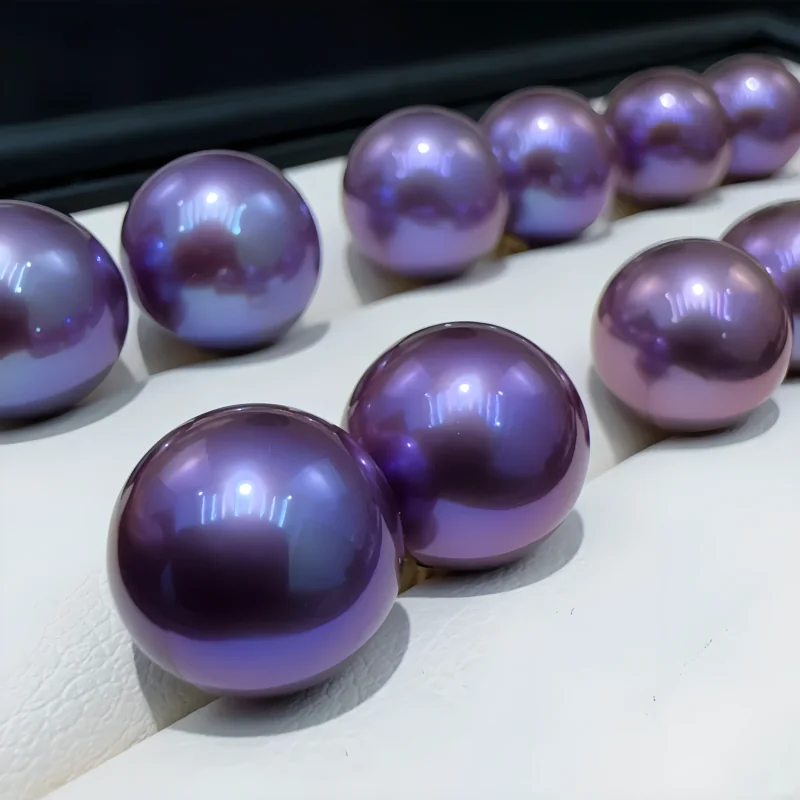
Yes—inexpensive pearls can be very worth buying. A low price does not automatically mean the pearls are fake, unattractive, or poor quality. Some cultured pearls are affordable because they are produced in larger quantities, are smaller, are not perfectly round, have minor surface characteristics, or are set in simpler jewelry.
The important question is not simply “Are these pearls cheap?” It is “Why are they cheap?” If the seller has saved money on features you do not need, the result can be excellent value. If the low price comes from weak luster, serious surface damage, unclear identity, or poor construction, the bargain may not be worth it.
A useful rule is: save on rarity and perfection before you save on beauty, condition, or honest disclosure.
Quick Answer: When Are Inexpensive Pearls a Good Buy?
| Why the pearls cost less | Usually a reasonable compromise? | What to check |
|---|---|---|
| Freshwater cultured pearl type | Often yes | Luster, surface, shape, matching, and accurate identification |
| Smaller size | Yes | Whether the scale suits the jewelry and wearer |
| Near-round, oval, button, or baroque shape | Often yes | Whether the shape looks intentional and attractive |
| Minor surface marks | Often yes | Location, severity, and whether the issue is cosmetic or structural |
| Simple silver or minimal setting | Yes | Construction quality and whether the metal is clearly described |
| Weak or chalky luster | Usually no | Compare under similar lighting before buying |
| Cracks, peeling, badly damaged nacre | No | Durability and whether damage may worsen with wear |
| Vague identity such as only “real pearl” | Be cautious | Ask whether it is cultured or imitation and what pearl type it is |
Low Price Is Not the Same Thing as Low Quality
Pearls do not have one fixed relationship between price and quality. Price can fall for several very different reasons.
GIA evaluates pearls using seven value factors: size, shape, color, luster, surface, nacre, and matching. Those factors help explain why two real cultured pearls can have very different prices. They also explain why an inexpensive pearl can still be attractive: it may give up one expensive feature while keeping the qualities you notice most when wearing it.
For example, a slightly off-round freshwater pearl may cost much less than a perfectly round pearl of otherwise similar appearance. A smaller pearl may cost less than a larger one. A strand with a few minor natural surface marks may cost less than an unusually clean strand. None of those compromises automatically makes the jewelry bad.
GIA specifically notes that freshwater cultured pearls can be highly affordable because production is large, including attractive lustrous examples in off-round shapes. That is an important distinction: affordability can come from supply and category, not from fakery.
First, Make Sure “Inexpensive Pearl” Still Means a Real Pearl
The word pearl is used loosely in retail, so identity should come before value.
- Cultured pearls are real pearls. They form inside a living mollusk after human intervention starts the process.
- Natural pearls form without human intervention and are much rarer.
- Imitation pearls are manufactured products made to resemble pearls, using materials such as glass, plastic, shell, or composites.
GIA confirms that cultured pearls are genuine pearls rather than imitations. For most ordinary jewelry shoppers, this means a low-priced cultured freshwater pearl can be completely legitimate even though it costs far less than a fine Akoya, Tahitian, or South Sea pearl.
If a listing uses only vague phrases such as “real pearl,” “natural pearl look,” “shell pearl,” or “premium pearl” without clearly identifying the material, ask for clarification. If you need a fuller buying framework, see our Pearl Buying Guide.
Why Can Genuine Pearls Be Inexpensive?
There is no single reason. In practice, lower prices often come from one or more of the following.
1. The pearls are freshwater cultured pearls
Freshwater pearls are widely produced and cover a very broad quality range. GIA describes them as one of the jewelry market's strong value categories because production volume makes attractive examples accessible at lower prices than many saltwater alternatives.
That does not mean every freshwater pearl is inexpensive or that every inexpensive freshwater pearl is good. It means freshwater is a category where limited budgets can still reach genuine pearls with attractive luster. If you are shopping for finished jewelry, our freshwater pearl jewelry collection is the most relevant commercial starting point.
2. The pearls are smaller
Within the same general pearl type and quality level, larger pearls are usually more valuable. Choosing a smaller size can therefore reduce price without requiring you to accept weaker luster or poorer condition.
This is one of the cleanest budget trade-offs. A smaller pearl with bright reflections often looks more appealing than a larger but duller pearl. For more on visual scale, see the Pearl Size Guide.
3. The shape is not perfectly round
Perfect roundness carries a premium because it is relatively difficult to obtain. Near-round, oval, button, drop, and baroque pearls can therefore offer very good value when their shape suits the jewelry.
A baroque pearl is not a failed round pearl. Its irregular shape can be the design itself. Likewise, near-round pearls may look very close to round in normal wear while costing less. If shape is the main compromise, use the Pearl Shape Guide to decide whether you are actually giving up something you care about.
4. The pearl has minor cosmetic surface characteristics
Most pearls show some natural surface features. Small pits, wrinkles, spots, or growth marks can lower value, but their practical importance depends on severity and location.
A small mark near a drill hole or on the less-visible side of an earring can be a sensible compromise. Deep cracks, severe peeling, or damage that threatens durability are different. The goal is not “zero marks at any cost”; it is to distinguish cosmetic imperfection from structural concern.
5. The jewelry itself is simple
A simple pendant, stud, or strand can cost less because there is less precious metal, fewer stones, less complex setting work, and lower design or brand overhead. That says little about the beauty of the pearl itself.
This is why two pieces using visually similar pearls can have very different retail prices. Always separate the value of the pearl from the cost of the setting, metal, workmanship, and brand.
What Should You Not Sacrifice Just to Get a Lower Price?
Budget buying works best when you deliberately give up expensive features that matter less to you. Some compromises, however, tend to make the purchase weaker rather than simply cheaper.
Protect luster first
GIA describes luster as possibly the most important pearl value factor. High-luster pearls return bright, relatively sharp reflections; weak-luster pearls look softer, hazier, or chalkier.
Luster is one of the first things the eye notices. If you must choose between a slightly smaller pearl with stronger luster and a larger pearl with a lifeless surface, the smaller pearl is often the better value.
Avoid serious nacre or surface damage
Minor natural marks are normal. Structural problems are not the same compromise. GIA notes that severe surface characteristics can affect durability and that poor nacre quality can reduce both luster and longevity.
Be cautious with visible peeling, deep cracks, exposed-looking bead areas, or very chalky surfaces. A bargain stops being attractive if the pearl's condition is already compromised.
Do not accept unclear identity
An inexpensive cultured pearl is one thing. An imitation product being described ambiguously as though it were cultured pearl is another.
The seller should be able to tell you what the pearl actually is. If authenticity matters to the purchase, read our guide on how to tell real and imitation pearls apart and remember that visual inspection has limits.
Check the construction as well as the pearls
Affordable pearl jewelry can still be assembled well. For earrings, inspect posts, backs, glue or setting security, and metal disclosure. For necklaces and bracelets, check clasp quality, drilling, thread condition, and whether the strand is constructed appropriately for its intended use.
You do not need luxury hardware, but you do want jewelry that is honestly described and made well enough for normal wear.
The Best Inexpensive Pearl Is Usually Not the One That Tries to Look Expensive
One common buying mistake is asking a very low-priced piece to imitate every premium feature at once: large size, perfect roundness, flawless surface, strong luster, rare color, precious metal, and tight matching.
At a limited budget, a more convincing piece usually makes its compromise openly.
- A small, bright pearl can look elegant without pretending to be large.
- A well-shaped baroque pearl can look intentional rather than imperfect.
- A near-round strand can give a classic impression without paying the full roundness premium.
- A simple pendant can spend more of the budget on one attractive pearl instead of elaborate metalwork.
- A pearl with one minor hidden surface mark can still look excellent from normal viewing distance.
This is why inexpensive pearls can be satisfying purchases: you are not necessarily buying “less pearl.” You may simply be buying fewer rarity premiums.
When Are Cheap Pearls Probably Not Worth It?
Low price becomes more concerning when the seller's claims and the visible product do not agree.
Be more cautious when:
- The pearls look dull or chalky even in the seller's best photographs.
- There are obvious cracks, peeling, severe pits, or damaged drill holes.
- The listing promises large, perfectly round, flawless, “top-grade” pearls at an unusually low price but gives no meaningful specifications.
- The seller relies on AAA, AAAA, “luxury grade,” or another label without explaining what it means. Pearl grading language is not perfectly standardized across unrelated sellers.
- The product identity is vague. You cannot tell whether the pearls are cultured, imitation, freshwater, saltwater, treated, or coated.
- The photos make comparison difficult. Heavy filters, extreme lighting, or a lack of close-up views can hide weak luster or surface condition.
- The jewelry construction looks disposable. A loose post, weak clasp, rough drilling, or fragile stringing can make even decent pearls a poor purchase.
The red flag is not simply “cheap.” It is a low price combined with weak information, weak condition, or claims that the seller cannot support.
A Five-Minute Test for an Inexpensive Pearl Purchase
- Confirm what it is. Cultured pearl or imitation? Freshwater, Akoya, Tahitian, South Sea, or another type?
- Look at luster. Do reflections look lively and reasonably sharp, or flat and chalky?
- Check the surface. Are the marks minor and cosmetic, or deep enough to create a condition concern?
- Identify the deliberate compromise. Smaller size? Near-round shape? Baroque form? Simple setting? Minor blemishes?
- Check matching when there is more than one pearl. Earrings and strands should look coherent unless the design intentionally mixes them.
- Inspect the jewelry construction. Check the clasp, posts, drilling, thread, metal description, and setting.
- Ignore the grade label until it is defined. Compare visible characteristics, not just letters.
- Ask whether you would still like the piece without knowing its price. A bargain you do not enjoy wearing is not good value.
If you want to understand how these variables interact at different spending levels, our Pearls by Budget guide goes deeper into the trade-offs.
Are Inexpensive Pearls Good for a First Purchase?
Often, yes. In fact, an affordable cultured pearl can be a more sensible first purchase than an expensive piece if you are still learning what size, color, shape, and style you actually enjoy wearing.
Freshwater earrings, a small pendant, a near-round strand, or a simple baroque design can let you experience real pearls without paying immediately for maximum rarity. Once you know whether you prefer crisp round pearls, organic shapes, warmer colors, larger sizes, or a certain jewelry type, spending more becomes a more informed decision.
The same logic works for gifts. A modest piece with strong luster and good construction is often safer than a larger, lower-quality piece chosen mainly because it looks more expensive on paper.
Are Inexpensive Pearls Worth Buying for Long-Term Wear?
Price alone does not determine how long pearl jewelry will remain enjoyable. Care, nacre condition, construction, and frequency of wear all matter.
Pearls are relatively soft organic gems, so even expensive pearls need thoughtful care. Avoid unnecessary contact with perfume, cosmetics, acids, and harsh chemicals; wipe pearls after wear; and maintain stringing or settings when needed.
An inexpensive cultured pearl with sound nacre, attractive luster, and proper care can remain a useful piece of jewelry for years. An expensive pearl that is mistreated can still be damaged. Purchase price does not cancel normal pearl-care requirements.
So, Are Inexpensive Pearls Worth It?
They can be one of the best-value ways to buy pearls—if the low price comes from the right compromises.
Do not assume you need to pay for the largest size, perfect roundness, flawless surfaces, rare pearl types, luxury settings, and a famous brand at the same time. Those are all potential premiums, not prerequisites for attractive pearl jewelry.
Instead, keep the things that make the purchase fundamentally good: genuine identity, visible luster, acceptable condition, honest description, appropriate construction, and a style you actually want to wear. Then save money on the premiums that matter less to you.
The best inexpensive pearl is not the cheapest pearl available. It is the pearl that explains its low price without sacrificing the qualities you care about most.
FAQ
Are cheap pearls always fake?
No. Genuine cultured pearls can be inexpensive, especially freshwater pearls, smaller pearls, off-round shapes, or pieces with simple settings. The seller should clearly identify whether the pearls are cultured or imitation.
Are inexpensive freshwater pearls worth buying?
They often can be. Freshwater cultured pearls cover a wide range of qualities and prices, and attractive lustrous examples can be relatively affordable. Judge the actual luster, surface, shape, size, matching, and construction rather than price alone.
What should I prioritize when buying cheap pearls?
Prioritize honest identity, good visible luster, sound condition, and adequate construction. It is usually safer to compromise on size, perfect roundness, minor surface marks, or setting complexity before accepting dull pearls or structural damage.
Are baroque pearls a good budget choice?
They can be. Baroque pearls do not need to imitate perfectly round pearls, so their organic shape can become part of the design. Strong luster and an attractive form can make them excellent value.
Is a smaller pearl better than a larger cheap pearl?
Sometimes. If the smaller pearl has noticeably stronger luster, better condition, or better matching, it may look more attractive in jewelry than a larger but duller pearl. Size is only one value factor.
Should I trust AAA or AAAA labels on inexpensive pearls?
Only after the seller explains the grading standard. Letter grades are not perfectly comparable across unrelated sellers. Use visible quality factors and clear specifications to make the actual comparison.