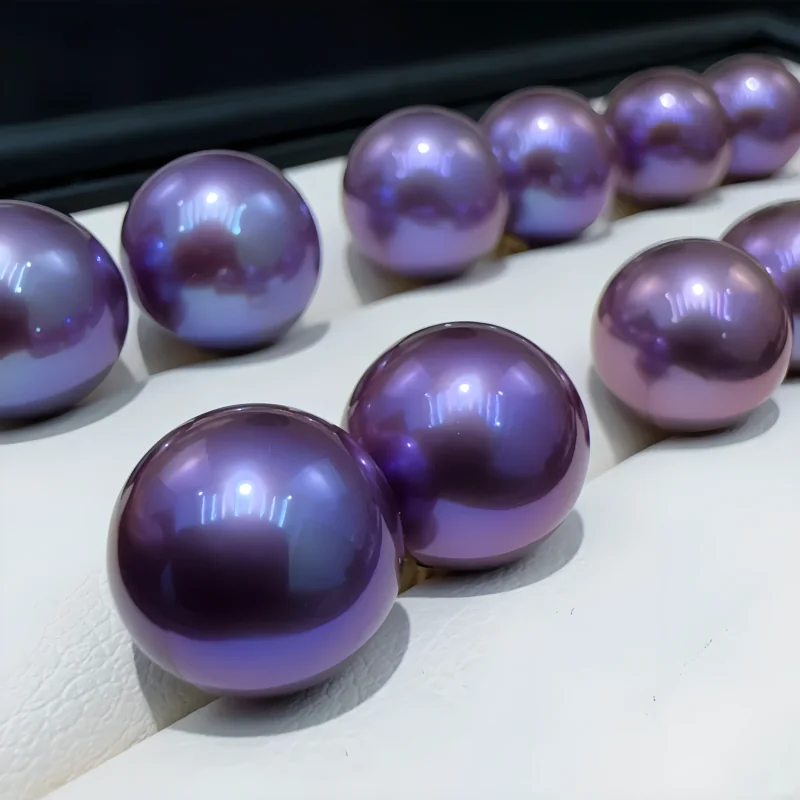
If you are buying pearls for the first time, do not begin by asking which grade is “best.” Begin with the piece of jewelry you actually want to wear, set a realistic budget, choose the pearl type that fits the look you want, and only then compare quality within that category.
A simple beginner buying order is:
- Choose the jewelry type and how you plan to wear it.
- Set a maximum budget.
- Choose between Freshwater, Akoya, Tahitian, and South Sea pearls.
- Decide your preferred size, shape, and color range.
- Compare luster, surface, nacre, and matching among similar pearls.
- Check exactly what the seller is offering: cultured or imitation, treatments, dimensions, metal, photos, and grading criteria.
- Review return terms before paying.
This sequence is more useful than memorizing dozens of pearl terms before your first purchase. It prevents a common beginner mistake: paying for one impressive feature—such as a large size, perfect roundness, or an “AAAA” label—without first deciding whether that feature matters for the jewelry you actually want.
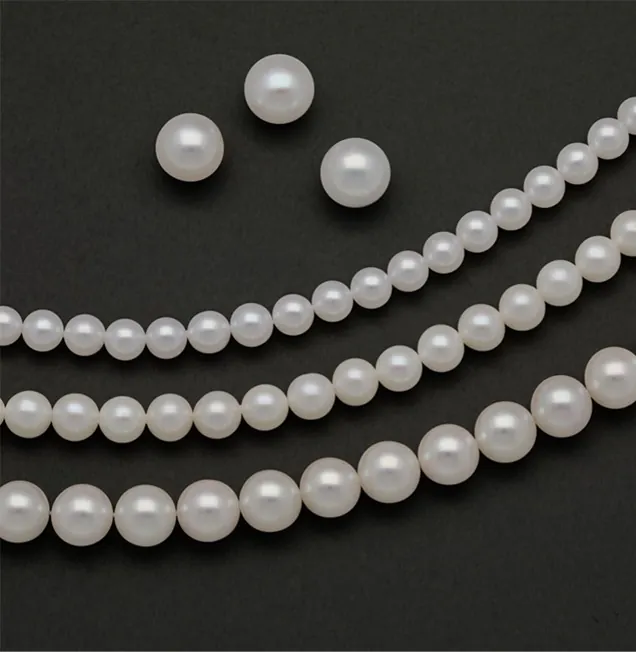
The Beginner Pearl-Buying Plan at a Glance
| Step | Question to answer | Why it comes first |
|---|---|---|
| 1. Jewelry | Studs, pendant, necklace, bracelet, or ring? | The format changes how much matching, size, and durability matter. |
| 2. Budget | What is the most you want to spend? | A clear ceiling prevents you from paying for premium features you do not need. |
| 3. Pearl type | Freshwater, Akoya, Tahitian, or South Sea? | Type strongly affects typical appearance, size range, rarity, and price. |
| 4. Style | What size, shape, and color do you actually like? | These are partly personal choices, not simply quality grades. |
| 5. Quality | How good are the luster, surface, nacre, and matching? | Now you can compare similar pearls instead of unrelated products. |
| 6. Verification | What exactly is being sold? | Clear disclosure matters more than a vague premium label. |
| 7. Purchase | Can you inspect, return, or question the item if needed? | Pearls are highly visual, so a practical return path reduces first-purchase risk. |
If you want a broader reference that explains pearl types and all major quality factors in depth, keep our complete Pearl Buying Guide open while you shop. This article is narrower: it focuses on the order of decisions a beginner should make.
Step 1: Choose the Jewelry Before You Choose the Pearl
Beginners often start with a pearl type—“Should I buy Akoya?”—before deciding what they want to wear. Reverse that order.
A pair of stud earrings needs two pearls that look harmonious together. A pendant can place nearly the entire visual focus on one pearl. A full necklace may contain dozens of pearls, so matching, total material, clasp quality, stringing, and length all become part of the purchase.
Ask yourself three questions:
- How often will I wear it? Everyday jewelry usually benefits from a practical size and a design that works with many outfits.
- Do I want classic or distinctive? Round white pearls create one look; baroque shapes, dark Tahitian colors, and large South Sea pearls create very different ones.
- Do I need one pearl or many? The more pearls a piece uses, the more matching and overall construction affect price.
For a first purchase, simplicity can make comparison easier. Studs, a simple pendant, or a straightforward strand let you focus on pearl appearance without too many design variables.
Step 2: Set a Budget Before You Start Chasing Grades
A beginner does not need to know exactly what every pearl “should cost” before shopping. You do need a ceiling.
Without a budget, pearl shopping can become an endless ladder: slightly larger, slightly rounder, slightly cleaner, rarer color, higher seller grade, more expensive clasp. Each upgrade can be reasonable by itself, yet the final purchase may be far beyond what you originally needed.
Instead, decide the maximum amount first and treat the rest as an allocation problem. Within that limit, ask which characteristics matter most to you.
For many beginners, a useful principle is: protect the pearl's overall beauty before paying heavily for rarity. Strong luster and an attractive visible surface often improve the way jewelry looks more obviously than a small increase in diameter or a move from near-round to perfectly round.
If you are working with a strict budget, our guide to what changes at different pearl budgets explains where the trade-offs tend to appear.
Step 3: Choose the Pearl Type by Look and Budget, Not Prestige
The four major cultured pearl categories most jewelry buyers encounter are Freshwater, Akoya, Tahitian, and South Sea. None is universally “best.” They have different visual strengths, typical sizes, color ranges, production characteristics, and price levels.
Freshwater pearls: the easiest place to explore
Freshwater cultured pearls offer a particularly broad range of shapes, colors, sizes, and prices. GIA notes that they are produced in large quantities and that attractive lustrous examples can be affordable, especially in off-round shapes.
That flexibility makes Freshwater pearls a sensible starting point for many beginners. You can learn what luster, surface, shape, and size you prefer without automatically paying a premium for a rarer pearl category. Modern Freshwater pearls can also be very round and highly lustrous, so do not assume “Freshwater” means low quality.
Akoya pearls: choose them for the classic crisp look
Akoya cultured pearls are strongly associated with the traditional round white pearl appearance, close matching, and sharp reflections. They are a logical choice if you want a classic strand or stud earrings and value crisp luster more than maximum size for the money.
Tahitian pearls: choose them for naturally dark colors
Tahitian cultured pearls are known for naturally dark bodycolors and complex overtones. They can show gray, green, blue, aubergine, and other combinations rather than a simple flat black.
Dark color alone does not prove that a pearl is Tahitian. Dyed Freshwater pearls can also be dark, so the seller should identify the pearl type and disclose treatment where relevant.
South Sea pearls: choose them when size and presence matter
White and Golden South Sea cultured pearls are generally larger and rarer, and they often occupy a higher price range. Their appeal is not simply diameter; fine examples can combine substantial size with attractive nacre, color, and a softer, satiny-looking luster.
For a beginner, the useful rule is simple: choose the pearl family whose natural appearance you like, then judge quality within that family. Do not buy a more expensive type merely because you assume it must always be superior.
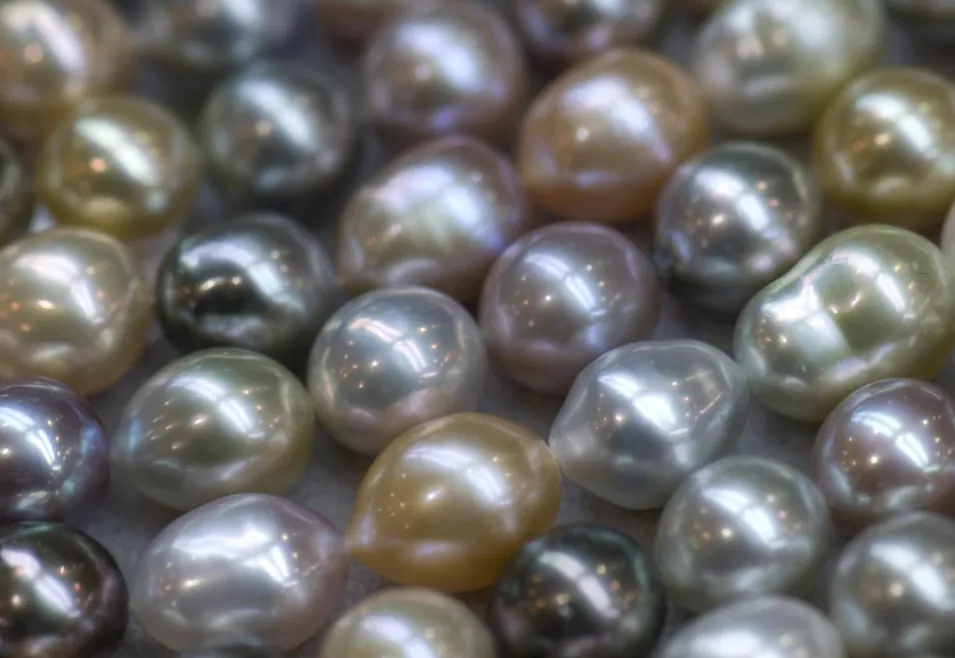
Step 4: Decide Size, Shape, and Color Before Comparing Quality
Size, shape, and color influence value, but they are not simply a ladder from bad to good.
A round pearl is generally rarer than an off-round pearl when other factors are equal, but a baroque pearl can be exactly the right choice if you like organic shapes. A larger pearl can be rarer and more expensive, but it is not automatically more beautiful. A particular color may carry a premium within one pearl type while being common in another.
This is why beginners should set a preferred range before judging quality:
- Size: choose the visual presence you want rather than the biggest number you can afford.
- Shape: decide whether you genuinely want round, or whether near-round, drop, oval, button, or baroque also fits your style.
- Color: choose a bodycolor and overtone range you will actually wear.
If millimeter measurements feel abstract, use our Pearl Size Guide before paying for a larger diameter simply because it sounds more valuable.
The important point is to separate preference from quality. Once you know the size, shape, and color you want, quality comparison becomes much easier.
Step 5: Compare Quality Only After You Are Comparing Similar Pearls
GIA describes seven pearl value factors: size, shape, color, luster, surface quality, nacre quality, and matching. Matching applies when two or more pearls are used together.
A beginner does not need to master every grading scale before shopping. Start with the factors that most directly affect what you see.
Look at luster first
GIA describes luster as potentially the most important of the seven value factors. High-luster pearls show bright, sharper reflections; lower-luster pearls can look soft, hazy, or chalky.
Compare pearls under similar lighting. If one product is photographed under intense spotlights and another under soft daylight, you are partly comparing photography rather than pearl quality.
Judge surface marks by severity, not by existence
Most pearls are not perfectly flawless. Small pits, spots, wrinkles, or other natural surface characteristics can occur. GIA notes that minor characteristics have less effect when they are few or can be hidden by drilling or mounting, while numerous or severe features may reduce value and can affect durability.
For a beginner, the practical question is not “Does this pearl have any mark?” but “Will I notice this mark when the jewelry is worn, and does it look structurally concerning?”
Do not ignore nacre
Nacre quality is connected with both luster and durability. Thin or poor-quality nacre in bead-nucleated pearls can contribute to a dull or chalky appearance and may allow the underlying bead to become visible.
You cannot reliably measure nacre thickness from a normal product photograph. For a more expensive purchase, rely on a combination of appearance, seller disclosure, and independent documentation when it is relevant.
Check matching for pairs and strands
Matching matters when several pearls are meant to look harmonious together. Compare size, shape, bodycolor, overtone, luster, and surface quality across the pair or strand.
Intentional variation is different from poor matching. A multicolor or graduated strand can be well designed even though the pearls are not identical.
For a deeper explanation of these factors and seller grading terminology, see the MJ Pearls grading guide.
Step 6: Do Not Compare Seller Grade Labels as If They Were Universal
One seller may use A–AAA. Another may use A–AAAA. Another may use terms such as Premium, Gem, Select, or Hanadama for particular products. These labels can be useful inside a clearly explained system, but they are not automatically equivalent across unrelated sellers.
If two products both say “AAA,” translate the label back into observable information:
- What does the seller say about luster?
- How much of the surface is visibly clean?
- How round or symmetrical are the pearls?
- What is the actual millimeter range?
- How are color and matching described?
- What does the seller disclose about pearl type and treatment?
This is also why you should compare like with like. A Freshwater pearl and an Akoya pearl can both be beautiful, but differences between them are not simply differences in grade.
Step 7: Verify What You Are Actually Buying
Before paying, move from aesthetics to facts.
Confirm cultured versus imitation
Cultured pearls are real pearls formed by mollusks with human assistance. Imitation pearls are manufactured products designed to resemble pearls. The U.S. Federal Trade Commission distinguishes natural, cultured, and imitation pearls and advises that jewelry sellers describe them accurately.
If authenticity is uncertain, do not rely on one home test or one photograph. Our guide on how to tell real and imitation pearls apart explains what visual inspection can and cannot establish.
Check treatment disclosure
Pearls may be bleached, dyed, coated, irradiated, or otherwise treated depending on the product. Treatment is not automatically a reason to reject a pearl, but it can affect color origin, care, durability, and value. The important point is disclosure.
Read the actual measurements
A photograph cannot tell you reliably whether a pearl is 6 mm, 8 mm, or 10 mm. Read the stated size range and check whether it refers to one pearl, a pair, or a graduated strand.
Check the jewelry materials too
You are not buying a pearl in isolation when you buy finished jewelry. Check the metal, clasp, posts, chain, setting, stringing method, and any other materials that affect comfort and durability.
Ask whether the photos show the exact item
Representative images can be sufficient for highly standardized products, but they are less useful when surface marks, baroque shape, color, or matching materially affect your decision. For higher-value or one-of-a-kind pieces, exact-item photos or video are more informative.
Step 8: Use the Seller's Transparency as Part of the Product
For a first pearl purchase, seller transparency reduces uncertainty.
A useful product listing or sales conversation should make it reasonably clear what the pearl is, how large it is, what shape and color you should expect, how the seller defines quality, and whether relevant treatments are disclosed.
Before buying, check:
- Is the pearl type clearly identified?
- Are cultured and imitation products distinguished?
- Are treatments disclosed when relevant?
- Are dimensions stated in millimeters?
- Are the jewelry metal and construction described?
- Does the seller explain its grading language?
- Can you see useful photographs from more than one angle?
- Is there a clear return or inspection policy?
A laboratory report can be useful when identity, treatment, or a high-value claim materially affects the price, but beginners do not need a laboratory report for every ordinary pearl purchase. A seller's grade and an independent laboratory identification report are not the same thing.
A 60-Second Checklist Before You Buy
When you are looking at a product page and feel ready to order, run through this checklist:
- Do I actually like the jewelry format?
- Is it within the budget I set before shopping?
- Do I understand the pearl type?
- Is the size stated clearly in millimeters?
- Do I like the shape and color, rather than merely assuming they are valuable?
- Does the pearl show good luster in useful photos?
- Are surface marks acceptable for the price and design?
- If it is a pair or strand, does the matching look intentional?
- Are cultured/imitation status and relevant treatments clear?
- Do I understand the metal, clasp, setting, or stringing?
- Do I know the return conditions?
If you can answer those questions without guessing, you are already doing more useful due diligence than simply comparing grade labels.
Where Should a Beginner Spend More—and Where Can You Compromise?
There is no universal spending formula, but the following framework works well for many first purchases.
| Feature | Beginner approach |
|---|---|
| Luster | Usually worth protecting. It strongly affects how lively the pearl looks. |
| Serious surface or nacre problems | Avoid structural concerns even if the pearl is large or cheap. |
| Minor surface marks | Often a reasonable place to compromise if they are discreet. |
| Perfect roundness | Pay for it only if the classic round look is important to you. |
| Large size | Choose enough visual presence for the design; do not maximize diameter automatically. |
| Rare color | Worth the premium only if you genuinely want that color and its origin is clearly described. |
| Matching | Important for studs, strands, and bracelets; less relevant to a single-pearl pendant. |
When you are ready to compare finished pieces, browse the MJ Pearls jewelry collection using this order instead of starting with the largest size or highest grade label.
Five Beginner Mistakes That Make Pearl Shopping Harder
1. Starting with “What is the best pearl?”
There is no single best pearl for every buyer. A small high-luster Akoya stud and a large baroque Freshwater pendant solve different aesthetic problems.
2. Comparing products from different pearl families by price alone
Type affects typical size, color, luster character, production volume, and rarity. Compare similar products before deciding one seller is expensive or one pearl is low quality.
3. Paying for size before deciding how the jewelry should look
Size is easy to understand, so beginners often over-focus on it. A larger pearl is not automatically the better purchase if the luster, surface, or proportions are less attractive.
4. Treating every natural surface mark as a defect
Small surface characteristics are common. Severity and position matter more than the simple existence of a mark.
5. Letting one grade word replace all the details
“AAA,” “premium,” or “gem quality” is useful only when you understand what the seller means. Translate the label back into luster, surface, shape, size, color, nacre, and matching.
Frequently Asked Questions
What kind of pearls should a beginner buy first?
There is no required first pearl type. Freshwater pearls are often an easy starting point because they offer a broad range of prices, shapes, colors, and sizes. Akoya is a strong choice for a classic round white look with crisp luster. Tahitian and South Sea pearls make sense when their distinctive colors or larger sizes are specifically what you want.
Should beginners buy Freshwater or Akoya pearls?
Choose by appearance and budget. Freshwater pearls usually offer more variety and can provide excellent value. Akoya pearls are especially associated with a classic, highly matched, round white look and sharp luster. Compare good examples of both instead of assuming one category is automatically higher quality.
What should I check first when looking at pearl quality?
After confirming that you are comparing similar pearl types and sizes, start with luster. Then consider surface quality, nacre, and matching where relevant. Shape, size, and color also affect value, but they are partly style decisions.
Is AAA or AAAA the best grade for pearls?
Not in a universal sense. Different sellers may use different grading systems and thresholds. A high grade can be meaningful inside one seller's inventory, but beginners should compare the actual characteristics behind the label.
Do beginners need a pearl certificate?
Not for every ordinary purchase. Independent laboratory documentation is most useful when pearl identity, treatment, origin, or another high-value claim materially affects the price. A laboratory report is different from a seller's own quality grade.
Is it safe to buy pearls online?
Yes, provided the seller gives clear specifications, useful photos, transparent grading and treatment information, and reasonable return terms. Online buyers should compare similar products under similar photography and ask for additional images or video when surface, color, or matching is difficult to judge.
Final Takeaway
Beginners should buy pearls by making decisions in the right order, not by trying to memorize every pearl term at once.
Choose the jewelry first. Set the budget second. Pick the pearl type whose natural look you actually want. Decide your size, shape, and color range. Then compare quality among similar pearls, with special attention to luster, surface condition, nacre, and matching.
Finally, verify what the seller is offering. Clear identification, treatment disclosure, measurements, useful photography, understandable grading, and return terms are all part of a good purchase.
If you follow that sequence, your first pearl purchase does not need to be perfect on paper. It only needs to be a pearl whose strongest qualities are the ones you will actually notice and enjoy.
References
- GIA — Pearl Buyer’s Guide
- GIA — Pearl Quality Factors
- GIA — Different Pearl Types Explained: Akoya, South Sea, Tahitian & Freshwater Pearls
- GIA — How GIA Analyzes Pearls from Start to Finish
- GIA — Freshwater “Akoyas”: A Trending Misnomer for Certain Freshwater Pearls
- U.S. Federal Trade Commission — Buying Gemstones, Diamonds, and Pearls
- U.S. Federal Trade Commission — Jewelry Guides