Why Does Luster Have Such a Strong Impact on Pearl Value?
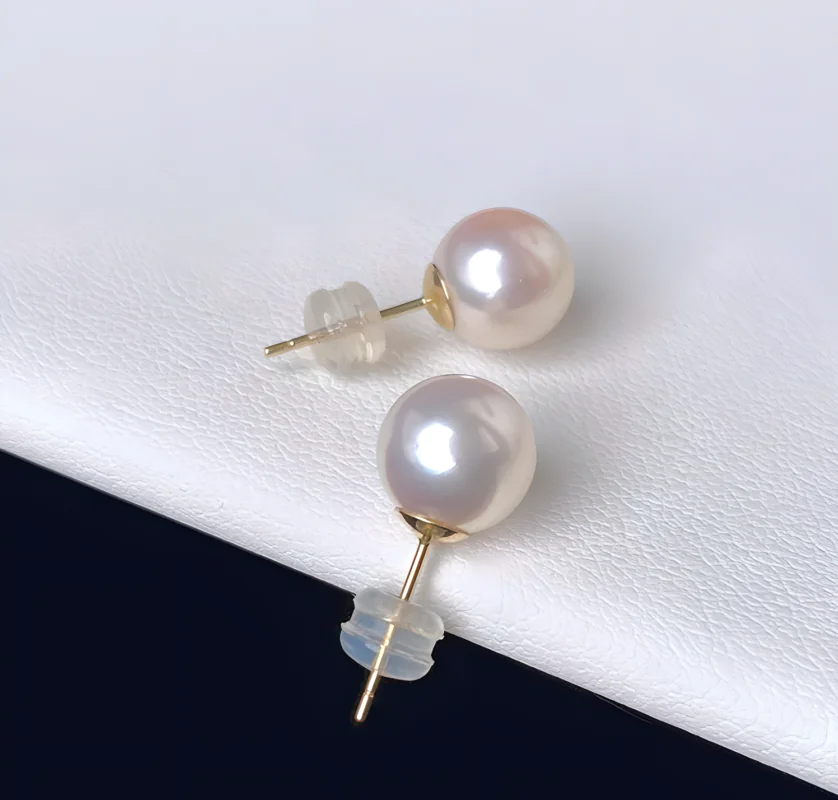
Luster has such a strong impact on pearl value because it controls one of the first things the eye notices: how intensely and clearly the pearl returns light. A highly lustrous pearl can look bright, crisp, dimensional, and visually alive, while a pearl with weak luster may look flat or chalky even if it is large, round, and relatively clean. This is why luster is often treated as one of the most influential pearl quality factors—but it should still be judged together with size, shape, color, surface, nacre, and matching.
What Does “Luster” Actually Mean in Pearls?
Pearl luster is more specific than simply saying that a pearl is shiny. The Gemological Institute of America (GIA) evaluates luster by the intensity and sharpness of reflections from the pearl's surface and underlying nacre. In GIA's terminology, excellent luster produces bright, sharp reflections, while lower luster produces increasingly weak, hazy, or diffused reflections.
The CIBJO Guide for Classifying Natural Pearls and Cultured Pearls uses similar logic, describing lustre through the brilliance of reflected light and the sharpness of the reflected light source. That distinction matters because a glossy surface alone is not the whole story. Fine pearl luster combines brightness with definition and, in many pearls, a sense of optical depth.
Why Does Luster Change a Pearl's Appearance So Dramatically?
Most familiar jewelry pearls are nacreous. Their nacre is built from very fine layers dominated by aragonite, a form of calcium carbonate, together with organic material. Light interacts not only with the outermost surface but also with this layered structure. Reflection, transmission, interference, and the geometry of the pearl all contribute to the visual effect we describe as luster.
This is one reason a fine pearl does not look exactly like a polished metal ball or a bead covered with glossy paint. The reflection can be bright and sharply defined, yet the pearl can also show subtle depth, overtone, or iridescent effects. For a deeper look at the material itself, see our guide to the physical and chemical properties of pearls.
The important point for value is simple: luster changes the entire visual presentation of the pearl at once. It affects how crisp the pearl looks, how strongly it catches light as it moves, and how much visual depth the viewer perceives. A small improvement in luster can therefore create a larger apparent improvement than a similarly small change in a less immediately visible factor.
Why Can a Smaller Pearl With Better Luster Be More Desirable?
Size and shape matter because rarity matters. Within the same pearl type and quality level, larger pearls are generally rarer, and round pearls are generally more difficult to produce than many other shapes. But rarity does not automatically create beauty. Luster is unusually powerful because it affects how the pearl looks every moment it is being worn.
Imagine two pearls of the same type. One is slightly larger and rounder but has soft, blurred reflections. The other is a little smaller or slightly less perfect in shape but has bright, crisp reflections. Many buyers will find the second pearl more visually compelling because its luster is obvious from normal viewing distance, while the size difference may be comparatively subtle.
This does not mean “luster always beats size” or that every high-luster irregular pearl should cost more than every larger round pearl. Pearl value is multi-factor. The useful buying principle is that a large size or perfect shape should not distract you from weak luster. If you want to see how the factors work together, our guide to evaluating pearl value explains the broader framework.
Luster Has High Visual Weight Because You See It Before You Inspect the Pearl
Some pearl characteristics require close inspection. A tiny pit, a shallow wrinkle, a minor drill-hole imperfection, or a small mismatch in diameter may not be obvious until the pearl is examined carefully. Luster, by contrast, is often visible almost immediately.
Under suitable lighting, the eye quickly notices whether reflections look crisp or cloudy. When a strand moves, strong luster also creates repeated flashes of light across many pearls at once. On earrings, it can make the pearls remain visually noticeable even though the jewelry is small. That immediate optical response gives luster unusually high perceptual weight—and perceived beauty strongly influences commercial desirability.
Strong luster can also make minor surface characteristics less visually dominant at ordinary viewing distance, because the eye is drawn to bright reflections. It does not erase blemishes, however. Surface quality remains a separate value factor, and a severe pit, crack, abrasion, or other defect can still reduce value even when the pearl is highly lustrous.
How Is Luster Related to Nacre Quality?
Luster and nacre quality are closely connected, but they are not interchangeable terms. GIA notes that poor nacre can produce a dull or chalky appearance, and its updated nacre classification work emphasizes thickness, continuity, surface and subsurface structure, and condition. Irregular nacre structures can disperse reflections and make luster appear softer.
This is an important correction to a common oversimplification: more nacre thickness does not automatically guarantee stronger luster. Thickness can matter, especially in bead-cultured pearls where extremely thin nacre can negatively affect appearance and durability, but the regularity and quality of nacre formation matter as well. CIBJO likewise notes that luster may be related to the homogeneity, light transmittance, and thickness of nacre rather than to thickness alone.
In practical terms, luster is partly an optical result of how well the pearl's surface and nacre structure interact with light. That is why it can act as a useful visible quality signal, but it should not be treated as a complete laboratory diagnosis of the pearl's internal structure.
Does High Luster Mean a Pearl Is Real?
No. High luster is a quality characteristic, not an authenticity test. Modern imitation pearls and coated beads can be engineered to look bright and attractive, and some treated surfaces can appear very glossy. Conversely, genuine cultured pearls can have poor luster.
That means “it has beautiful luster, so it must be real” is not a safe identification rule. Authenticity requires a broader assessment of surface structure, drill holes, construction, seller disclosure, and—when the value justifies it—gemological testing. Our pearl identification guide covers those distinctions separately.
Why Different Pearl Types Should Not Be Judged by One Identical Luster Look
Another common mistake is assuming that every fine pearl must look equally mirror-like. GIA specifically notes that different pearl varieties have different standards for luster. High-quality Akoya pearls are often appreciated for very bright, sharp reflections, while fine South Sea pearls can show a broader, satiny-looking luster. Both can be high quality within the visual character expected of their type.
This is why pearl luster is best compared within the same pearl type first. Comparing a South Sea pearl directly against an Akoya pearl and declaring the sharper-looking one “better” can be misleading. Their mollusks, nacre structures, sizes, and typical visual character differ.
The same principle applies to freshwater pearls, Tahitian pearls, and other pearl categories. Start by asking whether the pearl shows strong, attractive luster for its type, then compare the remaining value factors.
How Should You Judge Pearl Luster in Practice?
You do not need laboratory equipment to make a useful visual comparison. What matters most is controlling the comparison so that lighting, pearl type, and viewing conditions do not mislead you.
- Compare pearls side by side. Differences in luster are much easier to see when two or more pearls are under the same light.
- Use the same pearl type when possible. Compare Akoya with Akoya, South Sea with South Sea, and so on before making cross-type judgments.
- Look at both brightness and sharpness. A high-luster pearl should not merely look bright; the edges of reflected light and nearby objects should appear relatively clear rather than foggy.
- Rotate the pearl. Good luster should remain attractive as the pearl moves, rather than depending on one flattering angle.
- Use neutral, diffused lighting plus a defined light source. Very dark rooms, harsh spotlights, or heavily edited photos can make comparisons unreliable.
- Then inspect surface, shape, color, and nacre. Do not let luster become the only factor you evaluate.
A Simple Decision Framework: What Should You Prioritize?
| Observation | What It Usually Means | How to Use It |
|---|---|---|
| Bright, sharp reflections | Higher luster | Positive value signal when comparing pearls of the same type |
| Bright but hazy reflections | Moderate luster | Compare carefully with higher-luster examples before paying a premium |
| Weak, dull, or chalky appearance | Lower luster or possible nacre-quality concerns | Do not let size or roundness alone justify a high price |
| Very glossy surface but uncertain construction | Not enough information to judge authenticity | Check identification and treatment status separately |
| Different luster styles across pearl types | Normal type-related variation may be present | Compare within the same pearl type before ranking quality |
If budget forces a compromise between two otherwise similar pearls, prioritizing the pearl with clearly stronger luster is often a sensible choice because luster remains visible during normal wear. But there is no universal price multiplier such as “excellent luster makes a pearl twice as valuable.” The final price still depends on pearl type, size, shape, color, surface, nacre, matching, treatment status, rarity, and market demand.
Why Luster Has Such a Strong Effect on Value
Luster matters so much because it sits at the intersection of optics, material quality, and human perception. It is easy to see, it changes the pearl's overall appearance, and it remains important whether the pearl is viewed from nearby or worn as jewelry. That gives it more visual influence than many characteristics that only become obvious under close inspection.
The best way to use luster in a buying decision is not to treat it as a magic score. Compare like with like, judge the intensity and sharpness of reflections, then confirm that the pearl also makes sense in terms of surface, nacre, shape, color, size, and matching. A pearl is valuable because these factors work together—but luster is often the factor that makes the quality visible first.
FAQ
Is luster the most important factor in pearl value?
It is often considered one of the most important. GIA states that luster might be the most important of its seven pearl value factors, but overall value still depends on size, shape, color, surface, nacre, and matching as well. The safest comparison is within the same pearl type and with the other factors held as similar as possible.
Is pearl luster the same as surface shine?
No. Surface gloss contributes to appearance, but pearl luster is evaluated through the intensity and sharpness of reflected light from the surface and underlying nacre. A merely glossy coating should not automatically be equated with fine natural nacre luster.
Does thicker nacre always create better luster?
No. Adequate nacre thickness is important, especially in bead-cultured pearls, but luster also depends on nacre continuity, structure, surface condition, and how light interacts with the layers. Thickness alone is not a complete predictor of luster.
Can a pearl have small blemishes and still be valuable?
Yes. Minor surface characteristics are common in natural and cultured pearls. A pearl can still be highly desirable when its luster is strong and the blemishes are small or unobtrusive, although surface quality remains a separate value factor.
Should I compare Akoya and South Sea luster in the same way?
Not exactly. Different pearl types can have different characteristic luster appearances. Compare pearls within the same type first, then consider how each type is normally expected to look before making a cross-type judgment.