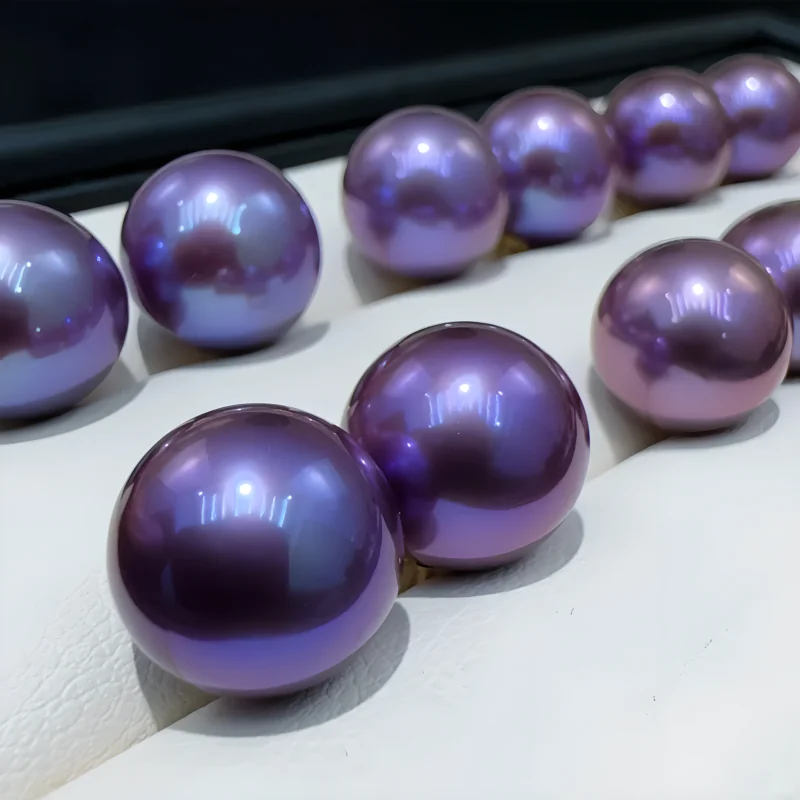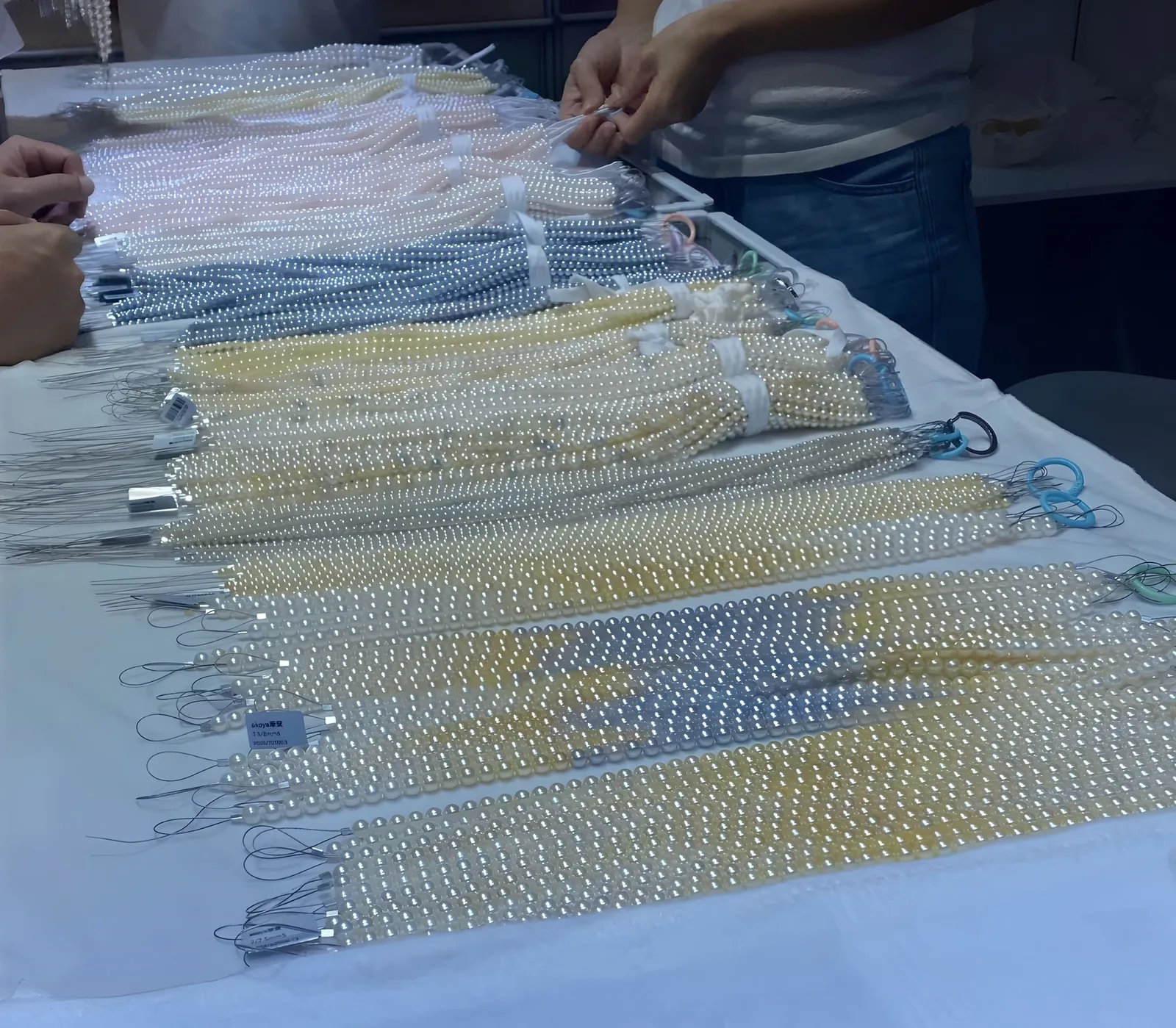
Pearl prices vary so much because a pearl is not priced by one measurement. Two pearls can have the same diameter and similar color yet differ greatly in luster, surface quality, shape, nacre, rarity, and overall desirability. If several pearls are used together, matching adds another layer. Before any of those factors are compared, the pearl type itself—freshwater, Akoya, Tahitian, South Sea, natural, or cultured—already changes the supply and rarity context.
The easiest way to understand the price gap is to think in three layers: what kind of pearl it is, how good that individual pearl is within its category, and what has been added to turn it into a finished product. The first two layers explain pearl value. The third explains why the retail price of finished jewelry can differ even when the pearls themselves appear comparable.
GIA describes seven core pearl value factors: size, shape, color, luster, surface quality, nacre quality, and matching for pieces containing more than one pearl. These factors are useful because they replace vague labels such as “premium” with characteristics you can actually compare. If you want a broader overview of how those characteristics are graded, see our Pearl Grading Guide.
Quick Answer: What Creates the Biggest Differences in Pearl Price?
| Price layer | What changes the price | Why it matters |
|---|---|---|
| Pearl identity and type | Natural vs. cultured, freshwater vs. Akoya, Tahitian, or South Sea | Different mollusks, production systems, typical sizes, yields, colors, and supply levels create different starting points |
| Individual pearl quality | Luster, surface, shape, size, color, nacre | These determine how rare and attractive one pearl is within a comparable group |
| Group quality | Matching across a pair, strand, bracelet, or set | Finding many pearls that match closely requires a much larger inventory and more sorting |
| Finished-jewelry factors | Metal, diamonds or other gems, workmanship, design, laboratory reports, brand, retail channel | The price of a finished piece is not the same thing as the value of the pearls alone |
This is why statements such as “8 mm pearls should cost about X” are usually too simple. Diameter matters, but an 8 mm pearl with excellent luster, a clean surface, desirable color, and good roundness is not equivalent to an 8 mm pearl that looks dull, heavily blemished, or poorly formed.
First Rule: Compare Like with Like Before Comparing Price
The fastest way to misunderstand pearl prices is to compare two pearls that belong to different rarity structures. A large freshwater pearl should not be priced as though it were a South Sea pearl simply because both measure 12 mm. A round Akoya pearl should not be judged by the same size expectations as a Tahitian pearl. And a natural pearl should not be treated as an ordinary cultured pearl.
GIA notes that natural pearls form without human intervention and are very rare, while the vast majority of pearls in today’s jewelry market are cultured. Within cultured pearls, freshwater, Akoya, Tahitian, and South Sea pearls come from different mollusks and cultivation systems. Those differences influence normal size ranges, production volume, color possibilities, and the probability of producing fine-quality material.
So before asking whether a price is high or low, establish the comparison group:
- Is the pearl natural, cultured, or imitation?
- If cultured, what pearl type is it?
- What size and shape category is being compared?
- Only then: how strong are the quality factors within that category?
Our Pearl Value Evaluation guide goes deeper into this distinction between intrinsic quality and market value.
The Seven Quality Factors That Explain Most Pearl Value Differences
The seven factors are not seven independent boxes that each add a fixed amount of money. They interact. A pearl becomes especially scarce when several desirable traits occur at the same time.
For example, a large pearl is not automatically rare in the same way as a large, round, clean, highly lustrous pearl with attractive color. Every additional requirement narrows the number of pearls that qualify. This compounding scarcity is one of the main reasons prices can jump sharply instead of increasing in a smooth, predictable line.
1. Luster: Often the First Difference You Notice
Luster is one of the most important reasons two pearls of the same size can look completely different. GIA describes high-luster pearls as having bright, sharp reflections. Lower-luster pearls show softer, hazier, or more diffused reflections.
This matters because luster affects the whole visible surface. A small pit may only be noticeable from one angle, but weak luster can make the entire pearl look flat. That is why, within the same pearl type and comparable size, a highly lustrous pearl will generally be more valuable than a duller one.
One important nuance is that different pearl types can have different luster character. Fine Akoya pearls are often associated with crisp, mirror-like reflections, while fine South Sea pearls may show a softer satin-like glow. The goal is not to force every pearl to look like Akoya; it is to judge luster appropriately within the pearl type.
If you want to practice this visually, our Pearl Luster Guide explains what to look for in reflections, contrast, and apparent depth.
2. Surface Quality: Cleanliness Matters, but Location Matters Too
Pearls form inside living mollusks, so small surface characteristics are normal. Pinpoints, small pits, wrinkles, ridges, bumps, and growth marks do not automatically make a pearl poor quality. The real questions are how many marks there are, how severe they are, where they are located, and whether they affect durability or the main visible face.
GIA notes that numerous or severe surface characteristics can reduce value substantially. Minor characteristics matter less when they are small, few in number, or positioned where drilling or a setting can conceal them.
This creates a practical price difference that photographs do not always explain well. A pearl with one small mark near the drill hole may be priced much more favorably than a technically similar pearl with a deep or distracting feature directly on the front. The number of blemishes alone is therefore not enough.
For a closer look at what is cosmetic versus more serious, see our Pearl Surface & Blemishes Guide.
3. Shape: Roundness Can Carry a Premium, but It Is Not the Whole Grade
Round is the most difficult cultured pearl shape to produce consistently, and GIA notes that when the other value factors are equal, round pearls are generally the most valuable shape. That scarcity is especially important when many pearls are needed for a strand.
But “round costs more” should not be turned into “round is always better.” Near-round, oval, drop, button, circled, and baroque pearls can all be beautiful and desirable. A symmetrical drop may be especially valuable for fine earrings or a pendant. An unusually attractive baroque pearl may be chosen specifically for its form.
Shape therefore affects price in two ways:
- Rarity: stricter roundness is harder to obtain when other quality factors also need to remain high.
- Design suitability: certain non-round shapes can be more desirable for specific jewelry rather than simply being substitutes for round pearls.
If your priority is value rather than perfect spherical geometry, shape is often one of the safest places to make a deliberate compromise—as long as luster and structural condition remain strong.
4. Size: Larger Usually Costs More, but Only Within a Fair Comparison
When other value factors are equal, larger pearls are generally rarer and more valuable within the same pearl type. The important phrase is “when other factors are equal.”
A buyer can easily overpay by treating millimeters as a quality score. A larger pearl with dull luster, heavy blemishing, weak nacre appearance, or poor shape may be less desirable than a slightly smaller pearl with stronger overall quality.
Size premiums can also become steeper when a pearl type approaches the upper end of its normal production range. A size that is common for one pearl family may be unusually large for another. That is why a one-millimeter increase does not have one universal dollar value across all pearls.
The practical rule is simple: compare size only after you have matched the pearl type and general quality level. If you are deciding what millimeter range actually suits your jewelry, our Pearl Size Guide can help separate visual proportion from price.
5. Color: Desirability and Rarity Matter More Than a Simple “Best Color” Rule
Color is not a universal ladder from cheap to expensive. Pearls have bodycolor, overtone, and sometimes orient, and different pearl types have different natural color ranges. Market demand also changes by region, fashion, and personal preference.
GIA specifically notes that supply and demand can affect the value of certain pearl colors. If a desirable color is scarce in high quality, it can command a premium. But color alone cannot rescue weak overall quality. A fashionable overtone on a pearl with poor luster and a heavily blemished surface is still a different product from a fine-quality pearl with the same general hue.
Treatment status can also affect how a color should be understood. Dyeing, coating, irradiation, and other treatments exist in the pearl market. A treated cultured pearl is still a cultured pearl, but buyers should not assume that every attractive color has the same rarity or origin. When color carries a significant premium, accurate disclosure matters.
6. Nacre Quality: The Structural Factor Behind Beauty and Durability
Nacre quality is closely related to how a pearl looks and, in relevant pearl types, how well it is likely to hold up over time. GIA notes that poor or thin nacre in bead-nucleated pearls can make the underlying nucleus more visible and can contribute to a dull or chalky appearance.
However, nacre should not be reduced to one oversimplified thickness rule across every pearl type. Freshwater and saltwater pearls can have different cultivation structures, and bead-nucleated and non-bead-cultured pearls are not built the same way.
For ordinary buyers, the most useful principle is this: do not separate nacre from luster, surface condition, pearl type, and treatment history. A pearl that looks chalky, peels, shows structural damage, or reveals an obvious nucleus deserves different consideration from one with healthy-looking nacre and strong surface integrity.
7. Matching: Why a Fine Strand Can Cost Much More Than a Bag of Similar Pearls
Matching matters whenever more than one pearl appears together. GIA evaluates how well pearls in a piece relate in size, shape, color, luster, surface, nacre, and overall appearance.
This is where price differences can become surprisingly large. A necklace does not need one good pearl; it may need dozens of pearls that all fall within a narrow visual range. As the quality requirement rises, the sorting pool becomes smaller. Add a large size, strong luster, clean surfaces, tight roundness, and consistent color, and finding enough pearls for one coherent strand becomes increasingly difficult.
This is also why a matched pair of earrings can cost more than two random loose pearls that look “about the same” in separate photographs. The value lies partly in the labor and inventory required to make the pair look intentional together.
Matching does not always mean sameness. Multicolor strands and graduated necklaces can be intentionally varied. In those cases, the question becomes whether the variation is controlled, balanced, and visually coherent.
Why Pearl Prices Can Rise Nonlinearly
This is the part many simple price guides miss.
Suppose a seller starts with 1,000 pearls in the same broad type and size range. A large portion may have acceptable luster. A smaller portion may also be clean enough for a higher-end piece. Fewer still may be truly round. Fewer again may have the desired color and nacre quality. If the goal is a necklace, enough of those remaining pearls must also match each other.
The exact percentages vary by pearl type, farm, harvest, and grading standard, so there is no responsible universal formula. But the logic is consistent: every additional strict requirement reduces the qualifying pool.
That means price does not necessarily rise by a little every time one quality factor improves. At the upper end, the factors compound. The expensive pearl is often not expensive because it is merely “10% better.” It may belong to a much smaller intersection of desirable characteristics.
This also explains why small visual improvements can create surprisingly large price differences at the top of the market. Moving from “good” to “very good” may still leave many pearls available. Moving from “very good” to “large + round + clean + high-luster + well-colored + closely matched” can shrink supply dramatically.
Pearl Type Sets the Baseline Before Fine Quality Is Compared
The major cultured pearl families do not begin with the same production economics or typical rarity. Freshwater pearls are produced in large volumes and can offer excellent value, while Akoya, Tahitian, and South Sea pearls are produced under different biological and farming constraints.
GIA notes that freshwater cultured pearls are plentiful in part because a freshwater mollusk can produce multiple pearls, while some saltwater cultivation systems produce far fewer pearls per mollusk at one time. South Sea and Tahitian pearls also occupy different size and supply ranges from Akoya pearls.
That creates broad market tendencies, but it is important not to turn them into absolute quality rankings. A fine freshwater pearl can be more attractive than a low-quality saltwater pearl. A South Sea pearl is not automatically “better” simply because its type has a higher typical market position. Type tells you the comparison context; the individual quality factors tell you how good the particular pearl is within that context.
Why “AAA” Does Not Solve the Price Question
Many pearl listings use A, AA, AAA, AAAA, or other seller grading systems. These labels can be useful inside one seller’s system, but they are not a universal price language.
GIA developed its seven value factors partly because the pearl industry has used multiple grading systems that are difficult to align perfectly. One seller’s “AAA” may therefore not be identical to another seller’s “AAA.”
Instead of asking only, “What grade is it?”, ask:
- How is luster defined at this grade?
- How much visible surface marking is allowed?
- How strict is the shape requirement?
- Is size part of the grade or priced separately?
- How is matching evaluated for pairs and strands?
- Are treatments and color origin disclosed where relevant?
At MJ Pearls, our own grade labels are explained publicly in the Pearl Grading Guide so buyers can see what the labels are intended to communicate rather than treating the letters as self-explanatory.
Finished Jewelry Price Includes More Than Pearl Quality
A pearl necklace, ring, or pair of earrings has a retail price that includes more than the pearl itself. Precious-metal weight, clasp construction, diamonds or colored stones, setting work, drilling, stringing, design complexity, packaging, laboratory reports, brand positioning, and the retail channel can all affect the final number.
That distinction is important when two pieces use visually similar pearls but sell at different prices. The difference may come from the pearls, but it may also come from the jewelry construction around them.
For this reason, separate two questions:
- Are these pearls of similar quality and rarity?
- Are these finished pieces otherwise comparable?
If you skip the second question, you can mistake a difference in gold, craftsmanship, design, or branding for a difference in pearl quality.
A Practical Buying Order: What Should You Protect First?
If your budget is fixed, you do not need the maximum possible score in every factor. You need to decide which premiums actually improve the jewelry you want.
| Priority | What to protect | Where you can often compromise |
|---|---|---|
| 1 | Healthy appearance, strong luster, no serious structural problems | Do not trade these away just to gain size or a higher seller grade |
| 2 | Surface quality appropriate to the jewelry’s visible face | A small hidden mark may be acceptable if it materially improves value |
| 3 | Pearl type, color, and size that create the look you actually want | A slightly smaller pearl can be a better buy if the visible quality is much stronger |
| 4 | Shape appropriate to the design | Near-round, button, oval, drop, or baroque can save money when perfect roundness is unnecessary |
| 5 | Matching when the jewelry uses multiple pearls | Looser matching can work in intentionally organic or multicolor designs |
This is not a universal grading formula. It is a buying framework. If perfect roundness is central to the design, roundness deserves more budget. If you want a large statement pendant, size or color may matter more. If you want classic Akoya studs, sharp luster and pair matching may dominate your decision.
For budget-specific trade-offs, see Pearls by Budget: What Really Changes at $50, $150, $300 & $1000.
How to Compare Two Pearl Listings More Fairly
When two listings appear similar but the prices are far apart, compare them in this order:
- Confirm identity and pearl type. Are both cultured? Are both actually the same pearl family?
- Check the exact size range. “8 mm” and “8–9 mm” are not necessarily equivalent.
- Compare luster under similar lighting. Bright studio lighting can hide weak differences if the photographs are not standardized.
- Inspect the surface from more than one angle. One front-facing image may conceal a significant feature.
- Check shape honestly. Round, near-round, oval, button, and baroque should not be priced as if they were the same geometry.
- Ask about color and treatment status. This is especially important when a rare-looking color carries a premium.
- For pairs or strands, examine matching. Similar individual pearls can produce very different group quality.
- Separate pearl value from jewelry value. Compare metal, settings, stones, craftsmanship, and brand context separately.
If you are new to pearl shopping, our Pearl Buying Guide gives a broader decision process covering type, size, quality, and budget.
Frequently Asked Questions
Why can two pearls of the same size have very different prices?
Because size is only one value factor. Luster, surface quality, shape, color, nacre, pearl type, and—when relevant—matching can all differ. A same-size pearl with sharper luster, cleaner surface, better roundness, and stronger overall quality can be much rarer.
Is a bigger pearl always more valuable?
No. When all other factors are equal, larger pearls are generally more valuable within the same pearl type. But a larger pearl with weak luster or heavy blemishing can be less desirable than a smaller pearl with stronger quality.
Which pearl quality factor matters most?
GIA notes that luster may be the most important of the seven pearl value factors because it strongly affects the pearl’s visual character. In real buying, however, luster should still be considered together with surface, nacre, shape, size, color, and matching.
Are round pearls always more expensive?
When the other value factors are equal, round cultured pearls are generally more valuable because true roundness is difficult to produce. But exceptional drop, baroque, or other shaped pearls can still be valuable, and a high-luster non-round pearl may be a better buy than a dull round one.
Why are matched pearl necklaces expensive?
A fine necklace requires many pearls that work together in size, shape, color, luster, surface quality, and overall appearance. Tight matching reduces the number of pearls that qualify and requires substantial sorting, so the finished strand can carry a meaningful premium.
Does AAA mean the same quality from every pearl seller?
No. Seller grading scales are not universally identical. Compare the seller’s definitions for luster, surface, shape, matching, and other factors instead of assuming that the same letters represent the same quality everywhere.
Final Takeaway
Pearl prices vary because rarity is multidimensional. The price is not determined by size alone, color alone, or a grade label alone. Pearl type sets the broad supply context; luster, surface, shape, size, color, and nacre determine the quality of the individual pearl; matching determines the quality of pairs and strands; and the finished jewelry adds its own material, labor, design, and brand costs.
The most useful buying question is therefore not “Why is this pearl expensive?” but “Which specific characteristics am I paying for, and do they matter to the way I want the pearl to look and perform?”
Once you compare pearls in the right order—type first, quality factors second, finished-jewelry costs third—the wide price range becomes much easier to understand. You may also find that the best value is not the cheapest pearl or the highest grade, but the pearl that protects the qualities you can actually see while avoiding premiums you do not need.