Why Do Pearl Prices Vary So Much? The Main Quality Factors That Determine Price
Two pearls can be the same size, the same general color, and even look similar in a product photo, yet sell at very different prices. That is because pearl price is not determined by one measurement. Pearl type sets a broad starting point, while luster, surface quality, shape, size, color, nacre quality, and matching determine how rare and desirable a particular pearl is within that category. For finished jewelry, metal, craftsmanship, certification, design, and brand positioning can add another layer to the final retail price.
Quick answer: why can one pearl cost much more than another?
The simplest way to understand pearl prices is to think in three layers:
- What kind of pearl is it? Freshwater, Akoya, Tahitian, South Sea, natural, cultured, or imitation are not equivalent categories.
- How good is this particular pearl? Its luster, surface, shape, size, color, nacre, and—when several pearls are used together—matching all affect value.
- What are you actually buying? A loose pearl, a matched pair, a full strand, and a finished gold necklace can contain similar pearls but have very different costs.
This is also why a simple rule such as “bigger pearls are more expensive” is incomplete. A large pearl with dull luster, heavy blemishing, or weak shape can be less desirable than a smaller pearl with excellent luster and a cleaner surface.
Pearl type sets the price baseline before quality is compared
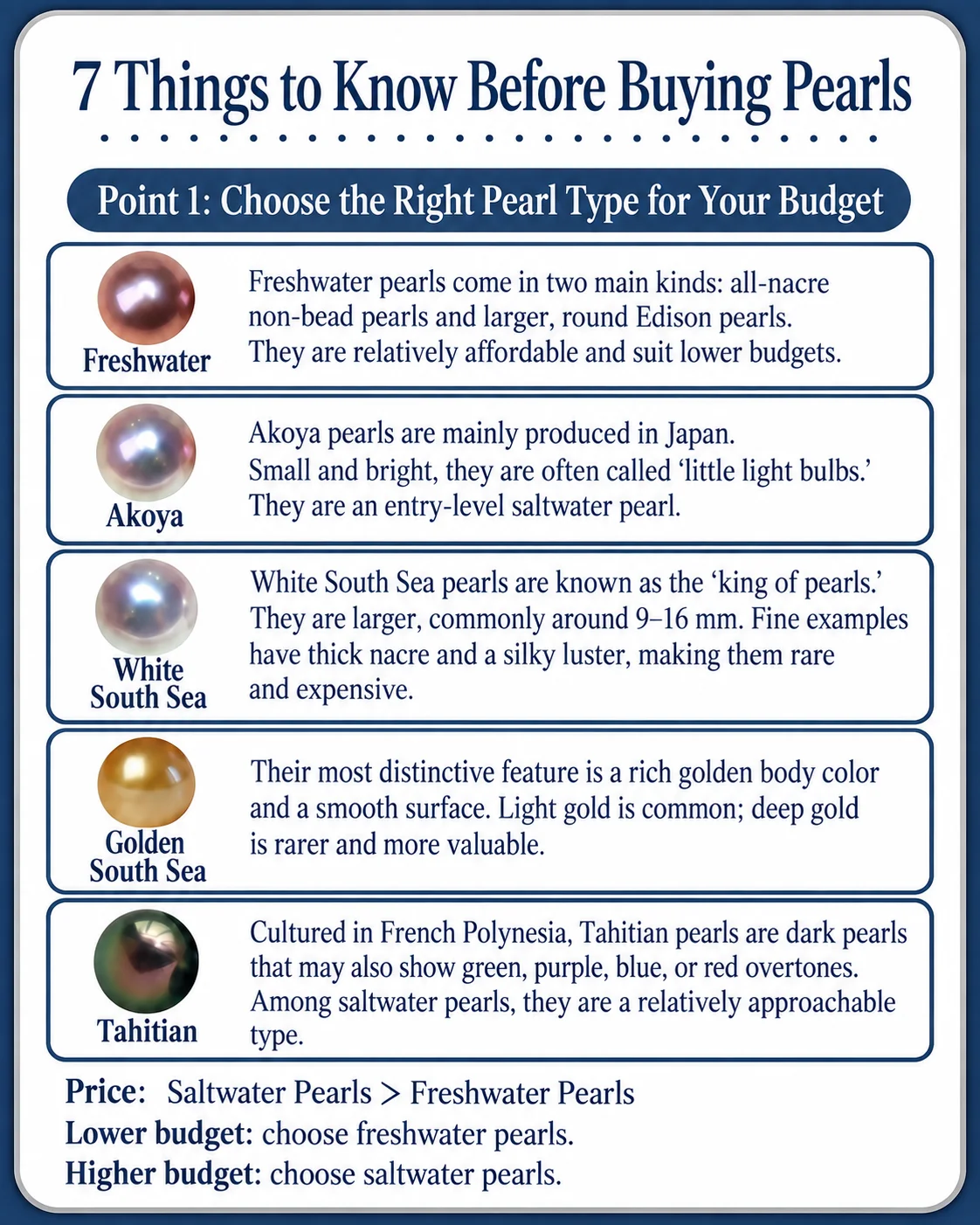
Before comparing quality, make sure the pearls belong to comparable categories. Different pearl types are produced by different mollusks, in different environments, with different typical size ranges and production constraints. Those differences affect supply and create different market baselines.
For example, Akoya pearls are known for a relatively compact size range and often sharp luster, while South Sea pearls can reach much larger sizes. Tahitian pearls occupy their own natural dark-color range, and freshwater cultured pearls cover an especially broad range of shapes, colors, sizes, and qualities. GIA notes that pearl varieties should be compared with their own characteristics in mind rather than judged by a single universal appearance standard.
That means a 9 mm freshwater pearl and a 9 mm Akoya pearl should not be assumed to have the same market value simply because the diameter matches. First identify the pearl category; then compare quality within that category.
If you need a broader overview of the categories themselves, start with our pearl classification guide.
The seven main quality factors behind pearl value
The GIA pearl value framework evaluates seven characteristics: size, shape, color, luster, surface quality, nacre quality, and matching. They are useful because they explain why two pearls from the same general category can still have very different prices.
| Factor | What usually raises value | What the buyer should look for |
|---|---|---|
| Luster | Bright, sharp, lively reflections | Can you see crisp reflected edges, or does the pearl look flat and hazy? |
| Surface | Fewer or less distracting blemishes | How visible are pits, wrinkles, scratches, bumps, or other surface features? |
| Shape | Rarity and attractive symmetry; round is generally prized when other factors are equal | Is the pearl truly round, near-round, symmetrical, or intentionally baroque? |
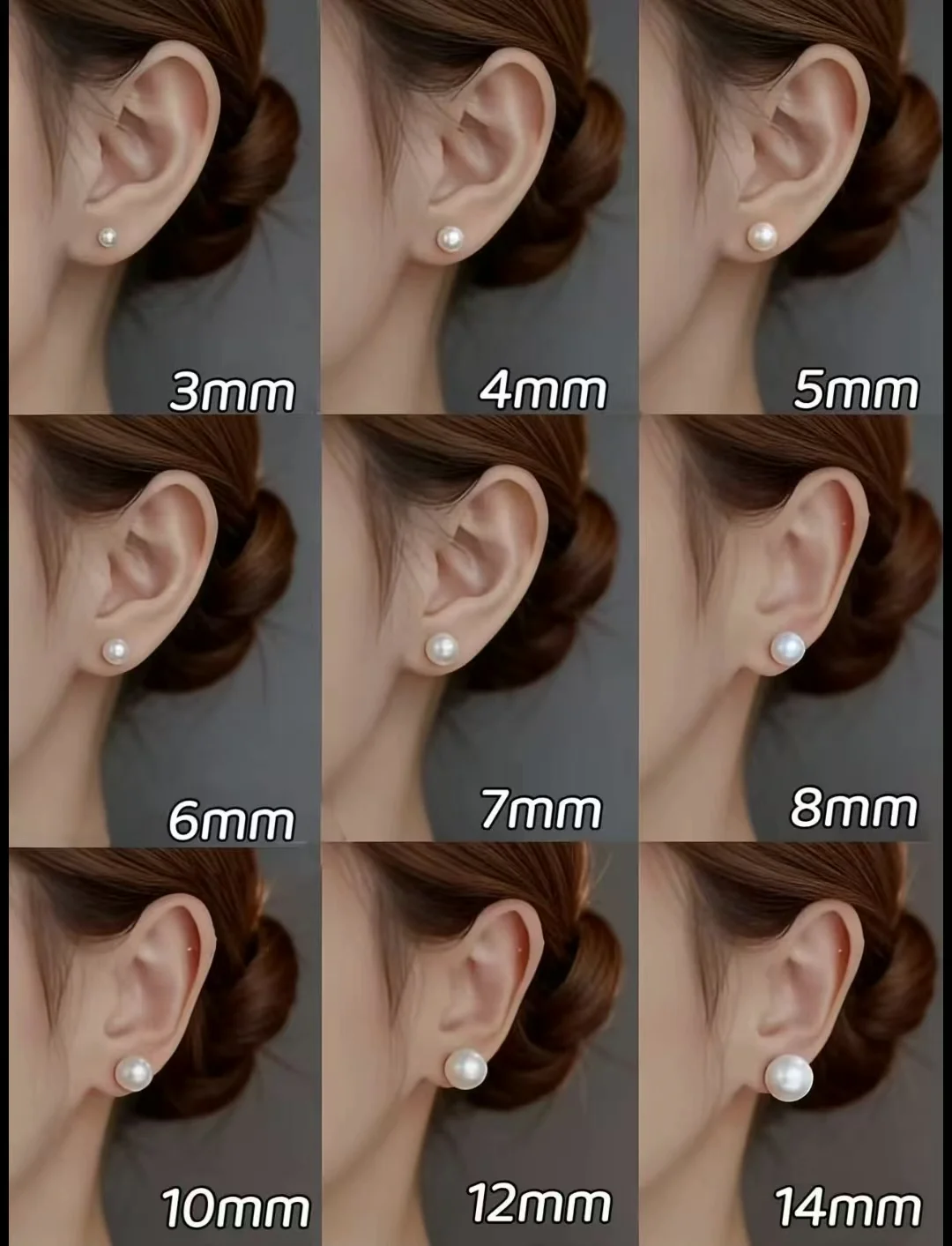
| Size | Larger size within the same pearl type and comparable quality | Compare millimeters only after checking luster, surface, shape, and type. |
| Color | Desirable, attractive, or scarce colors and overtones | Look at bodycolor, overtone, color evenness, and treatment disclosure. |
| Nacre | Good nacre quality and continuity appropriate to the pearl type | Watch for chalkiness, poor depth, exposed nucleus, peeling, or weak-looking layers. |
| Matching | Consistent quality across pairs, strands, or sets | Do the pearls work together in size, color, luster, shape, and surface? |
1. Luster can create a large visual—and price—difference
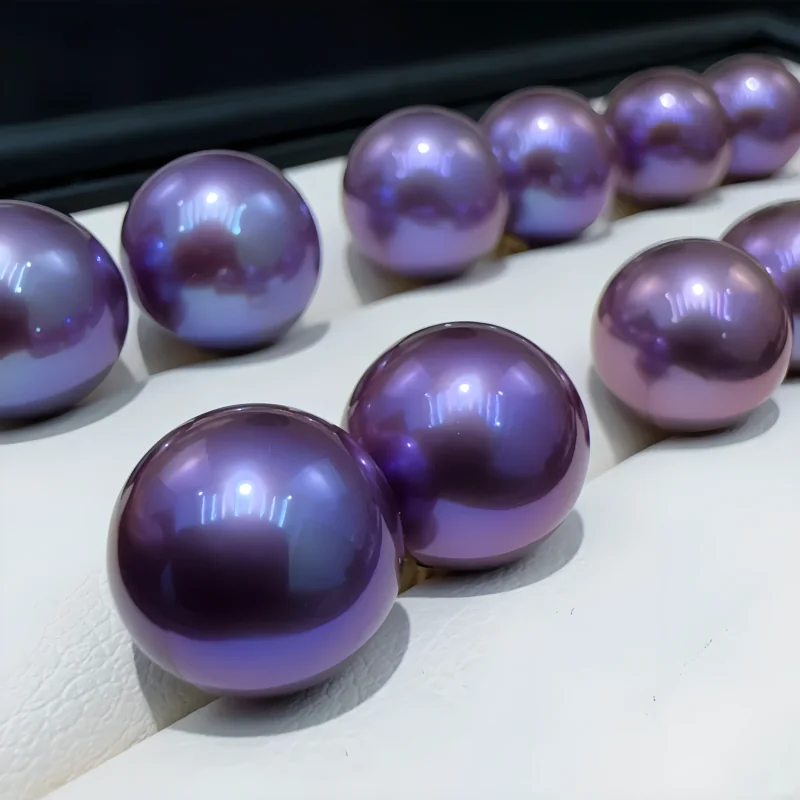
Luster is the brightness and sharpness of light reflected from a pearl and its nacre. It is one of the most important reasons two pearls of the same size can look completely different in person.
A high-luster pearl can show bright, defined reflections and a sense of depth. A lower-luster pearl may look soft, cloudy, waxy, or flat. GIA describes luster as potentially the most important of the seven value factors and notes that, within the same pearl type, stronger luster generally supports higher value when other characteristics are equal.
This is why buying only by diameter can be misleading. If your budget forces a choice between slightly more size and clearly better luster, the higher-luster pearl may give the stronger visual result.
2. Surface quality matters, but not every blemish has the same effect
Pearls grow in living mollusks, so surface features are common. A small pit, wrinkle, bump, growth line, or abrasion does not automatically make a pearl poor quality. What matters is the number, size, severity, and position of the blemishes.
GIA notes that numerous or severe surface characteristics can reduce value and, in some cases, may also affect durability. Minor features have less impact when they are small, few in number, or positioned where a drill hole or setting can conceal them.
This creates an important buying distinction: visible cleanliness is not the same as absolute flawlessness. A pearl with one small hidden mark can be a much better buy than a pearl with fewer total marks but a distracting defect directly on the face.
3. Shape affects rarity, but round is not automatically “better” for every design
Perfectly round cultured pearls are difficult to produce consistently, so roundness usually carries a premium when the other quality factors are comparable. Symmetrical drop shapes can also be highly desirable.
However, shape should not be treated as a simple ladder from “good” to “bad.” Baroque, oval, button, and irregular pearls can be intentionally chosen for design character. A beautifully proportioned baroque pearl with excellent luster may be more attractive—and sometimes more desirable—than a near-round pearl with weak luster and a dull surface.
The fair comparison is therefore not “round versus baroque” in isolation. It is “how rare, attractive, and suitable is this shape within the type and intended jewelry design?”
4. Size usually raises value only when quality keeps up
Within the same pearl type, larger pearls are generally rarer and tend to be more valuable when the other factors remain similar. But the phrase “when other factors remain similar” is essential.
A larger pearl can also be more difficult to find with strong luster, clean surface quality, attractive shape, and good nacre. When all of those qualities appear together at a larger size, the combination becomes much scarcer. This is one reason pearl prices often rise in noticeable steps rather than in a perfectly smooth line as diameter increases.
So do not compare a 10 mm pearl with an 11 mm pearl by the 1 mm difference alone. Compare the full quality package.
5. Color affects value through beauty, rarity, treatment, and demand
Pearl color is more than a simple label such as white, pink, gold, or black. It can include a dominant bodycolor, a translucent overtone, and sometimes iridescent orient. GIA notes that color value is also influenced by supply, demand, fashion, and cultural preference.
This makes color more market-dependent than factors such as obvious surface damage. A rare or highly desired natural color may command a premium in one pearl category, while another market may prefer a different tone.
Treatment disclosure also matters. A dyed or otherwise treated pearl is not automatically “bad,” but it should be described accurately because treated color and naturally occurring color are not the same thing. When comparing two prices, ask whether the color is natural for that pearl type and whether any treatment has been disclosed.
6. Nacre quality influences both appearance and durability
Nacre is the material that creates much of a pearl's optical depth and characteristic glow. Good nacre quality supports attractive luster and helps the pearl remain durable in normal jewelry use. Poor nacre can produce a chalky or weak appearance, and severe nacre problems may reveal the underlying nucleus or create structural concerns.
GIA updated its nacre classification guidance in 2025 to assess nacre quality more systematically, reinforcing an important point: nacre should not be reduced to a single “thick versus thin” shortcut. Continuity, appearance, and the pearl type all matter.
For a buyer, nacre is often harder to judge from a single online photo than size or shape. That is one reason clear close-ups, accurate product descriptions, and reputable grading or laboratory documentation become more useful for higher-value purchases.
7. Matching can make a strand worth more than the sum of its pearls
Matching applies when two or more pearls are used together. A pair of earrings or a necklace is judged not only by the quality of the individual pearls but also by how well they relate to each other.
A well-matched strand requires consistency in size, shape, color, luster, and surface appearance—or an intentional progression when the design is graduated or multicolored. Finding enough pearls that meet the same visual standard can require a much larger pool of inventory than selecting one attractive loose pearl.
This is why a carefully matched necklace can cost much more than simply multiplying the price of one loose pearl by the number of pearls in the strand.
The price gap becomes largest when several rare qualities appear together
Pearl pricing becomes easier to understand when you stop imagining each quality factor as a separate surcharge. The factors interact.
Consider two hypothetical 10 mm pearls of the same type:
- Pearl A is near-round, medium-luster, visibly blemished, and uneven in color.
- Pearl B is round, sharply lustrous, clean-looking from normal viewing distance, attractive in color, and has strong nacre quality.
The second pearl is not simply “a little better” in four separate categories. It belongs to a much smaller intersection of the harvest: pearls that meet several demanding qualities at the same time. That scarcity can create a disproportionately large price difference.
This combination effect is one of the most important ideas to understand about pearl prices.
Identity and treatment can change the comparison before grading even begins
A price comparison only makes sense when the items are described accurately. Natural pearls, cultured pearls, and imitation pearls are different product categories. Likewise, treated color, coatings, composites, or other modifications should not be hidden behind vague wording.
The CIBJO pearl classification guidance exists in part to create clearer terminology for natural and cultured pearls, while its Pearl Blue Book sets disclosure standards for pearl products and imitations.
For most modern jewelry, cultured pearls are genuine pearls and should not be confused with imitation beads. But “real pearl” alone still does not tell you whether the pearl is freshwater or saltwater, what type it is, how it was treated, or how high its quality is.
Why “AAA” or another grade does not make prices directly comparable
One of the biggest sources of confusion in pearl shopping is the use of letter grades such as A, AA, AAA, or AAAA. These labels can be useful inside one seller's own inventory, but they should not be assumed to mean exactly the same thing from one company to another.
The pearl trade uses several grading and classification approaches, which is why GIA emphasizes descriptive value factors rather than relying on one universal retail letter grade. When two sellers both call a strand “AAA,” compare the actual specifications: luster, surface cleanliness, roundness, size range, color, nacre quality, matching, pearl type, and treatment disclosure.
For a deeper explanation of the underlying evaluation logic, see our guide to evaluating pearl value.
Pearl value and jewelry retail price are not the same thing
Even after you understand pearl quality, two finished pieces can still have different prices. The final retail price may include:
- 18K gold, platinum, silver, or other findings and settings
- Design and manufacturing complexity
- Drilling, setting, knotting, polishing, and matching labor
- Laboratory reports or certification costs
- Packaging, service, returns, and warranty support
- Retail overhead and brand positioning
These costs are real, but they are separate from the intrinsic quality of the pearl itself. A more expensive piece of jewelry does not automatically contain a better pearl, just as a cheaper loose pearl does not automatically represent better value.
The useful question is not simply “Which one costs less?” It is “How much of the price difference can I explain through pearl quality, and how much comes from the finished jewelry around it?”
A practical way to compare two pearl prices
When two listings look similar but the prices are far apart, compare them in this order:
- Confirm identity: Are both cultured pearls? Are they the same pearl type? Is any treatment disclosed?
- Compare luster first: Look for brightness, sharp reflections, and visual depth.
- Check surface and shape: Note the severity and position of blemishes, then confirm whether the stated shape is accurate.
- Compare size only after quality: Make sure the millimeter range is measured in the same way and that the larger pearl has not sacrificed luster or cleanliness.
- For pairs and strands, inspect matching: Uneven luster or color can lower the visual quality even when each pearl looks acceptable alone.
- Separate pearl quality from jewelry cost: Account for metal, workmanship, reports, service, and brand markup.
If a seller cannot explain a large price difference in terms you can actually observe or verify, ask for more information before relying on the grade label alone.
FAQ
Does a larger pearl always cost more?
No. Within the same pearl type and similar quality, larger pearls generally command higher prices because they are rarer. But a smaller pearl with much better luster, surface quality, shape, or nacre can be more valuable than a larger lower-quality pearl.
Why can two pearl necklaces of the same size have very different prices?
Their luster, surface cleanliness, roundness, color, nacre quality, pearl type, and matching may be different even if the listed diameter is the same. The clasp, metal, workmanship, certification, and brand can also change the finished retail price.
Are freshwater pearls always cheaper than saltwater pearls?
Freshwater cultured pearls are often more accessible because production and available supply differ from saltwater categories, but this is not an absolute quality ranking. Fine freshwater pearls can be large, round, highly lustrous, and clean, while a lower-quality saltwater pearl may be less attractive. Compare quality within the correct type.
Is luster more important than surface cleanliness?
Both matter, but luster often has the strongest immediate effect on how lively a pearl looks. A small, well-positioned blemish may be acceptable if the pearl has excellent luster, while a perfectly smooth-looking pearl with weak luster can still appear flat.
Does a pearl certificate tell me what the pearl should cost?
Not by itself. A laboratory report can help confirm identity, characteristics, or treatments depending on the report type, but retail price also depends on quality, rarity, matching, market demand, jewelry construction, and seller context.
What to remember about pearl prices
Pearl prices vary so much because pearls are not standardized objects. Type establishes a broad market context, but value is then shaped by luster, surface, shape, size, color, nacre, and matching. When several high-quality characteristics occur together—especially at a desirable size—the supply becomes much smaller and the price can rise sharply.
The best way to compare pearls is therefore not to ask which one has the highest grade or largest diameter. Ask whether the identity is clear, whether the quality factors are visible and well described, and whether the price difference can be explained by qualities that actually matter in the finished piece.