When Should Pearl Sales Guidance Move from Education to a Specific Buying Recommendation?
Pearl sales guidance should move from education to a specific buying recommendation when the seller knows enough about the buyer's purpose, budget, visual preferences, quality priorities, and non-negotiables to explain why one option fits better than the others. The trigger is not how long the conversation has lasted. It is whether the recommendation can now be tied to the buyer's stated needs rather than to a generic idea of what is “best.”
Good pearl guidance therefore has two jobs. Education helps the buyer understand the differences that matter. Recommendation uses those differences to narrow the field. Moving too early feels like selling before understanding; moving too late can leave the buyer with more information but no clearer decision.
Education and Recommendation Solve Different Problems
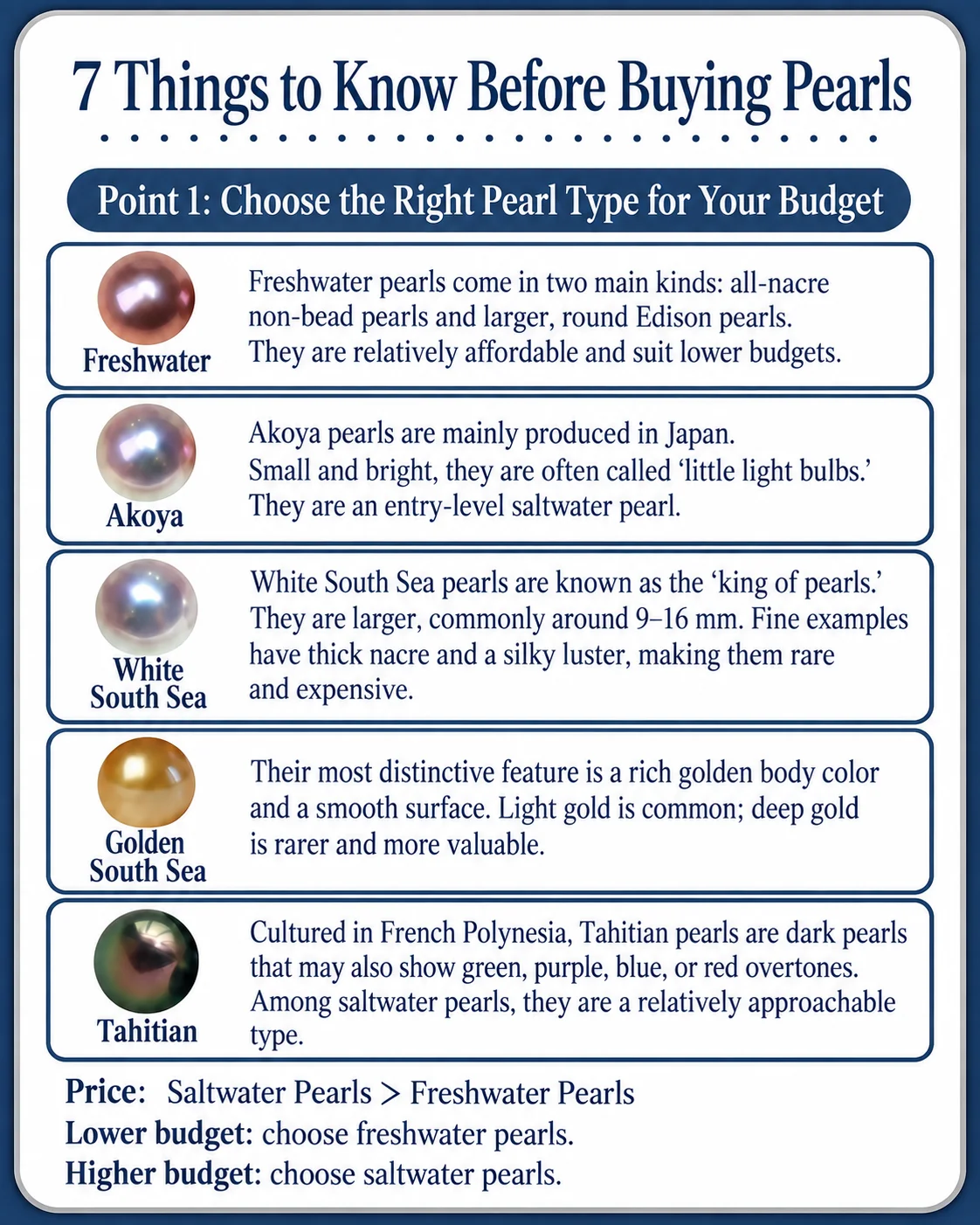
Education answers questions such as: What is the difference between freshwater, Akoya, Tahitian, and South Sea cultured pearls? Why does luster matter? How much should surface characteristics affect the decision? Why can two pearls of the same size have very different prices?
A recommendation answers a different question: Given what you want, which direction makes the most sense for you?
That distinction matters because pearl quality is multidimensional. GIA evaluates pearls using seven value factors—size, shape, color, luster, surface, nacre, and matching for multi-pearl items. Those factors provide a common language for comparison, but they do not automatically tell every buyer to choose the same pearl. A shopper who prioritizes maximum size at a moderate budget may make a different choice from someone who prioritizes very sharp luster, close matching, natural dark color, or minimal surface characteristics.
If a buyer is still learning what those trade-offs mean, education is doing useful work. Once the buyer has expressed enough preferences to rank the trade-offs, the conversation can become more specific. For a deeper explanation of the quality variables themselves, see our guide to evaluating pearl value.
The Decision Threshold: What Should Be Known Before Recommending?
A seller does not need to know everything about a customer before making a useful recommendation. But several decision-critical points should be clear. In practice, the conversation is usually ready to move forward when the following five questions have usable answers.
| Question | Why It Matters | Typical Recommendation Impact |
|---|---|---|
| What is the pearl for? | Daily wear, a gift, bridal jewelry, a statement piece, collecting, and wholesale production create different priorities. | Changes pearl type, size, jewelry format, durability expectations, and matching needs. |
| What budget or price range is comfortable? | Without a budget, almost every quality improvement can be described as desirable. | Determines which trade-offs are realistic rather than theoretical. |
| What look does the buyer actually want? | “High quality” is not a visual style. Classic white, dark natural color, large presence, delicate scale, baroque character, and sharp luster are different goals. | Narrows pearl family, color, shape, size, and design direction. |
| Which quality factors matter most? | Two options at the same price may allocate value differently. | Helps decide whether to prioritize luster, size, roundness, surface cleanliness, matching, or rarity. |
| Are there any non-negotiables? | Treatment status, origin claims, metal preference, certification, natural color, matching tolerance, or delivery requirements can eliminate otherwise attractive options. | Prevents a recommendation that looks good but violates an important condition. |
The important point is not that every consultation must follow a rigid questionnaire. It is that the seller should be able to summarize the buyer's decision in a sentence such as: “You want a classic white pair for frequent wear, you care more about bright luster than maximum diameter, and you want to stay within this price range.” Once that sentence is accurate, a recommendation can become genuinely useful.
When Is It Too Early to Make a Specific Recommendation?
A recommendation is premature when it depends more on the seller's inventory or assumptions than on the buyer's stated priorities. Several situations are strong signals to keep educating or asking focused questions.
- The buyer is still exploring categories. Someone asking “What is the difference between Akoya and freshwater pearls?” may not yet be asking which one to buy.
- The purpose is unclear. A recommendation for a daily-wear stud can be very different from one for a milestone gift or a dramatic necklace.
- The budget is completely undefined. Without any price boundary, “better” can become an endless ladder of larger, rarer, cleaner, or more precisely matched pearls.
- The buyer has not revealed the visual priority. If you do not know whether the buyer wants crisp reflections, large size, warmer color, dark natural color, perfect roundness, or organic shape, narrowing too soon is mostly guesswork.
- A material disclosure is still unresolved. If treatment, pearl identity, origin, or another fact could materially change the buyer's decision, it should be clarified before the seller uses that product as the preferred choice.
Continuing education does not mean reciting a complete pearl encyclopedia. Good education should become more selective as the conversation progresses. Once the buyer says, for example, “I want white pearls for earrings and I care most about a bright, clean look,” there is little reason to spend ten minutes explaining every Tahitian overtone or every baroque shape.
What Should a Good Specific Recommendation Actually Contain?
A useful recommendation is more specific than “buy the highest grade you can afford,” but it does not need to force the buyer into one exact SKU immediately. In many cases, the best recommendation defines a buying specification first.
That specification may include:
- a pearl type or short list of suitable pearl types;
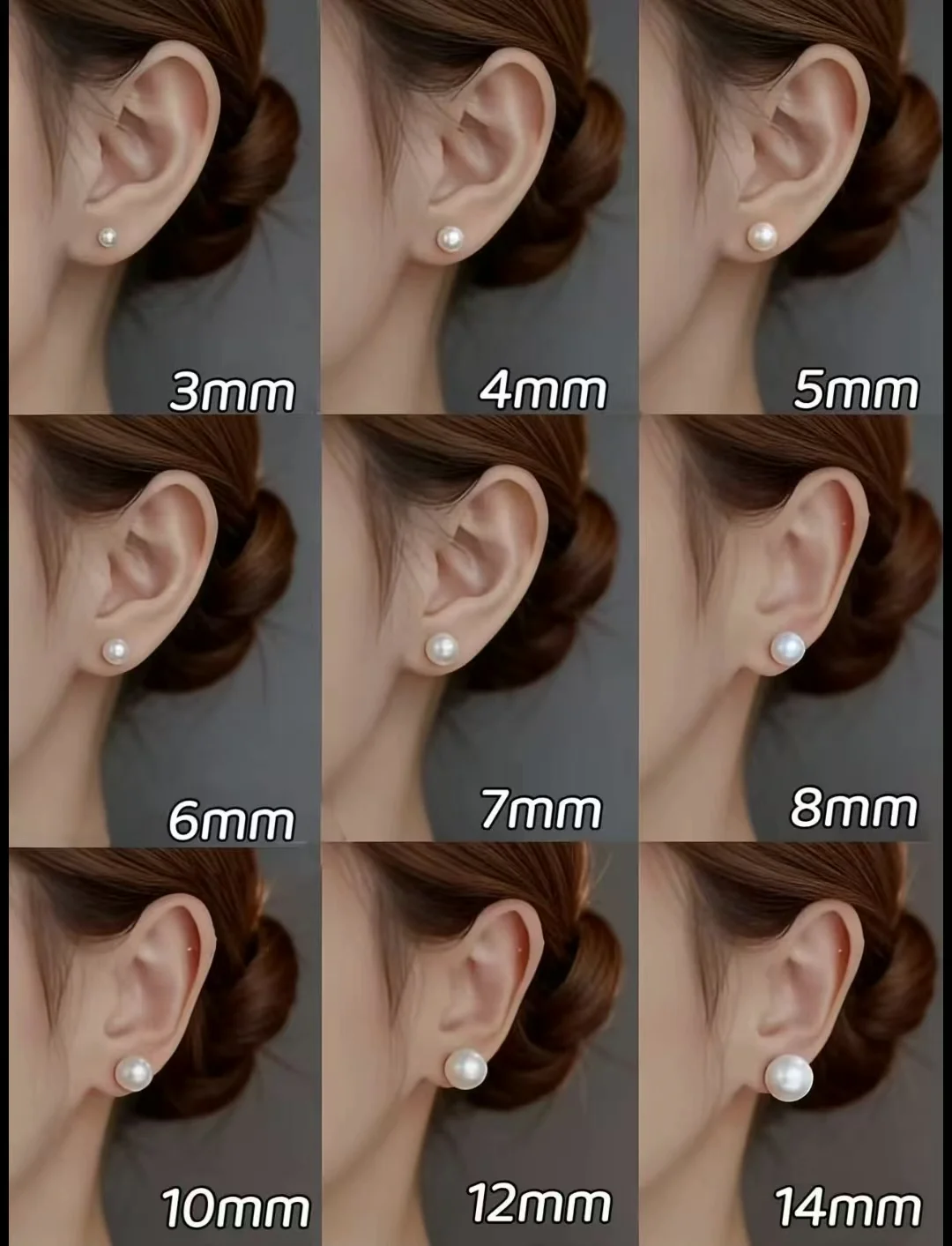
- a practical size range;
- the quality factor that should receive the largest share of the budget;
- which imperfections or trade-offs are acceptable;
- which color, shape, matching level, or treatment status should be avoided for this particular buyer;
- the jewelry format or mounting that best fits the intended use.
For example, “Choose a round white pearl with strong luster” is still broad guidance. “For the classic, bright look you described, compare well-matched white Akoya cultured pearl studs in roughly the 7–8 mm range, and spend first on luster and matching rather than pushing to the largest possible diameter” is a real recommendation because it connects the choice to stated priorities.
If the buyer instead says that visible size matters more than species prestige and that minor surface characteristics are acceptable, a strong-luster freshwater cultured pearl in a larger size may be the more rational recommendation. The point is not that one pearl family is universally superior. The point is that the reason for recommending it should change when the buyer's priorities change.
A Recommendation Should Translate Quality Factors into Trade-Offs
Many buying conversations stall because the buyer is given a list of quality factors but is never told how to prioritize them. This is where recommendation adds value.
Suppose two pearls are within the same budget. One is slightly larger but has softer luster and more visible surface characteristics. The other is slightly smaller, but its reflections are brighter and its surface is cleaner. Education explains what size, luster, and surface quality mean. Recommendation explains which combination better fits the buyer's goal.
If the buyer wants the strongest visual impact at normal viewing distance, the smaller pearl with higher luster may be the better choice. If the buyer explicitly wants a larger statement look and accepts some surface variation, the larger pearl may make more sense. Neither answer is honest unless the trade-off is stated.
This is also why generic grade labels should not carry the whole recommendation. Different sellers can use grade terminology differently, and a letter grade does not tell the buyer which visible characteristic is responsible for the price difference. A stronger sales explanation translates the product into observable qualities: brighter reflections, cleaner surface, tighter matching, larger diameter, rarer color, or a more symmetrical shape.
Use Pearl Type as a Direction, Not as a Shortcut
Pearl type can be a useful way to narrow a recommendation, but it should not replace quality evaluation. As a broad practical guide:
- Akoya cultured pearls are often a strong direction for buyers who want a classic round white appearance with crisp, bright luster.
- Freshwater cultured pearls can make sense when the buyer wants more size, shape variety, or overall value within a given budget.
- Tahitian cultured pearls are a natural direction when naturally dark bodycolor and complex overtones are central to the desired look.
- South Sea cultured pearls are often considered when larger size and a softer, satiny visual presence are priorities and the budget supports that category.
These are starting directions, not automatic rankings. GIA itself notes that different pearl varieties have different standards for luster and appearance. A good recommendation therefore compares quality within the relevant pearl type before declaring one option “better.”
Disclosure Should Come Before Persuasion
A recommendation becomes less trustworthy if it depends on information that the buyer has not been given. Pearl identity and treatment are especially important examples.
In the United States, the FTC Jewelry Guides emphasize truthful descriptions of pearls and distinguish natural, cultured, and imitation products. The guides also call for treatment disclosure in circumstances where treatment is not permanent, creates special care requirements, or significantly affects value. CIBJO's pearl standards and product-integrity guidance similarly emphasize providing material information so a purchaser can make an informed decision.
That creates a simple sales rule: do not use a hidden qualification as the reason a product wins. If a color is treated, if a pearl is cultured rather than natural, if a grade is seller-defined, or if a certification claim has limits, those facts should be clear before the recommendation is framed as the best fit.
Transparent disclosure does not prevent selling. It improves the quality of the recommendation because the buyer can evaluate the option on its real merits rather than on an assumption.
Three Examples of When to Keep Educating and When to Recommend
Scenario 1: The Buyer Wants “A Nice Pearl Necklace”
This is too early for a narrow recommendation. The seller still needs to know whether “nice” means classic, modern, large, delicate, white, dark, highly symmetrical, or intentionally organic. It also matters whether the necklace is for daily wear, a wedding, a gift, or occasional formal use.
The right move is short education plus qualification: explain the main visual directions, ask for an approximate budget, and show two or three contrasting examples. Recommendation should come after the buyer reacts to those differences.
Scenario 2: The Buyer Wants Classic White Studs and Prioritizes Luster
Now the conversation is ready to narrow. The intended jewelry type is known, the desired color is known, and the buyer has named the quality priority. If budget and size preference are also clear, the seller can recommend a specific range rather than continuing to describe every pearl category.
A recommendation might focus on well-matched Akoya cultured pearls with strong luster, then adjust diameter and surface cleanliness to fit the budget. If the same buyer values larger size more than species, the recommendation may shift toward high-quality freshwater pearls instead.
Scenario 3: A Wholesale Buyer Needs Pearls for a Repeatable Product Line
For a wholesale buyer, the recommendation threshold depends less on personal style and more on production constraints. Before specifying pearls, the supplier should understand target retail price, required size range, drilling, acceptable shape and surface variation, matching tolerance, order volume, replenishment needs, and whether color consistency between batches is critical.
Once those variables are known, a recommendation can be very specific: pearl type, size tolerance, shape, luster target, surface acceptance, color range, drilling specification, and matching standard. Recommending only a vague “AAA” grade without defining the usable specification is often less helpful for repeat purchasing.
A Simple Five-Step Sales Sequence
For most pearl consultations, the transition can be managed with a simple sequence:
- Educate: explain only the differences necessary to understand the decision.
- Qualify: identify purpose, budget, desired look, priorities, and non-negotiables.
- Compare: show two or three options that represent meaningful trade-offs.
- Recommend: state which option you would choose for this buyer and explain the reason in plain language.
- Confirm: make the trade-off explicit and check that the buyer agrees with it before closing the choice.
The confirmation step is important. A strong seller might say: “I would choose this pair because the luster and matching are visibly better, even though it is half a millimeter smaller. Does that match what matters most to you?” This keeps the buyer in control while still providing expert direction.
How Can a Buyer Tell Whether a Recommendation Is Actually Personalized?
A useful pearl recommendation should be easy to test. Ask the seller, “Why this one instead of the other two?” The answer should refer to your stated needs—not simply to a grade label, a higher price, or the seller's preference.
Good answers sound like:
- “You said luster matters more than size, and this option has the sharper reflections.”
- “You wanted naturally dark color, so this Tahitian option fits better than treated dark pearls.”
- “You need a repeatable wholesale specification, and this size and surface tolerance will be easier to replenish consistently.”
- “You prefer a larger look but want to stay within budget, so this freshwater option gives more diameter without sacrificing the luster level you liked.”
Weak answers rely mainly on urgency or authority: “This is our best grade,” “everyone buys this one,” or “the more expensive one is better.” Those statements may sometimes point toward a good product, but they do not demonstrate that the product is the best fit for the buyer in front of the seller.
If you are ready to move from general education into concrete styles, our recommended pearl selections can help you compare common directions. For a more specific purchase or sourcing question, you can also contact Margaret Jewelry with your intended use, size preference, and budget so the options can be narrowed around those constraints.
FAQ
Should a pearl seller recommend the most expensive option?
No. Price can reflect rarity, size, quality, matching, craftsmanship, or other factors, but the most expensive option is not automatically the best fit. A recommendation should be tied to the buyer's purpose and priorities.
How many pearl options should a seller show before recommending one?
There is no fixed number, but two or three meaningfully different options are often enough to make a trade-off visible without overwhelming the buyer. More options are useful only when they add a genuinely different direction.
Should education stop once a recommendation is made?
No. Education should become more targeted. Once a recommendation is made, the seller should explain the specific trade-off, relevant disclosures, and why the suggested option fits the buyer's stated priorities.
What information matters most before recommending pearl jewelry?
At minimum, clarify the intended use, approximate budget, desired look, major quality priority, and any non-negotiable conditions such as natural color, treatment status, metal, certification, or size.
Is a pearl grade enough to make a buying recommendation?
Usually not by itself. Grade terminology can vary between sellers. A stronger recommendation explains the observable characteristics behind the grade, such as luster, surface quality, shape, size, color, nacre, and matching.
The Key Point to Remember
Pearl sales guidance should become a specific recommendation when the seller can connect a real product direction to a real buyer priority. Before that point, education reduces confusion. After that point, more education without narrowing can become noise.
The best transition is simple: understand the goal, define the constraints, compare meaningful trade-offs, recommend one direction, and explain exactly why it fits. A good pearl recommendation does not replace buyer choice—it makes that choice easier to understand.