How to Choose Pearl Colors for Different Skin Tones: Who Suits White, Pink, Gold, or Black Pearls?
There is no pearl color that belongs to only one skin tone. A better way to choose is to consider three things together: your skin undertone, whether you want harmony or contrast, and the pearl’s actual bodycolor and overtone. White pearls are the easiest all-round choice, pink pearls can create a soft rosy effect, golden pearls emphasize warmth, and dark Tahitian colors create either sophisticated harmony or dramatic contrast depending on the wearer.
Quick answer: which pearl colors should you try first?
| Coloring or styling goal | Pearl colors to try first | Why they often work |
|---|---|---|
| Cool undertone | Silvery white, white with rose overtone, soft pink, lavender, silver-gray | These colors can echo cooler pink, blue, or neutral-looking tones in the complexion. |
| Warm undertone | Creamy white, ivory, peach, champagne, golden | Warmer pearls can create a smoother, more blended look beside golden, yellow, or peach-leaning undertones. |
| Neutral undertone | Most white, pink, gold, and dark pearl colors | Neutral coloring often works with both warm and cool directions, so style and contrast become more important. |
| You want high contrast | Crisp white on deeper skin; dark Tahitian colors on lighter skin; deep gold against cool or neutral clothing | Contrast makes the pearl more visually distinct instead of trying to blend it into the complexion. |
| You are choosing a first pair or a gift | White or softly creamy white | White is easy to combine with wardrobes, metals, and occasions, while the overtone can still be adjusted warmer or cooler. |
These are starting points, not rules. Someone with cool skin can look excellent in deep golden pearls because the contrast is intentional. Someone with warm skin can prefer bright silver-white pearls because they want a cleaner, sharper look. The best choice is the one that gives the effect you actually want near the face.
Start with undertone, not simply “fair, medium, or dark” skin
Skin depth and skin undertone are not the same thing. Fair, medium, tan, olive, and deep describe how light or dark the complexion appears. Undertone describes whether the overall coloring reads warmer, cooler, or relatively neutral. A person with light skin can have a warm undertone, and a person with deep skin can have a cool or neutral undertone.
For pearl styling, undertone is usually more useful than skin depth when you want a harmonious look. Skin depth becomes more important when you want contrast. Bright white pearls may stand out strongly against deeper skin, while dark gray Tahitian pearls may look especially dramatic against fair skin.
If you are unsure about your undertone, do not rely on one “test” as if it were scientific. Instead, compare what already works near your face in natural daylight. Do silver-toned jewelry and crisp white clothing tend to look more balanced, or do yellow gold and cream look more natural? If both directions work well, you may simply have more freedom to choose by wardrobe and personal taste.
Pearl color is more complex than the words white, pink, gold, and black
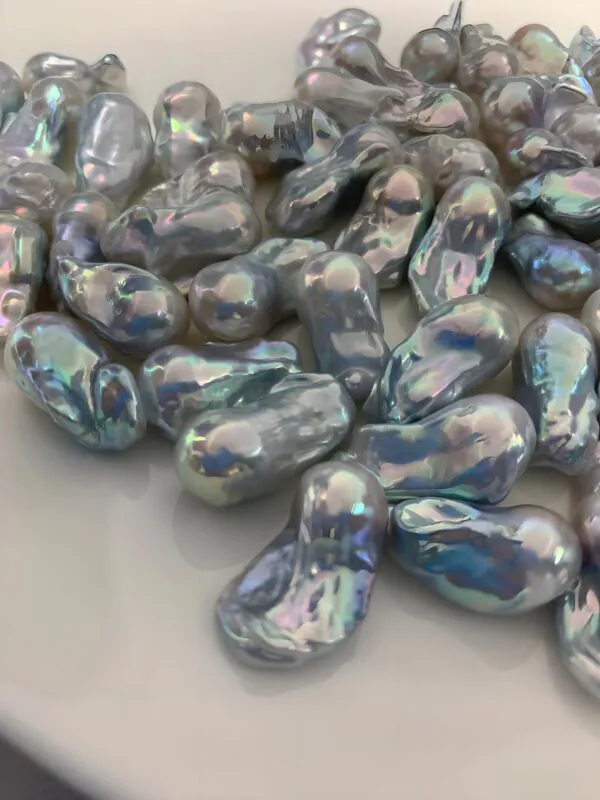
This is the part many skin-tone guides miss. According to GIA’s Pearl Quality Factors, pearl color can include bodycolor, overtone, and orient. Bodycolor is the dominant overall color. Overtone is a translucent secondary color over the bodycolor, while orient is the iridescent play of colors visible on or just below the surface of some pearls.
That means two “white” pearl strands can behave very differently against the same skin. One may look icy and silver-white; another may show a rose overtone; another may look warm and creamy. The same is true of dark pearls: a green-gray Tahitian pearl can give a very different effect from a silver-gray or aubergine-toned pearl.
Color is also only one part of appearance. Strong luster can make a pearl look brighter and more dimensional, sometimes changing the impression more than a small difference in hue. When comparing two pieces, consider color together with the other factors explained in our guide to evaluating pearl value.
Who suits white pearls?
Almost anyone can wear white pearls. The more useful question is which kind of white gives you the effect you want.
Cool undertones: try silver-white or rose-white
Silvery white pearls can create a clean, crisp effect beside cooler coloring. A subtle rose overtone can also work beautifully when you want the pearl to echo rosy tones in the face rather than appear stark. Classic Akoya pearls are especially associated with bright white-to-cream bodycolors and can show attractive rose or other overtones.
Warm undertones: try cream, ivory, or softly warm white
If bright optic white feels too sharp, a creamier pearl may integrate more naturally with golden, peach, or yellow-leaning coloring. This does not mean warm skin should avoid white pearls. It means the exact white—and the metal surrounding it—can shift the overall effect.
Deeper complexions: crisp white can create striking contrast
White pearls can look particularly luminous when the difference between pearl and skin is visually strong. If you want a bold, graphic effect, bright white can be more effective than a cream pearl that blends more closely into the complexion.
Best for: first pearls, bridal jewelry, business wear, gifts, and anyone who wants the easiest color to combine with clothing.
Who suits pink pearls?
“Pink pearl” can describe more than one appearance. Freshwater cultured pearls can occur naturally in pink, peach, lavender, and related pastel bodycolors, while a white pearl may instead have a delicate rose overtone. GIA’s overview of the major cultured pearl types notes this broad natural pastel range in freshwater pearls.
Cool undertones: rosy and lavender-pink can feel naturally harmonious
Soft pink, mauve, or lavender-leaning pearls can echo cooler rosy coloring and create a gentle, low-contrast effect. If you want something more romantic than classic white without moving into a dark statement pearl, this is one of the easiest directions to try.
Warm undertones: look at peach-pink rather than only cool pink
Pink is not one fixed hue. A warm peach-pink pearl can behave very differently from a bluish or lavender pink. If cool pink appears separate from your complexion, a peachier freshwater pearl may create a more connected look.
Neutral and deeper complexions: use pink either softly or as contrast
On neutral skin, pink is flexible because both warmer peach and cooler rose directions may work. On deeper skin, pale pink can create an elegant contrast, while more saturated mauve or lavender tones create a stronger color statement.
Best for: romantic styling, softer everyday jewelry, spring and pastel wardrobes, and buyers who want a visible color difference without the intensity of gold or dark Tahitian pearls.
Who suits golden pearls?
Natural golden South Sea pearls range from pale champagne to rich gold. They are associated with South Sea cultured pearls rather than being simply “yellow versions” of ordinary white pearls. Our South Sea pearl guide explains the category in more detail.
Warm undertones: gold often creates the most seamless harmony
Champagne and gold can reinforce naturally warm coloring, especially when paired with yellow-gold settings. If the goal is a rich, blended look rather than obvious contrast, this is the most intuitive pairing.
Neutral undertones: choose the depth of gold by style
Pale champagne can feel restrained and easy to wear, while deeper gold becomes more of a statement. Neutral coloring often gives you room to choose based on wardrobe, scale, and occasion rather than undertone alone.
Cool undertones: do not assume gold is “wrong”
A deep golden pearl against cool skin can produce deliberate contrast and look very sophisticated. If rich yellow gold feels too strong, try a paler champagne tone first, or compare the same pearl in yellow-gold and white-gold settings. The metal can change the visual transition between pearl and skin.
If color origin matters to the purchase, ask whether the golden color is natural or treated rather than assuming every yellow or gold-colored pearl is a natural Golden South Sea pearl.
Best for: warm-toned wardrobes, statement earrings and pendants, special occasions, and buyers who want a richer alternative to classic white.
Who suits black pearls?
The phrase “black pearl” is convenient, but natural Tahitian pearls are often not jet black. They commonly appear in dark gray, silver, green, brown, and related bodycolors with overtones that may flash green, blue, pink, purple, or bronze. See our guide to Tahitian black pearls for the wider color range.
Fair or cool complexions: dark pearls create strong, modern contrast
Silver-gray, blue-green, or cool peacock-like Tahitian colors can look especially crisp against lighter skin. The effect is very different from classic white: less traditional, more graphic, and often more contemporary.
Warm or olive complexions: look at green, bronze, and warmer dark overtones
Dark pearls with green, bronze, brown, or warm peacock overtones can connect naturally with warmer coloring while still looking distinctive. A charcoal pearl can also work well when you want a neutral dark instead of obvious green.
Deeper complexions: pay attention to luster and overtone, not only darkness
Dark pearls do not need to disappear against deeper skin. Bright luster, silver overtones, vivid green, or strong peacock colors can preserve definition. If a very dark pearl looks too subtle for the effect you want, choose a brighter overtone or a setting that creates separation.
Also remember that dark freshwater pearls often raise a treatment question. GIA notes that freshwater pearls are not typically naturally dark and recommends asking whether unusual colors are natural or treated. Our guide to pearl color enhancement treatments explains why treatment disclosure matters.
Best for: modern styling, evening wear, minimalist dark wardrobes, statement jewelry, and anyone who wants pearls to feel less traditional.
A better decision rule: choose harmony or contrast first
Instead of asking, “What pearl color is allowed for my skin tone?”, ask, “Do I want the pearl to blend with my coloring or stand out from it?” That one question makes the rest much easier.
- Estimate your undertone. Warm, cool, or neutral is enough; you do not need a perfect label.
- Choose harmony or contrast. Harmony usually follows undertone; contrast intentionally breaks it.
- Pick a color family. White for versatility, pink for softness, gold for warmth and richness, dark Tahitian colors for drama.
- Compare actual overtones. Do not buy from the color name alone. A silver-white and cream-white pearl can look surprisingly different on the same person.
- Check the metal. Yellow gold tends to warm the overall piece; white gold, platinum, or silver-toned metal tends to keep the look cooler.
- Check the pearl in daylight near the face. This is more informative than judging it in a display tray or under warm jewelry-store lighting.
This framework also helps when you are choosing for someone else. If you know the person wears mostly yellow gold and warm neutrals, creamy white, peach, champagne, or gold is a logical starting direction. If they wear mostly silver-toned jewelry, black, navy, gray, and crisp white clothing, silver-white, rose-white, or cool Tahitian colors may be easier to integrate.
Do not ignore clothing, metal, and lighting
Pearls are reflective gems. Their appearance changes with surrounding colors and light. A creamy pearl beside an ivory blouse may look softer and warmer; the same pearl against black fabric may appear brighter. A Tahitian pearl with green overtone can look more obviously green beside neutral gray than beside an emerald dress.
The setting matters too. A pink freshwater pearl in rose gold feels warmer than the same pearl in white metal. A Golden South Sea pearl in yellow gold creates a continuous warm palette, while placing it in white gold increases separation between pearl and setting.
For that reason, skin tone should never be the only criterion. Ask yourself whether the piece also works with the clothes, metals, and occasions you already wear most often.
How to choose pearl color when shopping online
Online photos can exaggerate or suppress pearl color because lighting, white balance, exposure, background, and editing all affect what you see. If color is central to your decision, compare pearls under the same lighting rather than comparing separate product photos taken in different conditions.
- Ask for a daylight or neutral-light photo when possible.
- For two candidate colors, ask for them side by side in the same frame.
- Look for video as the pearl rotates; overtone and orient can shift with angle.
- Confirm the metal color because it changes the overall temperature of the jewelry.
- For unusual, dark, or strongly saturated colors, ask whether the color is natural or treated.
- Prioritize luster as well as hue; a flattering color with weak luster may still look less lively than a slightly different color with stronger reflections.
If you are comparing finished pieces rather than loose pearls, you can also browse our finished pearl jewelry and compare how pearl color changes across earrings, pendants, necklaces, and different metal settings.
FAQ
What pearl color is the most universally flattering?
White is the safest all-round starting point because it works with many wardrobes and occasions. The exact overtone still matters: silver-white tends to feel cooler, while cream or ivory feels warmer.
Do white pearls suit warm skin tones?
Yes. Warm skin does not need to avoid white pearls. If bright white feels too stark, try creamy white, ivory, or a warmer overtone. If you like contrast, crisp white can also be an intentional choice.
Are pink pearls naturally pink?
They can be. Freshwater cultured pearls naturally occur in pink, peach, lavender, and related warm pastel colors. Some white pearls can also show a rose overtone rather than a pink bodycolor. Strong or unusual colors should still be evaluated with treatment disclosure in mind.
Are black pearls naturally black?
Tahitian cultured pearls can have naturally dark bodycolors, but many are gray, silver, greenish, or brown rather than pure jet black. Dark freshwater pearls are often color-treated, so ask the seller how the color was produced.
Can cool skin wear golden pearls?
Yes. Golden pearls do not have to match the undertone. On cool skin they can create intentional warm-cool contrast. Pale champagne is a softer entry point, while deep gold produces a stronger statement.
Should I choose pearl color by skin tone or personal style?
Use skin tone as a starting point, not the final rule. Personal style, wardrobe colors, metal preference, desired contrast, pearl luster, and the specific overtone are all equally useful in deciding what you will actually enjoy wearing.
What to remember
The most useful rule is simple: undertone helps you create harmony; contrast helps you create impact. White pearls are highly versatile, pink pearls add softness, golden pearls emphasize warmth and richness, and dark Tahitian pearls create a modern statement. None of these colors is restricted to one complexion.
When possible, compare the actual pearls near the face in neutral daylight. Pay attention to overtone, luster, metal, and treatment disclosure—not just the color word in the product title. That is a much more reliable way to choose a pearl color you will continue to enjoy wearing.