If your skin has a warm, golden, peachy, or yellow undertone, you do not need to limit yourself to one pearl color. As a starting point, cream, warm white, champagne, golden, peach, and some warm green or peacock pearls often look especially harmonious. But crisp white, silver, and cool gray pearls are not automatically “wrong”—they simply create more contrast.
The most useful rule is to choose the effect you want: harmony if you want the pearls to blend naturally with your coloring, or contrast if you want them to look brighter and more graphic. Then compare the actual pearls in neutral daylight, because pearl bodycolor, overtone, luster, metal, and lighting can change the result.
Quick guide: pearl colors that often work with warm undertones
| Pearl color | Typical effect on warm or yellow undertones | Where you may find it |
|---|---|---|
| Cream or ivory | Soft, low-contrast, and easy to wear; often warmer than a bright icy white | Akoya, freshwater, some white South Sea pearls |
| Warm white | Keeps the classic white-pearl look without appearing extremely cool | Akoya, freshwater, South Sea pearls |
| Champagne or pale gold | Echoes golden undertones and can look rich without the intensity of deep gold | Golden South Sea pearls; some freshwater colors |
| Deep golden | Creates strong warmth and a luxurious, saturated look | Golden South Sea pearls |
| Peach or warm pink | Adds color while staying close to a warm palette | Freshwater pearls |
| Green, peacock, or bronze-dark tones | More dramatic; can pair beautifully with golden or olive complexions, especially with yellow gold | Tahitian pearls |
| Silver-white or blue-gray | Creates deliberate cool-versus-warm contrast rather than tonal harmony | Akoya, white South Sea, Tahitian pearls |
First, separate skin depth from undertone
“Warm skin,” “yellow skin,” and “medium skin” are often used as if they mean the same thing, but they describe different features. Your skin depth is how light or deep your complexion appears. Your undertone is the underlying color direction—commonly described in styling as warm, cool, neutral, or olive.
A fair complexion can have warm undertones, and a deep complexion can have warm undertones. Likewise, skin that looks yellow in one photograph may be affected by lighting, makeup, tanning, or camera white balance. That is why online undertone tests should be treated as clues rather than final answers.
For pearl shopping, the practical question is simpler: when you place a warmer pearl and a cooler pearl beside your face, which one gives you the effect you prefer?
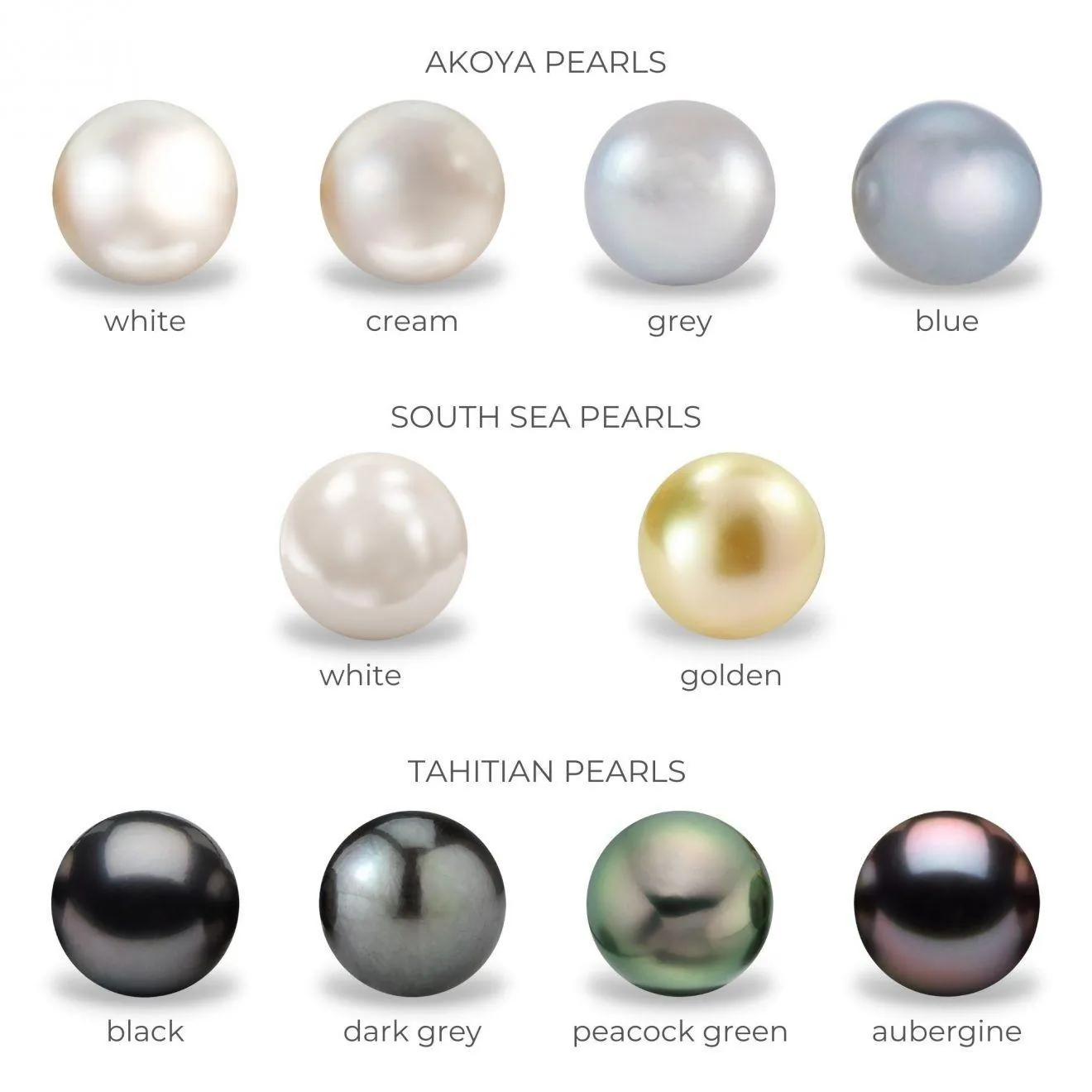
Pearl color is more than “white, pink, or gold”
A pearl can look quite different from a flat color swatch. The Gemological Institute of America describes pearl color through bodycolor, overtone, and sometimes orient. Bodycolor is the dominant overall color; overtone is a translucent secondary color over it; orient is the iridescent play of color that some pearls show. GIA's Pearl Quality Factors provides a useful gemological explanation of these components.
This matters because two pearls both sold as “white” can behave very differently against warm skin. One may read as creamy ivory; another may look silver-white; another may have a pink or green overtone. The label alone cannot tell you which one you will prefer.
Luster matters too. A highly reflective pearl can pick up colors from your skin, clothing, walls, and surrounding light. So when choosing pearls by complexion, judge the actual pearl rather than relying only on a product color name.
The easiest choices for warm or yellow undertones
1. Cream and ivory: the safest warm-neutral direction
If bright white pearls feel too stark, cream or ivory is usually the easiest adjustment. These colors still look recognizably classic, but their slight warmth can sit more gently against golden or yellow undertones.
Cream does not have to mean obviously yellow. In good pearls it may be only a subtle warmth in the bodycolor. This makes cream especially useful if you want a traditional strand, studs, or a pendant without making the jewelry itself the dominant color statement.
2. Warm white: classic without looking icy
Many buyers want white pearls even if their coloring is warm. That is completely reasonable. Instead of avoiding white, compare warmer and cooler versions of white.
A warm white pearl may have a creamy base or a soft overtone that prevents it from reading as blue-white or metallic silver. This gives you the brightness of white pearls while preserving some tonal harmony with the skin.
If you are new to pearls and want a versatile everyday option, the broader pearl buying guide explains how color should be balanced with luster, surface, size, shape, and matching rather than judged alone.
3. Champagne and golden pearls: the most obvious warm match
Champagne and golden pearls naturally sit in the same visual family as honey, caramel, bronze, and yellow-gold tones. For someone who already looks good in those colors, golden pearls are an intuitive place to start.
But “golden” covers a wide range. Pale champagne can look subtle and soft; saturated gold can become the focal point of the entire outfit. Deeper gold is not automatically more flattering simply because the skin is warm—it is a stronger style choice.
Golden South Sea pearls are the best-known natural golden pearl category. If that look appeals to you, compare the finished pieces in our South Sea pearl jewelry collection, and read the South Sea pearl guide for the difference between white, silver, and golden colors.
4. Peach and warm pink freshwater pearls: softer color without going neutral
Freshwater cultured pearls can occur in warm pastel colors including peach and pinkish tones. On warm skin, a peach pearl can feel more integrated than a cool lilac or silver shade, while still offering more personality than cream or white.
The important distinction is between warm pink and cool pink. A peachy, coral-leaning, or warm rosé appearance tends to stay within a warm palette. A blue-pink or lavender-leaning overtone creates more contrast. Neither is inherently better; they simply produce different effects.
Can warm undertones wear Tahitian pearls?
Yes. Tahitian pearls are a particularly good example of why the rule “warm skin should wear warm pearls” is too simple. Their dark bodycolors can show green, peacock, bronze, cherry, aubergine, silver, and other overtones. On a warm or olive complexion, green-peacock and bronze-leaning Tahitian pearls can look especially rich, while yellow gold can connect the dark pearl back to the warmth of the skin.
A silver-gray Tahitian pearl can also work. It creates a cooler contrast, which may make the pearl look sharper and more modern. If you want to explore dark pearls, see our guide to who Tahitian pearls suit and how to style them, or browse Tahitian pearl jewelry.
Are bright white pearls bad for yellow undertones?
No. Bright white pearls are not a mistake on warm skin. They simply create a clearer boundary between the jewelry and the complexion.
That contrast can be desirable if you want the pearls to look crisp, formal, bridal, minimalist, or graphic. It can also work well on deeper warm skin, where a bright white pearl may stand out beautifully.
If a white strand seems harsh in one photo, do not reject it immediately. Check the same pearls in neutral daylight and with the clothing you actually plan to wear. Warm indoor bulbs can make skin and cream pearls look more yellow, while some phone cameras cool down or warm up the whole frame.
Choose by the effect you want: harmony or contrast
Instead of trying to identify one universally “correct” pearl color, decide what you want the jewelry to do visually.
| If you want… | Start by comparing… |
|---|---|
| A soft, harmonious look | Cream, ivory, warm white, champagne, peach |
| A rich, luxurious warm look | Golden South Sea, deep champagne, bronze-dark Tahitian colors |
| A modern statement | Green or peacock Tahitian, deep gold, baroque shapes |
| Crisp contrast | Bright white, silver-white, cool gray, blue-gray |
| A subtle everyday option | Warm white or cream studs and pendants |
How pearl type changes your color options
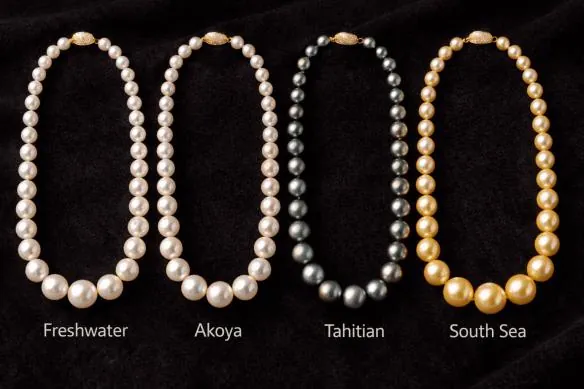
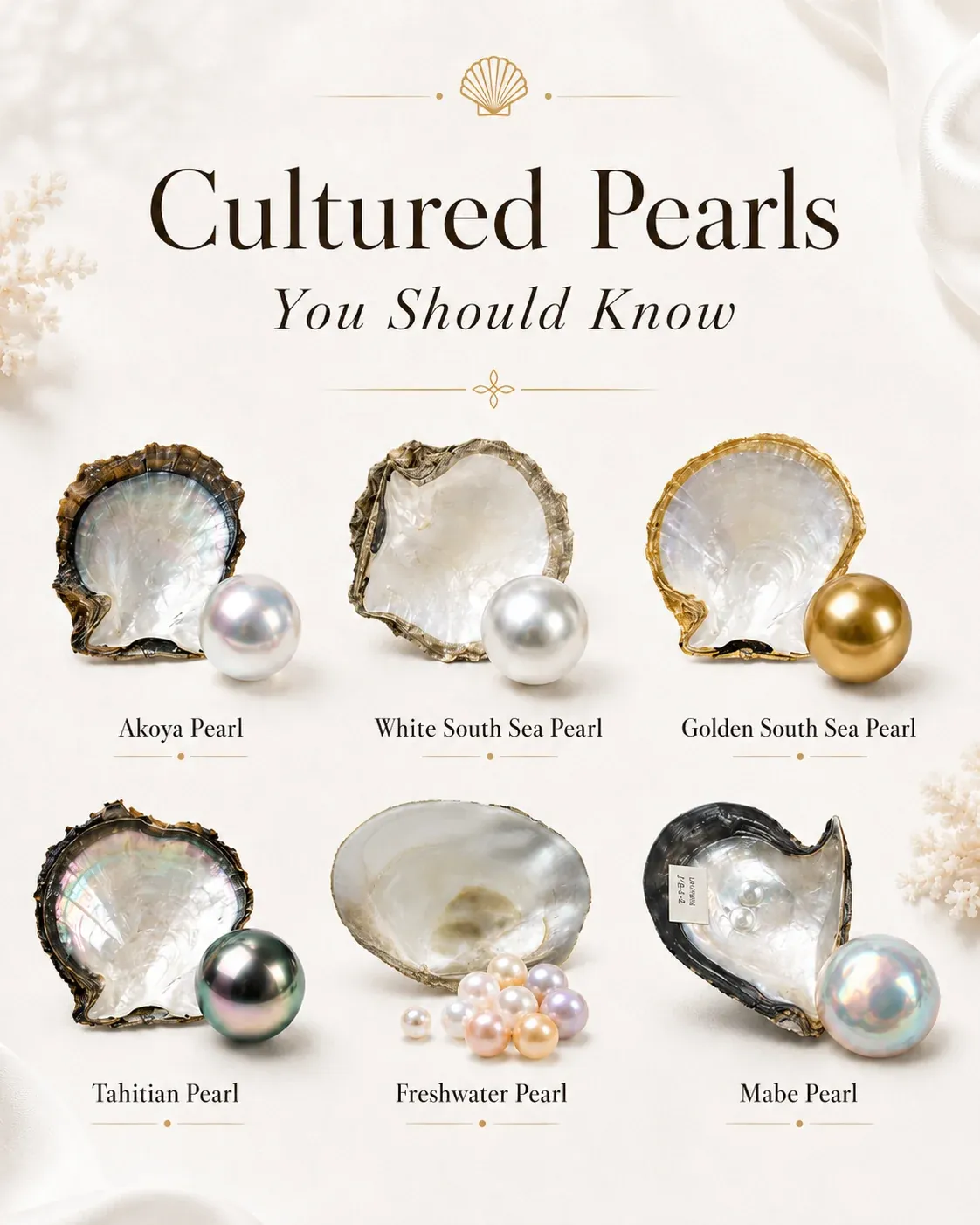
Pearl type is useful because each category tends to occupy a different color range. GIA's overview of the major cultured pearl types shows why the same undertone-matching idea can lead to several different pearl families.
Akoya pearls
Akoya pearls are the classic choice when you want a bright, refined white-to-cream appearance and strong luster. For warm undertones, compare creamier Akoya pearls or warm white pearls against more silver-white examples rather than assuming all Akoya will look the same.
Freshwater pearls
Freshwater pearls give you the broadest practical range for experimenting with warm pastels. White, cream, peach, pink, and other natural color variations make them useful when you want to test different tones without committing immediately to a rare premium color.
South Sea pearls
South Sea pearls are especially relevant for warm undertones because the category includes both white/silver and golden pearls. You can choose harmony with champagne or gold, or create a cleaner contrast with white South Sea pearls.
Tahitian pearls
Tahitian pearls offer dark color and complex overtones rather than classic white. Green, peacock, and bronze directions often sit naturally beside warm palettes, while silver and blue-gray create cooler contrast.
Does the metal matter?
Yes, but it should support the pearl rather than dictate the purchase. Yellow gold tends to reinforce warm palettes, so it is an easy companion for cream, golden, peach, and green-peacock pearls. Rose gold can soften a pink or peach palette. White gold, platinum, or silver-toned metals create a cooler frame.
Do not assume warm undertones require yellow gold. A cool pearl in a white-metal setting may give you exactly the crisp look you want. Conversely, placing a cool gray Tahitian pearl in yellow gold can create an interesting warm-cool contrast.
If you already wear one metal most days, that is often more important than following an undertone rule. Jewelry usually looks most natural when it fits the rest of your wardrobe and the pieces you already own.
How to compare pearl colors before buying
If you can see the pearls in person—or receive accurate comparison photos—use a controlled comparison instead of judging one item in isolation.
- Compare at least two color directions. Put warm white beside cool white, or champagne beside deep gold. Differences are easier to see side by side.
- Use neutral daylight. Avoid very yellow indoor lamps or colored walls when making the final judgment.
- Keep the distance realistic. Earrings should be judged near the face; a necklace should be viewed at normal wearing distance, not only in a macro photograph.
- Check the whole piece. Metal color, pearl size, clothing neckline, and even a dark or light background can change the impression.
- Take a same-light photo. If you are comparing remotely, keep exposure, background, and camera settings as consistent as possible.
- Choose the effect, not the rule. Pick the option that gives you the level of warmth, brightness, or contrast you actually want.
A practical recommendation by complexion depth
Undertone is only one part of the picture. Skin depth changes how much contrast a pearl creates, so these are better treated as starting comparisons than fixed rules.
Fair skin with warm or yellow undertones
Start with warm white, cream, pale champagne, or soft peach. These colors often preserve a light, delicate look. Deep golden or dark Tahitian pearls can also work, but they will read as a more deliberate statement.
Medium, golden, or olive-leaning skin
This range can handle both harmony and richer saturation. Cream, champagne, golden, peach, green, and peacock are all worth comparing. The deciding factor is often whether you want the pearl to merge into a warm palette or stand clearly apart from it.
Deep skin with warm undertones
Rich gold, bronze-dark Tahitian colors, and peacock tones can look powerful, while bright white pearls can create striking contrast. Do not avoid white because it is “cool”; on deeper skin, the contrast itself may be the feature you like most.
What matters more than undertone?
Color matching is useful, but it should not push more important pearl qualities into the background. If two pearls are similar in color, the one with stronger luster, better surface appearance, more suitable size, and better matching may be the better purchase.
That is why undertone should be treated as a filter for style, not a quality grade. GIA's pearl value factors assess features such as size, shape, color, luster, surface, nacre quality, and matching; they do not rank a pearl according to which complexion it suits.
For a finished piece, also consider how often you will wear it. A slightly less “perfect” color that works with most of your clothes may be more useful than a theoretically ideal undertone match that only suits one outfit.
Bottom line
For warm or yellow undertones, the easiest pearl colors to try first are cream, warm white, champagne, golden, peach, and warm green or peacock tones. They tend to sit naturally within a warm palette.
But do not treat that list as a restriction. Bright white, silver, and cool gray pearls can create elegant contrast, and sometimes contrast is more flattering—or simply more interesting—than perfect harmony.
When possible, compare actual pearls side by side in neutral light. Choose the color that gives you the visual effect you want, then judge luster, surface, size, and overall design. If you are ready to compare finished pieces across several pearl types, browse the MJ Pearls jewelry collection.
FAQ
What color pearls look best on warm skin?
Cream, warm white, champagne, golden, peach, and some green or peacock pearls are strong starting points for warm skin. The best choice still depends on whether you want tonal harmony or stronger contrast.
Are white pearls suitable for yellow undertones?
Yes. Warm white or cream-white pearls often create a softer transition, while bright cool white pearls create more contrast. Both can work.
Are golden pearls always best for warm undertones?
No. Golden pearls are an obvious warm match, but saturated gold can be a strong look. Some people prefer cream, peach, warm white, or even contrasting silver-white pearls.
Do warm undertones have to wear pearls with yellow gold?
No. Yellow gold reinforces warmth, but white gold, platinum, silver tones, and rose gold can all work. The metal changes the overall mood and contrast of the piece.
Which pearl type gives the most warm color options?
Freshwater pearls offer many accessible warm pastel colors such as cream, peach, and pink. Golden South Sea pearls offer the strongest natural golden direction, while Tahitian pearls add darker green, peacock, and bronze possibilities.