The best pearls for a young woman are not determined by age. They are determined much more by how she dresses, how much visual presence she likes, and whether the jewelry feels natural with the pieces she already wears.
If you want the safest starting point, small-to-medium pearl studs, a single pearl pendant, a short pearl necklace, or an organic baroque design are all easy to wear. But that does not mean young women must choose tiny white pearls. Larger pearls, dark Tahitian colors, bold baroque shapes, and classic round strands can look equally modern when the design and styling fit the wearer.
The useful question is therefore not “What pearls are young enough?” but “What kind of pearl jewelry matches this person's style?” Once you answer that, size, shape, color, and pearl type become much easier to choose.
Quick Guide: Which Pearls Are Easiest to Wear?
| Style preference | Good starting point | Why it works |
|---|---|---|
| Minimal | 5–7 mm studs or a single 7–9 mm pendant | Clean, light, and easy to combine with everyday clothes |
| Classic | 6–8 mm round or near-round pearls | Polished without being visually heavy |
| Casual / artistic | Baroque or irregular freshwater pearls | Organic shapes make the jewelry feel less formal and more individual |
| Fashion-forward | Short strands, asymmetrical earrings, pearls mixed with chains | The setting creates contrast and makes the pearl part of a modern composition |
| Bold | 9 mm+ pearls, Tahitian colors, large Edison or South Sea focal pearls | A larger or darker pearl reads as a deliberate statement rather than an age signal |
These are starting points, not age rules. A young woman who already wears chunky hoops and large rings may feel more at home in a 10 mm pearl than in a delicate 5 mm stud. Someone with a very minimal wardrobe may prefer the opposite.
First Principle: Age Does Not Decide Whether a Pearl Suits You
Pearls are often discussed as though certain diameters belong to certain age groups. That is a styling convention, not a gemological rule. Pearl size changes visual presence. Shape changes character. Color changes contrast. The jewelry design changes how formal or casual the whole piece feels.
This distinction matters because the same pearl can create completely different impressions. A perfectly round white pearl on a thin chain can look minimal. The same pearl repeated through a traditional graduated necklace can look more formal. A large pearl suspended from a simple hoop can feel playful, while a much smaller pearl used in an ornate matching set may look more ceremonial.
So when choosing pearl jewelry for a young woman, start with her existing jewelry rather than her birth year. Look at the scale, metal color, shapes, and amount of decoration she already chooses for herself.
The Easiest Pearl Jewelry Styles for Young Women
1. Pearl Studs: The Simplest First Pair
Pearl studs are one of the easiest entry points because they do not require a new way of dressing. They can replace an ordinary pair of metal studs and work with T-shirts, shirts, knitwear, dresses, or office clothes.
For a restrained look, roughly 5–7 mm is delicate and easy to forget about while wearing. Around 7–8 mm becomes more visible and is a versatile middle ground. Larger studs can also work very well when the wearer already likes statement earrings.
The setting matters as much as the pearl. A plain post looks clean and classic. A pearl combined with a small hoop, chain, ear jacket, geometric setting, or asymmetrical element changes the mood immediately. If earrings are the likely starting point, browse different pearl earring styles before choosing by millimeter size alone.
2. A Single Pearl Pendant: Minimal Without Feeling Formal
A single pearl pendant leaves visual space around the pearl. That makes it especially easy to wear with modern wardrobes and allows a somewhat larger pearl without creating the visual weight of a full strand.
A 7–9 mm pearl is a useful everyday range for many pendant designs, while 9–11 mm creates more presence. Larger focal pearls can still look clean if the chain and setting remain simple.
Pendants also layer naturally with ordinary gold or silver chains. That makes them a good choice for someone who already wears necklaces but has never worn pearls. See the pearl pendant collection for the difference between minimal, decorative, and statement settings.
3. A Short Pearl Necklace: Classic or Contemporary Depending on the Design
A pearl strand is not automatically mature-looking. What changes the impression is the combination of pearl size, uniformity, necklace length, clasp, and the rest of the outfit.
A shorter strand of small or medium pearls can feel crisp and modern, especially with a plain T-shirt, open-collar shirt, knit top, or simple dress. Irregular pearls make the effect more relaxed. A very uniform round strand creates a more traditional look, which can still be attractive if that is the wearer's style.
When choosing a strand, compare both pearl diameter and necklace length. Our pearl size guide shows how the same millimeter range changes when used in earrings, pendants, and full necklaces.
4. Pearl Drops, Hoops, and Asymmetrical Designs
Movement helps pearls feel lighter. Drop earrings, pearls suspended from hoops, and asymmetrical designs introduce space around the pearl and keep the piece from looking overly coordinated.
This is useful for someone who likes pearls but does not want a traditional “pearl set.” One pearl piece can be the focal point while the rest of the jewelry stays metal-only.
5. Baroque Pearls: An Easy Way to Make Pearls Feel Personal
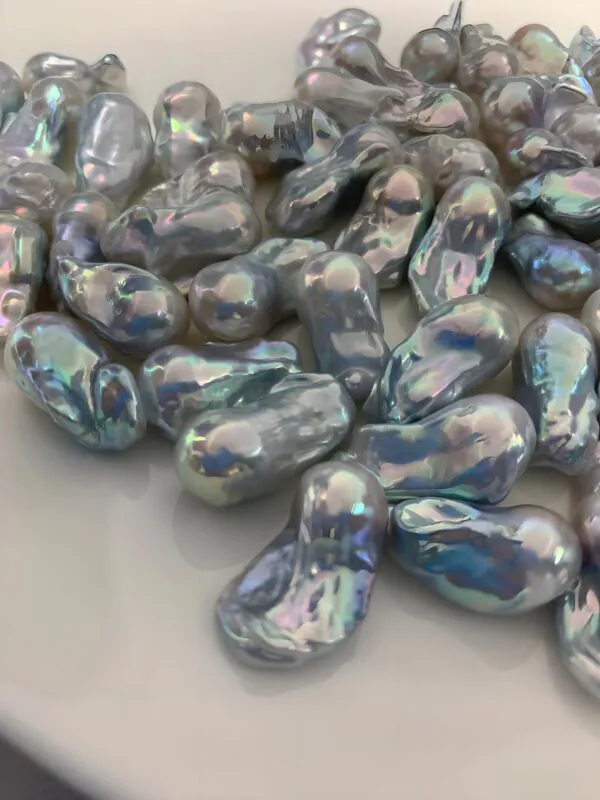
Baroque pearls are naturally irregular rather than perfectly spherical. Their shape gives the eye more texture and makes each pearl look less standardized. That often suits casual, creative, or fashion-oriented styling.
Baroque does not mean low quality. Shape is only one characteristic of a pearl. A baroque pearl can have strong luster, attractive color, and an intentional silhouette. If shape is a major part of the decision, the pearl shape guide explains round, near-round, oval, drop, button, and baroque forms in more detail.
What Pearl Size Suits a Young Woman?
There is no correct pearl size for a particular age. A better way to choose is to decide whether the pearl should be a small accent, a balanced part of the outfit, or the main focal point.
| Approximate size | Visual effect | Useful starting uses |
|---|---|---|
| 4–6 mm | Fine, light, understated | Small studs, delicate strands, secondary piercings, layering |
| 6–8 mm | Balanced and clearly visible | Everyday studs, simple strands, small drops |
| 8–10 mm | Polished with stronger presence | Pendants, larger studs, drop earrings, focal details |
| 10 mm+ | Statement scale | Large freshwater, Tahitian or South Sea designs, bold baroque pieces |
The jewelry format changes how a number looks. A single 10 mm pendant on a thin chain can feel visually lighter than an entire necklace made from 8 mm pearls. Likewise, a large baroque pearl may read as sculptural rather than formal.
Do not automatically choose the smallest size because the wearer is young. If her normal jewelry is bold, a tiny pearl may actually feel less like her than a larger one.
Which Pearl Type Works Best?
Freshwater, Akoya, Tahitian, and South Sea pearls do not correspond to age groups. They offer different combinations of size, shape, color, luster, rarity, and price. GIA describes pearl quality through factors including size, shape, color, luster, surface, nacre, and matching; personal preference then determines which combination is most attractive to the wearer.
Freshwater Pearls: Versatile and Easy to Experiment With
Freshwater cultured pearls are a practical place to start because they are available in many sizes, shapes, and colors. Round and near-round white pearls can look classic, while oval, baroque, and softly colored freshwater pearls can feel more relaxed.
This variety also makes freshwater pearls useful for people who are still discovering what they like. You can compare delicate studs, irregular strands, pendants, or modern mixed-metal designs without assuming there is only one “correct” pearl look. Browse freshwater pearl jewelry if variety is the priority.
Akoya Pearls: Crisp, Round, and Refined
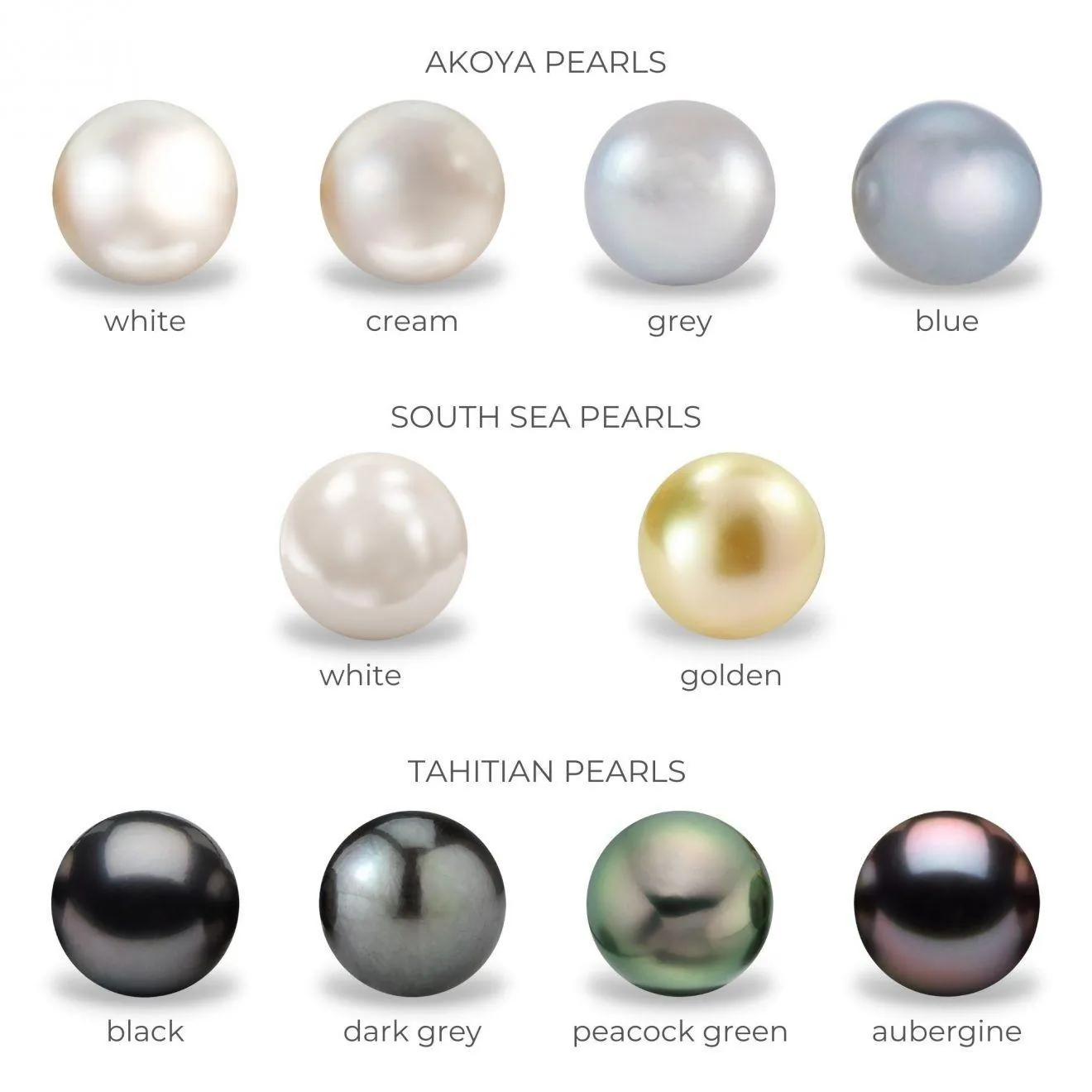
Akoya pearls are strongly associated with round shapes, white-to-cream body colors, and bright luster. That gives them a polished look. They can appear traditional in a classic matched strand, but the pearl itself is not old-fashioned.
Akoya studs, small drops, and simple pendants work especially well when the wearer likes clean lines and a precise finish. If she already dresses in a minimalist or tailored way, the crispness of Akoya can fit naturally.
Tahitian Pearls: Darker Color and More Visual Character
Tahitian cultured pearls are known for naturally dark body colors with gray, green, blue, aubergine, and other overtones. They usually create more contrast than classic white pearls, so they can feel less conventional even in a simple setting.
They are useful for someone who likes darker clothing, cooler metals, bolder jewelry, or pieces that do not immediately read as “traditional pearls.” For a deeper styling discussion, see who Tahitian pearls suit and how to style them.
South Sea Pearls: Large Scale and Quiet Luxury
South Sea cultured pearls commonly occupy a larger size range than classic Akoya pearls and often show a softer, satiny luster. Because of their scale and rarity, they also tend to sit higher in the market.
They are not “too mature” for a young woman. The more useful question is whether she likes large jewelry and whether the budget makes sense. A single South Sea pendant or drop earring can look extremely clean and contemporary because the design lets one pearl do most of the visual work.
Round or Baroque? Shape Changes the Mood More Than Age Does
Round pearls create order, symmetry, and polish. Baroque pearls create irregularity, texture, and individuality. Neither effect belongs to a specific generation.
If the wearer likes classic jewelry, a round pearl may suit her better even at a young age. If she prefers handmade-looking, organic, or asymmetrical jewelry, baroque pearls may feel more natural. Near-round, oval, button, and drop shapes sit between those two extremes and can be easier to integrate into less formal designs.
Shape also affects value. GIA notes that round cultured pearls are generally rarer and more highly valued when other factors are equal, but that does not mean round is always the best aesthetic choice. A well-shaped baroque pearl can be the more interesting option for a design where individuality matters.
What Pearl Colors Look Young and Modern?
No pearl color is inherently young or old. White is the most familiar, but cultured pearls occur in a wide range of body colors and overtones. The best choice is usually the color that works with the wearer's wardrobe, metal preference, and desired level of contrast.
- White and cream are the easiest to combine and can look either classic or minimal depending on the design.
- Pink, peach, and lavender freshwater tones can add softness without requiring a traditional white-pearl look.
- Gray, green, blue, and dark Tahitian colors create stronger contrast and can feel more graphic or dramatic.
- Golden tones are visually warm and can become either understated or luxurious depending on pearl size and setting.
Be cautious with rigid “skin tone rules.” Lighting, clothing color, makeup, hair color, metal choice, and personal preference all change how a pearl reads. When possible, compare pearls near the face or use realistic on-body images rather than choosing only from a white-background product photo.
What Makes Pearl Jewelry Look More Traditional?
When someone worries that pearls may look “too mature,” the effect usually comes from the whole styling combination rather than from one pearl characteristic.
A look becomes more formal when several traditional elements appear at the same time: a perfectly matched round strand, matching pearl studs, a pearl bracelet, conservative clothing, and a ceremonial occasion. None of those elements is wrong. Together, they simply create a very coordinated visual language.
If the goal is a more relaxed result, change one or two parts of the formula:
- wear one pearl piece instead of a complete matching set;
- combine pearls with an ordinary metal chain, hoop, or ring;
- pair a classic strand with a T-shirt, denim, knitwear, or a relaxed shirt;
- use an irregular pearl shape or asymmetrical setting;
- let a larger pearl stand alone instead of repeating it across a full set.
This is why a classic pearl does not need to be replaced simply to create a modern look. Often the styling context is the only thing that needs to change.
Choose Pearls by Personal Style, Not by an Age Chart
| If her style is... | Try... | Avoid assuming... |
|---|---|---|
| Minimalist | Small studs, single pearl pendant, clean round or near-round pearls | That a larger single pearl will automatically look too formal |
| Classic / professional | 6–8 mm Akoya or high-luster freshwater pearls, simple drops, clean strands | That classic styling is inappropriate for a younger wearer |
| Romantic / soft | Drop shapes, pink or peach tones, delicate gold settings | That only white round pearls count as “real pearl style” |
| Casual / creative | Baroque pearls, mixed shapes, short strands, irregular designs | That imperfect shape means poor quality |
| Bold / fashion-led | Large focal pearls, dark Tahitian colors, oversized drops, mixed chains | That young women should always wear small pearls |
How to Choose Pearls as a Gift for a Young Woman
If you are buying for someone else, the safest clue is not her age. It is the jewelry she already chooses.
- Check whether she usually wears earrings, necklaces, rings, or bracelets. Buy the format she actually uses.
- Look at scale. Are her current earrings tiny, medium, or large? Are her necklaces delicate or chunky?
- Check metal color. Yellow gold, white metal, and rose tones change how the pearl fits into her existing collection.
- Notice whether her jewelry is symmetrical or irregular. This helps decide between classic round pearls and organic shapes.
- When uncertain, avoid extremes. Medium-size studs or a single pendant are easier to wear than a very large formal strand.
For many gift situations, roughly 6–8 mm studs or a 7–10 mm single-pearl pendant are reasonable middle-ground starting points. Treat those ranges as practical defaults rather than rules. If the recipient already wears bold jewelry, go larger. If she prefers extremely delicate pieces, go smaller.
Do Not Sacrifice Pearl Quality Just to Make the Piece Look “Younger”
Style and quality are different questions. Once you know the general look you want, evaluate the pearl itself.
GIA's pearl value framework considers size, shape, color, luster, surface quality, nacre quality, and matching for multi-pearl jewelry. Among those factors, luster has a major effect on the beauty of a pearl. A bright, lively smaller pearl may be more attractive than a larger dull one.
This is particularly useful when working within a budget. Instead of chasing maximum diameter, consider whether a slightly smaller pearl gives you better luster, cleaner appearance, or stronger matching. If you want to compare those factors systematically, use the MJ Pearls buying guide before focusing on style labels.
A Simple Five-Step Way to Decide
- Choose the jewelry type first. Earrings, pendant, strand, bracelet, or ring.
- Choose the visual scale. Delicate, balanced, bold, or statement.
- Choose the design language. Round and polished, organic and baroque, or something in between.
- Choose the pearl type and color. Freshwater, Akoya, Tahitian, South Sea, or another category based on the look and budget.
- Then judge quality. Compare luster, surface, condition, matching, and construction instead of buying only by age-based recommendations.
This framework works because it starts with the wearer rather than with an arbitrary age category.
Frequently Asked Questions
Are pearls suitable for young women?
Yes. Pearls do not have a minimum age. The design and styling determine whether a piece feels delicate, classic, casual, artistic, or bold. Young women can wear anything from tiny white studs to large Tahitian or baroque pearls if the piece matches their personal style.
What pearl size is best for a woman in her 20s?
There is no single best size. Around 6–8 mm is a versatile range for many studs and strands, while 7–10 mm works well for many pendants. Smaller sizes feel more delicate; larger sizes create more presence. The wearer's existing jewelry scale is a better guide than age.
Do large pearls make a young woman look older?
Not necessarily. A large pearl can look minimal, sculptural, or fashion-forward when used as a single pendant, drop, hoop accent, or baroque focal piece. Formality depends on the whole design, not simply on diameter.
Are baroque pearls better for younger women?
They are not objectively better, but their irregular shapes often create a more casual or artistic effect. A young woman who prefers classic, symmetrical jewelry may still prefer round pearls.
Are Akoya pearls too formal for young women?
No. Akoya pearls can look very clean and modern in studs, small drops, simple pendants, or restrained strands. They become more traditional-looking mainly when combined with a very formal, fully matched design.
What is the safest pearl gift for a young woman?
If you do not know her exact taste, a simple pair of medium-size studs or a single pearl pendant is usually easier to integrate into an existing wardrobe than a full matching set. Check the jewelry scale and metal color she already wears before choosing.
Final Takeaway
Young women do not need a special category of “young pearls.” They need pearl jewelry that fits how they already dress.
For a minimal wardrobe, that may mean small studs or a single pendant. For someone who likes organic jewelry, it may mean baroque freshwater pearls. For a polished dresser, classic Akoya can be exactly right. For someone who likes strong visual pieces, dark Tahitian pearls or large focal pearls can look more natural than a tiny traditional stud.
The most useful rule is simple: choose the person first, then choose the pearl. Size, shape, color, and pearl type should support her style rather than satisfy an age chart.