The easiest way to style pearls with gold chains is to give each necklace a different job. Let one piece be the focal point, separate the necklaces enough that both remain visible, and contrast their visual weight rather than trying to make everything match.
A classic pearl strand with a fine gold chain is the simplest place to start. From there, you can make the combination more modern with a paperclip chain, more minimal with a single pearl pendant, or more dramatic with baroque pearls and a stronger gold link. The best result usually comes from balancing length, scale, texture, and one clear focal point.
A Simple Formula for Pearls and Gold Chains
Before thinking about exact necklace lengths, decide which piece should attract attention first. A pearl strand already creates a strong line around the neck, while a large pendant or chunky gold chain naturally becomes a focal point of its own.
For most everyday combinations, use this three-part formula:
- Choose the anchor. Decide whether the pearls or the gold chain should be the main piece.
- Create visible separation. Place the second necklace clearly above or below the first rather than at almost the same level.
- Change the texture or scale. Smooth pearls look more intentional beside a visibly different metal chain than beside another piece with the same visual weight.
A difference of roughly 1–2 inches (about 2.5–5 cm) between necklace lengths can be a useful starting point, but it is not a fixed rule. Neck circumference, pearl diameter, pendant weight, clasp position, and clothing can all change where a necklace actually sits. Judge the space you can see in the mirror, not only the number printed on the product page.
| Combination | Best effect | What to watch |
|---|---|---|
| Classic pearl strand + fine gold chain | Clean, easy, everyday | Keep the chain visibly above or below the pearls |
| Pearl choker + longer gold pendant | Modern and vertical | Leave enough room around the pendant |
| Pearl pendant + short gold chain | Minimal and youthful | Avoid a second large pendant |
| Baroque pearls + paperclip chain | Textural and contemporary | Let only one piece be visually heavy |
| Dark Tahitian pearls + yellow gold | Rich, high-contrast look | Keep clothing colors relatively controlled |
Choose the Gold Chain by Texture, Not Just by Length
The chain style changes the mood of the pearls more than many people expect. Two gold chains at the same length can produce completely different looks if one is almost thread-fine and the other uses large, open links.
Fine cable, box, or delicate curb chains
These are the easiest companions for a classic pearl strand. Their narrow profile adds a clean metallic line without competing strongly with the pearls. If you are trying pearl-and-gold layering for the first time, this is usually the lowest-risk combination.
It works especially well with round white pearls, smaller Akoya pearls, or a neat freshwater pearl strand when you want the pearls to remain the obvious focal point.
Paperclip chains
Paperclip links create more visible geometry. That makes them useful when you want pearls to feel less traditional. Pair them with a smaller pearl strand, a pearl pendant, or irregular baroque pearls rather than automatically adding them to the heaviest strand you own.
If both the paperclip chain and the pearls are large, give them more vertical space so the combination reads as two deliberate layers instead of one crowded band.
Rope and twisted chains
Rope and twisted chains reflect more light and already carry visual texture. They work best when the pearl piece is comparatively simple. A smooth strand of round pearls can balance a textured chain well; a heavily textured chain plus highly irregular pearls can become busy quickly.
Chunky curb or statement chains
A chunky gold chain can work beautifully with pearls, but one of the two pieces should clearly lead. If the chain is the hero, use smaller pearls, a short pearl strand, or a single pearl element as contrast. If the pearls are large and dramatic, choose a cleaner metal layer.
Match Chain Weight to Pearl Size
One of the most useful styling decisions is simply comparing the apparent size of the chain links with the pearls. You do not need a mathematical ratio; you need a clear hierarchy.
- Small pearls, around 4–6 mm: pair easily with fine or medium-fine chains and can support two or three light layers.
- Medium pearls, around 6–8 mm: have enough presence to sit beside a moderately visible chain without disappearing.
- Larger pearls, around 8 mm and above: usually look cleaner with fewer surrounding layers or with a chain that is visually distinct rather than merely thicker.
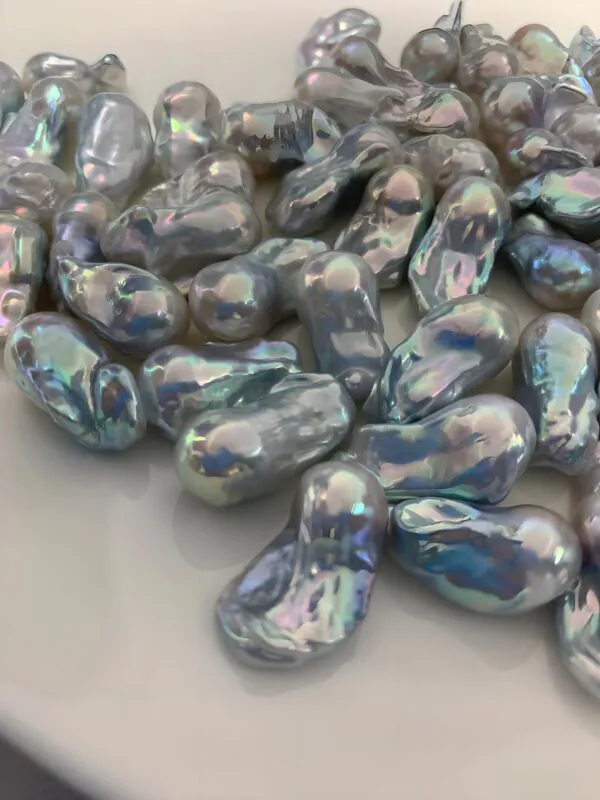
- Large baroque pearls: already provide shape, texture, and variation, so a restrained gold chain often creates the strongest contrast.
If you are unsure how different millimeter sizes look once worn, the MJ Pearls pearl size guide gives a more practical sense of scale for necklaces, earrings, and pendants.
Six Pearl-and-Gold Combinations That Are Easy to Wear
1. Classic white pearl strand + longer fine gold chain
This is the most forgiving combination. Let a pearl necklace sit near the collarbone, then add a slightly longer fine gold chain. If the chain includes a small pendant, allow the pendant to fall clearly below the pearl line.
The gold breaks up the formality of a full pearl strand without making the outfit feel deliberately “layered.” It works with knitwear, open shirts, simple dresses, and plain T-shirts.
2. Pearl choker + longer gold pendant
A short pearl necklace frames the neck horizontally, while a pendant creates a vertical line below it. This contrast is especially useful if two plain necklaces at similar lengths feel too flat.
For a clean look, keep the pendant simple and avoid adding another charm at the same level. You can browse pearl necklaces or pearl pendants to compare how full strands and focal-point designs change the balance.
3. Short gold chain + single pearl pendant
If you like pearls but do not want the visual weight of a full strand, reverse the usual arrangement. Wear a short gold chain first, then place a pearl pendant lower.
This is one of the easiest combinations for minimalist wardrobes because the pearl appears as a single point of light rather than a complete row. It also leaves more freedom to use a slightly more textured upper chain.
4. Baroque pearl strand + clean paperclip chain
Baroque pearls already have irregular outlines, so the straight geometry of paperclip links creates a useful contrast. The goal is not to match the shapes. It is to let one material look organic and the other architectural.
Keep the rest of the outfit relatively simple if both pieces are visually substantial. A white shirt, black knit, denim, or plain dress gives the jewelry enough negative space.
5. Tahitian pearls + yellow gold
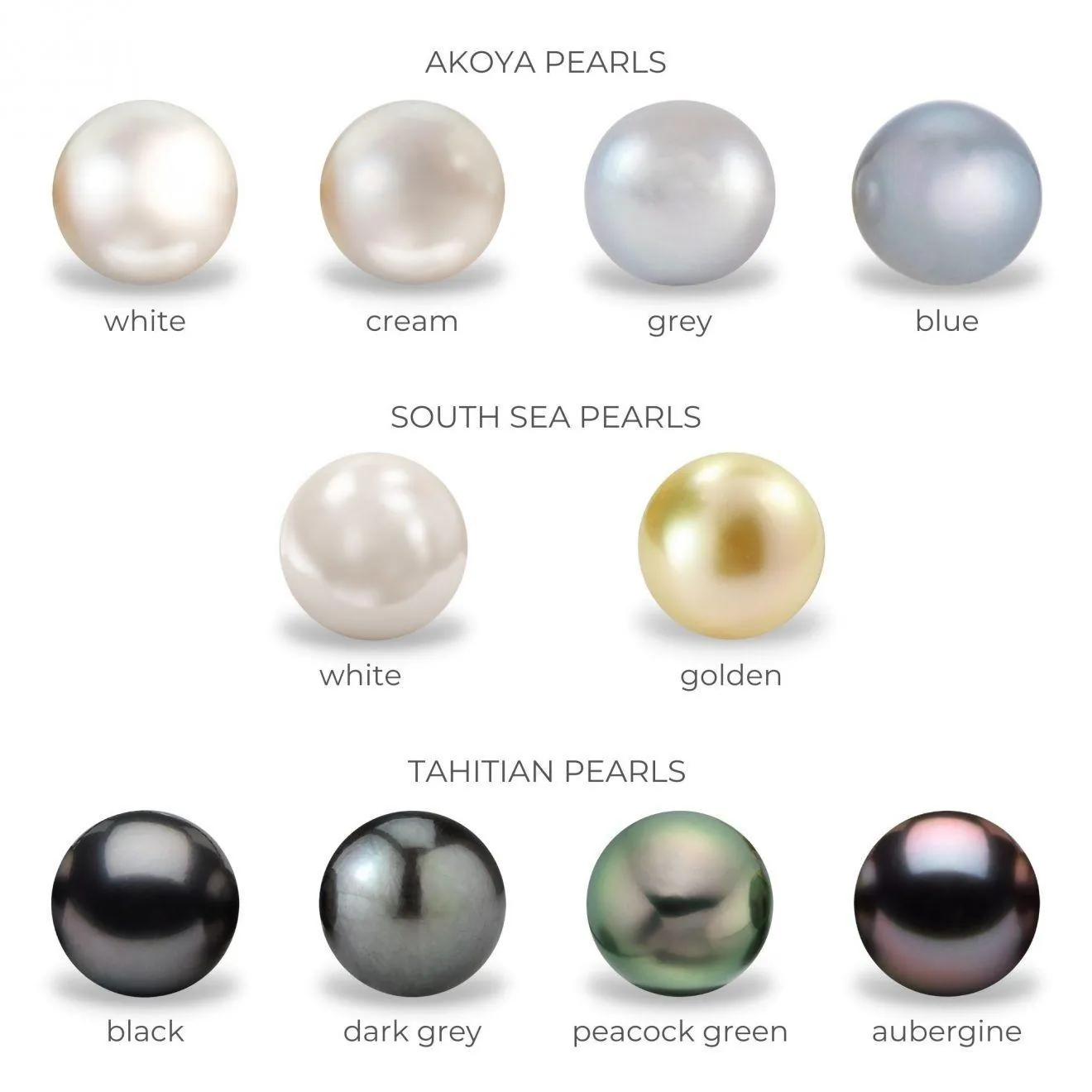
Dark Tahitian pearls can make yellow gold look richer because the warm metal sits against gray, green, peacock, or charcoal pearl colors. The pairing does not need to follow a strict skin-tone rule; the overall contrast between pearl, metal, and clothing matters more.
For more detail on dark pearl color, overtone, and metal pairing, see how to style Tahitian pearls.
6. Cream or golden-toned pearls + simple yellow gold
Warm-toned pearls and yellow gold create less color contrast, so texture becomes more important. A smooth pearl strand beside a fine chain can look cohesive and polished, while large gold links beside large warm pearls can become visually heavy.
If the pearl and metal colors are very close, create separation with length, link shape, or clothing color rather than adding more jewelry.
Should the Gold Chain Sit Above or Below the Pearls?
Either arrangement can work. The better choice depends on which piece is the anchor.
Put the pearls above the gold chain when you want a pearl strand or choker to frame the face and the gold layer to extend the composition downward. This is the easiest arrangement for classic pearl strands.
Put the gold chain above the pearls when the upper chain is delicate and the pearl piece is a pendant or longer necklace. This can make the overall look lighter and more casual.
Instead of following a universal rule, ask one question: Do the two pieces still read as separate necklaces from normal viewing distance? If not, change the length of one layer.
Match the Necklace Stack to the Neckline
Necklace layering is partly a jewelry decision and partly a clothing decision. A combination that looks balanced against bare skin can become crowded when it lands directly on a collar or neckline seam.
- V-neck: let a pendant follow the open vertical space while a shorter pearl or gold layer sits above it.
- Scoop or square neck: use the open area for two clearly separated layers rather than filling every inch.
- Button-down shirt: one pearl layer plus one fine gold chain often works better than a dense three-necklace stack.
- Crew neck: either keep both necklaces above the fabric edge or let the longer piece fall clearly over the shirt; avoid having one necklace disappear exactly into the neckline.
- Strapless or off-shoulder styles: shorter layers have plenty of open space, so you can use slightly more contrast in chain texture.
How to Keep Pearls and Gold from Looking Too Formal
Pearls can become formal-looking when several traditional signals appear at once: perfectly matched round pearls, symmetrical clothing, polished hair, a formal neckline, and conservative metal jewelry. You do not have to remove the pearls; change one or two surrounding elements.
Try one of these adjustments:
- replace a fine dress chain with a paperclip or simple curb chain;
- wear the pearls with denim, a T-shirt, knitwear, or an open shirt;
- use a pearl pendant instead of a full strand;
- choose baroque or slightly irregular pearls for more texture;
- keep the stack to two necklaces rather than automatically adding a third.
The point is not to make pearls look “casual” at all costs. It is to control how many formal cues are present at the same time.
How to Avoid a Busy or Tangled Look
If a pearl-and-gold stack does not look right, the problem is usually easier to diagnose than it seems.
If the necklaces merge visually: increase the difference in length.
If the stack feels heavy: remove one thick piece or replace it with a finer chain.
If there are too many focal points: keep one pendant, one bold chain, or one dramatic pearl strand—not all three.
If the necklaces tangle: use greater length separation, combine pieces with different weights, and test the stack while moving rather than only while standing still. Necklace separators can help in some combinations, but they cannot compensate for several chains trying to occupy the same position.
One Care Rule Matters When You Layer Pearls with Metal
Pearls are relatively soft compared with many jewelry materials, so repeated rubbing and abrasion are worth paying attention to. The Gemological Institute of America notes that pearl surfaces can be scratched or abraded and recommends keeping them away from rough objects and storing them carefully.
In practice, you do not need to avoid layering pearls with gold. Just avoid creating a stack in which a rough or heavy metal edge constantly rubs the same pearl, and do not store the necklaces tangled together after wear. Wipe pearls gently before putting them away and store them separately from harder jewelry.
For a fuller routine, see the MJ Pearls care and maintenance guide. GIA also provides a useful pearl care and cleaning reference.
The Best Starting Point: Two Pieces, Not Five
If you are building a pearl-and-gold look from scratch, start with one pearl necklace and one gold chain. Make their lengths visibly different, decide which piece is the focal point, and check the combination with the actual neckline you plan to wear.
Once those two pieces work, adding a third becomes much easier. If they do not work, more jewelry rarely solves the problem.
There is no single correct gold-chain style or fixed spacing measurement. A successful combination simply needs a clear hierarchy: one anchor, enough visible separation, and a deliberate contrast in scale or texture. That is what makes pearls and gold look modern rather than crowded.
Frequently Asked Questions
Can you wear a pearl necklace with a gold chain?
Yes. Pearl necklaces pair well with gold chains when the pieces have visibly different lengths or visual weights. A classic pearl strand with a fine yellow-gold chain is one of the easiest combinations to wear.
Should a gold chain be longer than a pearl necklace?
It often works well, especially when the pearl strand sits near the collarbone and the gold chain or pendant falls below it. However, the reverse arrangement can also work. What matters is that the necklaces remain visually separate.
Do pearls look better with gold or silver?
Neither metal is universally better. Yellow gold usually creates a warmer look, while white metals tend to feel cooler and crisper. Pearl color, clothing, skin tone, and personal style all affect the final result.
Can a gold chain scratch pearls?
Pearl surfaces can be scratched or abraded by harder or rougher objects. When layering, avoid constant rubbing from heavy or sharp-edged links, and store pearl jewelry separately after wear.
How do you keep pearl and gold necklaces from tangling?
Use clearly different necklace lengths, avoid stacking several chains of nearly identical weight, and test the combination while moving. A necklace separator can help, but good spacing and different necklace weights usually matter more.