A bride should choose pearls as part of the complete bridal look, not as an isolated jewelry purchase. Start with the dress and hairstyle, decide whether the ears or neckline should carry the main jewelry focus, then choose pearl scale, quality, color, and type. Before buying, test the jewelry with the actual gown or a close visual substitute and look at it from portrait distance as well as close up.
This order matters because a beautiful pearl can still be the wrong bridal choice if the necklace fights the neckline, the earrings disappear under the hair, or several pearl pieces compete with one another. The goal is not to find the most expensive or most traditional pearl. It is to make the pearls look as though they were chosen for this bride, this dress, and this wedding.
Quick Answer: Choose Bridal Pearls in This Order
| Decision | What to ask | Why it comes first |
|---|---|---|
| 1. Overall bridal look | Classic, minimal, romantic, organic, dramatic, or unconventional? | Sets the visual direction before you compare pearl types |
| 2. Jewelry focal point | Should attention sit at the ears, neckline, wrist, or hair? | Prevents several pieces from competing |
| 3. Jewelry format | Studs, drops, pendant, strand, bracelet, or another design? | The dress neckline, veil, and hairstyle affect what is visible |
| 4. Pearl scale | Should the pearls look delicate, noticeable, or statement-sized? | Size changes the visual weight of the entire look |
| 5. Pearl quality | How strong is the luster? Are surface features distracting? Is matching intentional? | Visible quality often matters more than simply buying larger pearls |
| 6. Color and metal | Do the pearls work with the actual dress, veil, skin, and metal details? | “White” pearls and “white” wedding fabrics are not all the same tone |
| 7. Full bridal try-on | Does the jewelry still work in photos, movement, and several hours of wear? | A wedding piece has to work beyond a close-up product photo |
1. Define the Bridal Look Before You Choose the Pearl Type
It is tempting to begin with “Akoya or freshwater?” but that is usually too early. First decide what the finished look is supposed to communicate.
- Classic: clean symmetry, round pearls, restrained metalwork, and a polished finish.
- Minimal: one pearl pendant, simple studs, or clean drops with very little surrounding detail.
- Romantic: softer movement, delicate drops, floral settings, or pearls combined with fine gold or diamond accents.
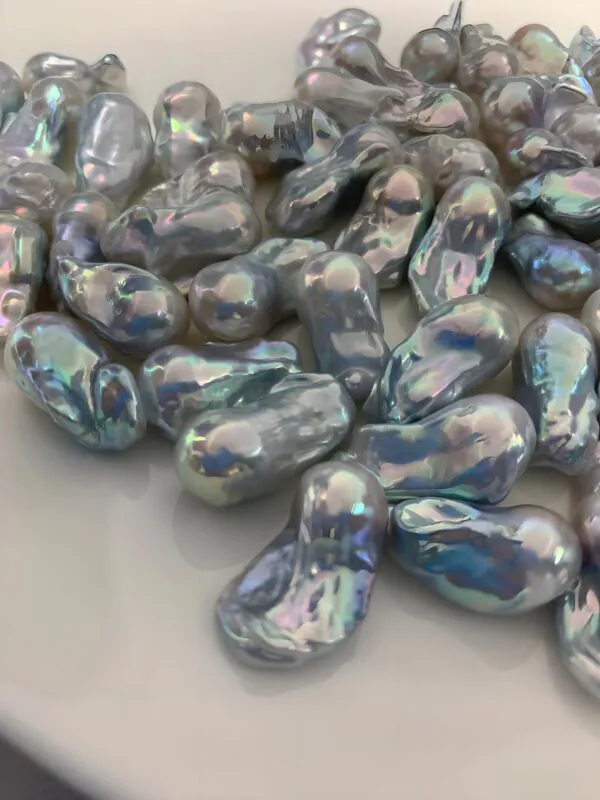
- Organic or artistic: baroque shapes, visible irregularity, and designs in which each pearl looks individual.
- Dramatic: larger scale, longer drops, a prominent strand, or a pearl piece designed to be noticed from across the room.
- Unconventional: Tahitian pearls, mixed shapes, darker colors, asymmetry, or pearls used with less traditional bridal styling.
This visual brief narrows the search faster than a list of pearl species. If you want a type-by-type comparison after you have chosen the look, see our guide to the best pearls for bridal jewelry.
2. Decide Where the Pearls Should Be Seen
Think of bridal jewelry as a composition. The eye should have somewhere to land. For most brides, that means choosing one primary pearl area and letting the other pieces support it.
If the earrings should lead
This works especially well with an updo, a high or detailed neckline, a dramatic veil, or a dress that already has enough visual information around the chest. Pearl studs create a quiet finish; short drops add movement without becoming dominant; longer drops can become the main jewelry statement.
If earrings are your focal point, compare the silhouette first in the pearl earring collection. A highly visible drop and a small stud can use the same pearl type but produce completely different bridal looks.
If the neckline should lead
An open neckline can give a pearl strand or pendant a clear place to sit. Strapless, sweetheart, square, scoop, and many open V-neck dresses leave visible space around the collarbone. By contrast, high necklines, halters, illusion panels, heavy lace, or dense beading may already occupy that space.
The useful question is not “Does this neckline allow pearls?” but “Does the neckline need anything added?” A necklace should improve the shape of the dress rather than merely fill empty skin.
If the dress already has pearl embellishment
You do not have to repeat pearls everywhere. Pearl-beaded fabric may already provide enough repetition. One clean pair of earrings can connect the jewelry to the dress more effectively than adding a necklace, bracelet, earrings, and pearl hairpiece all at once.
3. Choose One Main Pearl Focal Point
Matching sets can work, but every piece does not need equal visual weight. A simple way to keep the look controlled is to choose one leading piece and one supporting piece.
- Statement pearl drops + no necklace: useful when the face and hairstyle should remain the focus.
- Classic strand + small studs: balanced and traditional without making both pieces compete.
- Single pearl pendant + restrained studs: clean and easy with minimalist dresses.
- Sculptural baroque earrings + no necklace: strong enough for a modern dress without needing a complete set.
- Pearl bracelet + earrings: useful when the neckline is already visually complete.
This is also a practical way to control budget. Instead of dividing money across three or four average pieces, you can put more of the budget into the pearl jewelry that will actually be noticed.
4. Choose Pearl Size by Visual Weight, Not by the Bride's Age
There is no universal “bridal pearl size.” The same diameter can look delicate in one design and substantial in another. A pearl stud sits directly on the ear, a drop gains visual length from the setting, and a full strand repeats the pearl diameter around the neck.
Use the dress as the scale reference. A heavily embroidered gown, ornate veil, or large floral detail may need quieter jewelry. A clean satin column dress or simple civil-wedding outfit can support a more noticeable pearl without looking crowded.
Then check the jewelry from more than arm's length. Wedding photographs include close portraits, half-body images, group photos, and full-length frames. A pearl that looks large in a close mirror may look restrained from two meters away. Conversely, a very large pearl can dominate a close portrait more than you expected.
For millimeter comparisons by jewelry format, use our pearl size guide. Treat the measurements as visual tools rather than age rules.
5. For Bridal Pearls, Prioritize the Quality You Can Actually See
GIA evaluates pearls using seven value factors: size, shape, color, luster, surface quality, nacre quality, and matching for multi-pearl jewelry. For a bride choosing finished jewelry, three of those factors often deserve immediate visual attention: luster, distracting surface features, and matching.
Luster determines how bright and lively the pearl appears. GIA notes that high-luster pearls show bright, sharp reflections. That matters in bridal jewelry because pearls are seen in changing light and repeatedly photographed. A slightly smaller pearl with lively luster can often look more striking than a larger pearl that appears flat or chalky.
Surface quality should be judged by severity and visibility, not by expecting biological material to be perfectly featureless. Small natural marks can be acceptable if they are not distracting or structurally concerning. What matters to a finished bridal piece is how the pearl looks at normal viewing distance and whether any feature draws the eye for the wrong reason.
Matching matters especially in earrings and strands. A pair of earrings should look intentionally paired; a strand should feel visually continuous unless the design deliberately mixes sizes, colors, or shapes.
If you are comparing seller grades such as AAA or AAAA, remember that those labels are not one universal industry standard. Our pearl grading guide explains how to look beyond the grade name and compare the actual pearl characteristics.
6. Compare Pearl Color With the Actual Dress—Not a Color Name
“White” is not a precise match instruction. Wedding dresses can be bright white, ivory, cream, champagne, blush, silver-toned, or something in between. Pearls can also show bodycolor and overtone that make one white look warmer, cooler, rosier, creamier, or more silvery than another.
Do not rely too heavily on rules that assign one pearl color to one skin tone. The bridal look contains more variables than skin alone: dress fabric, veil, metal color, makeup, venue light, and photography all affect the result.
The better test is physical comparison. Hold the pearls near the dress and the bride's face in neutral daylight, then check them again under indoor lighting similar to the ceremony or reception. You are looking for harmony, not an identical shade.
Also check the metal. Yellow or rose gold can make the complete design feel warmer; platinum, white gold, or silver-toned settings can shift it cooler. If the dress, shoes, veil, or other jewelry already contains visible metal, repeating that tone can make the pearl piece feel more intentional.
7. Choose the Pearl Type After the Style Brief Is Clear
Once you know the jewelry format, visual scale, and desired mood, pearl type becomes much easier to choose.
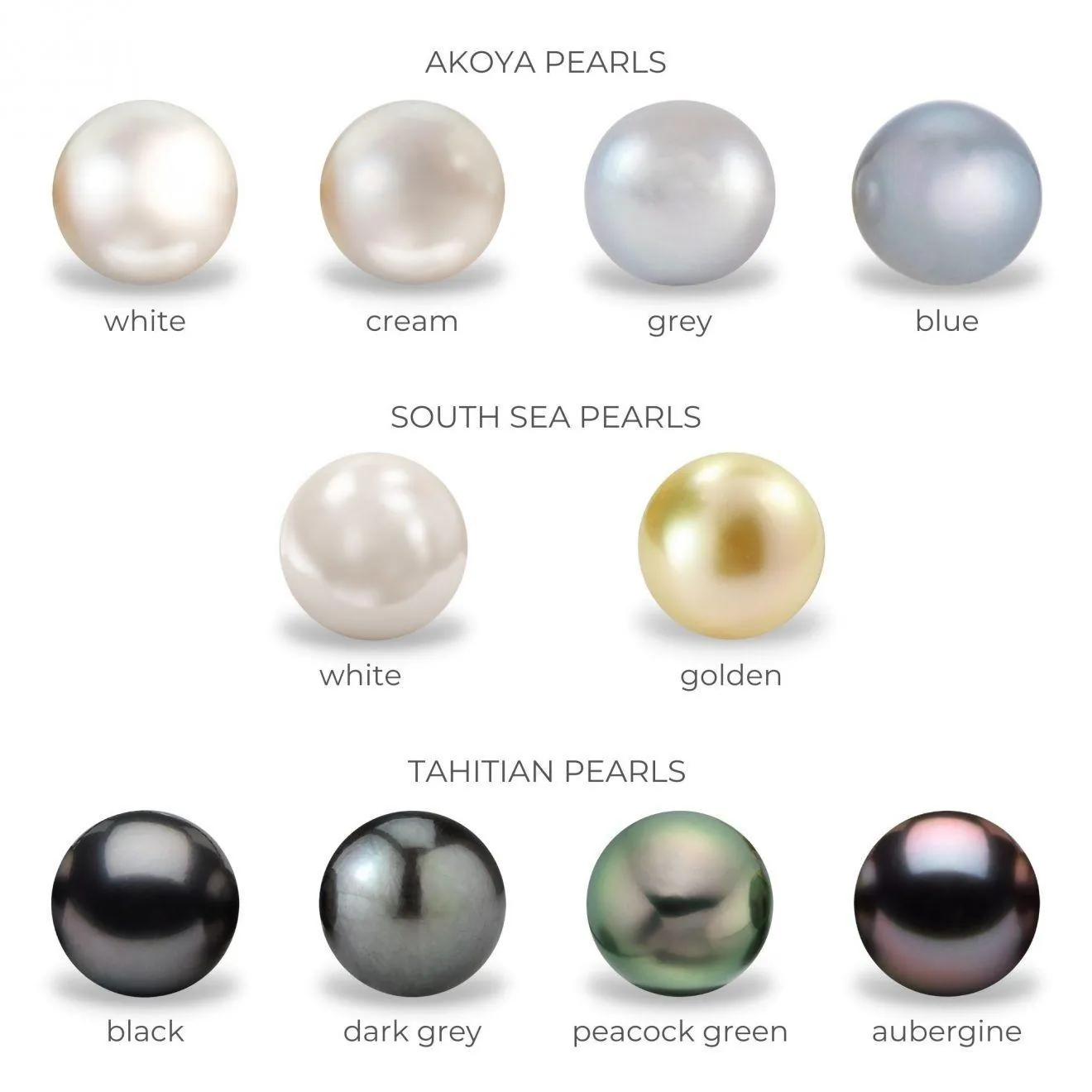
- Akoya cultured pearls: a natural fit for a crisp, classic bridal look because they are strongly associated with round white pearl jewelry and bright luster.
- Freshwater cultured pearls: versatile in shape, size, and design, with options ranging from classic round jewelry to irregular contemporary pieces.
- White South Sea cultured pearls: useful when you want greater pearl scale and a luxurious, relatively simple focal point.
- Tahitian cultured pearls: a deliberate choice for brides who want darker, green-gray, peacock, silver, or other less conventional pearl colors.
- Baroque pearls: an excellent option for organic or artistic bridal jewelry. Baroque describes shape rather than one pearl species, so baroque pearls can come from different cultured pearl families.
Do not choose a pearl type because a wedding guide calls it the “correct” bridal option. GIA's overview of Akoya, freshwater, Tahitian, and South Sea pearls shows how different pearl families vary in appearance and typical characteristics. Use those differences to serve the design you already chose.
8. Do a Full Bridal Try-On Before You Commit
This is the step many buying guides skip. Jewelry that looks right against a plain shirt or in a product image can behave very differently once the veil, hairstyle, neckline, makeup, and dress detail are present.
Ideally, test the pearls with as much of the real bridal setup as possible. If the dress is unavailable, use photos plus a top with a similar neckline and color, then repeat the test when you have access to the gown.
Use three viewing distances
- Close mirror: inspect luster, surface, metal finish, and how the earrings or necklace sit.
- Portrait distance: step back roughly one to two meters or take a waist-up photo. Check whether the pearls frame the face or disappear.
- Full-length view: make sure the jewelry belongs to the complete silhouette and is not disproportionately strong or weak.
Then test movement
Turn your head, hug someone, bend down, walk, and move as you will during the day. Long earrings can catch in loose hair or veils. A necklace can rotate or disappear under a neckline. Heavy earrings can become uncomfortable after several hours. A bracelet can catch lace, gloves, or bouquet ribbon.
Also check the practical hardware: earring backs should feel secure, clasps should close properly, and strands should not show obvious signs of worn thread. Bridal jewelry is not successful if you spend the ceremony worrying that it will fall off.
Should All the Bride's Pearls Match?
They should look coherent, but that does not mean every pearl must have exactly the same diameter or every piece must come from a factory-matched set.
For a coordinated bridal look, it is usually enough for the pieces to share a visual language: similar luster, compatible color, related metal, and a consistent level of formality. Earrings can be smaller than a pendant. A bracelet can use a different pearl size from a necklace. Baroque shapes can vary deliberately.
Within an earring pair or a classic uniform strand, closer matching usually matters more because the pearls are directly compared with one another. In intentionally mixed or graduated designs, variation is part of the design rather than a defect.
Do You Need the Most Expensive Pearls for a Wedding?
No. A wedding is important, but importance does not create a technical requirement to buy the highest grade or largest pearl available.
Set the budget after you know which piece is doing the visual work. Then spend on the characteristics that will actually improve that piece. If the earrings are the focal point, good luster, attractive face-up surfaces, secure settings, and convincing pair matching may matter more than increasing diameter by one millimeter. If the necklace is the focal point, overall matching, drape, clasp quality, and how the strand sits on the dress become more important.
A useful bridal purchase should also make sense after the wedding. If two pieces look equally good on the day, the one you can imagine wearing again may offer more long-term value.
If You Are Wearing Heirloom Pearls, Inspect the Jewelry Before the Wedding
Heirloom pearls can add meaning that a new purchase cannot replace, but sentimental value does not guarantee that the jewelry is mechanically ready for a long wedding day.
Before the event, inspect the clasp, earring backs, settings, and strand condition. If an older pearl necklace shows stretched, dirty, or weakened thread, have a qualified jeweler assess whether it should be restrung. Do this early enough that you are not making repairs immediately before the wedding.
You also do not have to wear an heirloom exactly as it was originally styled. A family strand can be the main piece with modern earrings, or heirloom studs can be paired with a new pendant. The goal is to preserve the meaning without forcing the entire bridal look into one era.
Wedding-Day Pearl Care: Put Them On After Hair and Makeup
Pearls require gentler handling than many other jewelry materials. GIA notes that pearl surfaces can be damaged by hair spray, perfume, cosmetics, acids, and abrasion. On the wedding day, finish hair, fragrance, and makeup before putting on the pearl jewelry.
After the reception, wipe the pearls gently with a soft clean cloth and store them away from harder jewelry that could scratch them. Our pearl care guide covers routine cleaning, wearing, and storage in more detail.
Common Mistakes When a Bride Chooses Pearls
- Buying the pearls before understanding the dress. The gown may later make the necklace unnecessary or change the ideal earring length.
- Making every pearl piece a statement. Necklace, earrings, bracelet, and hair jewelry do not all need equal emphasis.
- Choosing size from age-based rules. Scale should be judged against the design and complete silhouette.
- Buying by grade label alone. Compare visible luster, surface, matching, size, color, and construction rather than trusting AAA or AAAA without context.
- Matching the dress by the word “white.” Compare the actual materials under real light.
- Testing only in a close mirror. Bridal jewelry should work in portraits and full-length photographs too.
- Forgetting comfort and security. A beautiful earring is a poor choice if it becomes painful or catches the veil all day.
A Simple Bridal Pearl Checklist
- Define the overall bridal style in a few words.
- Choose the main pearl focal point: ears, neck, wrist, or hair.
- Use the dress neckline, embellishment, veil, and hairstyle to choose the jewelry format.
- Choose pearl scale by the full silhouette, not by age.
- Compare luster, visible surface quality, and matching before simply buying larger pearls.
- Check pearl color and metal against the actual dress in more than one lighting condition.
- Choose the pearl type that best delivers the look and budget you already defined.
- Do a full try-on and photograph the jewelry from close, portrait, and full-length distances.
- Test movement, comfort, clasps, backs, and veil or hair interference.
- On the wedding day, put pearls on after hair products, perfume, and cosmetics.
Final Takeaway
The best bridal pearls are not the ones that win a checklist on their own. They are the ones that make the complete bride look more resolved.
Choose in this order: bride and dress first, jewelry position second, pearl scale and quality third, pearl type last. Then test the finished combination in real light, in photographs, and in movement. That process is more reliable than starting with a rule such as “brides should wear Akoya” or “wedding pearls should be 8 mm.”
When the proportions, luster, color, and placement all support the dress rather than competing with it, the pearls stop looking like an accessory added at the end and start looking like part of the bridal design.
FAQ
What pearl jewelry is easiest for a bride to wear?
Pearl studs, short drops, and a single pearl pendant are among the easiest formats because they can work with many dress styles. The best option still depends on the neckline, hairstyle, veil, and whether the bride wants the jewelry to be subtle or prominent.
Should a bride wear both pearl earrings and a pearl necklace?
She can, but the two pieces do not need equal visual weight. If a strand or statement necklace leads the look, smaller earrings often create better balance. If long pearl earrings are the focal point, the bride may not need a necklace at all.
Should bridal pearls be white or ivory?
Either can work. Pearl colors and bridal fabrics contain many subtle tones, so compare the actual jewelry with the dress rather than relying on labels alone. A harmonious difference can look better than an attempted exact match.
Are Akoya pearls better than freshwater pearls for a bride?
Not automatically. Akoya pearls are a strong choice for a classic round-white look, while freshwater pearls offer a wider range of shapes and design directions. Quality, jewelry design, budget, and the desired bridal style matter more than choosing one pearl family by rule.
Can a bride wear baroque or Tahitian pearls?
Yes. Baroque pearls can create an organic or contemporary look, while Tahitian pearls can suit a darker or more unconventional bridal palette. Neither is less appropriate simply because it departs from the traditional round white pearl look.