No—pearls do not automatically make young people look older. What they can do is make an outfit look more polished, formal, traditional, or mature. Those impressions are often mistaken for “looking older,” especially when the pearls are part of a very classic combination.
A perfectly matched white pearl strand with matching studs and formal clothing sends a different style message from the same strand worn with a T-shirt, open shirt, knit, denim, or a plain metal chain. The pearls have not changed. The visual context has.
So the useful question is not “Are pearls too old for me?” It is “What kind of impression does this particular pearl design create with the rest of my outfit?”
First, Separate “Looking Older” from Looking More Mature
These ideas are easy to mix together, but they are not the same.
A young person wearing pearls may look:
- more polished;
- more formal;
- more classic;
- more serious;
- more elegant;
- more intentionally dressed.
Any of those changes can be interpreted as “older,” even though the jewelry has not actually changed the wearer's apparent age in any objective way.
This distinction matters because sometimes a more mature impression is exactly what the wearer wants. A classic pearl stud or a neat strand can be useful for a wedding, presentation, formal dinner, interview, or another situation where a very casual look would feel wrong. In other situations, the same wearer may prefer something lighter, less coordinated, or more relaxed.
Pearls are therefore better understood as a style signal than as an age signal.
Why Do Pearls Have a “Mature” Reputation?
The association is mostly cultural and stylistic. For decades, one of the most familiar pearl images was a highly matched white round strand worn as part of polished formal dressing. Pearl studs, a coordinated necklace, conservative tailoring, and symmetrical styling often appeared together.
That combination became so recognizable that some people now react to the whole formula as “older” or “traditional.” But removing even one part of the formula can change the impression quickly.
Current jewelry styling commonly places pearls beside denim, casual knitwear, simple shirts, mixed metals, irregular shapes, chains, asymmetrical earrings, and gender-neutral clothing. Fashion and jewelry guides now routinely treat pearls as everyday jewelry rather than accessories reserved for formal occasions.
This is why it is misleading to blame the pearl itself. The strongest age association usually comes from several traditional signals appearing at the same time.
What Actually Makes Pearl Jewelry Feel Older or Younger?
Instead of using age as the rule, look at the design variables that change the mood of the jewelry.
| Variable | More classic / mature impression | More relaxed / contemporary impression |
|---|---|---|
| Number of pearl pieces | Matching necklace, earrings, bracelet, and ring | One pearl focal piece with non-pearl jewelry |
| Matching | Highly uniform pearls and very coordinated styling | Mixed shapes, sizes, materials, or intentional contrast |
| Jewelry format | Traditional full strand and button studs | Single pendant, hoop, drop, station necklace, sculptural setting |
| Shape | Perfectly round and strongly symmetrical | Baroque, oval, drop, asymmetric, or mixed shapes |
| Clothing | Highly formal or conservative outfit | Denim, simple knitwear, T-shirt, relaxed tailoring |
| Other jewelry | Everything matched to the pearl set | Plain gold or silver chain, hoops, rings, or mixed textures |
None of the choices in the middle column are wrong. They simply create a more traditional visual language. A young wearer who likes that look should not avoid it just to satisfy an arbitrary idea of what is “age appropriate.”
Does a Classic Pearl Necklace Make a Young Person Look Older?
It can make the wearer look more classic or more dressed up, but that does not mean the necklace itself is aging.
A full strand of round white pearls is visually strong because it creates a continuous line around the neckline. If the strand is also highly matched and paired with matching pearl earrings, the look becomes very coordinated. That degree of coordination is often what people interpret as mature or formal.
Change the context and the same necklace can read very differently:
- with a white T-shirt and jeans, it becomes deliberate contrast;
- with a black knit and simple metal hoops, it can look minimal;
- with an open-collar shirt, it can feel relaxed but polished;
- beside a plain chain, it becomes part of a layered jewelry look;
- with no other pearl pieces, the strand becomes the single focal point rather than a complete traditional set.
If you already own a classic strand, experiment with the surrounding styling before replacing it. In many cases, changing the clothing, earrings, or other necklaces is more useful than replacing good pearls.
Do Small Pearls Automatically Look Younger?
No. Smaller pearls often have less visual weight, so they can be easier to wear casually. That is probably why many buying guides recommend petite pearls to younger wearers. But pearl size alone does not determine the age impression.
A tiny pearl can look extremely vintage in an ornate antique-inspired setting. A much larger baroque pearl can look modern when it is used as a single sculptural focal point.
The more useful question is: How much visual presence do you want?
Small pearls can create a subtle line or delicate accent. Medium pearls are easy to notice without dominating an outfit. Larger pearls create stronger presence and can look classic, dramatic, artistic, or minimalist depending on the design.
For millimeter comparisons and how size changes the visual effect of earrings, necklaces, and other pieces, use the pearl size guide.
Are Baroque Pearls More Youthful Than Round Pearls?
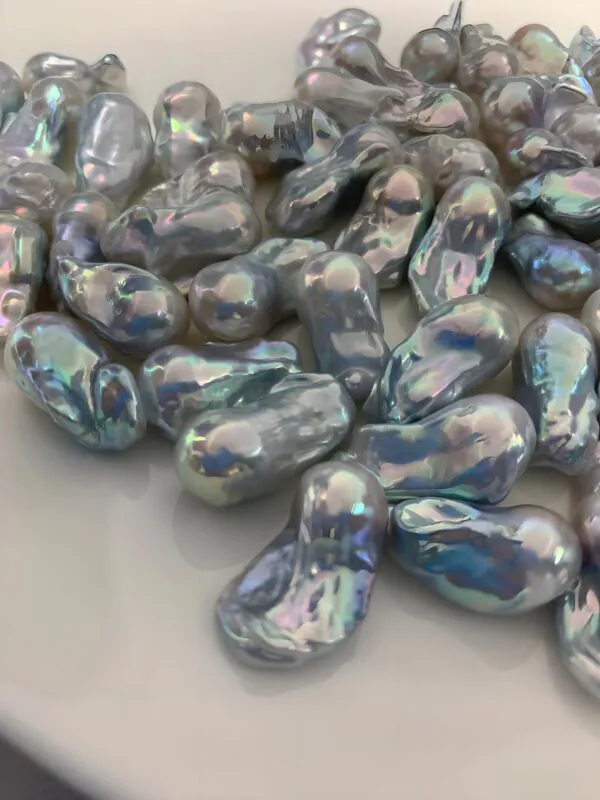
Baroque pearls often feel less formal because their irregular shapes break the visual perfection associated with a traditional matched strand. That can make them easier to integrate into casual, artistic, or contemporary jewelry.
But “baroque = young” and “round = old” is still the wrong rule.
A perfectly round pearl can look very current as a single pendant, on a small hoop, or in a clean geometric setting. A baroque pearl can look highly ornate in an elaborate design. Shape changes the character of the piece, but it does not assign an age to the wearer.
GIA treats shape as one of the major characteristics used to describe and evaluate pearls, alongside size, color, luster, surface, nacre, and matching. None of those quality factors is an age category. If you want to compare the visual effect of round, drop, oval, button, and irregular forms, see our pearl shape guide.
Can Pearls Actually Make a Young Person Look Better Dressed?
Yes, and this is one reason the “pearls make you older” concern can be misleading.
Pearls can introduce a controlled amount of polish into an otherwise simple outfit. A plain shirt and jeans with pearl studs may look more finished without becoming formal. A single pearl pendant can give a basic knit or T-shirt a focal point. A pearl strand can make a minimalist black outfit feel intentional rather than plain.
That effect is closer to visual refinement than aging. The wearer may appear more composed or sophisticated, but still clearly young.
This is also why there is no need to avoid classic pearls merely because you are in your teens, twenties, or thirties. If the piece suits your taste, a classic design can look confident rather than conservative.
When Might Pearls Make a Young Wearer Feel “Too Mature”?
The effect is most likely when several formal signals accumulate at once. For example:
- a perfectly uniform white round strand;
- matching pearl button studs;
- a matching bracelet;
- structured or conservative clothing;
- a high, closed neckline;
- highly symmetrical hair and accessories;
- no contrasting metal, texture, color, or casual element.
If you like that polished look, there is no reason to change it. But if the result feels unlike you, do not conclude that you are “too young for pearls.” Change one variable first.
For example, keep the necklace and switch to metal hoops. Keep the pearl studs and wear them with denim. Keep the round pearls but choose a pendant instead of a strand. Keep a large pearl but use only one as the focal point.
One contrast is often enough.
A Simple Test: Does the Pearl Look Old, or Does the Whole Outfit Look Formal?
Before deciding that pearls do not suit you, try this quick test in front of a mirror.
- Remove every pearl piece except one. Does the look immediately feel lighter?
- Change one item of clothing. Try a plain knit, open shirt, T-shirt, or relaxed blazer.
- Add one piece of ordinary metal jewelry. A chain, hoop, or ring can break the “complete set” effect.
- Look at the design, not your age. Is the piece minimal, classic, organic, romantic, bold, or formal?
- Ask whether that mood matches you. If it does, the pearl is working—even if it is a very traditional pearl.
This separates two very different problems: “I do not like pearls” and “I do not like this styling.” The second problem is much easier to solve.
If You Are Young and Buying Pearls for the First Time, What Is the Safest Choice?
If you want maximum versatility, start with a jewelry format that already fits what you normally wear. That is more reliable than choosing a pearl according to an age chart.
Easy starting points include:
- pearl studs if you already wear simple earrings;
- a single pearl pendant if you usually wear fine necklaces;
- pearl drops or hoops if you like movement or visible metal;
- a short strand if you already wear necklaces as a focal point;
- baroque or irregular pearls if you prefer organic or individual-looking jewelry;
- a classic round strand if traditional polish is actually your style.
If you are ready to compare finished pieces rather than general advice, browse pearl jewelry by the format you are most likely to wear. Compare the design first, then use pearl size, shape, color, and quality to narrow the choice.
Do Not Buy “Youthful Pearls.” Buy Pearls That Fit Your Style.
Age-based pearl rules sound convenient because they reduce a complicated style decision to one number: young people wear small pearls, older people wear large pearls. Real jewelry does not work that neatly.
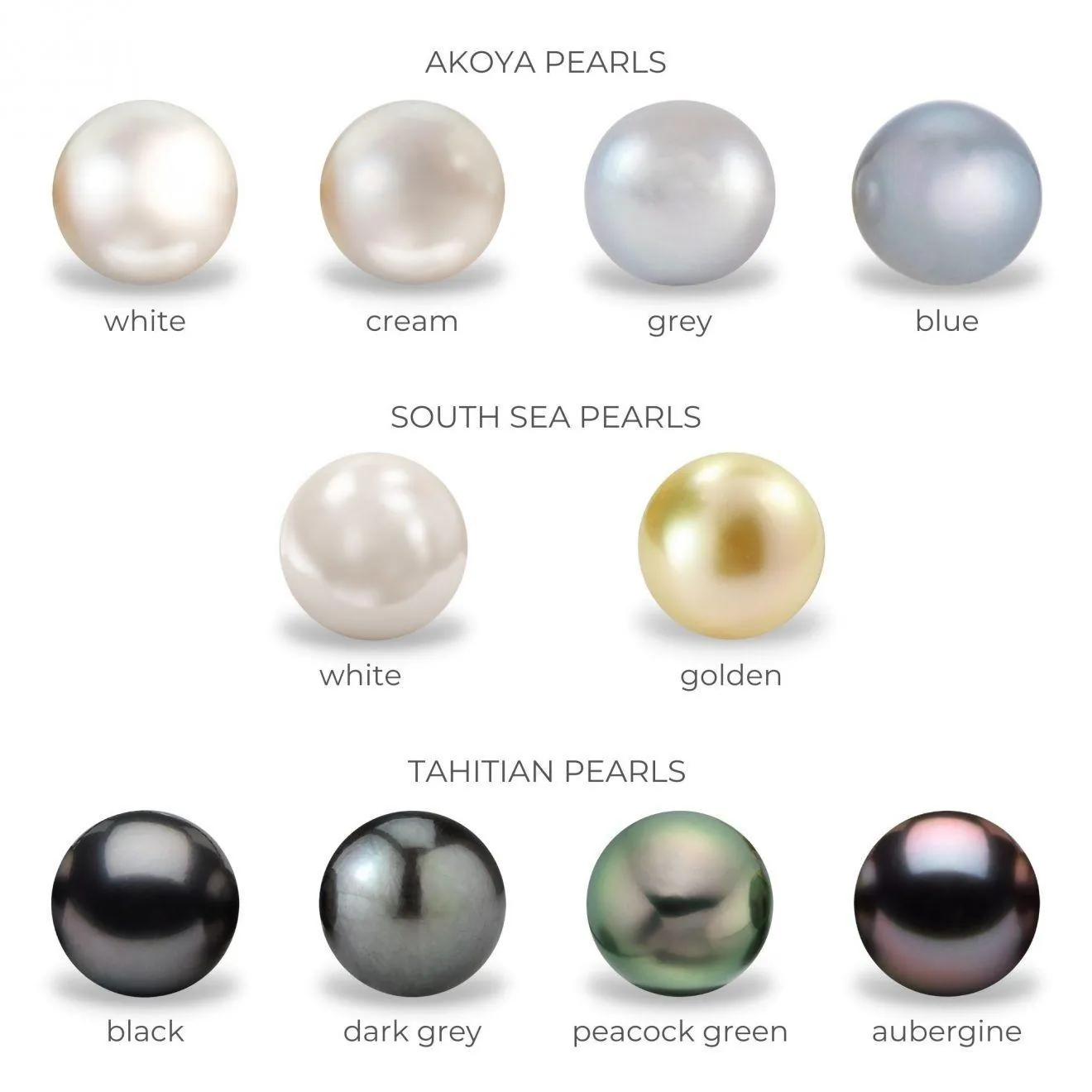
A young person can wear large South Sea pearls in a minimal design and look striking. Another may prefer tiny freshwater pearls layered with chains. Someone else may feel most like themselves in a perfectly matched Akoya strand. None of those choices is incorrect.
The stronger buying framework is:
- Choose the jewelry format you will actually wear.
- Choose the mood you want: subtle, classic, modern, organic, romantic, or bold.
- Choose the visual scale.
- Then compare pearl size, shape, color, type, and quality.
That order prevents you from buying a piece simply because someone labeled it “young” or “mature.” It also makes it much more likely that the pearls will leave the jewelry box and become part of your normal wardrobe.
If you want a broader buying framework after deciding on the style, the pearl buying guide explains the main factors to compare before purchasing.
So, Do Pearls Make Young People Look Older?
Not by themselves. Pearls can make a young wearer look more polished, traditional, elegant, or mature, but those are style impressions—not automatic increases in apparent age.
The “older” effect usually appears when several classic signals are combined: a highly matched strand, matching earrings and bracelet, formal clothing, symmetry, and conservative styling. Change one or two of those elements and the same pearls can look relaxed, minimal, artistic, or fashion-forward.
The most useful rule is simple: do not choose pearls for your age. Choose them for the visual language you want.
Frequently Asked Questions
Do pearl necklaces make young people look older?
Not automatically. A classic pearl necklace can make an outfit look more formal or polished, especially when it is worn with matching pearl jewelry and conservative clothing. The same necklace can look much more relaxed with casual clothes, simple metal jewelry, or modern layering.
What pearl style looks youngest?
There is no objectively youngest pearl style. Small studs, single pendants, baroque pearls, hoops, drops, and mixed-chain designs often feel less formal, but a classic round strand can also look contemporary when it matches the wearer's personal style.
Do large pearls make a young person look old?
No. Large pearls have stronger visual presence, but they can look sculptural, minimal, dramatic, or classic depending on the jewelry design. One large focal pearl may feel more contemporary than a complete set of smaller matched pearls.
Are round pearls old-fashioned?
No. Round pearls are strongly associated with classic pearl jewelry, but the shape itself is not old-fashioned. Round pearls can look modern in single-pendant, hoop, drop, geometric, layered, or otherwise minimal designs.
Can teenagers and people in their twenties wear pearls?
Yes. Pearls are not restricted to a particular age. The most useful approach is to choose a piece that fits the wearer's normal clothing, jewelry habits, preferred scale, and desired level of formality.
How can I wear inherited pearls without looking too formal?
Start by wearing only one inherited pearl piece at a time. Pair a strand with casual clothing or plain metal earrings, or wear pearl studs without a matching necklace. You can usually change the overall impression without altering the original jewelry.