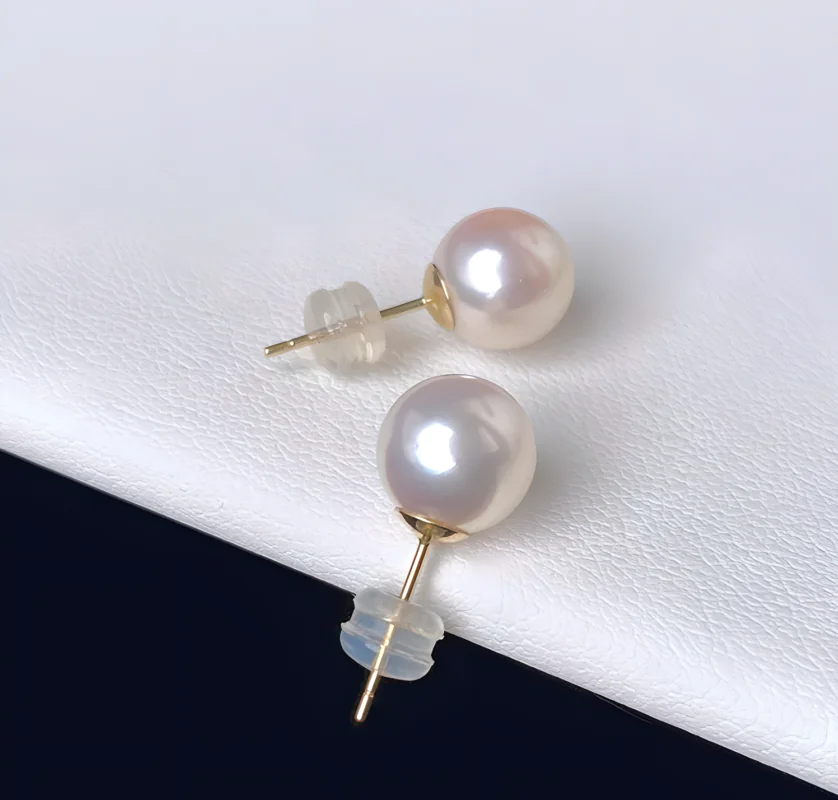
Common Imitation Pearl Materials: How to Tell Shell, Glass, and Plastic Pearls Apart
Shell, glass, and plastic pearls are all commonly used to imitate natural or cultured pearls, but they are not made the same way. Plastic imitations are usually the lightest, glass imitations often feel noticeably heavier and cooler, while shell-based imitations can come surprisingly close to the weight and feel of cultured pearls. The most useful clues are therefore not appearance alone, but a combination of weight, surface character, drill-hole condition, temperature, and—when visible—the material beneath the coating.
There is one important limitation: no simple home test can reliably identify the core material of every imitation pearl. High-quality coatings can hide whether the bead underneath is shell, glass, or plastic. Think of the methods below as a process of narrowing the possibilities rather than a guaranteed laboratory identification.
What Is an Imitation Pearl?
An imitation pearl is a manufactured object designed to simulate the appearance of a natural or cultured pearl. Unlike a cultured pearl, its pearl-like exterior was not produced as a whole pearl inside a mollusk.
This distinction matters especially with the term shell pearl. The shell material itself may be genuine mollusk shell or mother-of-pearl, but if a shell bead is manufactured and given a pearl-like finish outside the mollusk, the finished product is still an imitation rather than a cultured pearl.
The CIBJO Pearl Book defines imitation pearls as artificial products that simulate the appearance of natural or cultured pearls and calls for them to be described as imitation or simulated pearls. For a broader overview of manufactured pearl substitutes, see our guide to artificial and imitation pearls.
Shell vs Glass vs Plastic Pearls: Quick Comparison
| Feature | Shell-Based Imitation | Glass Imitation | Plastic Imitation |
|---|---|---|---|
| Typical core | Carved shell bead or other shell-based material | Solid or hollow glass bead | Molded plastic or resin bead |
| Typical weight | Moderate to substantial; may feel convincing | Usually substantial; solid glass can feel quite heavy | Usually noticeably light |
| Initial temperature | Often cool | Often cool | Usually warms relatively quickly |
| Common surface | Pearlescent artificial coating over shell | Pearlescent coating over glass | Paint or pearl-effect coating over molded material |
| Useful drill-hole clue | Chipping may expose white shell material | Chipping may expose hard, glassy material | Molded edges, burrs, seams, or exposed plastic may appear |
| Main identification problem | Can resemble cultured pearls in both appearance and heft | High-quality coated glass can look very convincing | Better-quality coatings can hide obvious plastic characteristics |
The table is best used as a pattern-recognition guide. Weight, temperature, or surface smoothness alone should never be treated as proof.
What Are Shell Pearls?
The commercial term shell pearl does not describe one perfectly standardized manufacturing recipe. A common construction uses a bead fashioned from mollusk shell and covers it with an artificial pearlescent finish. Other products may use shell-derived or composite materials, so the exact construction should ideally be confirmed by the supplier.
GIA examined commercially sold shell pearls that closely resembled white, golden, and dark cultured pearls. The specimens used shell beads covered with an artificial coating. Some were convincing not only in appearance but also in heft, illustrating why the simple assumption that “fake pearls always feel light” is unreliable.
Under magnification, however, the coating provided useful clues. GIA observed a glittery artificial surface rather than the overlapping nacre platelet structures associated with nacreous pearls. In damaged areas near drill holes, the thin coating had chipped or peeled away and exposed the lighter shell bead underneath. See GIA's study, Shell Pearl as a Pearl Imitation.
Why Shell Pearls Cause So Much Confusion
Shell is closely related to genuine pearl material. Mother-of-pearl is the nacreous lining found inside certain mollusk shells, and shell beads are also legitimately used as nuclei in many bead-cultured pearls. The difference is what happens next.
In a bead-cultured pearl, the implanted nucleus remains inside a living mollusk while biological material is deposited around it. In a shell-based imitation pearl, the manufactured bead receives its pearl-like appearance outside that biological growth process.
So the practical rule is simple: a genuine shell core does not make a manufactured shell bead a genuine pearl.
What Are Glass Pearls?
Glass has been used for pearl imitations for a long time. Some imitation pearls contain solid glass beads, while others have historically used hollow glass constructions. The glass is then given a pearlescent coating that creates the visible color and luster.
Glass imitations can be much more convincing than inexpensive plastic pearls. A solid glass bead has enough mass to feel substantial in the hand, and it initially feels cool when touched. Both characteristics can lead buyers to assume that it must be a real pearl.
High-quality glass-based imitations can be sophisticated. GIA's research into Majorica imitation pearls, for example, documented coated glass nuclei engineered specifically to reproduce the appearance of cultured pearls.
Clues That May Suggest a Glass Core
If damage or wear exposes the bead beneath the coating, glass generally looks hard and glassy rather than chalky or shell-like. Depending on the material and construction, magnification of an exposed area may reveal features such as bubbles or flow-like structures within the glass.
Chipping is another useful clue. A hard impact can fracture a glass bead or chip its surface coating. This is different from the softer-looking molding marks or burrs sometimes seen around inexpensive plastic beads.
However, if the coating is completely intact, confidently separating a well-made glass imitation from a shell-based imitation by eye can be difficult.
What Are Plastic Pearls?
Plastic and resin are widely used for inexpensive fashion-jewelry pearls. They can be molded rapidly into consistent sizes and shapes and then covered with pearl-effect paint or another decorative coating.
Of the three materials discussed here, plastic is usually the easiest to suspect from physical handling. Equal-size plastic beads generally weigh much less than solid glass or shell beads. Large plastic imitation pearls may therefore feel surprisingly light compared with their apparent size.
The surface can also provide clues. Mold seams, small burrs around the hole, coating buildup, identical surface patterns, or areas where paint has worn through to the underlying plastic may all point toward a molded imitation.
Plastic also tends to lose its initial cool feeling relatively quickly when held. But temperature is only a supporting clue: bead size, room temperature, hollow construction, and how long the jewelry has already been handled can all change what you feel.
How Can You Tell Shell, Glass, and Plastic Pearls Apart at Home?
The best approach is to combine several observations in a fixed order rather than looking for one decisive trick.
1. Compare Weight Between Beads of Similar Size
Start with weight. For beads of roughly the same diameter, plastic is usually the lightest. Solid glass is generally much more substantial, while shell-based imitations can also have convincing weight.
This test is most useful for identifying an obvious plastic candidate. It is much less useful for separating glass from shell. Hollow glass constructions can also break the usual pattern, so weight should remain a clue rather than a verdict.
2. Inspect the Drill Hole Before Studying the Perfect Front Surface
The drill hole is often more revealing than the most visible part of the bead. The front surface was designed to look attractive; the edge of the hole is where the coating, core, and manufacturing process may become visible together.
Use a 10× loupe or a phone macro lens and look for:
- peeling or chipping of a thin surface film;
- a visible boundary between the outer coating and inner bead;
- white shell-like material beneath the finish;
- hard, glassy exposed edges;
- plastic burrs or molded-looking hole edges;
- paint or coating pooled around the hole.
GIA laboratory observations repeatedly show why the drill area deserves attention. Coating damage, unusual drill-hole structure, and manufactured surfaces can reveal information that is almost invisible when viewing the bead from the front.
3. Examine the Surface Under Magnification
A manufactured pearl coating may appear extremely smooth, glittery, paint-like, or unusually uniform. Small coating particles, bubbles, pooling, peeling, or repeated surface patterns can support an imitation diagnosis.
By comparison, nacreous pearls have a biological surface structure created during growth. Under sufficient magnification, characteristic nacre structures may be visible rather than a continuous artificial film. You can learn more about these structural differences in our pearl identification guide.
Surface inspection is less effective for distinguishing shell from glass or plastic, because different core materials can receive similar coatings. Once again, the exposed core is usually more informative than the coating itself.
4. Use Temperature Only as a Supporting Test
Glass and shell commonly feel cool when first touched. Plastic is generally less substantial and may warm relatively quickly in the hand.
This is why the familiar advice that “real pearls feel cold” is incomplete. A glass imitation can also feel cold, and a shell-based imitation can feel remarkably convincing. Temperature may help identify an obvious plastic bead, but it does not prove that a cool bead is a cultured pearl.
5. Look for Manufacturing Uniformity
A perfectly matched strand is not automatically fake—high-quality cultured pearls can be carefully sorted and matched. Still, extreme consistency can become useful when it appears together with other manufactured clues.
If every bead has the same diameter, identical color, identical surface shine, and nearly identical coating texture, inspect the drill holes and surface more closely. Manufacturing tends to reproduce consistency more easily than biological pearl growth.
Can the Tooth Test Identify Shell, Glass, or Plastic Pearls?
Not reliably. The traditional tooth test is intended to detect differences in surface texture between some genuine nacreous pearls and smooth imitations. It does not tell you what the core of an imitation pearl is made from.
A coated shell, glass, and plastic bead can all present an artificial surface, while some sophisticated coatings may feel less obviously smooth than inexpensive imitation pearls. A textured result should therefore not be interpreted as proof that a pearl is genuine.
More importantly, there is little reason to rub valuable jewelry against teeth, scrape coatings, apply chemicals, heat beads, or perform other destructive experiments when magnification and professional testing are available.
Why No Single Home Test Works for Every Imitation Pearl
Modern imitation pearls can be surprisingly sophisticated. GIA notes that common imitations may use solid or hollow glass, plastic, or shell beads covered with pearl-effect substances. Under magnification they can show artificial coatings or molded drill holes, but individual specimens vary.
A 2025 GIA laboratory report illustrates the problem particularly well. An imitation bead was found among thousands of small pearls in submitted strands and looked similar enough to surrounding pearls that routine appearance alone was insufficient. Laboratory examination of its surface and X-ray behavior ultimately established that it was an imitation. See GIA's Imitation Seed Pearl with Blue X-Ray Fluorescence.
That does not mean home inspection is useless. It means the goal should be different: use visible clues to identify obvious imitations and recognize when the evidence is not strong enough for certainty.
A Better Identification Sequence
- Confirm the seller's description. Is the item sold as cultured pearl, simulated pearl, shell-based imitation, glass imitation, or plastic imitation?
- Compare size with apparent weight. Extremely light large beads often point toward plastic or another lightweight construction.
- Inspect the drill holes. Look for coating boundaries, peeling, exposed core material, molding marks, or glass-like chips.
- Use magnification on the surface. Search for artificial film, glittering particles, pooling, repeated texture, or other manufactured characteristics.
- Use temperature and uniformity only as supporting evidence.
- Escalate to professional testing when authenticity materially affects value.
If the real question is not merely which imitation material was used but whether an item is a natural pearl, cultured pearl, treated pearl, or imitation, follow a broader pearl identification workflow rather than relying on one physical trick.
Does the Imitation Material Affect Jewelry Quality?
Yes, although material quality and pearl authenticity are separate questions. A well-made imitation can be attractive jewelry even though it is not a cultured pearl.
Plastic is useful when low weight and low cost are priorities. Glass often provides greater heft and can support a more substantial finish, although glass can chip or fracture. Shell-based imitations can give a convincing weight and appearance because the core itself is derived from mollusk shell.
The coating system may matter just as much as the core. Peeling, abrasion, chemicals, perfume, and repeated friction can expose the material underneath. If you want to understand how an added surface layer differs from biologically grown nacre, see our guide to pearl coating techniques.
The important buying principle is therefore not that every imitation pearl is “bad.” It is that the material should be described honestly and priced for what it actually is.
FAQ
Are shell pearls real pearls?
Shell-based imitation pearls are not natural or cultured pearls simply because their core contains real shell or mother-of-pearl. If the bead was manufactured and coated outside a mollusk to simulate a pearl, it is an imitation pearl.
Are glass pearls heavier than plastic pearls?
Usually, especially when the glass bead is solid and the beads being compared are similar in size. Hollow glass and different plastic formulations can change the result, so weight alone is not a definitive material test.
How can I tell a shell pearl from a glass pearl?
The drill hole or a naturally damaged area is often the best place to inspect. An exposed shell core may look white and shell-like, while glass can appear hard, vitreous, translucent, or show glass-related internal features. If the coating completely hides the core, visual identification may remain uncertain.
Can shell pearls feel as heavy as real cultured pearls?
Yes. Some shell-based imitations have enough weight to feel surprisingly similar to cultured pearls. GIA has documented shell imitations that were convincing in both appearance and heft, which is why weight should be combined with surface and drill-hole inspection.
Can the tooth test distinguish glass, plastic, and shell pearls?
No. At most, surface texture may help raise or lower suspicion that a bead has genuine nacre, but it does not reliably reveal whether an imitation has a shell, glass, or plastic core.
When should imitation pearls be professionally tested?
Professional testing makes sense when authenticity has a meaningful effect on value, when an expensive piece is represented as natural or cultured pearl jewelry, or when visual clues conflict. Gemological laboratories can use magnification, X-ray imaging, spectroscopy, and other methods that are not available in ordinary home testing.
The Key Difference to Remember
Plastic pearls are usually easiest to suspect because of their low weight and molded construction. Glass pearls can feel much heavier and cooler, while shell-based imitations can be especially deceptive because shell itself is closely related to nacreous material. But once all three receive a convincing pearl-like coating, appearance alone may not reveal what is underneath.
The most practical identification rule is therefore: look at several clues together, pay special attention to drill holes and exposed edges, and do not turn a useful clue into an absolute test. If the difference between a cultured pearl and an imitation materially affects the purchase price, seller disclosure or professional identification is more reliable than guessing from touch alone.