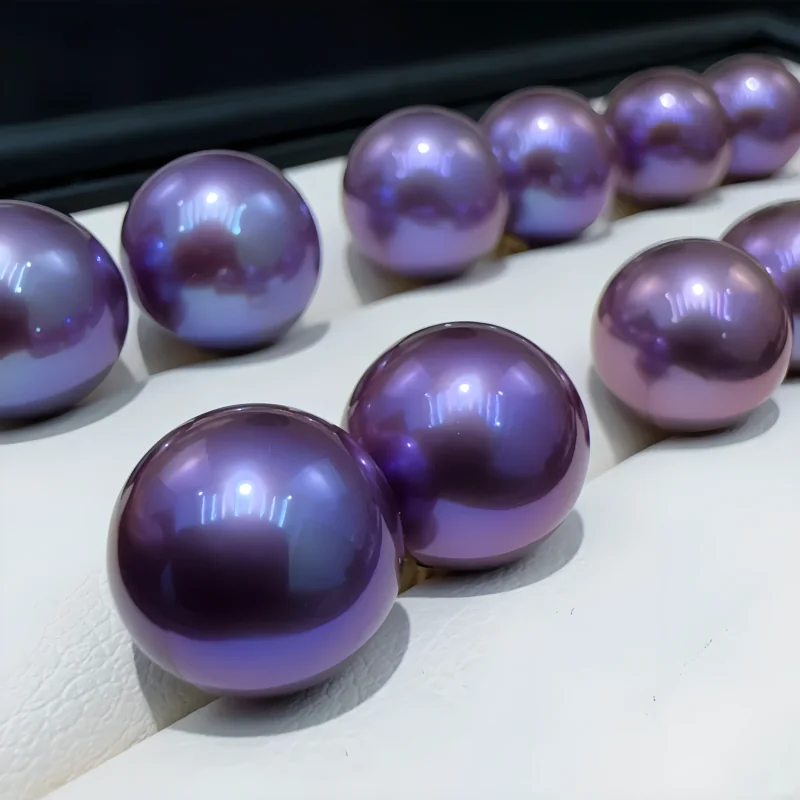
Australian South Sea pearls are expensive because they combine a costly, slow and uncertain production process with something even harder to obtain: large pearls that also have strong luster, clean surfaces, attractive shape and good matching.
They are cultured in the large Pinctada maxima pearl oyster, usually over a much longer period than many other cultured pearls. Australian farms also operate in remote marine environments, and in Western Australia part of the industry depends on a tightly managed wild-stock pearl-oyster fishery. Yet none of those facts means every Australian South Sea pearl is automatically valuable.
The real price premium appears when large size and high quality occur in the same pearl—and rises again when enough similar pearls can be assembled into a well-matched pair or strand. That distinction is the most useful way to understand the market.
Quick Answer: What Makes Australian South Sea Pearls Cost More?
| Price driver | Why it matters | What it does not mean |
|---|---|---|
| Large Pinctada maxima oyster | Allows the cultivation of unusually large bead-cultured pearls with substantial nacre | A large pearl is not automatically beautiful or high grade |
| Long cultivation period | Capital, labor and biological risk remain tied up for years before harvest | More time does not guarantee a perfect pearl |
| Low output per oyster | A Pinctada maxima oyster normally produces one bead-cultured pearl in a cultivation cycle | One oyster does not equal one gem-quality pearl |
| Remote marine husbandry | Oysters must be seeded, monitored, cleaned and protected in open-water farms | High production cost alone does not determine retail value |
| Quality rarity | Large, round, lustrous and clean pearls are much scarcer than ordinary harvest material | Australian origin is not a quality grade |
| Matching | Finding two—or dozens—of similar large pearls can take far longer than finding one | A strand price cannot be understood by multiplying one loose-pearl price |
1. The Oyster Can Produce Large Pearls—but Large Pearls Are Biologically Expensive
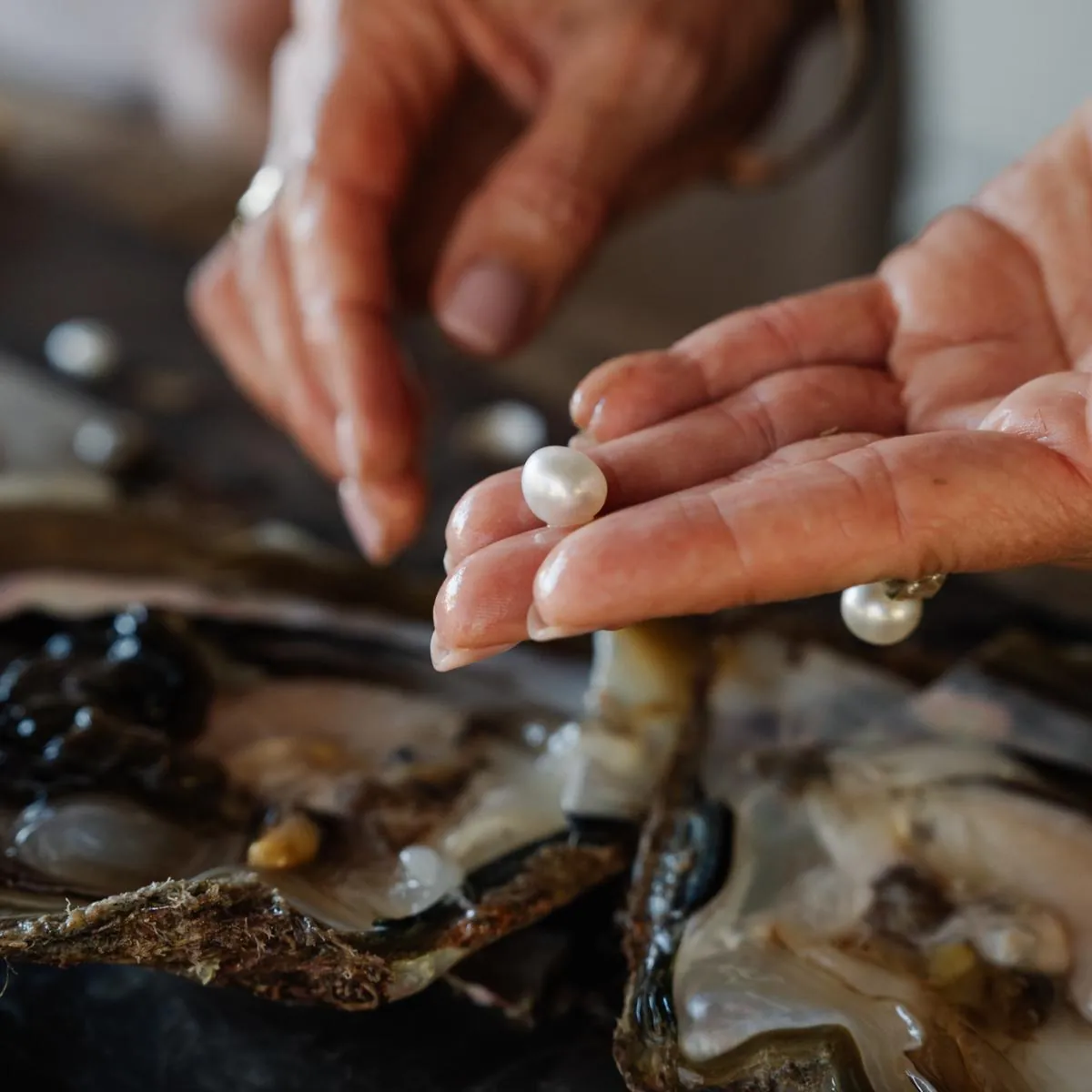
Australian South Sea pearls are cultured in Pinctada maxima, the largest of the major commercially farmed pearl oysters. GIA notes that its large size gives South Sea cultured pearls the potential to grow much larger than pearls produced by smaller saltwater oysters. South Sea pearls are therefore strongly associated with the large sizes that make them visually distinctive.
That size potential matters because pearl value does not depend on one characteristic alone, but size is important when other quality factors are comparable. A 15 mm pearl with excellent luster, a clean surface and attractive shape is much harder to obtain than a smaller pearl with the same combination.
There is also an output constraint. A bead-nucleated Pinctada maxima is generally used to grow one cultured pearl at a time. That is very different from the economics of many freshwater pearl mussels, where multiple pearls can be cultured in one animal. The relevant comparison is therefore not simply “oyster versus mussel”; it is how many marketable pearls one animal can produce during a given production cycle, and how long that cycle takes.
2. Australian South Sea Pearls Take Years, Not Months, to Grow
Time is one of the clearest reasons for the higher production cost. GIA describes Pinctada maxima as requiring a long growth period for bead-cultured pearls with thick nacre, while Australian producers commonly describe a cultivation period of roughly two to three years for a pearl crop.
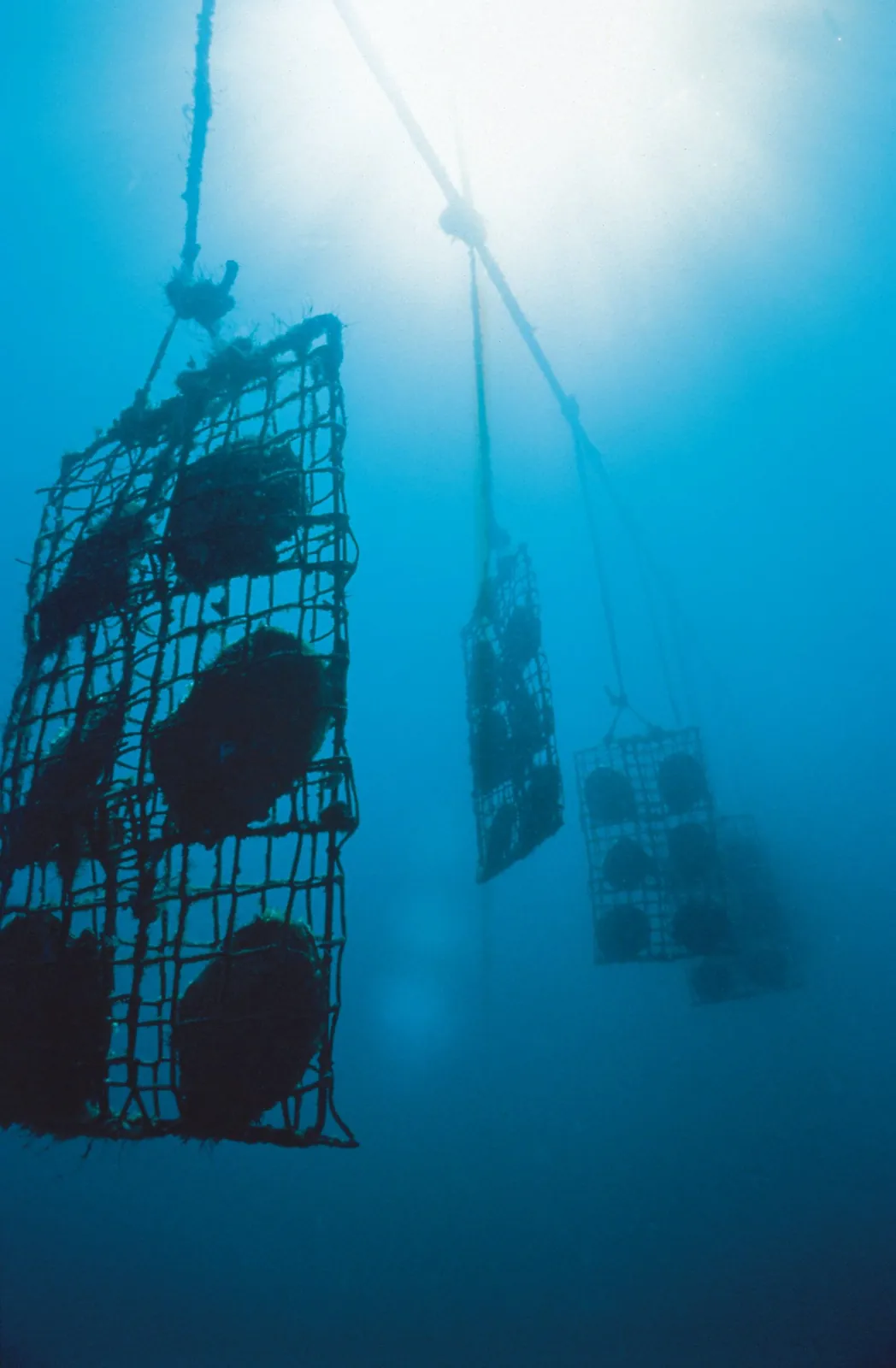
During that time, the oyster is not a passive container. It is a living animal in an open marine environment. Farms must keep oysters healthy, manage marine growth, move or protect stock when conditions require it, and wait for a result that remains uncertain until harvest.
This creates a simple economic problem: the farm invests labor, infrastructure and time long before it knows the quality of the pearl inside. The longer the cycle, the longer capital remains at risk.
3. The Farming Environment Adds Cost and Limits How Quickly Supply Can Expand
Australian pearl farming is concentrated in remote northern and north-western marine environments. In Western Australia, the commercial Pinctada maxima fishery is managed as a limited-entry fishery, and wild-stock collection is controlled through licensing and annual quotas designed to keep the resource sustainable.
This is important because supply cannot simply be increased like production in a factory. More demand does not instantly create more mature oysters, more suitable farming sites or more high-quality pearls. Biological growth takes time, marine conditions vary, and regulated access to wild stock places another practical limit on expansion.
Remote operations also require boats, trained technicians, marine infrastructure and repeated handling of living oysters. Those costs help explain the production economics, although buyers should remember that production cost and pearl value are not the same thing. A difficult-to-produce pearl can still be off-round, blemished or weak in luster.
4. Harvest Is Uncertain: Years of Work Do Not Guarantee a Fine Pearl
A cultured pearl is not manufactured to a fixed specification. The farmer can influence the process, but cannot order an oyster to produce “a perfectly round 15 mm pearl with mirror-like luster and no visible blemishes.”
At harvest, pearls naturally vary in:
- size
- shape
- bodycolor and overtone
- luster
- surface quality
- nacre quality
These are closely related to the factors GIA uses when discussing pearl value. The key economic point is that the most desirable characteristics are not evenly distributed across the harvest. A farm may produce many genuine Australian South Sea pearls, but only a smaller subset will combine the characteristics required for the top end of the market.
This is why “South Sea pearl” is too broad to explain price by itself. A baroque pearl with visible surface features and moderate luster belongs to the same broad pearl type as a large, round, clean, highly lustrous pearl, but the two can occupy very different price levels.
If you want a broader framework for comparing those characteristics, see our Pearl Grading Guide.
5. Large Size Becomes Expensive Only When Quality Survives at Large Size
South Sea pearls are famous for size, but the most valuable large pearls are not expensive merely because a caliper shows a large number.
As a pearl grows, it still has to maintain attractive luster, acceptable surface condition and a desirable shape. GIA specifically notes that larger pearls are generally rarer when other value factors are equal. That final phrase—when other factors are equal—is essential.
A smaller pearl with exceptional luster can be more visually compelling than a larger pearl with a dull surface. Likewise, a very large baroque pearl may be valuable because of its scale and character, but it should not automatically be priced like a round pearl of comparable size and quality.
For buyers, the useful question is therefore not “How many millimeters is it?” but “How much quality has been preserved at this size?”
6. Round, Clean, High-Luster Pearls Create a Second Layer of Scarcity
Once you move beyond basic production, pearl value becomes selective. Roundness is difficult to achieve, clean surfaces are less common than marked surfaces, and strong luster has to coexist with those traits in the same pearl.
That creates what might be called compound scarcity. A pearl does not become top quality by being large or round or lustrous. It becomes much scarcer when several desirable qualities occur together.
This is one reason two Australian South Sea pearls of the same diameter can have very different prices. Their millimeter measurement may match, while their luster, surface, shape, color and nacre appearance do not.
For more detail on why “Australian” should be treated as origin information rather than a shortcut for grade, read why pearl origin matters.
7. Matching Makes Pairs and Strands Disproportionately Expensive
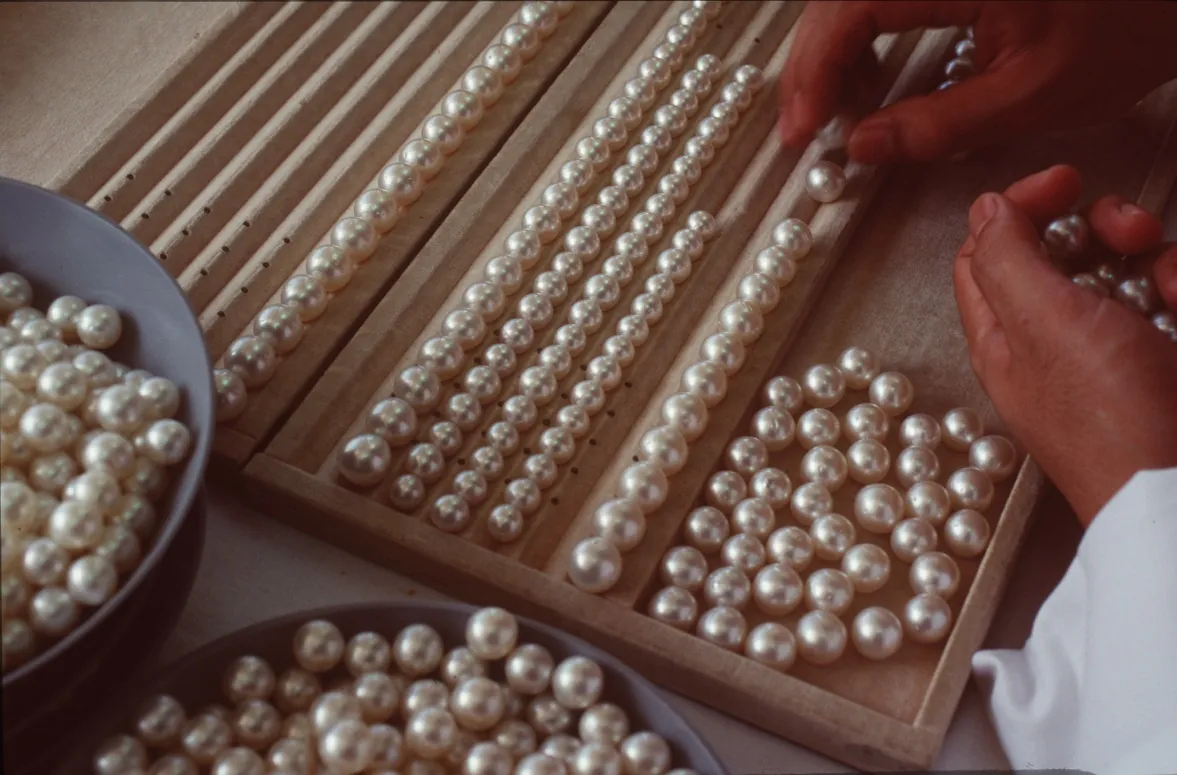
A single fine pearl is difficult to produce. A pair requires two pearls that work together. A full necklace may require dozens.
Matching is not just about diameter. For a high-quality pair or strand, graders may also need to coordinate:
- shape
- bodycolor
- overtone
- luster
- surface character
- overall visual character
This is why the price of a matched South Sea strand can rise far faster than a buyer expects from looking at one loose pearl. The challenge is not merely obtaining thirty pearls. It is obtaining thirty pearls that belong together visually.
The larger and finer the target pearls are, the smaller the pool of suitable matches becomes. A farm or dealer may need material from multiple harvests to build an exceptional strand. That waiting and selection are part of the value.
8. Does “Australian” Itself Make a South Sea Pearl More Valuable?
Not by itself. Australian origin can carry market significance because of the country’s established Pinctada maxima industry, production methods, white-to-silver pearl tradition and tightly managed farming environment. But origin does not replace quality evaluation.
A pearl should still be judged on the qualities you can actually observe and document. GIA's pearl value framework includes size, shape, color, luster, surface, nacre and matching. “Australia” is not an eighth quality grade.
This distinction protects buyers from two opposite mistakes:
- underestimating origin: ignoring the real production context and scarcity behind fine Australian South Sea pearls;
- overvaluing origin: assuming any pearl described as Australian must be top quality.
The best Australian South Sea pearls command high prices because origin, biological difficulty and exceptional visible quality converge—not because a country name magically increases value.
9. Are Australian South Sea Pearls Always More Expensive Than Akoya, Tahitian or Freshwater Pearls?
As a category, fine Australian South Sea pearls often sit at the high end of the cultured-pearl market because of their size potential, long cultivation cycle and limited supply. But category averages should not be mistaken for a rule about every individual pearl.
An exceptional Akoya, Tahitian or freshwater pearl can outperform a lower-quality South Sea pearl on luster, surface, shape or desirability. Jewelry price also includes factors beyond the pearl itself, such as precious-metal weight, diamonds, craftsmanship, design, brand positioning and retail margin.
If you are comparing pearl types rather than only origin, our South Sea Pearls Guide explains the category in more detail, while the Pearl Buying Guide provides a broader buying framework.
10. How Can You Tell Whether a High Price Is Justified?
You do not need to become a pearl grader to ask better questions. When comparing expensive Australian South Sea pearls, check the price against the characteristics that should actually create scarcity.
- Confirm what is being sold. Is it genuinely a cultured South Sea pearl, and is Australian origin being documented or simply implied by marketing language?
- Measure the size. Compare like with like; a 15 mm pearl should not be evaluated against a 10 mm pearl as though size were irrelevant.
- Look at luster first. Strong reflections and visual depth can matter more to appearance than a small improvement in roundness.
- Inspect the surface. Consider the number, severity and location of visible features rather than expecting natural pearls to look mechanically perfect.
- Check shape. Round pearls usually command a premium, but attractive drops and baroques can offer better value if you like their form.
- For pairs and strands, judge matching. Similar diameter alone is not enough.
- Separate pearl value from jewelry value. Gold, diamonds, workmanship, branding and retail service can materially change the final price.
For sourcing loose pearls or strands, you can also browse our wholesale pearl selection. The same principle applies: compare pearls within a clearly defined type, size and quality range rather than treating “South Sea” as a single grade.
The Bottom Line
Australian South Sea pearls are expensive because their supply is constrained long before grading begins. The oysters are large, the marine farming cycle is slow, each cultivation cycle produces limited output, and years of work can still end with an ordinary pearl.
But the largest price jumps happen after harvest. Large size, round shape, strong luster, clean surface and close matching must occur together. A fine matched pair or strand is therefore not simply “more pearls”; it represents repeated success across a long and biologically uncertain production process.
That is also why the fairest way to judge an Australian South Sea pearl is not to ask whether the origin deserves a premium in isolation. Ask whether the pearl's size, quality, rarity and matching actually justify the price being asked.
Frequently Asked Questions
Are all Australian South Sea pearls expensive?
No. Prices vary widely with size, shape, luster, surface quality, color, nacre and matching. An off-round or visibly marked Australian South Sea pearl can be much less expensive than a large, round, high-luster pearl from the same broad category.
Why are round Australian South Sea pearls more expensive?
Roundness is relatively difficult to achieve, especially when it must occur together with large size, good luster and a clean surface. The rarer the combination of desirable traits, the higher the value can become.
Are bigger South Sea pearls always more valuable?
No. Larger size generally adds value when other factors are comparable, but size cannot compensate for every weakness. A smaller pearl with much stronger luster, better surface quality or a more desirable shape may be the better pearl.
Why are Australian South Sea pearl strands so expensive?
Because a strand requires many pearls to match in size, shape, color, luster and overall appearance. Finding enough large, fine pearls that work together can take far longer than finding one attractive loose pearl.
Does Australian origin automatically mean better quality?
No. Australian origin describes where the pearl was produced and gives useful context about the farming system and pearl type, but quality still needs to be judged from the pearl itself. Origin should not be treated as a substitute for grading.
What should I compare before paying a premium?
Compare pearls of the same type and similar size, then evaluate luster, surface, shape, color, nacre appearance and matching. For finished jewelry, also separate the value of the pearls from the value of the metal, diamonds, craftsmanship and brand.