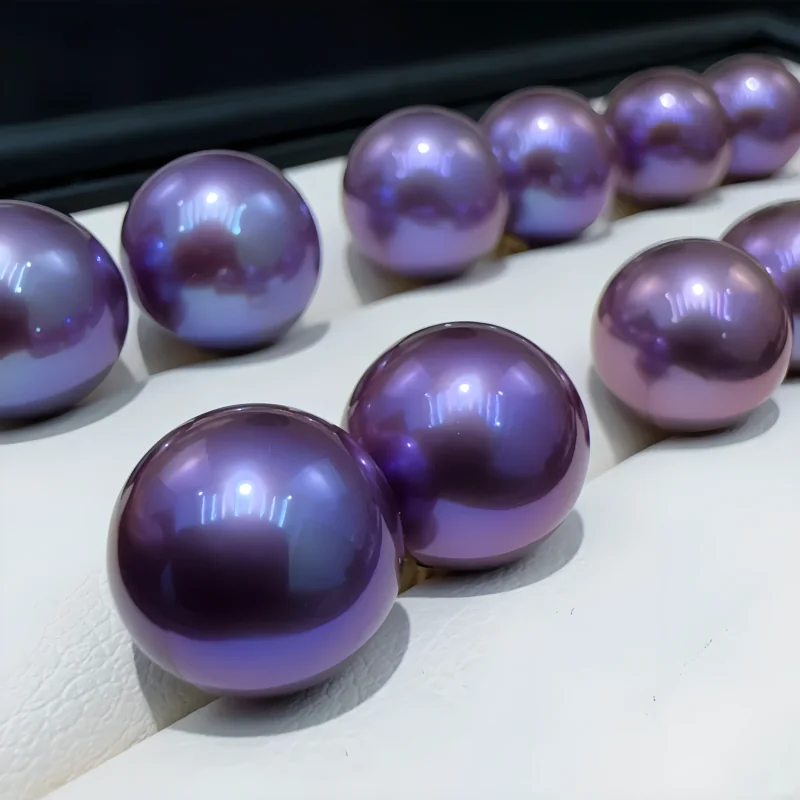
If you are buying pearl jewelry for the first time and want the most practical choice, start with a simple pair of pearl stud earrings.
They work with more outfits than most pearl jewelry, do not depend on neckline or chain length, need no ring or bracelet sizing, and can move easily between casual clothes, workwear, dinners, weddings, and other occasions. A medium-size pair also lets you experience the look of real pearls without committing to a full strand or a larger statement piece.
That is the default answer—not a rule. If you do not have pierced ears, dislike earrings, or already wear necklaces every day, a single-pearl pendant may be the more practical first purchase. The useful question is not which pearl piece is the most traditional. It is which one creates the least friction in your real routine.
Quick answer: pearl studs are the easiest first choice for most people
| Jewelry type | Practicality as a first pearl piece | Main advantage | Main limitation |
|---|---|---|---|
| Pearl stud earrings | Best default choice | Easy to wear, little outfit coordination, no sizing | Not suitable if you dislike earrings or have unpierced ears |
| Single-pearl pendant | Best alternative | Simple, visible, adjustable lengths are easy to style | Still interacts with necklines, chains, and other necklaces |
| Pearl strand necklace | Very good for the right wardrobe | Classic pearl look and strong visual impact | More styling commitment and usually a higher total pearl count |
| Pearl bracelet | More lifestyle-dependent | Easy to see and enjoy while wearing | Frequent contact with desks, bags, sleeves, and hard surfaces |
| Pearl ring | Usually not the most practical first piece | Distinctive and personal | Needs sizing and puts a relatively soft pearl on the hand |
If you are specifically deciding between earrings and a necklace, our guide to choosing earrings or a necklace as your first pearl piece goes deeper into wear frequency, styling effort, and cost per wear.
What does “practical” actually mean for pearl jewelry?
The most practical first piece is not necessarily the cheapest, smallest, or most classic. A useful first purchase usually scores well in five areas:
- Frequency: you can imagine wearing it several times a month, not only to formal events.
- Low styling effort: it works with clothes you already own.
- Comfort: you are not constantly adjusting, removing, or worrying about it.
- Low fit risk: you do not need a precise finger, wrist, or necklace length to make the piece usable.
- Reasonable exposure: the pearls are not constantly striking hard surfaces or rubbing against objects during ordinary movement.
This framework changes the answer. A full pearl strand may be the most recognizable pearl jewel, but recognition is not the same as practicality. A ring may be beautiful, but hands take much more contact than ears. A bracelet can be easy to style, yet it lives next to desks, bags, sleeves, and countertops.
That is why simple studs usually come out ahead.
Why pearl stud earrings make such a practical first piece
1. They do not depend on your neckline
A necklace has to coexist with crewnecks, collars, V-necks, scarves, jacket lapels, and other chains. Pearl studs sit near the face, so the shirt or dress you choose usually does not change whether the earrings work.
That matters more than it sounds. Jewelry becomes practical when you can put it on without rebuilding the rest of the outfit around it.
2. They add a visible pearl effect without becoming a statement piece
A pair of pearls near the face catches light and is easy to notice, even when the pearls themselves are not large. At the same time, simple studs normally do not dominate an outfit. They can look polished with a shirt or blazer and still feel natural with a T-shirt, knit, or casual dress.
For a first pair, the goal is usually not maximum visual impact. It is learning whether you enjoy wearing pearls often.
3. They avoid most sizing problems
Rings need the correct finger size. Bracelets need the right wrist fit. Necklaces raise questions about chain or strand length and where the piece should sit relative to the neckline.
Stud earrings avoid most of those decisions. You still need to care about post material, backing security, pearl weight, and where the piercing sits on the earlobe, but the number of fit variables is much smaller.
4. The pearl is relatively protected compared with a ring or bracelet
Pearls are much softer than many common jewelry materials. The Gemological Institute of America lists pearl at about 2.5 on the Mohs hardness scale and notes that pearls can be scratched or abraded, so reasonable care matters. GIA's pearl care guidance also advises protecting pearls from chemicals such as perfume, cosmetics, and hairspray.
No pearl jewelry is maintenance-free, but the ear generally experiences less hard-surface contact than the hand or wrist. That makes studs a sensible format when you want something you can wear frequently while keeping accidental knocks relatively limited.
When a pearl pendant is actually more practical than earrings
Pearl studs are the default winner only if earrings already fit your life. A simple pendant can be the better first pearl piece when:
- your ears are not pierced;
- you rarely wear earrings now;
- you use over-ear headphones for long periods;
- you dislike the feeling of posts or backs;
- you tend to lose earrings;
- you already wear a fine chain almost every day.
A single-pearl pendant gives you one clear focal pearl without the visual commitment of a full strand. It is also easier to integrate with modern minimal jewelry than many people expect. If the chain length suits several necklines—or is adjustable—it can become almost as automatic as a pair of studs.
For someone who already reaches for necklaces every morning, forcing an “earrings first” rule would make no sense. Existing habit is more useful than jewelry tradition.
Why a full pearl necklace is not always the most practical first purchase
A classic strand is often the first image people associate with pearl jewelry, and it can absolutely be the right first piece. But it asks more of the wearer than studs or a small pendant.
You need to think about strand length, pearl diameter, neckline, clothing layers, and how strongly you want the pearls to define the outfit. A strand also contains many pearls, so matching becomes part of the overall appearance and value. GIA includes matching among its seven pearl value factors for jewelry containing multiple pearls, along with size, shape, color, luster, surface, and nacre quality. See GIA's pearl quality factors for the underlying framework.
Choose a strand first when you already love necklaces, want a recognizably classic pearl look, or can immediately name several outfits you would wear it with. Do not buy one simply because a pearl necklace feels like something you are “supposed” to own.
Why bracelets and rings usually come later
Pearl bracelets: easy to enjoy, but exposed to contact
A bracelet is visually easy to appreciate because you can see it while wearing it. The trade-off is location. Wrists move against desks, handbags, doors, sleeves, keyboards, and other objects throughout the day.
That does not make pearl bracelets impractical. It simply means they are less forgiving for someone who wants a first piece they can put on with minimal thought.
Pearl rings: beautiful, but the hand is a demanding place for a pearl
Rings add another problem: sizing. They also put the pearl on the part of the body that routinely touches hard objects.
If you love rings and already remove them for washing, exercise, housework, and other high-contact activities, a pearl ring can still be a good choice. But as a universal first recommendation, it ranks below studs, pendants, and necklaces.
What pearl size is easiest for a first pair of studs?
For many adults, about 6–8 mm is a very usable starting range. Pearls around 6–7 mm look restrained but clearly visible, while 7–8 mm gives a more classic middle-ground presence. Larger sizes can still work beautifully, but they become more noticeable and may feel heavier depending on the setting and earlobe.
Do not treat 6–8 mm as a rule. Your hairstyle, earlobe size, piercing position, normal jewelry scale, and preference for subtle or bold pieces all matter. Our pearl size guide shows how the same millimeter range reads differently in studs, strands, pendants, bracelets, and rings.
Freshwater or Akoya: which is better for a first piece?
Both can make excellent first pearl jewelry. They simply solve different priorities.
Freshwater cultured pearls are a strong starting point when you want broad choice in shape, color, size, and price. Modern freshwater pearls can range from intentionally organic baroque forms to very round, highly lustrous pearls, so “freshwater” should not be treated as shorthand for low quality.
Akoya cultured pearls are a natural choice if the look you want is classic, round, white-to-cream, and sharply lustrous. A well-matched Akoya stud pair is one of the clearest expressions of the traditional pearl-earring look.
For either type, do not sacrifice visible quality simply to buy the largest diameter you can afford. Luster has a major effect on how lively a pearl looks, and GIA treats it as one of the key pearl value factors. If you are new to judging quality, our broader pearl buying guide explains luster, surface quality, shape, nacre, matching, and budget trade-offs in more detail.
A simple first-purchase formula
If you want to make the decision quickly, use this sequence:
- Start from the jewelry you already wear. If you wear studs most days, choose pearl studs. If you never wear earrings but always wear a chain, choose a pendant.
- Choose low-friction scale. For studs, 6–8 mm is a useful starting range for many buyers; for a pendant, a somewhat larger single pearl can still feel easy because there is only one focal pearl.
- Prioritize luster and overall appearance. Do not let an extra millimeter or an exaggerated grade label distract you from what the pearl actually looks like.
- Choose a metal and construction you are comfortable wearing. A beautiful pearl is not practical if the post, clasp, chain, or setting annoys you.
- Picture five real outfits. If you cannot immediately think of five things you already own that work with the jewelry, it may be a special-occasion purchase rather than a practical first piece.
So, what should you buy first?
For most people, the most practical first pearl jewelry piece is a simple pair of pearl stud earrings. They combine visibility, versatility, low styling effort, and relatively low fit risk better than any other pearl format.
If earrings do not fit your habits, choose a single-pearl pendant next. A classic strand is an excellent first purchase for someone who genuinely enjoys necklaces and wants the pearls to play a larger role in the outfit. Bracelets and rings can be wonderful additions later, but their higher exposure to contact makes them less universal as a starting point.
The best first pearl is not the piece with the strongest tradition behind it. It is the one that earns a place in your normal week.
If studs fit that description, you can browse pearl earrings and compare simple everyday styles before deciding on pearl type and size.
Frequently Asked Questions
What is the best first pearl jewelry piece for a beginner?
For most beginners, simple pearl stud earrings are the most practical first choice because they are easy to style, need no ring or bracelet sizing, and work across casual, work, and occasion clothing. A pendant is the best alternative if you do not normally wear earrings.
Are pearl studs too formal for everyday wear?
No. Small to medium pearl studs can be worn with casual clothes as easily as with formal outfits. The overall effect depends on pearl size, setting, metal, hairstyle, and the rest of the outfit.
What size pearl studs are best for a first pair?
About 6–8 mm is a broadly useful starting range for many adults. Smaller pearls look more delicate; larger pearls have more presence. The best size depends on your normal jewelry scale, earlobe, hairstyle, and personal preference.
Should my first pearls be freshwater or Akoya?
Choose freshwater pearls when you value variety and flexibility in shape, color, and budget. Choose Akoya when you specifically want the classic round white pearl look with crisp luster. Quality varies within both categories, so judge the actual pearls rather than the name alone.
Can pearl jewelry be worn every day?
Pearls can be worn frequently, but they should not be treated like jewelry that never needs to come off. Protect them from hard knocks, perfume, cosmetics, harsh chemicals, bathing, swimming, and rough activity, and wipe them gently after wear. See our pearl care guide for a practical routine.