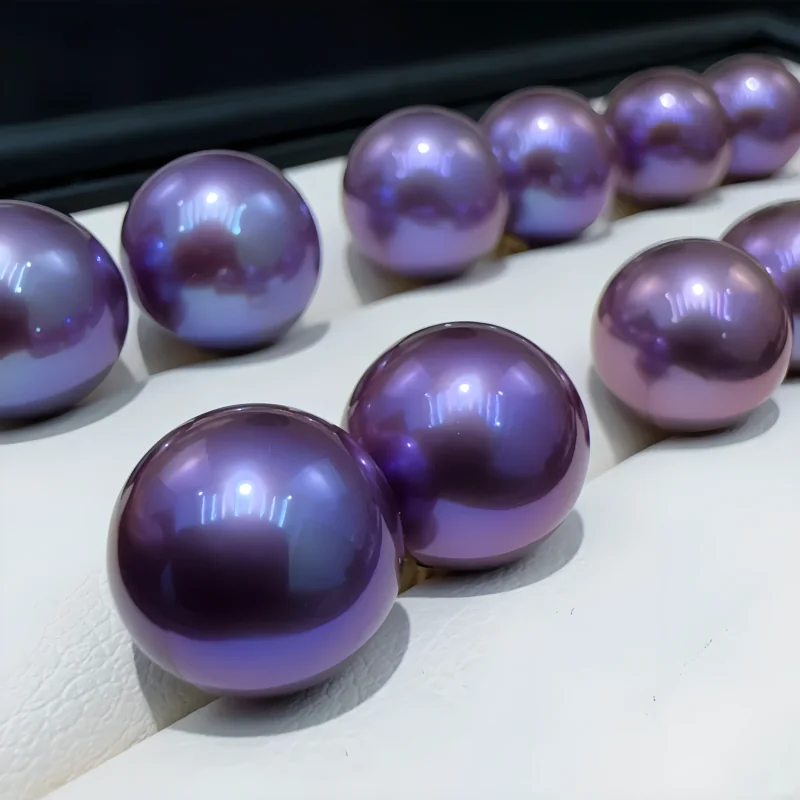
Two white pearls can look similar in a product title and completely different in person. One may appear bright, crisp, and lively; another may look soft or chalky. A larger pearl may cost more without actually looking better. And a pearl described as “AAA” by one seller may not be directly comparable with an “AAA” pearl from another.
The easiest way to choose well is to stop treating “white pearl” as a single quality category. First identify the pearl type, then compare quality within that type. For most buyers, luster should receive the highest priority, followed by surface condition and nacre quality. Matching becomes especially important for earrings and strands. Color, shape, and size still matter, but they are partly questions of preference, rarity, and design rather than simple measures of “better” or “worse.”
The Short Answer: What Should You Prioritize?
The Gemological Institute of America (GIA) evaluates pearls using seven value factors: size, shape, color, luster, surface, nacre, and matching. GIA notes that luster is one of the most important factors because it strongly affects the beauty of a pearl.
For a practical white-pearl purchase, a useful order of attention is:
| Factor | Practical priority | What to look for |
|---|---|---|
| Luster | Very high | Bright, lively reflections with good definition for that pearl type |
| Surface | High | Few distracting blemishes; no obvious serious damage |
| Nacre quality | High | Healthy-looking nacre, good visual depth, no obvious peeling or exposure |
| Matching | High for pairs and strands | Consistent luster, color, size, shape, and overall appearance |
| Color / overtone | Medium | A white tone that suits the wearer and looks consistent in a set |
| Shape | Depends on style | Round for a classic look; near-round or baroque when design matters more than symmetry |
| Size | Depends on style and budget | The visual scale you want without sacrificing the more important quality factors |
This is a buying priority, not a replacement for the GIA system. All seven factors can affect value. The point is that when your budget forces trade-offs, spending more for a little extra diameter is often less rewarding than spending the same money on visibly better luster.
First Decide Which Kind of White Pearl You Are Comparing
White cultured pearls commonly appear in three major families: Akoya, freshwater, and white South Sea pearls. They can overlap in color, but they are not expected to look identical.
| Pearl type | Typical visual character | What buyers often choose it for |
|---|---|---|
| Akoya | Usually smaller, often very round, with the potential for crisp, mirror-like luster | Classic white strands, studs, bridal jewelry, refined everyday wear |
| Freshwater | Very broad range of shapes, sizes, and luster; fine examples can be extremely bright | Value, variety, larger sizes at accessible price points, modern designs |
| White South Sea | Generally larger, with a broad, deep, often satiny glow | Large-scale luxury jewelry and a softer, more substantial visual presence |
This distinction matters because excellent luster does not look exactly the same across pearl types. Fine Akoya pearls may return very sharp reflections. Fine South Sea pearls often show a broader, softer-looking glow while still having excellent luster. Freshwater pearls span a particularly wide range, from soft to very sharp or metallic-looking reflections.
If you are deciding specifically between the two classic saltwater white-pearl categories, our comparison of white South Sea pearls vs. Akoya pearls explains the difference in size, luster character, and overall look in more detail.
1. Luster Usually Matters Most
Luster is not simply “shininess.” What matters is how strongly and clearly light is reflected from the pearl. A high-luster pearl looks lively and dimensional. A lower-luster pearl can look hazy, milky, or flat even if it is large, round, and relatively clean.
When comparing two similar white pearls, look at the reflections of a window, lamp, dark object, or your own outline. On the stronger-luster pearl, reflected shapes should generally appear more distinct. On a weaker-luster pearl, they blur together.
There is one important rule: compare like with like. Do not reject a white South Sea pearl simply because its reflection is not as razor-sharp as a fine Akoya pearl. The two types can have different high-quality luster characteristics.
For a more detailed visual method, see our pearl luster guide, which explains how to compare reflection sharpness, brightness, and consistency under the same lighting.
2. Surface Quality Matters, but a Tiny Blemish Is Not Automatically a Deal-Breaker
Pearls grow inside living mollusks, so completely featureless surfaces are uncommon. Small dots, shallow pits, growth marks, or slight texture can occur even on attractive pearls.
The better question is not “Does this pearl have any blemish?” but:
- How visible is the mark at normal viewing distance?
- Is it isolated or spread across much of the surface?
- Does it interrupt the luster?
- Can it be hidden near a drill hole or setting?
- Is it only a superficial growth feature, or does it look like cracking, peeling, or other damage?
If two pearls have similar luster, the cleaner surface will generally be more desirable. But when the choice is between excellent luster with one minor blemish and a perfectly clean-looking pearl with noticeably duller luster, many buyers will get more visual beauty from the better-luster pearl.
Our pearl surface and blemishes guide goes deeper into which marks are mainly cosmetic and which deserve more attention.
3. Nacre Quality Is Important, but It Is Harder for a Buyer to Judge Directly
Nacre is the material produced by the mollusk that forms the visible pearl. Its quality is closely connected with the pearl's appearance and durability, but consumers often cannot judge it as easily as size or surface marks—especially from online photos.
Instead of relying on vague claims such as “very thick nacre,” look for a combination of evidence:
- healthy, well-developed luster;
- visual depth rather than a flat or chalky appearance;
- no obvious peeling, chipping, or exposed nucleus;
- clear seller disclosure about pearl type and cultivation structure;
- laboratory documentation when the purchase value justifies it.
It is also important not to apply one nacre rule to every pearl. Traditional tissue-nucleated freshwater pearls and bead-nucleated saltwater pearls are constructed differently. The right question depends on what type of pearl you are actually buying.
4. Matching Can Make or Break Earrings and Necklaces
Matching is easy to underestimate because buyers often inspect one “best” pearl instead of the whole piece.
For a pair of earrings, the two pearls should look harmonious in:
- size;
- shape;
- bodycolor and overtone;
- luster;
- surface quality.
For a strand, matching becomes even more demanding. A necklace may contain dozens of pearls, and the piece looks more refined when brightness, color, shape, and size transition consistently from one pearl to the next.
This is why an excellent necklace is not merely a collection of good individual pearls. It is also a sorting and matching achievement. When comparing two strands at similar prices, step back and judge the entire necklace before focusing on individual blemishes.
5. “Whiter” Does Not Automatically Mean “Better”
White pearls are rarely a single neutral white. Their bodycolor may lean white, cream, silver, or ivory, and they can show subtle overtones such as rose or green depending on pearl type.
Color is a value factor, but it is also strongly influenced by personal preference. A cooler silver-white pearl may look especially crisp next to white gold or platinum. A warmer cream-white may harmonize beautifully with yellow gold. Rose overtones can add warmth without making the pearl look pink from a normal distance.
The practical rule is simple: do not pay more merely because a seller describes one pearl as “whiter.” Ask whether the color is attractive, even, and appropriate for the pearl type and the jewelry design.
For a strand or pair, color consistency often matters more than chasing a theoretical “best” white.
6. Shape Affects Rarity and Style More Than Basic Beauty
Round pearls are traditionally valued because highly symmetrical pearls are harder to produce. But roundness should not be confused with luster.
A near-round pearl with exceptional luster can look more beautiful than a perfectly round pearl with a dull surface. Baroque or oval white pearls can also be excellent choices when the design intentionally uses their organic shape.
If you want a traditional strand or classic stud earrings, roundness deserves more of your budget. If you want an expressive pendant or contemporary design, shape can become a creative choice instead of a quality defect.
See our pearl shape guide for a fuller comparison of round, near-round, oval, button, drop, and baroque pearls.
7. Size Increases Presence and Often Price, but Not Necessarily Quality
Larger pearls are generally rarer within the same pearl type when other factors are equal, so size can raise value significantly. But size tells you how large the pearl is—not how lustrous, clean, or well matched it is.
This creates one of the most common buying mistakes: using the entire budget to reach the next size tier and accepting a noticeable drop in luster.
If your budget is fixed, compare:
- a slightly smaller pearl with stronger luster and cleaner appearance; and
- a larger pearl with weaker luster or more distracting surface issues.
For many buyers, the first option looks better in real life. If you are unsure how millimeter size changes the visual impression of earrings or necklaces, use our pearl size guide before paying a premium for diameter alone.
A Practical White-Pearl Comparison Test
If you can compare pearls in person—or ask a seller for neutral-light photos or video—use this order:
- Confirm the pearl type. Compare Akoya with Akoya, freshwater with freshwater, or South Sea with South Sea before deciding which example is better within its category.
- Compare under the same lighting. Different exposure, background, and editing can make one pearl look artificially brighter.
- Look at luster first. Check the sharpness and liveliness of reflected objects, not just the bright highlight.
- Check the surface at normal viewing distance. Decide whether blemishes are actually distracting.
- Rotate the pearl. Quality should not disappear when the best side is turned away.
- Judge the whole pair or strand. Look for consistent color and luster, not only the best individual pearl.
- Only then compare size, shape, and price. These factors make more sense after the basic visual quality is established.
How to Spend a Limited Budget
When two white-pearl options cost roughly the same, these trade-offs are usually more useful than simply buying the highest seller grade:
- Choose better luster before extra size if the size difference is small.
- Accept a minor, well-placed surface mark if it allows you to keep excellent luster.
- Pay attention to matching for earrings and necklaces; inconsistency is visible every time the piece is worn.
- Choose color for the wearer rather than assuming the coolest or brightest white is universally superior.
- Compare the actual characteristics, not only AA/AAA labels. Letter grades are not used identically by every seller.
If you want a broader framework for comparing seller grades and the major quality factors together, see the MJ Pearls grading guide.
So, What Makes a Good White Pearl?
A good white pearl is not simply the largest, roundest, or whitest pearl you can afford. It is a pearl whose type, luster, surface, nacre, color, shape, size, and—when relevant—matching work together for the look you want.
If you remember only one rule, make it this: choose the pearl type for the visual style, then prioritize luster within that type. After that, use surface and nacre quality to separate strong candidates, check matching for multi-pearl jewelry, and treat color, shape, and size as deliberate design and budget choices.
That approach usually leads to a better-looking purchase than chasing the biggest millimeter size or the highest grade label on the page.
Frequently Asked Questions
Are pure white pearls more valuable than cream or silver-white pearls?
Not automatically. Color preference and rarity vary by pearl type and market. For most buyers, luster, overall quality, and how the color suits the wearer matter more than finding the “whitest” possible pearl.
Which white pearls have the strongest luster?
Fine Akoya pearls are especially known for sharp, mirror-like reflections, but excellent freshwater pearls can also be very bright, while fine white South Sea pearls often show a broader, satiny luster. Compare quality within the same pearl type rather than assuming one luster style is universally superior.
Is luster more important than a perfectly clean surface?
Often, yes. A small, unobtrusive blemish may have little effect on the appearance of a pearl with excellent luster. Heavy or structurally concerning surface features are different and deserve more attention.
Should I choose a larger pearl or a more lustrous pearl?
If the size difference is modest, stronger luster is often the better visual investment. Choose the larger pearl when size itself is central to the look you want and the quality trade-off is acceptable.
Can I compare AAA grades between different pearl sellers?
Use caution. Seller letter grades are not universally standardized. Compare the actual stated luster, surface, shape, nacre, matching, size, and color characteristics instead of relying on the grade label alone.