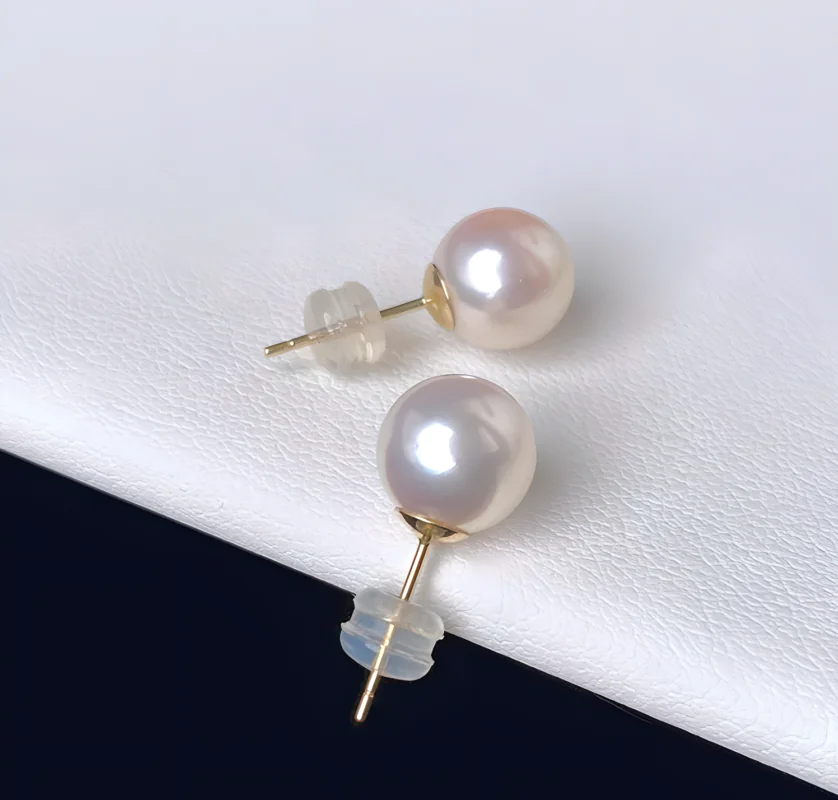
When Should You Request a Laboratory Grading Certificate When Buying Pearls?
You do not need an independent laboratory report for every pearl purchase. It becomes most useful when an important claim—such as natural versus cultured origin, treatment status, natural color, or unusually high quality—materially affects the price or your decision to buy. The key is not simply whether the pearls are expensive, but whether independent testing can answer a question that matters enough to justify the additional cost and effort.
Quick Answer: When Is a Pearl Laboratory Report Worth Requesting?
As a practical rule, consider requesting an independent pearl laboratory report when one or more of the following situations applies:
- The pearl is being sold as a natural pearl rather than a cultured pearl.
- A premium price depends on the claim that its color is natural rather than treated.
- You are making a high-value purchase and want independent confirmation of important quality characteristics.
- You are buying an estate, antique, auction, or unusual pearl whose identity cannot reasonably be established from appearance or seller documentation alone.
- You are purchasing remotely and an important claim cannot be adequately judged from photographs, video, or the seller's description.
- You need independent documentation for a later transaction, appraisal, collection record, or resale discussion.
For ordinary cultured pearl jewelry, especially modestly priced freshwater pearls, a full laboratory report is often unnecessary. Clear product specifications, good close-up images, transparent grading criteria, a reputable seller, and a reasonable return policy can be more useful than paying for a laboratory report whose cost is disproportionate to the purchase.
First, Understand What a “Pearl Certificate” Actually Is
The word certificate is used loosely in the pearl market. A card supplied with a necklace, an independent laboratory report, and an appraisal are not necessarily the same thing.
| Document | Main Purpose | What It May Tell You |
|---|---|---|
| Seller certificate | Records the seller's description | Pearl type, size, stated grade, product specifications or warranty information |
| Independent laboratory report | Gemological examination | Identity, natural or cultured status, environment, detectable treatment or quality classifications, depending on the service |
| Jewelry appraisal | Provides a valuation for a stated purpose | Description plus an appraiser's opinion of monetary or replacement value |
This distinction matters because a laboratory report is not automatically an appraisal, and a seller-issued certificate is not automatically independent verification.
Even the terminology used by laboratories varies. For example, GIA refers to the documents it issues as reports rather than certificates and offers different pearl services depending on whether the client needs identification, classification, or both.
Not Every Laboratory Report Answers the Same Question
Before requesting a report, ask yourself what you actually need proven. Paying for the wrong type of laboratory service can produce an impressive-looking document that still fails to answer your main concern.
Independent laboratories may offer different levels of analysis. As one example, GIA currently distinguishes among pearl identification, identification plus classification, and cultured pearl classification services.
Identification asks: What is this pearl?
An identification-focused report can address questions such as whether an examined pearl is natural or cultured, whether it formed in saltwater or freshwater, and whether certain treatments can be detected. Some reports may also provide information about the mollusk when it can be determined.
This is the appropriate direction when your concern is authenticity or origin rather than simply visual quality. For more background on why appearance alone has limits, see our pearl identification guide.
Classification asks: What characteristics does this cultured pearl have?
A classification or grading-oriented service may describe factors such as size, shape, color, luster, surface quality, nacre quality, and matching. These characteristics help explain why two genuine cultured pearls can differ substantially in quality and value.
They should be considered alongside the broader factors explained in our guide to evaluating pearl value.
One report does not necessarily do both
This is an easy detail to miss. A quality-classification report for pearls already known to be cultured does not necessarily perform the same identification or treatment testing as an identification report. If your real concern is whether a pearl's color has been treated, for example, a quality-only document may not be sufficient.
Always read the laboratory's stated scope rather than assuming that the words certificate, grading, or report mean that every possible characteristic was tested.
Situation 1: The Pearl Is Claimed to Be Natural Rather Than Cultured
This is one of the strongest reasons to seek independent laboratory testing.
Natural pearls form without deliberate human intervention, while cultured pearls form through a cultivation process initiated by people. Both are genuine pearls, but natural pearls are much rarer and can occupy a very different market.
If a substantial premium depends specifically on the word natural, visual inspection, seller reputation, or a basic retail certificate may not provide enough evidence. Examination of internal growth structures and other gemological properties can be necessary to distinguish pearl formation types reliably.
The buying rule is simple: the larger the price difference created by the natural-pearl claim, the stronger the case for independent verification.
Situation 2: Natural Color Is an Important Part of the Price
Pearls can undergo post-harvest treatments that alter or enhance their appearance. Depending on the pearl, treatments may include dyeing, irradiation, coating, or other forms of color modification.
Treatment does not automatically make a cultured pearl fake. A genuine cultured pearl can still be genuine after color treatment. The important issue is whether the treatment has been accurately disclosed and whether you are paying a premium based on a claim of natural color.
Suppose two pearls look similarly attractive, but one is marketed as having a rare natural color and priced substantially higher because of it. In that situation, independent testing may provide much more value than it would for a fashion pearl whose color treatment is already disclosed and reflected in the price.
For an overview of the different processes that can affect pearl color, see our guide to pearl color enhancement treatments.
Situation 3: You Are Buying a High-Value Akoya, Tahitian, or South Sea Pearl Piece
A high price alone does not automatically mean that a laboratory report is necessary. However, third-party classification becomes more useful when much of the price depends on exceptional luster, surface quality, nacre quality, matching, or another premium characteristic.
This can be particularly relevant when comparing expensive pearl strands remotely. Photographs are valuable, but lighting, exposure, sharpening, white balance, and screen settings can influence the way luster, color, and surface characteristics appear.
A laboratory report provides another independent description of the item. It should complement—not replace—good photography, a clear seller description, and your own judgment of whether you actually like the pearls.
There is still an important limitation: a grading report does not tell you whether the seller's asking price is fair. It describes characteristics of the examined pearl or jewelry item. Market value still depends on supply, demand, rarity, craftsmanship, brand, retail context, and other commercial factors.
Situation 4: You Are Buying Estate, Antique, or Auction Pearls
Older pearl jewelry can present questions that ordinary modern retail jewelry rarely does.
A necklace may be described as natural pearls because of its age or appearance, yet cultured pearls have existed commercially for more than a century. A historic-looking mounting does not by itself establish that the pearls are natural.
Laboratory testing can be especially useful when a major part of the item's value depends on determining whether its pearls are natural or cultured, saltwater or freshwater, or whether treatments are present.
However, keep laboratory identification separate from historical provenance. A gemological laboratory may be able to examine what the pearl is, but that does not automatically prove who owned it, which estate it came from, where it was purchased, or whether a historical story attached to it is genuine. Those claims normally require separate documentary evidence.
Situation 5: You Are Buying Pearls Online and Cannot Inspect Them in Person
Independent documentation can reduce one type of uncertainty in a remote purchase, but it should not be treated as a substitute for normal buying safeguards.
Before paying extra for a laboratory report, also ask for:
- the exact pearl type;
- actual dimensions rather than vague size categories;
- close-up photographs under neutral lighting;
- video showing luster and surface from several angles;
- written disclosure of known treatments;
- the seller's grading criteria;
- a clear return or inspection period.
If an expensive purchase still depends on an important claim you cannot reasonably verify from this information, that is where laboratory documentation becomes more valuable.
When You Probably Do Not Need a Laboratory Report
Independent testing has a cost, and good buying decisions should consider whether that cost produces meaningful information.
Routine cultured freshwater pearl jewelry
For a reasonably priced pair of cultured freshwater pearl earrings, bracelet, or everyday necklace, sending the piece to a major laboratory can be economically unnecessary. If the seller clearly states what the pearls are, accurately represents their quality, and provides appropriate buyer protection, a laboratory report may add little practical value.
When the treatment is already disclosed
If you intentionally want dyed or otherwise color-treated pearls and the treatment is clearly disclosed, there may be no reason to pay a laboratory simply to reconfirm a fact that does not affect your buying decision.
When the report would cost too much relative to the risk
There is no universal price threshold above which every pearl needs certification. Instead, compare the cost and inconvenience of testing with the financial consequence of the important claim being wrong.
A report makes more economic sense when a mistaken identity or treatment claim could change the value by hundreds or thousands of dollars than when the entire jewelry item is inexpensive.
Use the “Cost of Being Wrong” Test
A more useful rule than setting an arbitrary dollar limit is to ask four questions:
- Which claim is responsible for the premium?
Is it natural origin, natural color, pearl type, treatment status, luster, nacre, matching, or something else? - Can a laboratory actually test or classify that claim?
Check the exact scope of the service rather than assuming every report covers everything. - How much would it matter if the claim were wrong?
Would you still buy the pearl at the same price? - Is the potential loss greater than the cost and inconvenience of testing?
If yes, independent verification becomes much easier to justify.
This framework works better than saying that every pearl over a particular price must have a certificate.
A Practical Decision Table
| Buying Situation | Lab Report? | Main Reason |
|---|---|---|
| Affordable cultured freshwater pearl earrings | Usually unnecessary | Testing may cost too much relative to the purchasing risk |
| Everyday cultured pearl necklace from a transparent seller | Optional | Seller specifications and return protection may be sufficient |
| Expensive Akoya, Tahitian, or South Sea strand | Consider it | Independent classification may help document premium characteristics |
| Pearl sold at a premium for rare natural color | Often worthwhile | Treatment status may materially affect what you are paying for |
| Pearl claimed to be natural rather than cultured | Strongly recommended for a meaningful purchase | The identity distinction can substantially affect rarity and value |
| Antique or estate natural-pearl necklace | Strongly recommended when the claim drives value | Appearance and age alone cannot establish natural formation |
| Insurance documentation | May help, but is not enough by itself | A laboratory report and a monetary appraisal serve different purposes |
How to Check a Pearl Laboratory Report Before Relying on It
Having a report is not the end of the verification process. You also need reasonable confidence that the report corresponds to the pearls being offered.
Check the document for details such as:
- the issuing laboratory;
- report number and date;
- number of pearls examined;
- weight or dimensions;
- shape and color description;
- a photograph, when provided;
- identification conclusions;
- treatment comments;
- quality classifications, if that service was requested;
- any limitations, qualifications, or sampling statements.
If the laboratory provides an online report-verification service, use it. Then compare the report's photograph, measurements, pearl count, and other identifying details with the actual item.
Be Careful With Letter Grades Such as AAA, AAAA, or AAAAA
A laboratory report can be useful, but the existence of a grade does not make every grading system directly comparable.
Pearl grading has historically used multiple commercial systems, and different sellers or organizations may define their grade boundaries differently. An impressive number of As is therefore not enough information by itself.
Look instead at what the grading system actually evaluates: luster, surface condition, shape, nacre quality, matching, color, size, and any other stated factors. Understanding the underlying characteristics is more useful than assuming that two unrelated sellers' “AAA” pearls must be equivalent.
Our pearl classification guide provides additional context on the terminology used to describe different pearl categories.
A Laboratory Report Does Not Tell You Everything
Even an excellent independent report has a defined scope. Depending on the service, it may provide strong evidence about identity, treatment status, or quality characteristics, but it should not automatically be interpreted as proof of:
- the current retail value of the jewelry;
- whether the asking price is a good deal;
- historical ownership or provenance;
- the reputation of the seller;
- future resale value;
- whether you personally will find the pearls beautiful.
This is why the best pearl purchases combine documentation with visible quality, accurate disclosure, appropriate pricing, and a trustworthy transaction process.
Should You Ask for a Report Before or After Buying?
If laboratory verification is important enough that the result could determine whether you buy the item, discuss it before the transaction becomes final.
Agree on:
- which laboratory will perform the examination;
- which type of report will be requested;
- which claims need to be verified;
- who will pay the testing and shipping costs;
- what happens if the result differs from the seller's description.
This is much clearer than buying first and discovering later that the report you wanted cannot answer the question you originally cared about.
If you are purchasing through Margaret Jewelry and independent laboratory documentation matters to your decision, tell us what you want verified before the order is finalized. The useful question is not simply “Can I get a certificate?” but whether you need verification of identity, treatment, or quality so the appropriate type of documentation can be considered.
The Bottom Line
A pearl does not become good simply because it has a certificate, and a beautiful genuine cultured pearl does not become inferior because it was sold without one.
Request independent laboratory documentation when there is a material claim worth independently verifying. Natural-versus-cultured identity, treatment status, valuable natural color, exceptional quality claims, and important antique pearls are the clearest examples.
For routine pearl purchases, transparent specifications and responsible seller practices may be more useful than unnecessary paperwork. For high-stakes purchases, however, a properly chosen laboratory report can turn an important seller claim into independent gemological evidence.
FAQ
Do real pearls always come with a certificate?
No. Genuine natural and cultured pearls can be sold with or without a laboratory report. The absence of a certificate does not by itself mean that a pearl is fake.
Should freshwater pearls have a grading certificate?
Not necessarily. For ordinary cultured freshwater pearl jewelry, independent laboratory testing may cost more than the additional certainty is worth. It becomes more useful when an unusual identity, treatment, or high-value quality claim materially affects the purchase.
Can a laboratory tell whether a pearl is natural or cultured?
Major gemological laboratories can examine pearl structure and other properties to distinguish natural pearls from different types of cultured pearls. This is one of the most important reasons to request laboratory testing when a pearl is being sold at a substantial premium as natural.
Does a pearl grading report tell me what the pearl is worth?
Not necessarily. Gemological laboratory reports and monetary appraisals are different services. A report may document identity and quality characteristics, while an appraisal provides an opinion of monetary value for a stated purpose.
Is a seller's pearl certificate the same as an independent laboratory report?
No. A seller certificate generally records claims made by the seller, while an independent laboratory report records findings from an examination performed by the issuing laboratory. Both can be useful, but they serve different purposes.
Is a pearl with a laboratory report automatically better than one without a report?
No. A report documents characteristics within its stated scope; it does not create quality. An uncertified pearl can have excellent luster, surface quality, nacre and matching, while a laboratory-documented pearl may still be unattractive or overpriced for your needs.
External References
- Gemological Institute of America (GIA) — Pearl Reports & Services and Pearl Report comparison information.
- Swiss Gemmological Institute SSEF — Pearl testing and pearl report information.
- CIBJO, The World Jewellery Confederation — Pearl Book and pearl terminology guidance.