What Are the Wearing Characteristics of Pearl Rings and Pearl Bracelets?
Pearl rings and pearl bracelets both place pearls close to the hands, but they do not behave the same way when worn. A pearl ring creates a concentrated focal point on the hand and is especially exposed to knocks, while a pearl bracelet creates a continuous line around the wrist and experiences more movement, rubbing, and contact with desks, sleeves, watches, and other jewelry. Understanding these differences helps you choose not only a style you like, but one that suits how you actually use your hands and wrists.
Pearl Rings vs. Pearl Bracelets: The Quick Comparison
| Wearing Factor | Pearl Ring | Pearl Bracelet |
|---|---|---|
| Visual effect | Concentrated focal point on one finger | Repeated or flowing detail around the wrist |
| Movement | Moves with the hand but usually stays fixed on the finger | Frequently rotates, slides, and changes position |
| Contact exposure | Very high because fingers constantly touch objects and surfaces | High because the wrist contacts tables, clothing, bags, watches, and bracelets |
| Importance of pearl size | Size strongly affects height, balance, and statement level | Size affects both visual volume and the usable inner fit |
| Main comfort issue | Ring balance, pearl height, and interference with hand movement | Wrist fit, movement, weight, and how far the bracelet slides |
| Main construction concern | Security of the pearl and setting | String, wire, links, clasp, and pearl-to-pearl movement |
| Everyday wear | Best approached as mindful rather than continuous wear | Can be worn often, but repeated friction and wrist activity matter |
What Is Distinctive About Wearing a Pearl Ring?
A pearl ring puts one pearl, or a small group of pearls, in a highly visible position. Unlike a necklace where many pearls may share the visual attention, a single pearl on the hand is often judged almost individually. Its size, shape, luster, surface, color, and setting can all become noticeable at close range.
1. Pearl Size Has a Strong Visual Effect on the Hand
Because a ring occupies a relatively small area, even a few millimeters of difference in pearl diameter can noticeably change its character. Smaller pearls tend to feel more delicate and easier to integrate with other rings. Medium pearls create a clearer focal point without necessarily dominating the hand, while larger pearls can turn the ring into a statement piece.
There is no universal rule that a particular hand size must wear a particular pearl diameter. Finger length, band width, pearl shape, setting design, and personal style all affect the result. A better approach is to judge the pearl together with the complete ring rather than selecting by millimeter size alone.
2. The Height of the Pearl Matters Almost as Much as Its Diameter
A round pearl set high above a thin band can feel visually larger and may catch on clothing or contact objects more often. A lower-profile design, or a button-shaped pearl that sits closer to the finger, can feel quite different even when its visible width is similar.
This makes profile especially important when comparing pearl ring designs. If you use a keyboard frequently, reach into bags throughout the day, work with your hands, or regularly put on and remove clothing with narrow sleeves, a lower and more balanced design may be more practical than a tall cocktail-style setting.
3. Rings Are the Most Directly Exposed Pearl Jewelry Position
Your hands open doors, carry bags, hold phones, move chairs, touch counters, wash, cook, type, and handle countless objects during an ordinary day. A pearl ring therefore lives in a much more active environment than pearl earrings or most necklaces.
This does not mean a pearl ring must be reserved for formal occasions. It means that frequent wear and continuous wear are different ideas. A pearl ring can work beautifully for the office, dinner, social events, weddings, and many ordinary days, but it is sensible to remove it before cleaning, gardening, exercise, cooking, showering, swimming, or other hands-on activities.
4. Stacking Requires More Thought Than With Plain Metal Rings
Pearl rings can look modern when combined with narrow gold or silver bands, but the neighboring jewelry should not constantly rub against the pearl. Hard gemstones, sharp settings, and raised metal edges can create repeated contact with the pearl surface.
If you like a stacked look, check the rings while your fingers are bent as well as when your hand is flat. Jewelry that appears separated in a photograph may touch repeatedly during real hand movement.
What Is Distinctive About Wearing a Pearl Bracelet?
A pearl bracelet spreads its visual effect across the wrist rather than concentrating it at one point. It can range from a fine chain with occasional pearls to a traditional full strand, multi-strand bracelet, rigid bangle, or modern baroque design. As a result, the wearing experience depends heavily on both the pearls and the bracelet construction.
1. Repeated Pearls Create a Different Sense of Volume
On a bracelet, pearl size is repeated around the wrist. This means moving from smaller to larger pearls changes not only one focal point but the volume of the entire piece.
As a general styling reference, approximately 5–6 mm pearls usually create a fine, delicate effect; 6–8 mm pearls often give a versatile everyday-to-dressy appearance; 8–9 mm pearls feel more substantial; and pearls around 9 mm and above increasingly create a statement look. These ranges are useful starting points rather than strict rules, because shape, spacing, wrist size, and bracelet construction change the overall impression.
2. Bracelet Length Does Not Tell the Whole Fit Story
This is one of the most important differences between pearl bracelets and fine chain bracelets. Pearls have physical diameter and project inward toward the wrist. A bracelet made from large pearls can therefore feel tighter than a thin chain with the same measured end-to-end length.
For that reason, the best fit is determined by the completed bracelet around the wrist, not by nominal length alone. Measure the wrist where the bracelet will normally sit, then consider the pearl diameter, clasp, knotting or spacing, and how much movement you prefer.
A close fit reduces sliding, while a relaxed fit creates more movement and drape. Neither is automatically better. The goal is enough room for comfortable wrist movement without allowing the bracelet to travel so far toward the hand that it becomes distracting or vulnerable to catching.
3. Pearl Bracelets Move More Than Pearl Rings
A ring generally remains oriented around one finger. A flexible bracelet can rotate and slide every time the wrist turns. That movement is part of its appeal—the pearls catch light from different angles—but it also means more opportunities for friction.
Common contact points include desk edges, laptop surfaces, jacket cuffs, handbags, watch cases, metal bangles, and the clasp itself. Someone who spends a full workday typing at a desk may therefore experience bracelet wear differently from someone who mainly wears the same bracelet to dinners or social events.
4. The Entire Bracelet Structure Matters
When evaluating a pearl bracelet, do not ask only whether the pearls are durable. A bracelet is a small system made from pearls plus its string, wire, links, knots, clasp, spacers, adhesive, and metal fittings.
A traditional knotted strand may eventually require restringing. A chain-based bracelet depends on the condition of its links and jump rings. A stretch design depends on the elastic material. A rigid bangle places the pearls in a completely different mechanical environment.
This is why checking the clasp and stringing condition is an important part of owning a pearl bracelet, especially if you wear it regularly.
Which Is Easier to Wear Every Day: a Pearl Ring or a Pearl Bracelet?
If everyday wear means wearing jewelry through normal work and social activities while removing it for rough, wet, or chemical-heavy tasks, both can be practical. If everyday wear means putting the jewelry on and never thinking about it again, neither is ideal.
Between the two, a pearl ring normally deserves more caution because the hands experience direct impacts constantly. A bracelet is farther from the fingertips, but it has its own challenge: repeated movement and friction throughout the day.
| Your Priority | Usually the Better Starting Point | Why |
|---|---|---|
| A small but obvious focal point | Pearl ring | One pearl can create strong visual focus without covering much area |
| A continuous classic pearl look | Pearl bracelet | Multiple pearls create rhythm around the wrist |
| Minimal wrist movement | Close-fitting bracelet or ring | Fit and construction matter more than category alone |
| Frequent hands-on work | Bracelet, worn selectively | A ring is especially exposed to direct hand contact |
| Statement jewelry | Either | A large ring concentrates the statement; a large-pearl bracelet distributes it |
| Layering with other jewelry | Either, with spacing | Avoid repeated rubbing between pearls and harder jewelry surfaces |
How Should You Choose Pearl Size for Rings and Bracelets?
It is tempting to choose pearl size by asking which diameter is “best,” but wearability depends on the relationship between pearl size and jewelry structure.
For Pearl Rings
- Smaller pearls: usually lighter visually and easier to integrate into minimal or stacking styles.
- Medium pearls: provide a clear pearl focal point while remaining versatile across many ring designs.
- Larger pearls: create more drama, but profile, balance, and exposure become increasingly important.
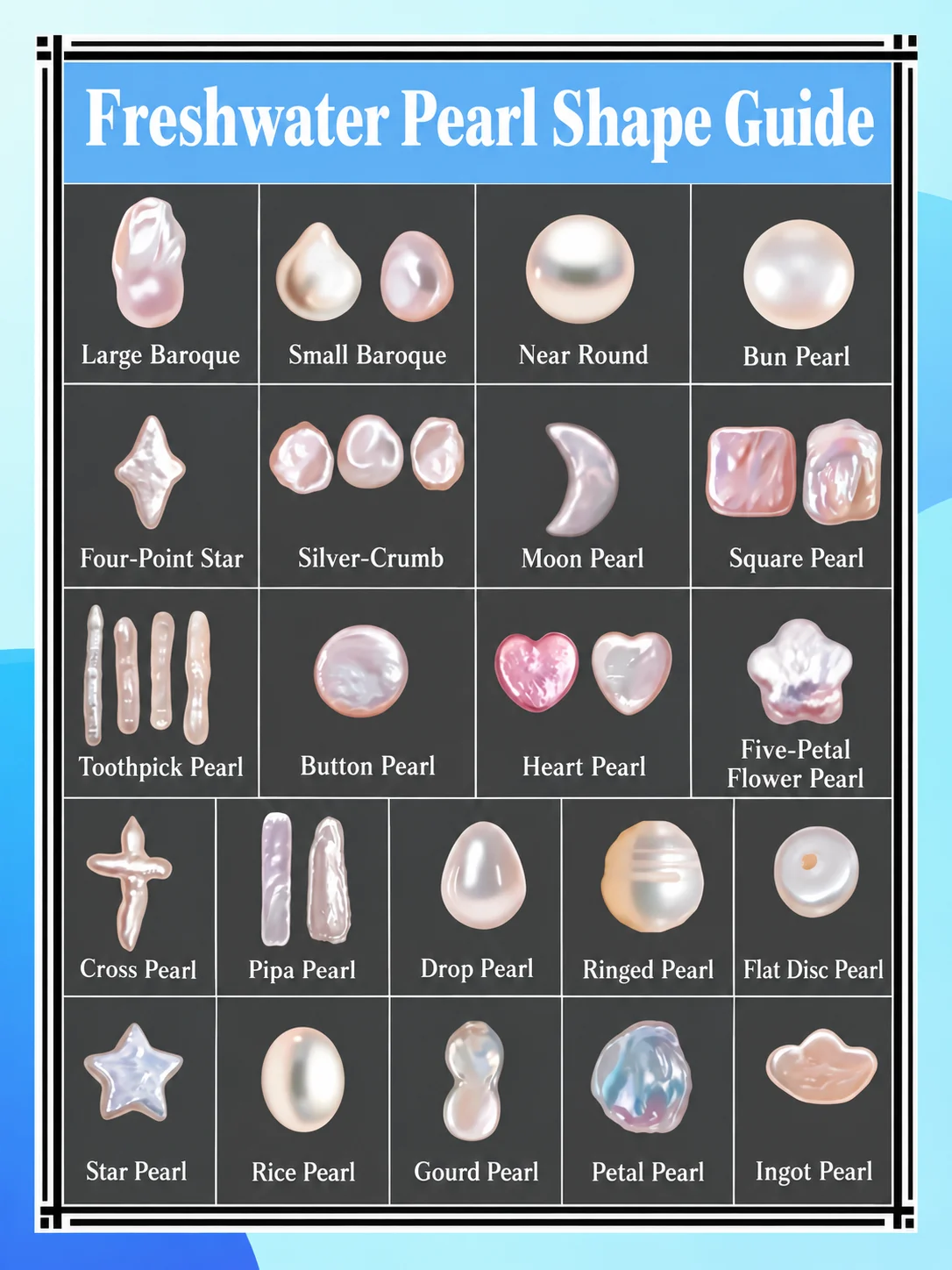
- Button or flatter shapes: can create substantial visible width without necessarily sitting as high as a comparable round pearl.
- Baroque pearls: can make a ring feel contemporary and individual, although balance depends heavily on the specific shape and setting.
For Pearl Bracelets
- Smaller pearls: create a lighter wrist line and are easy to combine with fine jewelry.
- Medium pearls: often provide a useful balance between visibility, flexibility, and overall volume.
- Larger pearls: make the bracelet visually fuller and also occupy more space toward the inside of the wrist.
- Baroque or irregular pearls: introduce texture and a less uniform silhouette, which can make the bracelet feel more relaxed or design-led.
Size should also be considered together with luster, surface quality, shape, color, and matching. A larger pearl is not automatically a better pearl. If you are comparing quality rather than only dimensions, our guide to evaluating pearl value explains the main factors in more detail.
How Do Ring and Bracelet Designs Change the Style of Pearls?
Pearls themselves do not make jewelry automatically formal. Much of the perceived formality comes from design.
A classic round pearl on a polished precious-metal ring can feel refined and traditional. Put an irregular baroque pearl on a sculptural band and the same jewelry category becomes more contemporary. Likewise, a uniform single-strand bracelet may feel classic, while widely spaced pearls on a fine chain can feel much lighter and more casual.
For everyday clothing, simpler proportions generally integrate more easily with shirts, knitwear, denim, tailoring, and dresses. For evening or ceremonial wear, larger pearls, multi-pearl arrangements, accent stones, wider bands, or multi-strand bracelets can create more visual emphasis.
The useful question is therefore not simply, “Are pearl rings or bracelets formal?” It is, “How much visual presence does this particular design create?”
Can You Wear a Pearl Ring and Pearl Bracelet Together?
Yes. Because they occupy different positions, a ring and bracelet can create a coordinated pearl look without feeling like a complete matching set.
One practical method is to choose which piece will be dominant. A large pearl ring can be paired with a finer bracelet, while a substantial full-strand bracelet can be balanced with a smaller, simpler ring. Matching the pearls perfectly is not always necessary; similar luster, color direction, metal tone, or design language can be enough to make the combination feel intentional.
Also consider physical contact. If several rings, bangles, watches, and bracelets are worn together, keep harder stones and sharp metal edges from repeatedly rubbing directly against the pearls.
Everyday Care Matters More for Rings and Bracelets
The Gemological Institute of America describes pearl as a relatively soft organic gem material that can be scratched or abraded and notes that substances including perfume, cosmetics, and perspiration may affect pearls. This is particularly relevant to rings and bracelets because they sit near hand cream, soap, water, sweat, desks, clothing, and frequently touched surfaces.
A practical routine is simple:
- Put pearl jewelry on after cosmetics, perfume, lotion, and hair products.
- Remove pearl rings before washing hands, cleaning, exercise, gardening, cooking, showering, or swimming.
- Remove pearl bracelets before activities involving prolonged water, chemicals, heavy friction, or impact.
- Wipe pearls gently with a very soft, clean cloth after wearing them.
- Store pearl jewelry separately from harder gemstones and sharp metal pieces.
- Do not use ultrasonic or steam cleaners on pearls.
- For strung bracelets, periodically inspect the thread, knots, and clasp and make sure the strand is completely dry before storing or wearing it after cleaning.
For a more complete maintenance routine, see our guide on how to care for pearls.
FAQ
Are pearl rings suitable for everyday wear?
They can be worn frequently, but they are better treated as mindful everyday jewelry rather than something that stays on through every activity. Because the hands make frequent contact with objects, pearl rings should normally be removed for cleaning, exercise, washing, gardening, cooking, and other rough or wet activities.
Are pearl bracelets more durable than pearl rings?
Not automatically. A bracelet is usually less exposed to direct fingertip impacts, but it moves and rubs against surfaces more often. Its durability also depends on the string, links, clasp, and other components. Rings and bracelets therefore have different wear risks rather than one being universally more durable.
What pearl size is best for a pearl ring?
There is no single best size. Smaller and medium pearls are generally easier to integrate into understated designs, while larger pearls create more visual impact. Ring profile and setting are just as important as diameter because a high-set pearl may feel more prominent and encounter more objects during wear.
How should a pearl bracelet fit?
It should allow comfortable wrist movement without sliding excessively toward the hand. Pearl diameter must be considered as well as bracelet length because larger pearls occupy more of the bracelet's inner circumference. Whenever possible, judge the fit of the finished bracelet rather than relying only on its flat measured length.
Can pearl bracelets be worn with watches or metal bangles?
Yes, but avoid arrangements that cause a watch case, hard gemstone, or sharp metal edge to rub repeatedly against the pearl surface. A little separation can preserve the layered look while reducing unnecessary abrasion.
What Should You Remember?
The biggest difference between pearl rings and pearl bracelets comes from where they are worn. A ring concentrates attention on a small area and places the pearl directly in the path of everyday hand activity. A bracelet distributes the pearl effect around the wrist but introduces more movement, friction, and dependence on fit and construction.
Choose a pearl ring by considering pearl size, profile, balance, and setting security. Choose a pearl bracelet by considering pearl size, usable inner fit, movement, clasp, and stringing structure. For either one, the most wearable design is not necessarily the smallest or largest—it is the one whose proportions and construction match how you intend to wear it.