Why Are Pearl Price and Pearl Value Not the Same Thing?
Pearl price and pearl value are related, but they are not interchangeable. Price is the amount a seller asks or a buyer pays in a particular transaction. Value is a broader judgment based on the pearl's identity, quality, rarity, condition, desirability, and the purpose of the valuation. The same pearl necklace can therefore have one retail price, a different resale value, and another figure for insurance replacement.
This distinction also explains why two pearl pieces that look similar in a product photo can have very different prices—and why the more expensive one is not automatically the better pearl. To compare pearls intelligently, you need to separate the quality of the pearls from the price structure around the finished product.
Quick Answer: What Is the Difference Between Pearl Price and Pearl Value?
| Term | What It Means | What Can Affect It |
|---|---|---|
| Price | The amount asked or paid in a specific sale | Seller, sales channel, brand, inventory, location, services, margin, and market timing |
| Pearl quality value | The desirability and relative value created by the pearls themselves | Size, shape, color, luster, surface, nacre, matching, pearl type, rarity, and condition |
| Finished jewelry value | The value of the complete piece rather than only the pearls | Pearls, precious metal, craftsmanship, design, condition, maker, and documentation |
| Resale value | What the owner might obtain through a particular secondary-market sale | Condition, demand, selling venue, commissions, timing, and buyer liquidity |
| Fair-market value | An appraisal concept tied to a defined market and willing buyer/willing seller assumptions | Current condition, relevant market, comparable transactions, valuation date, and intended use |
| Insurance replacement value | An estimate of the realistic cost to replace the item with a comparable one | Current retail replacement cost and the market in which a replacement would normally be obtained |
The key point is that there is no contradiction when these figures differ. They are answering different questions.
A Pearl's Quality Creates Value, but It Does Not Set One Universal Price
A useful starting point is the GIA 7 Pearl Value Factors: size, shape, color, luster, surface quality, nacre quality, and matching for pieces containing multiple pearls. These factors provide a structured way to describe the characteristics that contribute to pearl quality and desirability.
They are not a universal retail price list. GIA itself distinguishes gemological evaluation from monetary appraisal: its laboratory reports describe identity and quality characteristics, but GIA does not assign an appraisal value to the item. In other words, a quality description can provide evidence used in valuation, but it does not automatically produce a single dollar amount.
This is why a good pearl evaluation asks two separate questions:
- What is this pearl, and how good is it within its category?
- What is a reasonable price or monetary value for it in this particular market and purpose?
For a deeper explanation of how the quality characteristics work together, see our guide to evaluating pearl value.
Why Can Two Similar Pearls Sell at Very Different Prices?
Visible pearl quality is only part of a retail price. Once a pearl moves from a farm or processor into finished jewelry and then through different sales channels, other costs and sources of value are added.
1. The Selling Channel Changes the Price Structure
A loose pearl sold in a trade setting, the same quality pearl sold through an online specialist, and a similar pearl sold in a luxury boutique do not have identical cost structures. Retail premises, marketing, customer service, inventory risk, packaging, shipping, returns, warranties, and sales commissions may all influence the final price.
Those costs do not make the pearl's luster sharper or its surface cleaner. They affect the commercial price of the transaction.
2. A Finished Piece Includes More Than the Pearl
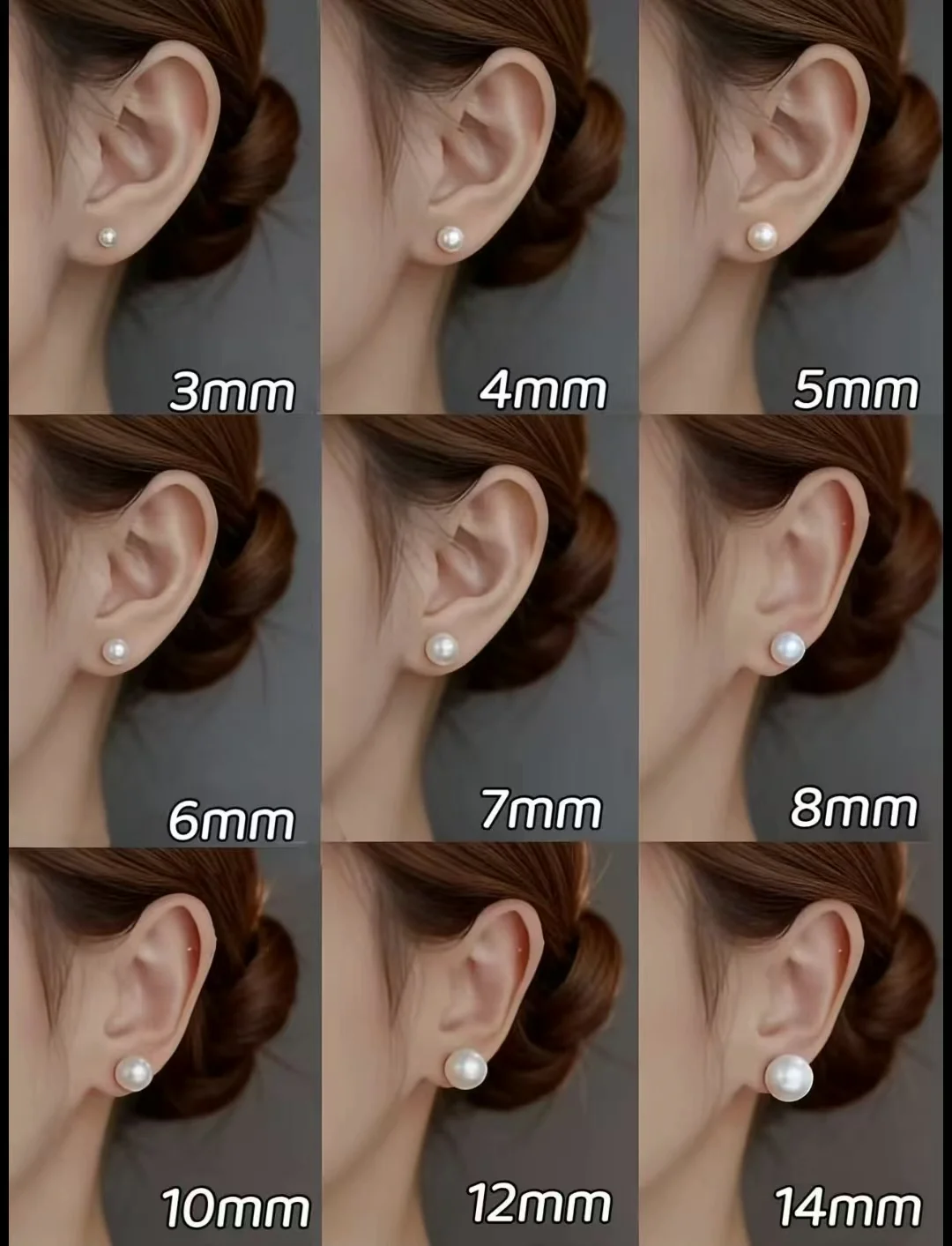
An 8 mm pearl mounted on a simple silver finding and an 8 mm pearl mounted in a carefully made 18K gold design are not equivalent products even if the pearls are similar. Precious-metal content, setting quality, clasp construction, workmanship, design development, and finishing all contribute to the value and price of the finished jewelry.
This is especially important when comparing earrings, pendants, rings, and necklaces across sellers. A product description that lists only pearl size and pearl type can hide major differences in the rest of the piece.
3. Matching Can Add Cost Without Changing the Size of Any Pearl
A strand is not simply a bag of individual pearls placed on a string. Pearls may need to be sorted for compatible size, shape, bodycolor, overtone, luster, and surface appearance. Earrings require a convincing pair. Graduated necklaces require intentional progression rather than identical diameters.
As matching becomes stricter, a seller may need to sort through a larger group of pearls to assemble one harmonious piece. That selection work can increase the value and price of the finished item even though no individual pearl became larger.
4. Brand and Service Can Have Market Value of Their Own
A recognized maker, distinctive design, documented provenance, strong after-sales service, or established retail reputation can affect what buyers are willing to pay. This is real market behavior, but it should not be confused with the physical quality of the pearl itself.
A branded pearl does not acquire better nacre merely because a logo is attached to the box. At the same time, a buyer may reasonably value design, service, authenticity documentation, consistency, or brand provenance as part of the complete purchase.
5. Supply and Demand Can Move Prices
Pearl value is not created in a vacuum. Availability and buyer preference matter. GIA notes, for example, that supply and demand can influence the value of particular pearl colors at a given time. Fashion, regional preferences, harvest conditions, and the availability of exceptional material can therefore affect market pricing.
This means a quality factor can be stable while its market premium changes. A pearl does not need to physically change for the price buyers are willing to pay to move.
Why Can Two Pearls at the Same Price Offer Different Value?
Price equality does not mean quality equality. Imagine two pearl pendants offered at the same price. One contains a slightly larger pearl with moderate luster and a very clean surface. The other contains a smaller pearl with sharper reflections, stronger optical depth, and a minor surface mark hidden near the setting.
Which is the better value? There is no useful answer until you know what matters to the buyer. Someone prioritizing visual brightness may prefer the second pearl. Someone prioritizing size may prefer the first. A rigid rule such as “larger is always better” ignores the interaction among multiple value factors.
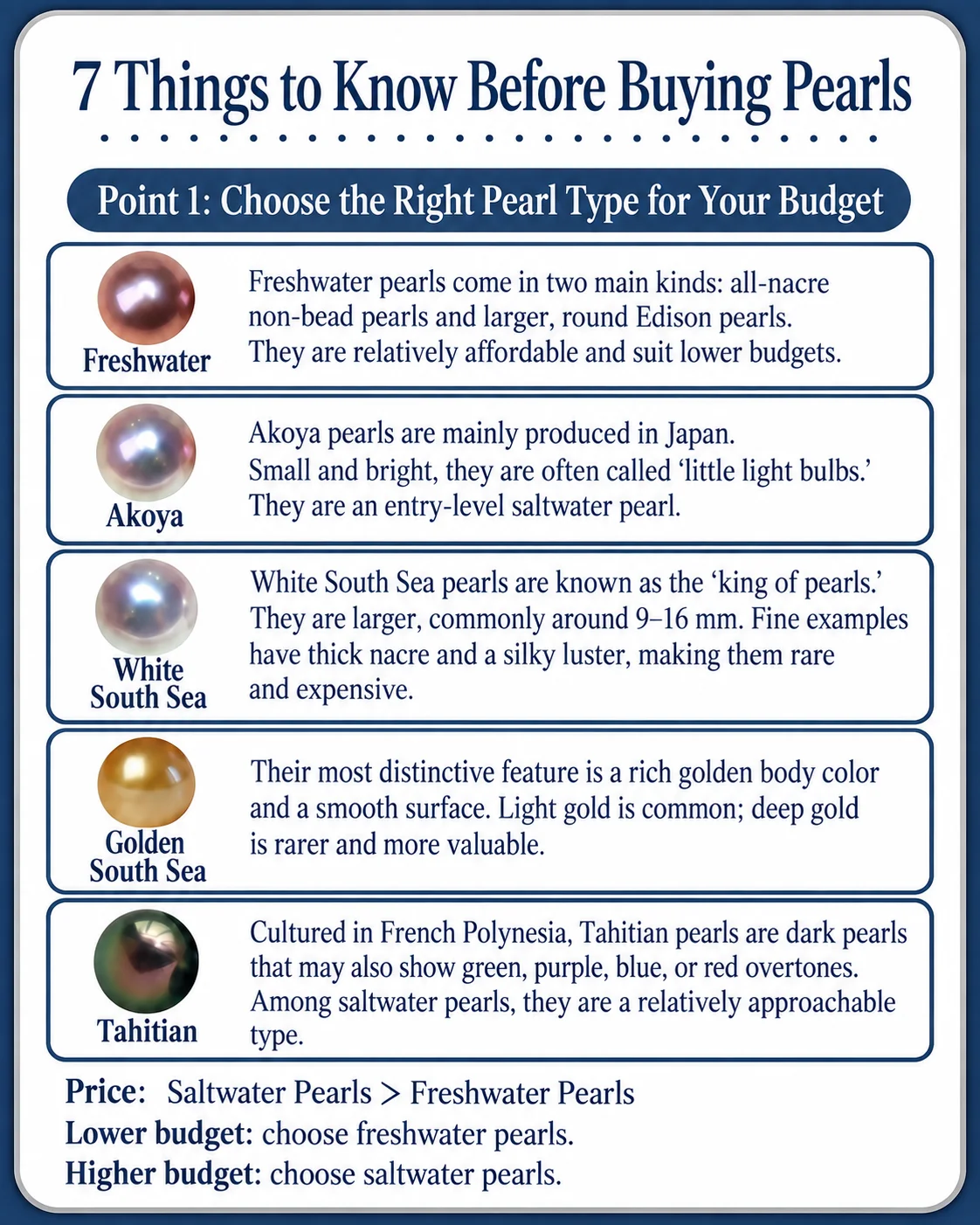
Comparison also becomes misleading when the pearl types are different. An 8 mm Akoya pearl, an 8 mm freshwater pearl, and an 8 mm Tahitian pearl come from different mollusks and production contexts. Their typical appearance, size ranges, colors, nacre structure, availability, and market expectations differ. Size alone cannot make them equivalent.
If the pearl type or treatment status is uncertain, establish identity before trying to estimate value. Our pearl identification guide explains why identification and valuation should not be collapsed into one step.
Retail Price, Resale Value, and Insurance Value Answer Different Questions
This is one of the most important distinctions for anyone who already owns pearl jewelry.
Retail Price
Retail price is what a seller charges for the product in the current sales environment. It can include the pearls, mounting, design, services, operating costs, and the seller's commercial margin. A receipt proves what was paid at that time; it does not guarantee what another buyer will pay later.
Resale Value
Resale value depends on the secondary market available for the piece. A dealer buying for inventory, an auction buyer, a consignment customer, and a private buyer may all arrive at different numbers because their costs, risks, time horizons, and demand are different.
For this reason, pearl jewelry should not be treated as though its original retail price guarantees a future resale amount.
Fair-Market Value
Fair-market value is a more specific appraisal concept. Jewelers of America describes it in terms of an actual selling price between a willing buyer and willing seller when neither is compelled to transact, using the item's current condition and its usual market. It therefore should not be used as a casual synonym for every dealer offer or quick resale estimate.
Insurance Replacement Value
Insurance replacement value has a different purpose again. Jewelers of America explains that insurance appraisals generally aim to reflect the realistic cost of replacing an item through an appropriate retail market. That figure may be higher than a fair-market value for the same used piece because the assignment is different.
If you are obtaining an appraisal, ask what kind of value is being stated and what the appraisal is intended to be used for. A number without a valuation purpose can easily be misunderstood.
A Better Way to Judge Pearl Value: Use Four Layers
Instead of asking only, “Is this pearl expensive?” use a four-layer framework.
Layer 1: Identity and Category
First establish what you are comparing. Is the pearl natural or cultured? Freshwater or saltwater? Akoya, Tahitian, South Sea, or another type? Is the color natural or treated when treatment is relevant to the purchase? An incorrect category can make every later price comparison unreliable.
Layer 2: Pearl Quality
Then judge the characteristics of the pearl itself. Use size, shape, color, luster, surface, nacre quality, and matching rather than relying on a single grade label. GIA's terminology is useful because it encourages a multi-factor description instead of reducing a pearl to one vague letter grade.
For readers comparing trade grading language, our pearl classification guide provides additional context.
Layer 3: The Finished Jewelry
Evaluate the material and workmanship around the pearl. Consider metal, setting security, drilling, stringing, clasp quality, matching, symmetry, design, and condition. These factors may not alter the pearl itself, but they can materially alter the complete piece.
Layer 4: Market and Valuation Purpose
Finally ask which market you are using as the reference. Are you comparing retail purchases, wholesale sourcing, resale offers, auction results, or replacement cost? A useful value conclusion must be tied to a market, a date, and a purpose.
How to Compare Pearl Prices Without Being Misled
- Compare the same pearl type first. Do not use size alone to compare Akoya, freshwater, Tahitian, and South Sea pearls.
- Look closely at luster. Strong, sharp reflections can matter more visually than a small increase in diameter.
- Judge surface marks in context. A minor mark in a hidden location is different from severe characteristics that interrupt beauty or affect durability.
- Check matching on multi-pearl jewelry. Similar diameter does not guarantee similar color, luster, or surface quality.
- Separate the pearl from the setting. Know how much of the product difference comes from the gem and how much comes from metal, workmanship, or design.
- Ask about treatment when it could affect the description or rarity story. Attractive treated pearls can still be genuine pearls, but disclosure matters when natural color is part of the value claim.
- Do not treat a laboratory report as a price certificate. GIA states that its reports provide technical information rather than an appraisal value.
- Compare the final asking price with genuinely comparable products. A useful comparison controls for pearl type, quality, jewelry construction, and sales channel as much as possible.
Does a Higher Pearl Price Usually Mean Higher Value?
Sometimes—but price alone is not evidence of quality. In a transparent market, better pearls often cost more because rarity, stronger luster, cleaner surfaces, desirable size, and more demanding matching can all increase value. But the final price may also include brand positioning, precious metal, design, service, or a different retail margin.
The practical rule is simple: use price as a signal to investigate, not as a substitute for evaluation. If a seller asks substantially more for one pearl, the useful question is not “Why is it expensive?” but “Which measurable or understandable differences justify the premium?”
Does a Lower Price Mean Better Value?
Not automatically. A lower price can result from a more efficient sales channel, lower overhead, direct sourcing, simpler packaging, or a temporary inventory decision. It can also reflect weaker luster, poorer matching, more visible surface characteristics, treatment, lower-cost metal, or reduced service.
A bargain exists only when the quality and product you actually receive are strong relative to the price you pay. Low price by itself proves only that the price is low.
FAQ
Is pearl value the same as an appraisal value?
No. Pearl quality contributes to value, while an appraisal assigns a monetary figure for a stated purpose, date, and market. Insurance replacement, fair-market, and liquidation appraisals can produce different figures for the same item.
Can a GIA pearl report tell me exactly how much my pearls are worth?
No. GIA reports can provide information about pearl identity and, for applicable services, quality characteristics. GIA explicitly states that it does not appraise submitted material or state an appraisal value.
Why can the resale value of pearl jewelry be lower than its original retail price?
Retail price can include new-product distribution, store services, design, marketing, operating costs, and retail margin. Resale takes place in a different market with different buyers, costs, commissions, condition considerations, and demand.
Does a luxury brand make the pearl itself more valuable?
A brand can add market value to the finished jewelry through design, reputation, provenance, service, or collectability, but it does not physically improve the pearl's luster, nacre, shape, or surface quality.
What should I compare first when deciding whether a pearl is worth its price?
Start with pearl identity and type, then compare the main quality factors—especially luster, surface, size, shape, color, nacre, and matching. After that, assess the jewelry setting, craftsmanship, documentation, and the sales channel behind the asking price.
What Should You Remember?
Pearl value helps explain why a pearl is desirable; pearl price tells you what a particular seller is asking in a particular market. The two should influence each other, but they do not move in perfect lockstep. The most reliable buying or appraisal decisions come from separating pearl identity, pearl quality, finished-jewelry construction, and market context before deciding whether the final number makes sense.