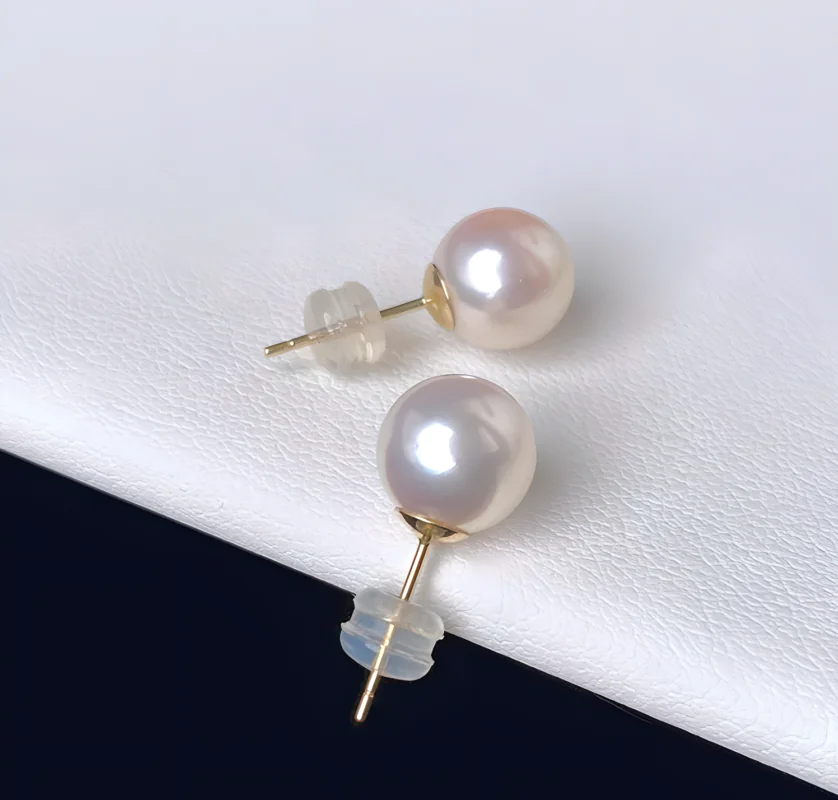
No. Pearl post-processing is not inherently fraudulent. Cleaning, sorting, drilling, matching, polishing, and other post-harvest steps are normal parts of preparing pearls for jewelry and trade. Even appearance-changing treatments such as bleaching, dyeing, irradiation, coating, or luster enhancement do not automatically make a pearl fake.
The real issue is what was done, what the seller claims, and what the buyer is led to believe. A treated cultured pearl can still be a genuine cultured pearl. The problem begins when a material treatment is hidden, a treated feature is presented as natural, or the seller makes claims such as “untreated” or “natural color” that are not true.
It is also worth separating trade language from legal language. “Fraud” is a legal conclusion that depends on the facts and jurisdiction. In pearl buying, the more useful question is usually: Was the product described accurately enough for the buyer to make an informed decision?
Why Pearls Need Post-Harvest Processing at All
A pearl does not usually go directly from the mollusk into a finished necklace. A harvest contains biological residue, mixed sizes, different shapes, different luster levels, surface marks, and color variation. The pearls must be cleaned, screened, sorted, measured, matched, drilled, graded, and prepared for their final use.
That workflow is not a trick. It is how a mixed agricultural harvest becomes a usable jewelry material. If you want to see the sequence in more detail, our pearl processing workflow guide explains what commonly happens from harvest through grading and matching.
Confusion arises because the phrase post-processing can cover two very different things:
- Normal preparation that cleans, shapes, sorts, drills, or finishes a pearl for use.
- Treatment or enhancement that deliberately changes color, luster, surface appearance, composition, or durability.
Those categories should not be treated as morally equivalent simply because both occur after harvest.
Routine Processing and Treatment Are Not the Same Thing
The World Jewellery Confederation, CIBJO, makes this distinction explicit in its Pearl Book. For cultured pearls, it lists procedures such as buffing, carving, cleaning, cutting, drilling, faceting, polishing, and light working as normal procedures, while separately identifying treatments such as bleaching, coating, dyeing, filling, heating, irradiation, luster enhancement, oiling, tinting, optical brightening, waxing, and chemical alteration.
| What happens after harvest | Typical purpose | Is it automatically deceptive? | Disclosure concern |
|---|---|---|---|
| Cleaning, sorting, measuring, matching | Prepare and organize the harvest | No | Usually low, unless the description creates a false impression |
| Drilling, ordinary polishing, buffing | Prepare pearls for jewelry or improve presentation | No | Generally treated as normal procedures for cultured pearls under CIBJO, with some exceptions |
| Bleaching, tinting, optical brightening, luster enhancement | Whiten, even, brighten, or improve appearance | No | CIBJO treats these as treatments requiring specific declaration |
| Dyeing, irradiation, coating, filling | Change color or surface appearance, or conceal/improve features | No | Material treatment information can strongly affect buyer expectations, care, and value |
| Calling a dyed pearl “natural color” | Create a false impression of rarity or origin | Potentially deceptive | The representation, not merely the treatment, is the core problem |
This distinction matters because buyers sometimes hear “processed” and assume “fake.” That is too broad. A drilled pearl is still a pearl. A dyed freshwater cultured pearl is still a freshwater cultured pearl. What changes is the history behind its appearance and, in some cases, its value, stability, or care requirements.
A Treated Pearl Can Still Be a Real Pearl
Treatment does not turn cultured nacre into plastic, glass, shell imitation, or another artificial material. Pearl identity and pearl treatment are separate questions.
For example, a black dyed freshwater cultured pearl is still a freshwater cultured pearl. The treatment changed its color; it did not change its basic identity into an imitation pearl. Likewise, a bleached Akoya cultured pearl remains an Akoya cultured pearl.
This is why the useful description contains both pieces of information:
What is it? Freshwater cultured pearl, Akoya cultured pearl, Tahitian cultured pearl, South Sea cultured pearl, and so on.
What was done to it? Dyed, bleached, irradiated, coated, optically brightened, luster enhanced, or another treatment when relevant.
For a broader explanation of the main enhancement methods, see our guide to cultured pearl treatments.
When Does Post-Processing Become a Transparency Problem?
The clearest dividing line is not “processed versus unprocessed.” It is accurate description versus misleading description.
1. A treated feature is sold as natural
If a pearl was dyed black but the listing presents the black color as naturally occurring, the buyer is being given the wrong explanation for what they see. The same problem can arise with phrases such as “natural golden color,” “untreated color,” or “naturally blue” when the seller knows that the appearance was created by treatment.
2. The seller hides a treatment that materially affects value
The U.S. Federal Trade Commission's Jewelry Guides say treatment disclosure is important when a pearl treatment is not permanent, creates special-care requirements, or significantly affects value. The FTC specifically frames failure to disclose in those situations as unfair or deceptive.
This does not mean every jurisdiction uses the same wording or that every processing step has identical disclosure rules. It does mean that treatment information can be material to the transaction rather than a trivial technical detail.
3. The treatment changes how the pearl should be cared for
If a surface coating, dye, filling, wax, or other treatment has stability limitations or requires extra care, that information matters after the sale. A buyer who is told only “real pearl” may care for the piece as though its appearance were entirely inherent to the pearl.
4. The seller claims “untreated” without a reliable basis
“Untreated” is not just a decorative marketing word. It is a factual claim about the pearl's post-harvest history. If the seller does not actually know the processing history, certainty should not be invented.
CIBJO and the FTC Do Not Use Exactly the Same Disclosure Framework
This is an important point that simplified articles often miss.
CIBJO uses a trade-standard framework that distinguishes normal procedures from treatments requiring specific treatment information. In its 2024 Pearl Book, bleaching, coating, dyeing, filling, heating, irradiation, luster enhancement, oiling, tinting, optical brightening, waxing, and chemical alteration are among the cultured-pearl treatments it says should be declared.
The U.S. FTC uses a consumer-protection framework centered on the effect of the treatment. Its Jewelry Guides call for disclosure when the treatment is not permanent, creates special-care requirements, or significantly affects value.
Those approaches overlap, but they are not identical. A seller working internationally should therefore avoid assuming that one vague phrase such as “enhanced” automatically satisfies every trade standard, marketplace expectation, or national rule.
For dyed pearls specifically, our guide on how to disclose dyed pearl treatment information gives practical examples for product pages, invoices, and direct sales.
Is Bleaching Fraud If It Is Common in the Pearl Trade?
No. The fact that bleaching is common does not make it fraudulent, and the fact that it is common does not automatically make disclosure irrelevant.
GIA notes that pearls may be routinely bleached to lighten or improve color uniformity. At the same time, CIBJO's current Pearl Book classifies bleaching as a treatment requiring specific declaration. In 2024, CIBJO's Pearl Commission also emphasized that bleaching should be disclosed through the supply chain.
This is a useful example of why “everybody does it” is not a sufficient disclosure policy. A process can be widespread and still matter to a buyer who is comparing untreated color, evaluating rarity, or reselling the pearls later.
The better approach is not to make bleaching sound scandalous. It is to describe it accurately and proportionately.
Does Post-Processing Automatically Reduce Pearl Value?
No. Value depends on the pearl, the treatment, the market, and what the treatment changed.
Some routine processing simply makes a pearl usable. Drilling does not make a cultured pearl worthless; it makes many jewelry designs possible. Matching does not reduce value; excellent matching can increase the value of a strand or pair because it requires selection from a larger quantity of pearls.
Appearance-changing treatments are more complicated. A treatment may improve salability while making the pearl less valuable than a comparable pearl whose desirable color or appearance formed naturally. In other cases, the treatment may be common enough that the market already prices it into the product.
That is why the buyer should not ask only, “Was it processed?” A better question is:
If I knew exactly what was done to this pearl, would I value it differently?
If the answer is yes, the treatment information is commercially important.
Can You Tell From Appearance Alone Whether a Pearl Was Treated?
Not reliably in every case.
Some treatments may create visible clues, especially when color is unusually uniform, concentrated around drill holes, or inconsistent with the expected natural color range of the pearl type. But visual inspection has limits. Modern dyeing, irradiation, optical brightening, and other processes can require gemological testing to identify with confidence.
GIA's pearl research describes the use of spectroscopy, fluorescence, radiography, and other analytical methods to investigate pearl structure and treatments. That is very different from looking at a photo and declaring a pearl treated or untreated.
For ordinary purchases, clear seller disclosure and traceable sourcing may be sufficient. For high-value pearls where natural color or treatment status materially affects price, independent laboratory testing can be appropriate.
A Simple Buyer Test: Five Questions to Ask
You do not need to reject every processed pearl. You need enough information to understand what you are paying for.
- What kind of pearl is it? Freshwater cultured, Akoya cultured, Tahitian cultured, South Sea cultured, natural pearl, or imitation?
- Has its color or surface appearance been treated? Ask for the specific treatment name when known, not only the word “enhanced.”
- Is the visible color natural or treatment-created? This matters especially for black, blue, pink, purple, and golden colors.
- Does the treatment affect durability or care? Ask whether chemicals, heat, light, abrasion, or cleaning methods require extra caution.
- Would the treatment affect price or resale expectations? If yes, it should be part of your comparison before purchase.
This framework is more useful than trying to divide the market into “pure” pearls and “processed” pearls. It focuses on information that actually changes the buying decision.
What Should an Honest Seller Say?
A good description does not need to sound alarming. It simply separates identity from treatment.
For example:
- Clear: “7–8 mm black dyed freshwater cultured pearl strand.”
- Clear: “Akoya cultured pearls; bleached after harvest.”
- Potentially misleading: “Natural black freshwater pearls” when the color is known to be dyed.
- Potentially misleading: “Untreated pearls” when the processing history is unknown.
In wholesale trade, treatment information should also survive the transaction. If the first supplier discloses treatment verbally but the invoice, stock record, and downstream product data omit it, the information can disappear before the pearl reaches the final consumer.
For custom production, matching, drilling, inspection, or other pearl-processing work, our pearl services page explains the types of work that may happen between loose material and a finished product.
So, Is Pearl Post-Processing Fraud?
Post-processing itself is not fraud. Pearls are routinely processed after harvest because they must be cleaned, sorted, drilled, matched, graded, and prepared for jewelry. Some pearls also receive treatments that alter color, luster, surface appearance, or other properties.
The ethical and commercial problem is not simply that human hands touched the pearl after harvest. The problem is when the pearl's history is used to create a false impression: a treated color is sold as natural, a significant treatment is hidden, care limitations are omitted, or an “untreated” claim is made without support.
The best buying rule is therefore simple:
Do not ask whether the pearl was processed. Ask whether the processing was described honestly enough for you to understand what you are buying.
FAQ
Are treated pearls fake pearls?
No. A genuine cultured pearl can be treated after harvest and remain a genuine cultured pearl. Treatment changes one or more characteristics; imitation pearls are a different product category.
Is pearl bleaching considered fraud?
No. Bleaching is a known pearl treatment and is used in the trade. The concern is whether the treatment is described appropriately. CIBJO currently lists bleaching among treatments requiring specific declaration.
Does every post-harvest step have to be disclosed?
Not necessarily. CIBJO distinguishes normal procedures such as cleaning, drilling, polishing, and buffing from treatments requiring specific disclosure, although there are exceptions. Legal requirements also vary by jurisdiction. In the United States, FTC guidance focuses on treatments that are not permanent, require special care, or significantly affect value.
Can a dyed pearl still be valuable?
Yes. A dyed pearl can still have good luster, surface quality, shape, size, and craftsmanship value. However, its treated color should not be priced or represented as though it were a rare natural color.
Can I identify pearl treatment from a photo?
Sometimes a photo may raise questions, but it cannot reliably prove every treatment. Advanced treatment detection can require gemological instruments and laboratory testing.
Sources and Further Reading
- CIBJO Pearl Book 2024 — sections on normal procedures, altered cultured pearls, treatment declarations, and care.
- U.S. Federal Trade Commission: In the Loupe — Advertising Diamonds, Gemstones and Pearls — consumer-protection guidance on pearl identity and treatment disclosure.
- GIA: An Introduction to Gem Treatments — overview of bleaching, dyeing, and other gem treatments, including pearls.
- GIA Pearl Research — research on pearl identification and post-harvest treatment detection.