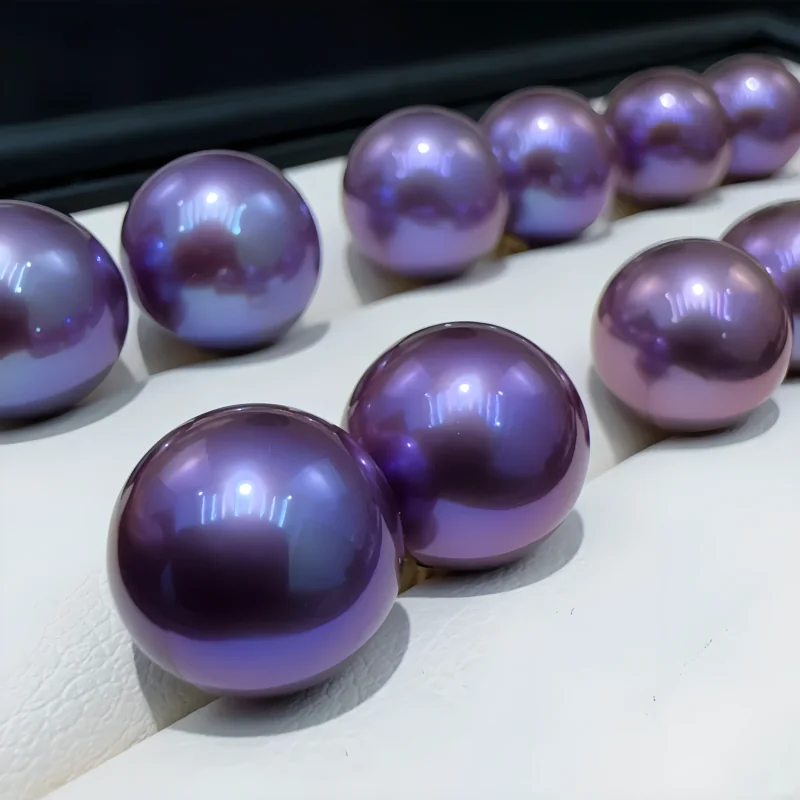
White, pink, and golden pearls can create three very different impressions, but there is no universally “best” pearl color. White is usually the most versatile and classic, pink tends to feel softer and more colorful, while golden pearls create a warmer and often more luxurious statement.
The more useful question is not simply Which color is prettiest? It is: Which pearl color works best with the way you plan to wear it, the pearl type you want, and the budget you have?
There is another important complication. “White,” “pink,” and “golden” do not always describe equivalent categories. A pink freshwater pearl can have a genuinely pink bodycolor, while a white Akoya pearl may simply have a subtle pink overtone. A natural golden South Sea pearl belongs to a different pearl family and price category altogether.
This guide separates those differences so you can compare colors without confusing color preference with pearl quality.
White vs. Pink vs. Golden Pearls at a Glance
| Color | Typical Impression | Common Pearl Types | Best For | Typical Budget Position |
|---|---|---|---|---|
| White | Clean, classic, bright, versatile | Freshwater, Akoya, White South Sea | First pearl purchase, everyday jewelry, weddings, formal wear | Very broad—from accessible freshwater to high-end South Sea |
| Pink | Soft, warm, youthful, distinctive | Especially freshwater; pink can also appear as an overtone on white pearls | Casual jewelry, romantic styling, subtle color | Often accessible when choosing freshwater pearls |
| Golden | Warm, rich, luxurious, noticeable | Especially Golden South Sea pearls | Statement jewelry, warm-toned styling, luxury purchases | Generally higher for natural Golden South Sea pearls |
If you want one simple starting point, choose white for maximum versatility, pink for gentle color, and gold for a warmer statement. Then refine the decision by pearl type, overtone, luster, size, jewelry design, and treatment status.
First, Understand What “Pearl Color” Actually Means
Pearl color is more complicated than a single color label. A pearl has a dominant bodycolor, and it may also display an overtone or, in some pearls, iridescent orient.
This distinction matters when comparing white and pink pearls.
A pearl described as pink may genuinely have a pink bodycolor. This is common in the natural color range of freshwater cultured pearls. Another pearl may be fundamentally white but display a delicate pink or rosé overtone. Fine Akoya pearls are a familiar example of white or cream pearls that can show attractive pinkish overtones.
Those two appearances are not the same:
- Pink bodycolor: the pearl itself reads visibly pink.
- White with pink overtone: the pearl still looks primarily white, with a subtle rosy layer visible in the light.
The same principle applies to golden pearls. A naturally colored Golden South Sea pearl is not simply a white pearl with a faint yellow reflection. Its dominant bodycolor can range from pale champagne through richer yellow-gold and deep gold.
For a broader introduction to pearl color, treatment, and other buying factors, see our pearl buying guide.
When Should You Choose White Pearls?
White is the safest choice if you want a pearl that can move easily between different outfits, seasons, jewelry metals, and occasions.
But “white pearl” does not mean one fixed appearance.
White freshwater pearls can offer excellent value and occur across a broad range of sizes and shapes. Akoya pearls are especially associated with the traditional round, bright white pearl look and often show sharp reflections. White South Sea pearls tend to be larger and are known for a broader, softer, satiny glow.
Even within one pearl type, white can lean in different directions:
- bright neutral white;
- cream or ivory;
- silver-white;
- white with pink or rosé overtone;
- white with cooler silver, greenish, or bluish nuances.
White is a good choice if you want:
- your first pearl jewelry piece;
- a color that works with many wardrobes;
- traditional pearl stud earrings;
- bridal or formal jewelry;
- a minimalist or understated look;
- flexibility between yellow gold, white gold, platinum, and other metals.
White is also useful when you want the eye to notice luster, shape, and jewelry design before color. A highly lustrous white pearl can look striking without relying on strong bodycolor.
If you are choosing between different white pearl families, do not compare them by color alone. Akoya, freshwater, and White South Sea pearls have different normal size ranges, luster characteristics, cultivation structures, and price positions. Our guide to White and Golden South Sea pearls explains this difference in more detail.
When Should You Choose Pink Pearls?
Pink pearls are a good option when you want genuine color without moving into a very dark or strongly contrasting pearl.
Natural pink, peach, lavender, and related warm pastel colors are particularly associated with freshwater cultured pearls. Depending on the individual pearl, pink can range from extremely pale blush to a much more noticeable rosy or purplish pink.
Because freshwater pearls cover such a broad range of price points, pink pearls can also be an accessible way to buy naturally colorful pearl jewelry.
Pink is a good choice if you want:
- a softer alternative to classic white;
- subtle color for everyday jewelry;
- rose-gold or warm mixed-metal styling;
- a less traditional pearl appearance;
- pastel, cream, beige, pink, brown, or other soft wardrobe colors;
- a pearl that feels decorative even in a simple stud or pendant design.
Pink does not automatically mean excessively feminine or youthful. Jewelry format changes the effect dramatically. Small round pink studs can look restrained, while large baroque pink pearls can look artistic and contemporary.
Also remember that a pink freshwater pearl and a white Akoya pearl with pink overtone are different buying options. If you want obvious pink color, focus on bodycolor. If you want a classic white pearl with just a warmer complexion, a rosy overtone may be enough.
When Should You Choose Golden Pearls?
Golden pearls are the strongest choice of the three if you want the color itself to become an important part of the jewelry.
The best-known naturally golden cultured pearls are Golden South Sea pearls, produced by the gold-lipped form of Pinctada maxima. Their natural color range can extend from pale champagne and cream-gold through yellow-gold to deeply saturated gold.
Golden South Sea pearls also tend to be relatively large, so their combination of size and color creates a noticeably different look from small white Akoya studs or pastel freshwater pearls.
Golden pearls are a good choice if you want:
- a warmer and richer appearance;
- a statement pearl rather than a neutral pearl;
- jewelry that pairs naturally with yellow gold;
- larger pearl sizes;
- a luxury-oriented South Sea pearl purchase;
- champagne, beige, brown, camel, olive, rust, or other warm wardrobe colors.
Color saturation also matters within the Golden South Sea category. A pale champagne pearl and a rich deep-golden pearl can look dramatically different even when both are correctly described as golden.
Deeper golden colors can attract a premium when other quality factors are comparable, but that does not mean every darker pearl is automatically better. Luster, surface quality, shape, size, and matching still matter.
It is also important to distinguish naturally golden South Sea pearls from pearls whose golden appearance has been produced or modified by treatment. If natural color matters to your purchase, read our guide to pearl color enhancement treatments before comparing prices.
Which Pearl Color Looks Best with Your Skin Tone?
Skin tone can help narrow your choice, but it should be treated as a styling tool rather than a strict rule.
Statements such as “cool skin must wear white” or “warm skin must wear gold” are too rigid. Pearl size, overtone, metal color, clothing, makeup, lighting, and personal preference can completely change the result.
A better approach is to compare how each pearl interacts with your complexion.
If your complexion tends to look cool
Bright white, silver-white, and white pearls with rosé or cooler overtones often create an easy harmony. Pale pink can also work especially well when it has a cooler rather than strongly peach direction.
Golden pearls are still possible. Instead of assuming they are unsuitable, compare lighter champagne gold with very saturated yellow-gold and see which creates the better contrast.
If your complexion tends to look warm
Creamier whites, peach-pink pearls, champagne colors, and golden pearls often feel naturally integrated with warm coloring. Yellow-gold settings can reinforce the effect.
But a bright white pearl can also create attractive contrast. You do not need to avoid it merely because your undertone is warm.
If your complexion is neutral
You can usually move easily between the three color families. The decision can be based more heavily on wardrobe and the impression you want the jewelry to create.
The most reliable test is comparison
If possible, place different pearls beside your face under the same neutral or daylight-like lighting. Do not compare one professional studio photograph with another image shot under warm lighting. Pearl color is especially sensitive to white balance, surroundings, and reflections.
The pearl that makes your complexion look clearer and that you instinctively prefer is often the better styling choice, regardless of an undertone chart.
Match the Pearl Color to Your Wardrobe
Your clothing may matter more than your skin tone because jewelry is usually seen as part of an entire outfit.
| If You Often Wear... | Easy Pearl Choices |
|---|---|
| Black, navy, gray, white | White for clean contrast; pink for softness; gold for a warmer focal point |
| Beige, camel, cream, brown | Golden, champagne, creamy white, peach-pink |
| Pastels | White or pink |
| Bright colors | White is easiest; choose pink or gold when they intentionally repeat a color in the outfit |
| Minimal monochrome clothing | Any of the three—the pearl color can become the main accent |
If your wardrobe changes constantly, white is usually the easiest long-term choice. If your clothing is consistently warm and earthy, golden pearls may get surprisingly frequent use. If you already wear blush, mauve, cream, lavender, and related tones, pink freshwater pearls may integrate naturally.
Think About the Jewelry Type, Not Just the Pearl
The amount of visible pearl surface changes how strongly a color affects your overall look.
Stud earrings
Color is concentrated in a small area, so even golden or pink pearls can remain easy to wear. Studs are a good way to try a new pearl color without committing to a full strand.
Single-pearl pendants
A pendant gives one pearl enough visual space to become a focal point. A golden South Sea pearl can therefore look dramatic even in a very simple setting.
Full strands
A necklace places many pearls together, amplifying both bodycolor and overtone. A full white strand feels very different from a full pink or deep-golden strand.
Matching also becomes more important. The pearls need to work together in size, shape, luster, surface appearance, and color. You can read more about these quality considerations in our pearl grading guide.
Does Pearl Color Affect Price?
Yes, but not in a simple “white versus pink versus gold” ranking.
The biggest mistake is to compare colors without comparing pearl types.
A pink freshwater pearl may cost considerably less than a white South Sea pearl, but the difference is not evidence that white is a superior color. You are comparing two different pearl categories with different production, size, rarity, and market characteristics.
Similarly, natural Golden South Sea pearls often occupy a higher price range than ordinary pink freshwater pearls because Golden South Sea pearls belong to the South Sea category and are commonly larger and scarcer.
Within the same pearl category, color rarity and desirability can influence value. For example, richly saturated golden South Sea pearls may command more than pale champagne examples when the other quality factors are comparable.
But color still does not replace the other major quality factors:
- luster;
- surface quality;
- shape;
- size;
- nacre quality;
- matching in multi-pearl jewelry.
For most buyers, protecting luster is more important than chasing a particular fashionable shade. A pearl with lively light return often looks more attractive than a more expensive color with weak luster. See our pearl luster guide for a practical comparison method.
Natural Color or Treated Color?
Color origin becomes particularly important when color rarity is part of the price.
Freshwater cultured pearls naturally occur in white and a range of pink, peach, orange, lavender, and related hues. Golden South Sea pearls can naturally develop champagne-to-golden bodycolors. However, pearls can also be dyed or otherwise treated to alter their appearance.
Treatment does not automatically make a cultured pearl “fake.” A dyed cultured pearl is still a cultured pearl. The important issue is disclosure.
If a seller is charging a premium because a pearl is supposedly a rare natural color, ask what pearl type it is and whether the color is natural or treated. This matters especially when the displayed color is unusual for the stated pearl type.
Do not try to identify treatment from one photograph alone. Lighting, editing, display calibration, and modern treatments can all make visual judgment unreliable.
A Simple Decision Guide
If you are still deciding, use this sequence:
- Choose the visual effect. Neutral and classic → white. Soft color → pink. Warm statement → gold.
- Choose the pearl type. Do not assume every color is equally typical of every pearl family.
- Choose the jewelry format. A golden stud is much subtler than a full golden strand.
- Compare luster. Do not sacrifice strong luster purely to obtain a preferred shade.
- Check treatment disclosure. Especially when natural color adds significantly to the price.
- Compare the pearl in realistic lighting. Product photographs can exaggerate warmth, saturation, or overtone.
- Buy the color you will actually wear. A theoretically perfect color has little value if it stays in the jewelry box.
So, Which Color Should You Choose?
Choose white pearls if you want the most versatile option, are buying your first pearl jewelry piece, or prefer a classic and clean appearance.
Choose pink pearls if you want visible but gentle color, like pastel or warm styling, or want the broad choice and accessible pricing available in freshwater pearls.
Choose golden pearls if you prefer warm, rich color and want the pearl itself to make a stronger visual statement—especially if you are considering natural Golden South Sea pearls.
None of these colors is inherently the highest quality. Color should narrow the style you want; luster, surface, shape, nacre, size, matching, pearl type, and treatment disclosure should determine whether the individual pearl is actually a good buy.
FAQ
Are white pearls better than pink pearls?
No. White and pink describe appearance, not a universal quality grade. A high-luster pink freshwater pearl can be much more attractive than a dull white pearl. Compare pearls by type and quality as well as color.
Are pink pearls naturally pink?
They can be. Freshwater cultured pearls naturally occur in pink, peach, lavender, and related warm pastel colors. However, pearls can also be dyed, so treatment disclosure is important when the color or price makes the distinction significant.
Are golden pearls naturally gold?
Golden South Sea cultured pearls can naturally develop golden bodycolors ranging from pale champagne to rich gold. Other pearl types can also be treated to create a golden appearance, so “golden color” alone does not establish pearl type or color origin.
What is the most versatile pearl color?
White is generally the easiest color to wear across different clothes, metals, and occasions. This makes it a practical choice for a first pair of pearl earrings or a first pearl necklace.
Which pearl color looks most youthful?
There is no fixed age rule. Smaller white pearls can look minimal and modern, pastel pink pearls can feel light and playful, and golden pearls can look contemporary when used in simple designs. Size, shape, setting, and styling usually affect the impression as much as color.
Should I choose pearl color according to skin tone?
Skin tone can be a useful starting point, but it should not become a strict rule. Compare several pearls under similar lighting and consider your clothing and metal preferences as well. The color you personally prefer beside your face is often the most useful answer.