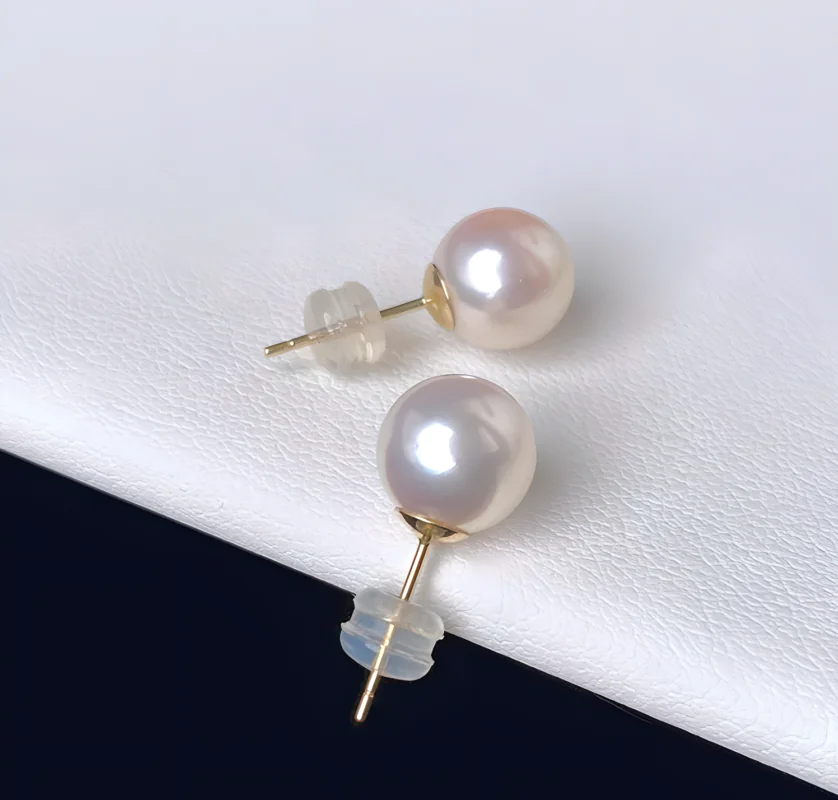
Can Pearls Get Wet? Should You Remove Them When Washing Hands, Showering, or Swimming?
Yes, pearls can handle brief contact with clean water, so a few splashes will not normally ruin them. But pearl jewelry should not be treated as waterproof. Repeated wetting, soaking, soap, shampoo, pool chemicals, perspiration, heat, and moisture trapped in thread or settings can all create problems over time. As a practical rule, remove pearl rings and bracelets before washing your hands when possible, and remove all pearl jewelry before showering or swimming.
Quick answer: when should you take pearls off?
| Situation | Remove the pearls? | Main concern |
|---|---|---|
| A few drops of clean water or light rain | Not an emergency | Wipe the pearls dry afterward |
| Washing hands with a pearl ring | Preferably yes | Repeated water, soap, hand products, friction, and the setting |
| Showering or bathing | Yes | Soap, shampoo, conditioner, heat, steam, and prolonged wetting |
| Swimming in a pool | Yes | Pool chemicals and prolonged immersion |
| Hot tub or spa | Yes | Chemicals, heat, and prolonged exposure |
| Swimming in the ocean | Yes | Salt, sunscreen, sand, prolonged wetting, and risk of losing the jewelry |
| Cleaning with a soft damp cloth | No | Brief, controlled moisture is part of normal pearl care |
The important distinction is therefore not simply wet versus dry. A better question is: what is in the water, how long will the jewelry stay wet, how often does it happen, and what other parts of the jewelry are exposed?
Why can pearls be cleaned with water if you are told not to get them wet?
This apparent contradiction causes a lot of confusion. Pearls are not objects that instantly deteriorate when a drop of water touches them. Controlled cleaning and prolonged everyday exposure are two very different situations.
GIA's pearl-care guidance says that warm, mildly soapy water can be used for occasional thorough cleaning. It also recommends wiping cultured pearls with a very soft, clean cloth after wearing them. If pearls are strung, GIA specifically notes that the string should be completely dry before the jewelry is worn again.
That tells us something useful: brief, controlled contact with water is compatible with proper pearl care. The problem begins when pearls are repeatedly soaked, left damp, exposed to harsh chemicals, or worn through activities that combine water with soap, heat, sweat, friction, or cleaning agents.
If you want the broader maintenance routine, see our guide on how to care for pearls.
Should you remove a pearl ring when washing your hands?
Ideally, yes—especially if you wash your hands frequently. Pearl rings face more everyday wear than earrings or necklaces because they sit directly on the hands, where they encounter water, soap, sanitizer, skincare products, countertops, door handles, and repeated friction.
An occasional splash while washing your hands is unlikely to destroy a pearl. The concern is the cumulative routine: wet the ring, add soap, rinse it, dry your hands, repeat several times a day. Residue can remain around the pearl and setting, while repeated contact is unnecessary wear on a piece that is relatively delicate compared with many other gemstones.
There is also another part of the jewelry to think about. Many pearl rings and earrings use a drilled pearl secured to a post or setting. The long-term condition of the adhesive, metal, and setting matters just as much as the pearl surface itself.
What about hand sanitizer?
It is sensible to keep pearl rings away from hand sanitizer and similar products when practical. Rather than repeatedly coating the pearl while sanitizing your hands, remove the ring first, allow your hands to dry, and then put it back on.
However, do not create a greater risk by balancing an expensive pearl ring on the edge of a public sink. If you regularly remove jewelry before washing your hands, put it securely into a small jewelry pouch or another safe place before approaching the sink.
Can you shower with pearl jewelry?
You should remove pearl jewelry before showering.
The shower combines several conditions that are better avoided: extended moisture, warm water, shampoo, conditioner, soap, facial cleanser, and other personal-care products. The concern is therefore much broader than tap water alone.
For a pearl necklace or bracelet, soaking also wets the string and knots. For pearl studs, pendants, and rings, repeated showering can expose the setting or adhesive to a warm, wet environment. Soap and hair-product residue can also accumulate around drill holes and settings and make the jewelry harder to keep clean.
MIKIMOTO similarly advises keeping pearls away from cosmetics, hair spray, and perfume and recommends gently wiping them after exposure to perspiration. The practical lesson is consistent: pearl jewelry does best when personal-care products go on first and the pearls go on afterward.
A useful routine is pearls on last, pearls off first. Finish skincare, perfume, makeup, and hair products before putting them on, then remove the pearls before showering, exercising, or getting ready for bed.
Can you swim in a pool while wearing pearls?
No. Remove pearl jewelry before entering a swimming pool.
Swimming is very different from getting a little water on your jewelry. The pearls remain immersed for an extended period while also being exposed to pool-treatment chemicals. Necklaces and bracelets may have wet thread and knots, while metal components and adhesives are exposed as well.
There is little benefit in accepting that risk. Even if one swim does not produce visible damage, regular pool wear creates exactly the kind of repeated chemical and moisture exposure that conservative pearl care is designed to avoid.
The same advice applies even more strongly to hot tubs and spas, where water treatment is combined with elevated temperature.
Can you wear pearls while swimming in the ocean?
It is still better to take them off.
One common misconception is that saltwater pearls should be safe in seawater because they originally formed in a marine environment. But “saltwater pearl” describes how and where the pearl formed; it is not a waterproof rating for the finished jewelry.
An Akoya, Tahitian, or South Sea pearl may have grown inside a saltwater mollusk, but after harvest it can be drilled, matched, strung, glued, or mounted into jewelry. Ocean swimming exposes the entire finished piece to saltwater, sunscreen, body products, sand, friction, and prolonged moisture.
There is also a very practical risk: losing a stud, ring, bracelet, or necklace in the ocean is far more serious than getting a pearl slightly wet.
The reverse misunderstanding is also worth avoiding. Freshwater pearls are not designed to be swim jewelry simply because they grew in freshwater. If you are unsure how these pearl categories differ, our pearl classification guide explains freshwater, Akoya, Tahitian, South Sea, and other pearl types.
Are freshwater pearls more water-resistant than saltwater pearls?
Not in a way that should change your normal wearing habits.
Different pearl types have different structures, cultivation methods, nacre characteristics, sizes, colors, and typical jewelry uses, but it is not useful to divide normal pearl jewelry into “waterproof freshwater” and “non-waterproof saltwater” categories.
For everyday care, the safer rule is essentially the same: brief clean-water contact is manageable, while showering, swimming, soaking, chemical exposure, and storing jewelry while damp should be avoided.
This makes more sense when you understand the material itself. Nacreous pearls are composed largely of calcium carbonate together with organic material and a small amount of water. Their layered surface is responsible for much of the optical effect we recognize as pearl luster. For more technical background, see the physical and chemical properties of pearls.
What should you do if your pearls accidentally get wet?
Do not panic. A brief accident is very different from a long-term care habit.
- Blot or wipe away moisture gently. Use a very soft, clean cloth rather than rubbing the surface aggressively.
- If there is residue, remove it gently. If the jewelry has been exposed to soap, saltwater, or pool water, a clean, slightly damp soft cloth can help remove residue.
- Let the piece air-dry completely. This is especially important for pearl strands and knotted jewelry.
- Lay strung pearls flat while drying. Do not hang a wet necklace, because unnecessary tension can affect the thread.
- Do not speed drying with strong heat. Avoid hair dryers, radiators, steam, or other high-temperature methods.
- Check the jewelry before wearing it again. If a pearl feels loose, the thread has stretched, or the setting appears unstable, have the piece inspected by a jeweler.
GIA notes that pearls are relatively soft—about 2.5 on the Mohs hardness scale—and can also be affected by chemicals and excessive heat. Gentle handling is therefore more useful than aggressive attempts to “fix” a pearl after it gets wet.
What about rain, sweat, and everyday accidental splashes?
Pearl jewelry does not need to be treated so delicately that normal life becomes impossible.
If you are caught in light rain or a necklace receives a few drops of clean water, simply wipe it afterward and allow it to dry. There is no reason to assume the pearls have been ruined.
Perspiration deserves more attention because it can remain on the jewelry after wearing. Both GIA and MIKIMOTO advise wiping pearls with a soft cloth after wear, and MIKIMOTO specifically notes that perspiration can affect pearl luster.
This is particularly useful for necklaces and pendants worn directly against the neck during warm weather. Regular gentle wiping is much easier than allowing layers of perspiration, cosmetics, sunscreen, and skin products to build up over time.
A better pearl-care rule than “never let pearls touch water”
The phrase “pearls must never get wet” is easy to remember, but it is too absolute to explain how pearl care actually works. After all, careful pearl cleaning itself may involve a damp cloth or controlled use of mild soapy water.
A more useful rule is:
Brief clean-water contact is usually manageable. Avoid soaking, repeated wetting, chemical-heavy water, heat, and leaving pearl jewelry damp.
That distinction also helps you make better decisions about different jewelry styles. Pearl earrings may rarely encounter water in normal use, while a pearl ring can meet soap, sanitizer, and water many times in one day. A knotted necklace introduces the additional question of whether the string is becoming wet. The correct care habit depends on the whole piece of jewelry, not only the pearl itself.
FAQ
Can freshwater pearls get wet?
Yes, brief contact with clean water is generally manageable. However, freshwater pearls should not be routinely soaked or worn while showering or swimming. Wipe them gently and let the jewelry dry completely if it becomes wet.
Can I wash my hands while wearing a pearl ring?
It is better to remove a pearl ring before hand washing when practical, particularly if you wash your hands frequently. The concern is repeated exposure to water, soap, sanitizer, friction, and the ring's setting rather than one accidental splash.
Can I shower with pearl earrings?
It is safer to remove them. Showering repeatedly exposes pearl earrings to warm water, shampoo, conditioner, soap, and other personal-care products, and may also affect the setting or adhesive over time.
Can you swim in the ocean with saltwater pearls?
It is not recommended. “Saltwater pearl” refers to the environment in which the pearl formed, not to whether the finished jewelry is suitable for swimming. Saltwater, sunscreen, sand, prolonged wetting, and the risk of losing the jewelry are all good reasons to remove it first.
Can pearls be worn in a swimming pool?
No. Pool chemicals and prolonged immersion make swimming an unnecessary risk for the pearl surface as well as thread, metal components, settings, and adhesives.
What should I do if my pearl necklace gets soaked?
Gently wipe away surface moisture, lay the necklace flat, and allow it to air-dry completely before wearing or storing it. Do not hang the wet strand or use strong heat to speed up drying. If the thread has become loose or stretched, have it inspected before regular wear.
What to remember
Pearls can get wet without being instantly damaged, but that does not make pearl jewelry waterproof. A little clean water is very different from repeated hand washing, a hot shower, a chlorinated pool, or an hour in the ocean.
For everyday use, remember the simple hierarchy: do not worry about an accidental splash; preferably remove pearl rings before repeated hand washing; and always remove pearl jewelry before showering, bathing, swimming, or entering a hot tub. If the pearls do become wet, clean away any residue gently and let the entire piece dry completely before storing or wearing it again.