What Are Bread-Shaped and Button Pearls? What Is the Difference Between Them?
Bread-shaped pearls and button pearls can look almost identical in a front-facing photo: both are usually rounded across the face but flatter than a truly round pearl. The main difference is not a strict measurement rule. “Button” is a recognized pearl-shape term, while “bread-shaped,” “bread pearl,” and related “mantou” or steamed-bun descriptions are informal trade terms whose meaning can vary between sellers. In practice, many pearls sold as bread-shaped pearls fall somewhere within the broader button or flat-round family. If you are comparing them for jewelry making or purchasing, the side profile and actual width-to-height dimensions are more useful than the product name alone.
Quick Answer: Bread-Shaped Pearls vs. Button Pearls
| Feature | Button Pearl | Bread-Shaped Pearl |
|---|---|---|
| Terminology | Recognized pearl-shape descriptor | Informal commercial or supplier term |
| Typical appearance | Symmetrical dome, often with a flatter underside | Rounded, squat or bun-like profile; exact shape varies by seller |
| Definition consistency | Relatively consistent | No universal industry definition |
| Common market use | Used internationally for many pearl types | Especially common in freshwater pearl and Asian supplier listings |
| Can the terms overlap? | Yes | Frequently |
| Best way to compare | Check dome height, base and overall symmetry | Check side-view photos and width × height measurements |
What Is a Button Pearl?
A button pearl is a pearl with a rounded, domed upper profile rather than a complete spherical shape. The CIBJO Pearl Book defines a button or bouton shape as a symmetrical domed shape with or without a flattish bottom. The term has also appeared in gemological literature for many decades, generally describing pearls that are visibly flattened compared with round pearls.
This means that “button” does not describe one exact height. Some button pearls are low and noticeably flat, while others have a high, full dome and can look almost round when viewed from above.
Imagine cutting part of a sphere away and keeping the domed top. That is a useful mental picture of a button shape.
High-button and low-button profiles
Within the broad button category, pearl profiles can vary considerably. A fuller button pearl may rise steeply from its base, while a lower button pearl may spread wider and sit closer to a flat-round shape. This is why two sellers can both correctly describe pearls as button-shaped even when their side profiles are noticeably different.
The important feature is the overall domed and relatively symmetrical profile—not a fixed width-to-height ratio.
What Is a Bread-Shaped Pearl?
“Bread-shaped pearl” is much less precise. It is commonly found in freshwater pearl product descriptions, loose-pearl catalogs and jewelry listings, but it is not a standardized pearl-shape category with an internationally agreed definition.
The term usually describes a pearl that resembles a small bun or loaf: rounded across the top, relatively broad through the middle and compressed compared with a spherical pearl. In listings connected with Asian pearl markets, similar pearls may also be described as mantou pearls, referring to the rounded shape of a Chinese steamed bun.
The difficulty is that sellers do not use these words consistently. One supplier may use “bread” for a relatively flat pearl, another may use it for a full high-domed pearl, and another may combine the terms and describe the same material as a “button-shaped bread pearl.”
For that reason, bread-shaped should be understood as a descriptive trade label rather than a precise gemological classification.
Are Bread Pearls and Button Pearls Actually the Same Thing?
Sometimes they are effectively the same thing in a product listing, but the two terms are not technically equivalent.
Button has a recognizable shape definition. Bread-shaped does not. A pearl marketed as bread-shaped may therefore fit comfortably within the button category, but the word “bread” can also be applied loosely to other squat, flat-round or bun-like freshwater pearls.
This explains why searching different pearl suppliers can produce apparently contradictory descriptions. The contradiction is often caused by naming conventions rather than by a meaningful difference in the pearls themselves.
A useful rule is:
- Button tells you something relatively specific about the shape.
- Bread tells you how a particular seller chooses to describe the appearance.
If you are studying pearl terminology more broadly, our guide to pearl classification explains how pearl categories and descriptive terms are used.
The Side Profile Is the Best Way to Tell the Difference
Front-facing photos are surprisingly poor at showing the difference between round, near-round, button and bread-like pearls. A flattened pearl can present an almost perfectly circular outline when photographed from directly above.
Turn the pearl sideways and the difference becomes much easier to see.
1. Look at the height
A fuller pearl rises higher from its base. A flatter pearl has a lower profile relative to its face-up diameter.
2. Look at the underside
A classic button pearl commonly has a visibly flatter underside or base, although the CIBJO definition does not require every button pearl to have a completely flat bottom.
3. Compare width and height separately
Do not rely only on a listing such as “8–9 mm.” A single diameter figure may tell you very little about how thick the pearl is.
For example, two pearls could both appear approximately 8.5 mm across when viewed from the front, while one might be considerably taller than the other. They would create very different silhouettes in earrings or a strand even though both might be advertised in the same nominal size range.
There is no universal height-to-width ratio that officially separates a “bread pearl” from a button pearl. However, recording both dimensions gives you a far more objective way to compare lots.
Why Do Pearl Sellers Use So Many Different Shape Names?
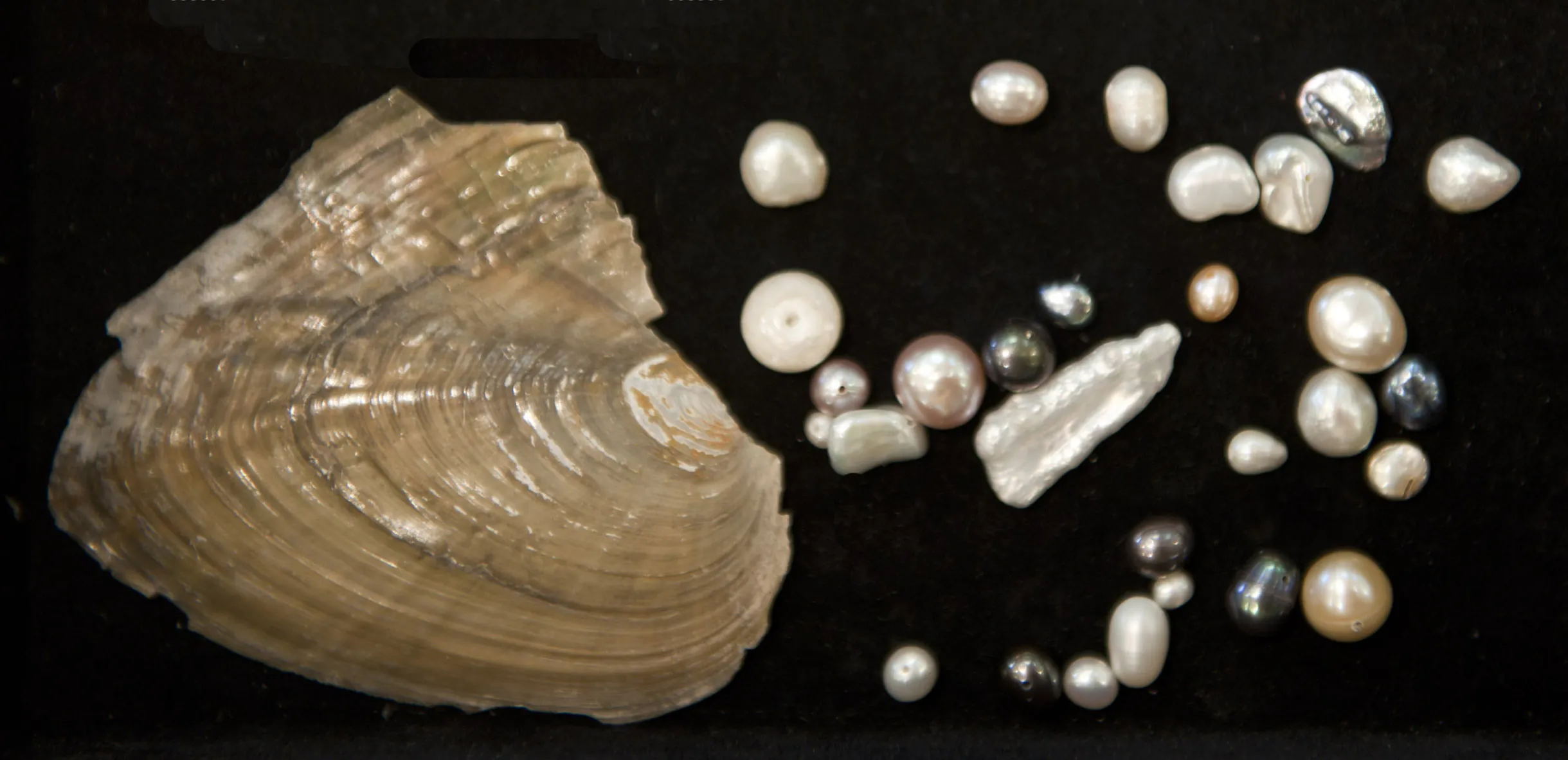
Pearls do not grow as machined objects with perfectly fixed geometries. Natural variations create a continuum between round, near-round, oval, button, drop and irregular forms. Commercial suppliers then add descriptive names that help buyers visualize particular appearances.
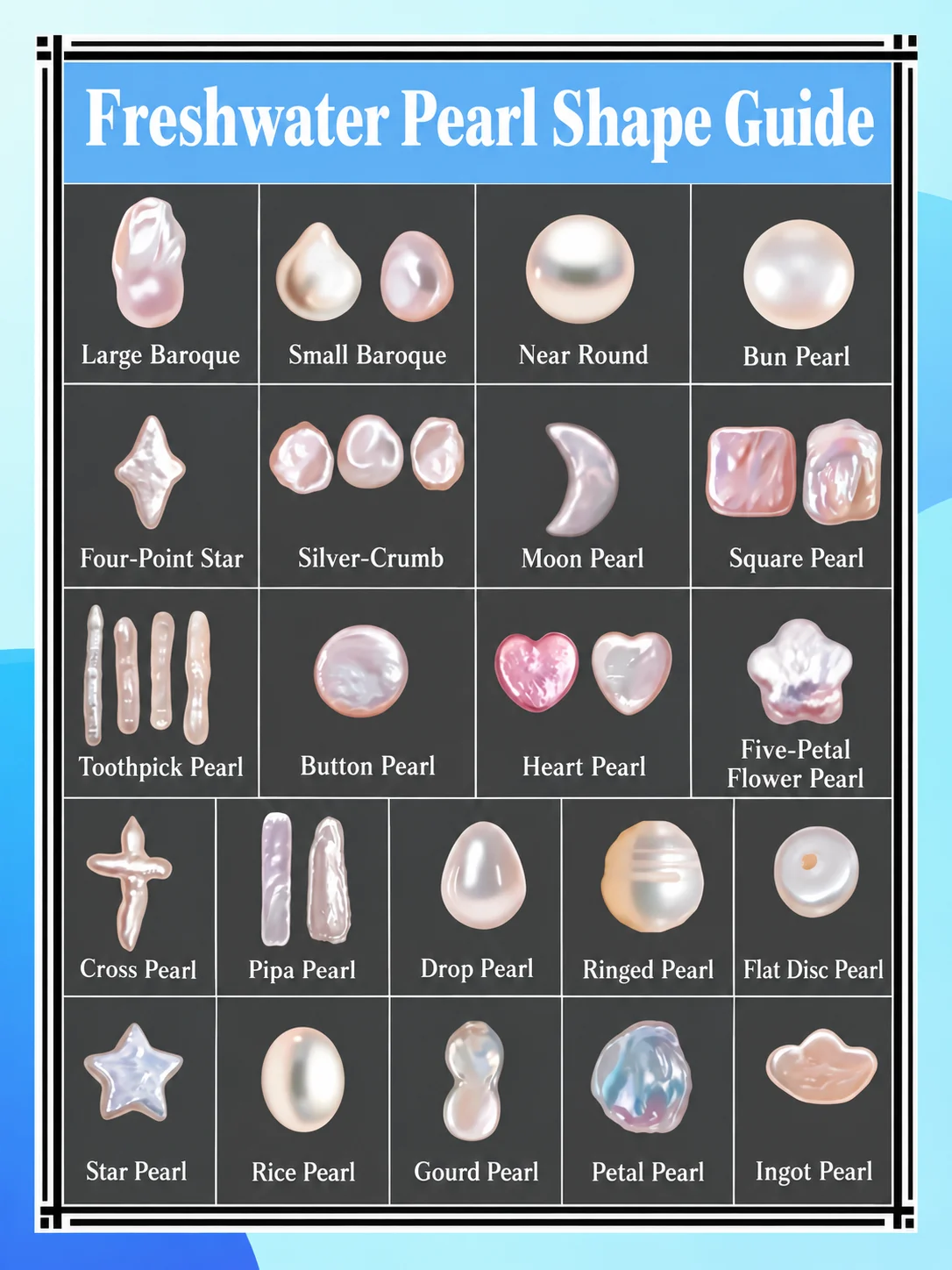
This is especially noticeable in freshwater pearls because they are produced in a very wide variety of shapes. Alongside recognized terms such as round, near-round and button, the trade may use visual names such as rice, potato, coin, petal, keshi, mantou or bread-shaped.
Some of these names are useful, but they should not automatically be treated as formal grading categories.
This is also why translating pearl terminology from one market into another can create confusion. A name that makes immediate visual sense to buyers in one region may become an awkward literal translation in English and gradually take on a slightly different commercial meaning.
Are Bread-Shaped and Button Pearls Always Freshwater Pearls?
No. Button describes shape, not pearl origin. Button-shaped pearls can occur in different pearl categories.
The term “bread pearl,” however, is encountered particularly often in commercial listings for freshwater cultured pearls. This association can make buyers assume that “bread” itself is a freshwater pearl classification, but it is better to keep the two ideas separate.
A shape name alone cannot tell you whether a pearl is freshwater or saltwater, natural or cultured, treated or untreated, or high or low quality.
For more background on how common freshwater pearls are formed, see our guide to freshwater non-nucleated cultured pearls.
Does a Button or Bread Shape Mean Lower Quality?
No. Shape and quality should not be treated as the same thing.
Roundness can influence pearl value, and highly round pearls often command a premium when other factors are comparable. But a pearl's overall quality also depends on characteristics such as luster, surface condition, color, size and matching.
A high-luster, clean and beautifully matched button pearl can therefore be much more desirable than a poorly lustrous or heavily blemished pearl that happens to be rounder.
This distinction matters when shopping online because sellers sometimes use shape words as if they were quality grades. “Bread,” “button,” “near-round” and “round” primarily describe form. They do not by themselves tell you how reflective, clean or well matched the pearls are.
Our guide to evaluating pearl value explains why shape should be considered together with the other major quality factors.
Which Shape Is Better for Jewelry?
There is no universally better choice. The best profile depends on how the pearl will be mounted and how much of it remains visible.
Stud earrings
Button and full bread- or mantou-style pearls can work particularly well for studs. A flatter back allows the pearl to sit closer to the ear, while the rounded face can create the visual impression of a larger pearl from the front.
A high-domed button can even look close to round when worn, because the viewer rarely sees the entire underside.
Rings and pendants
A flatter base can be convenient when a pearl is mounted against a setting. Again, the front appearance may be fuller than the side profile suggests.
Necklaces and bracelets
Here the profile becomes more obvious because multiple pearls are seen from different angles. Bread-shaped or button strands can create a softer, slightly compressed rhythm instead of the continuous spherical appearance of a classic round-pearl strand.
Matching also becomes especially important. Even attractive individual pearls can produce an uneven-looking strand if their heights differ too much.
Classic round-pearl designs
If the goal is a necklace that appears round from nearly every viewing angle, choose genuinely round or near-round pearls rather than relying on a face-up photograph of button or bread-shaped material.
Bread Pearl vs. Button Pearl vs. Coin Pearl vs. Near-Round Pearl
Several neighboring shape terms are easy to confuse:
| Shape | Typical Profile | Key Point |
|---|---|---|
| Near-round | Close to spherical | Minor deviation from a complete round shape |
| Button | Symmetrical dome, often with a flatter underside | Recognized pearl-shape terminology |
| Bread / mantou | Squat, rounded or bun-like | Informal terminology that varies between sellers |
| Coin | Distinctly flat and disc-like | Usually visually flatter than a typical button pearl |
The boundaries are not always sharp. Pearls exist along a range of shapes, and commercial names can overlap at the edges.
What Should You Ask a Seller Before Buying?
If a listing says “bread pearl” or “button pearl,” especially for loose pearls or wholesale strands, a few simple questions are more useful than debating the terminology.
- Ask for a side-view photo. This immediately reveals how flat or full the pearls are.
- Ask for width × height measurements. A single face-up diameter does not fully describe a flattened pearl.
- Confirm whether the lot is consistently matched. For strands and pairs, matching profile can matter as much as the name of the shape.
- Check the drilling direction. Center-drilled, top-drilled and half-drilled pearls can behave very differently in finished jewelry.
- Judge luster and surface separately from shape. A button designation is not a quality grade.
- Confirm pearl type separately. Do not assume that “bread,” “button” or any other shape word establishes origin or cultivation type.
For wholesale purchasing, it is also useful to establish the supplier's own terminology before comparing quotations. Two factories may be offering very similar pearls under different names—or materially different profiles under the same name.
The Most Useful Way to Think About the Difference
The simplest distinction is this: button is a shape category; bread is usually a visual trade description.
If a seller calls a pearl bread-shaped, do not assume that it belongs to a completely separate pearl type. It may simply be a button-like freshwater pearl with a rounded, bun-shaped profile. Conversely, because “bread” has no universal definition, you should not assume that every bread pearl will have the same height or silhouette.
When appearance matters, forget the label for a moment and compare the actual pearl: look at it from the side, check the width and height, inspect the base, and evaluate how consistently the pearls match. Those details tell you much more than the word printed in the product title.
FAQ
Are bread-shaped pearls the same as button pearls?
They often overlap in commercial listings, but the terms are not formally equivalent. Button has a recognized shape definition, while bread-shaped is an informal trade description that can vary between sellers.
What does a button pearl look like?
A button pearl typically has a symmetrical, rounded dome and may have a flatter underside. From the front it can appear nearly circular, while the side view reveals that it is flatter than a round pearl.
What is a mantou pearl?
Mantou is another trade description for a pearl with a plump, steamed-bun-like appearance. In English-language listings it may overlap with terms such as bread-shaped or high-button pearl rather than representing a separate standardized shape category.
Are button pearls real pearls?
Yes, a genuine pearl can be button-shaped. The word button describes the pearl's shape and does not indicate whether it is genuine, cultured, natural or imitation. Those characteristics must be identified separately.
Are button pearls cheaper than round pearls?
Round pearls often command higher prices when other quality factors are comparable, but shape alone does not determine value. Luster, surface quality, size, color and matching can all have a major effect on the final price.
How can I tell whether an online pearl is truly round or only button-shaped?
Ask for a side-view image or video and, if possible, both the width and height measurements. A button pearl may look circular and almost round in a straight-on photograph even though its side profile is clearly flattened.