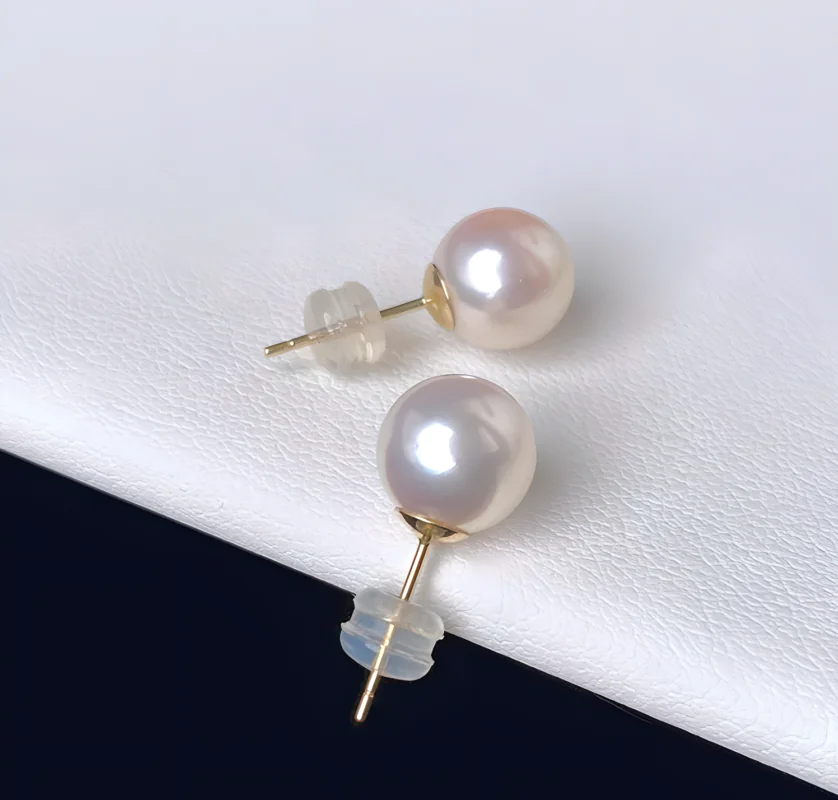
Visual inspection can often tell you whether a pearl deserves a closer look, but it cannot turn a home check into laboratory identification. The most useful approach is to look for several independent clues—especially surface character, luster, drill-hole structure, coating behavior, and repetition across a strand—rather than relying on one “magic” sign.
First, know what “real” means
A natural pearl and a cultured pearl are both real pearls because both are formed by a mollusk. The difference is that cultured pearl formation is initiated with human assistance. An imitation pearl is a manufactured look-alike, commonly made from materials such as glass, plastic, shell, or another bead with a pearlescent coating.
This distinction matters because a visual check that suggests “genuine pearl material” still does not tell you whether the pearl is natural or cultured. It also does not determine origin, treatment status, or value. GIA likewise treats cultured pearls as real pearls and uses laboratory methods, including X-radiography, when internal structure needs to be determined.
What visual inspection can—and cannot—do
Think of visual inspection as screening, not certification. It works best when an imitation leaves manufacturing evidence that a biological pearl would not normally show: a separate surface film, chipped coating over a different core, molded-looking openings, repeated surface patterns, or a mechanically identical finish across many beads.
At the same time, avoid the opposite mistake. A pearl does not become genuine simply because it is slightly irregular, has a strong glow, or has a neat drill hole. Well-matched cultured pearls can be extremely uniform, while sophisticated imitations can be textured and visually convincing.
| Visual clue | What may support a genuine pearl interpretation | What may raise suspicion of imitation | Strength by itself |
|---|---|---|---|
| Surface | Subtle natural variation, growth texture, minor irregularities | Paint-like film, molded texture, seams, repeated artificial pattern | Moderate |
| Luster | Reflections with apparent depth and layered optical character | Flat, oily, glittery, or purely surface-level shine | Weak to moderate |
| Drill hole | Integrated pearl material around the opening; sometimes a nacre/nucleus boundary | Peeling film, exposed unlike core, pooled coating, molded-looking opening | Moderate to strong when the core is clearly exposed |
| Whole strand | Natural-looking differences in surface, reflection, shape, or overtone | Mechanical repetition of identical marks, finish, or coating behavior | Moderate |
| Color | Color and overtone consistent with the pearl type | Unnatural concentrations or coating effects may deserve investigation | Weak for real-vs-imitation identification |
1. Start with the surface under good light
Use bright, diffuse light rather than a single harsh point light. Rotate the pearl slowly and examine more than one area. If possible, use a 10× loupe or a good macro camera mode.
Real nacre is a biological material, so its surface often shows small variations: faint ridges, tiny pits, growth marks, slight changes in texture, or minor blemishes. These do not have to be obvious. High-quality cultured pearls can have very clean surfaces because they have been carefully sorted.
What is more useful is spotting a surface that behaves like a manufactured skin. Look for a thin film lifting from the body, a seam, pooled material, a repeated molded texture, glitter-like particles, or a sharp boundary between a pearly coating and a different substance below it. GIA has documented coated shell imitations in which magnification revealed a glittery artificial surface and damaged areas exposing the shell bead underneath.
Important: “imperfections = real” is not a reliable rule. Some imitation pearls are deliberately textured, and some genuine pearls are exceptionally clean.
2. Judge luster by depth, not simply by brightness
A genuine nacreous pearl can show reflections that appear to sit within the surface rather than merely on top of it. In high-luster pearls, reflected edges may look crisp and lively; lower-quality real pearls can look softer or chalkier.
Imitation pearls may appear very shiny too. The warning signs are not “too much shine” alone, but a shine that looks flat, oily, plasticky, glittery, or identical from every angle. Some coated shell and glass imitations can imitate pearl luster surprisingly well, so this is a comparison clue rather than proof.
If you want to understand the difference between luster as an authenticity clue and luster as a quality factor, see the MJ Pearls pearl grading guide. A pearl can be genuine and still have weak luster.
3. Inspect drill holes and worn edges carefully
For drilled pearls, the hole is one of the most informative places to inspect because it interrupts the surface and may reveal how the object is constructed.
With a loupe, look around the rim rather than trying to force light deep into the hole. In a genuine bead-cultured pearl, you may sometimes see a boundary between nacre and an internal bead nucleus. In non-bead-cultured pearls, there may be no such bead boundary. The opening itself can also vary because drilling quality and wear vary.
More suspicious signs include:
- a thin coating peeling or chipping away from the rim;
- a clearly different glass-, plastic-, or shell-like material exposed beneath the surface;
- paint or coating pooled around the opening;
- a molded-looking hole rather than a drilled opening;
- the same coating failure repeated around many beads.
GIA laboratory reports on imitation pearls repeatedly show why the drill-hole area is useful: coated shell imitations have revealed thin artificial coatings and exposed underlying bead material, while other imitations have shown unusual molded or oversized openings.
Do not scrape, enlarge, or damage a drill hole to “test” it. If the existing structure is unclear, destructive probing does not make the conclusion more reliable.
4. Compare several pearls, not just one
A strand gives you more information than a single pearl because you can look for patterns. Real cultured pearls are sorted and matched, sometimes very tightly, but biological growth still tends to create small differences in surface character, reflection, shape, or overtone.
What should make you look closer is mechanical repetition: the same surface texture in the same way, identical blemish-like marks, the same coating edge at every hole, or a perfectly repeated finish that looks manufactured rather than selected.
Uniformity alone is not enough to call a strand fake. Fine Akoya or other high-quality cultured pearl strands can be impressively well matched. The useful question is whether the similarity looks like careful sorting of individual organic gems or repetition from a manufacturing process.
5. Treat color as a clue to investigate, not a verdict
Color is often overused in at-home pearl identification. A strange color does not automatically mean imitation, and a natural-looking white, cream, gray, pink, or black does not prove authenticity.
Color concentrations around holes, cracks, or surface pits may suggest dyeing or another treatment, but treated cultured pearls are still real pearls. That is a different question from whether the object itself is an imitation bead. If color treatment is the concern, use a treatment-focused guide rather than turning the color clue into a real-vs-fake conclusion.
For a broader framework that separates imitation, treatment, and pearl type, continue with our pearl identification guide.
6. Look for coating behavior at areas of wear
Older jewelry can be especially revealing because abrasion may expose how the “pearl” was made. Inspect points that rub against thread, clasps, metal findings, neighboring beads, or skin.
If wear reveals a sharply different material underneath a pearlescent skin, the construction is consistent with a coated imitation. Glass, plastic, shell, and even fibrous cores can be used in pearl imitations. GIA has documented modern examples whose external appearance was convincing enough that closer magnification and laboratory testing were needed.
However, surface damage alone is not proof of imitation. Genuine pearls can be scratched, abraded, chipped, or treated with surface coatings. Focus on whether the damaged area exposes a clearly separate non-pearl core or an artificial layer structure.
A practical visual inspection sequence
If you have a strand in hand, use this order:
- Look at the entire strand first. Note matching, repeated patterns, and overall surface character.
- Rotate several pearls under diffuse light. Compare depth of luster and reflection behavior.
- Use 10× magnification. Inspect natural-looking texture versus film, seams, glittery particles, or molding.
- Check drill holes. Look for coating failure, exposed core material, or construction clues.
- Inspect worn areas. Compare the surface layer with whatever is visible underneath.
- Combine the evidence. One weak clue should not override the rest of the pearl.
This is also why visual inspection is more reliable in person than from a single product photograph. Photography, lighting, retouching, distance, and resolution can hide the very details that matter.
Which visual clues are strongest?
The most persuasive visual evidence of imitation is usually construction evidence, not general appearance. For example, a pearlescent film visibly peeling from a glass or plastic core is much stronger evidence than “the pearl looks too round.”
A useful way to rank visual clues is:
- Stronger: exposed non-pearl core, peeling manufactured coating, visible seam, molded opening, repeated artificial construction features.
- Moderate: unusual surface film, glittery coating, mechanical repetition across a strand, flat or oily luster combined with other suspicious signs.
- Weak alone: perfect roundness, lack of blemishes, color, weight inferred from appearance, price, or one photograph.
For a broader real-vs-fake checklist that also discusses non-visual home tests, see How to Tell If Pearls Are Real: Real vs Fake Pearl Guide.
What visual inspection cannot prove
Even when you are confident that a pearl is genuine, visual observation alone usually cannot establish all of the following:
- whether it is natural or cultured;
- whether a cultured pearl is bead-nucleated or non-bead-cultured in every case;
- its geographic origin;
- whether its color is natural or treated;
- the full nature of internal structures;
- its market value.
GIA states that X-radiography is used to examine pearl internal structure and is the most reliable non-destructive method for separating natural from cultured pearls. Laboratories may combine visual examination with X-ray imaging and other gemological tests depending on the question.
If the pearl is high-value, antique, represented as natural, unusual in color, or important for insurance or resale, professional testing is the appropriate next step. Visual clues can tell you what to question; they should not be used to manufacture certainty.
Visual inspection is about evidence, not one trick
The simplest useful rule is this: look for how the object is constructed. Real pearls are biological gems; imitation pearls are manufactured objects designed to reproduce their appearance. Surface film, exposed cores, molded features, and repeated coating behavior therefore tell you more than generic rules such as “real pearls are never perfect.”
Use surface, luster, drill holes, wear, and strand-level comparison together. If several clues agree, visual inspection can be a strong first filter. When the answer matters financially or gemologically, stop at screening and move to professional identification.
FAQ
Can you tell if a pearl is real just by looking at it?
Sometimes you can identify obvious imitation construction visually, especially when coating has peeled or a different core is exposed. But a convincing imitation may require magnification or laboratory testing, so appearance alone cannot always provide a definitive answer.
Are perfectly round pearls usually fake?
No. High-quality cultured pearls can be very round and carefully matched. Perfect-looking shape is only a reason to inspect other clues; it is not evidence of imitation by itself.
Does a rough or chipped drill hole mean the pearl is fake?
Not automatically. Genuine pearls can be damaged or poorly drilled. The more important question is whether the damage reveals a separate manufactured coating and a clearly different core material underneath.
Can cultured pearls be real pearls?
Yes. Cultured pearls are real pearls formed by mollusks with human assistance. “Imitation” refers to look-alike products made from other materials.
When is laboratory testing worth considering?
Consider professional testing when a pearl is high-value, antique, claimed to be natural, unusually colored, or important for insurance, inheritance, resale, or a significant purchase. Laboratory testing can answer questions that visual inspection cannot.