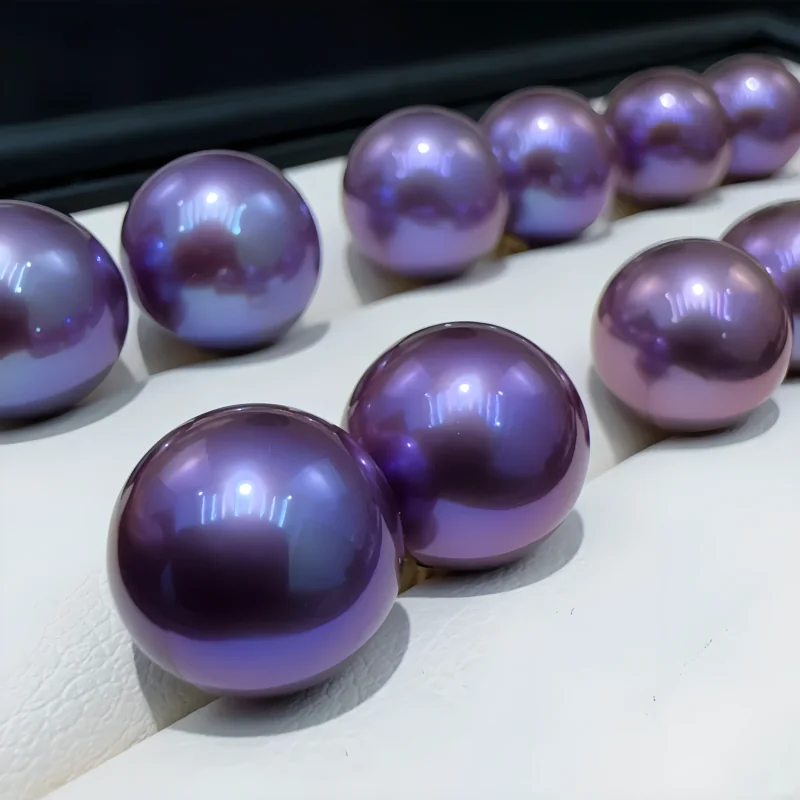
Some pearls are overpriced. Pearls as a category are not. A high price can reflect genuine rarity, visible quality, difficult matching, precious-metal work, or specialized retail service. It can also include a large brand, design, or marketing premium. The number on the tag does not tell you which part you are paying for.
The useful question is therefore not “Are pearls a rip-off?” but “What exactly is expensive in this piece?” If you can separate the value of the pearls from the value of the finished jewelry and from the seller’s commercial markup, pearl pricing becomes much easier to judge.
GIA evaluates pearls through seven value factors: size, shape, color, luster, surface quality, nacre quality, and matching for multi-pearl pieces. Those factors explain much of the difference between one pearl and another. They do not, however, explain the entire retail price of a finished necklace, ring, or pair of earrings.
Quick Answer: What Are You Actually Paying For?
| Part of the price | Can it be real value? | What to verify |
|---|---|---|
| Pearl identity and type | Yes | Natural or cultured; freshwater, Akoya, Tahitian, South Sea, or another type |
| Pearl quality and rarity | Yes | Luster, surface, shape, size, color, nacre, and the rarity of their combination |
| Matching | Yes | How closely pearls in a pair or strand agree in size, shape, color, luster, and overall appearance |
| Jewelry construction | Yes | Gold or silver content, stones, clasp, setting, stringing, workmanship, and design complexity |
| Laboratory documentation | Sometimes | Whether identity, treatment, natural origin, or classification actually needs independent verification |
| Brand and retail channel | Subjective | Whether you personally value the design, reputation, service, packaging, location, and buying experience |
None of these categories automatically makes a price fair. They simply tell you where the money might be going. A pearl can be objectively rare but still offered at an unattractive price. A modest freshwater pearl can also be a very good purchase if it has strong luster, honest disclosure, and a price appropriate to what it is.
First Principles: Price, Cost, and Value Are Three Different Things
A pearl does not have one universal “correct price.” Three separate ideas are involved:
- Cost is what it takes to produce, sort, process, set, distribute, and sell the item.
- Market price is what sellers can ask and buyers are willing to pay in a particular market.
- Value to you is whether the qualities you receive are worth that price compared with realistic alternatives.
This distinction matters because pearls are biological gems rather than standardized manufactured components. A harvest does not produce thousands of visually identical pearls. Size, shape, color, luster, surface characteristics, and nacre vary. The more conditions you require at the same time, the smaller the pool of pearls that qualifies.
That is why the price curve can become steep at the upper end. A pearl does not have to be “ten times prettier” to become much harder to source. It may simply belong to a much smaller intersection of desirable characteristics.
1. Identity Comes Before Quality: Natural, Cultured, and Imitation Are Not the Same Market
Before discussing whether a pearl is expensive, establish what it is. GIA defines natural pearls as pearls that form without human intervention. They are very rare, and most natural pearls encountered in the market today are antique. Cultured pearls form in mollusks with human assistance and make up the vast majority of pearls in modern jewelry.
That means an ordinary cultured-pearl necklace should not be priced or described as though it were a rare natural-pearl collector piece. At the same time, cultured does not mean fake. Cultured pearls are real pearls; imitation pearls are manufactured look-alikes made from other materials.
Within cultured pearls, the comparison must become more specific. Freshwater, Akoya, Tahitian, and South Sea pearls come from different mollusks and production systems and occupy different typical size, color, supply, and market ranges. A 10 mm freshwater pearl and a 10 mm South Sea pearl are not interchangeable products simply because the diameter is the same.
If you are still separating identity from quality, start with our Pearl Buying Guide before comparing price tags.
2. The Pearl Itself Has Real Quality Differences You Can See
Once you are comparing the same general pearl type, GIA’s seven value factors provide a useful framework. They are size, shape, color, luster, surface, nacre, and matching.
The important point for pricing is that these factors interact. A large pearl may be common enough at a lower quality level but much scarcer when it must also be round, highly lustrous, relatively clean, attractively colored, and structurally sound. In a necklace, enough pearls must then meet similar standards and look harmonious together.
For buyers, luster is especially important because it strongly affects the pearl’s visual life. GIA notes that luster may be the most important of the seven value factors. Surface quality also matters, but a tiny mark hidden near a drill hole should not be treated like a deep crack or a prominent defect across the face of the pearl.
Size and roundness can carry meaningful rarity premiums, but neither should be mistaken for a universal quality score. A slightly smaller or near-round pearl with much stronger luster can be a better-looking and better-value purchase than a larger, duller, perfectly round alternative.
For a deeper breakdown of how sellers describe these characteristics, see our Pearl Grading Guide and guide to evaluating pearl value.
3. Expensive Pearls Usually Combine Several Scarce Qualities at Once
One of the biggest mistakes in pearl shopping is assuming that price should rise in a smooth, linear way. It often does not.
Imagine sorting a large group of comparable pearls. First remove the dullest examples. Then require cleaner surfaces. Then tighter roundness. Then a particular color. Then a larger size. Each filter reduces the remaining pool. If you need a matched necklace rather than one loose pearl, the surviving pearls must also work together.
The exact percentages vary by pearl type, farm, harvest, and grading standard, so there is no responsible universal formula for how much each step “should” add. But the logic explains why a small visible improvement near the top of the market can produce a surprisingly large price difference.
This is genuine scarcity, not automatically hype. The buyer still has to decide whether the premium matters. If you cannot see or do not care about the difference between near-round and perfectly round pearls when worn, paying heavily for geometric perfection may be poor value for you even if the premium is commercially real.
4. Matching Is a Real Cost That Is Easy to Underestimate
A pendant may require one beautiful pearl. Stud earrings require two that look right together. A classic strand may require dozens.
GIA treats matching as a separate value factor for jewelry with more than one pearl. Good matching can involve size, shape, color, luster, surface quality, and overall appearance. The stricter the specification, the more inventory and sorting it can take to assemble a harmonious pair or necklace.
This is why comparing the price of a finished strand with the arithmetic sum of random loose pearls can be misleading. The strand price may include selection work and the scarcity of finding enough pearls that belong together.
Matching does not always mean perfect uniformity. A multicolor or baroque design can intentionally vary. The relevant question is whether the variation looks controlled and coherent rather than accidental.
5. A Finished Pearl Jewelry Price Is Not the Same as a Pearl Price
Once a pearl becomes jewelry, the price includes more than the pearl. Depending on the piece, you may also be paying for:
- gold, platinum, silver, or other metal;
- diamonds or colored gemstones;
- clasps, posts, findings, and setting work;
- drilling, stringing, knotting, polishing, and assembly;
- design development and small-batch production;
- laboratory reports where they are useful;
- quality control, returns, warranties, and after-sales service;
- retail overhead, marketing, packaging, and brand positioning.
These costs are not automatically illegitimate. A well-designed piece with excellent workmanship can reasonably cost more than the loose pearls inside it. A luxury brand can also charge for design language, reputation, service, presentation, and scarcity of distribution.
But those premiums should not be confused with pearl quality. A famous box cannot make weak luster stronger, and an expensive showroom cannot make two poorly matched pearls better matched.
This distinction is especially useful when comparing branded jewelry with specialist pearl sellers. Compare the pearls first, then the metal and construction, and only then decide what the brand experience is worth to you.
6. So When Does a Pearl Price Start to Look Like Hype?
There is no single markup percentage that turns a pearl into a bad deal. Different businesses have different costs, services, and positioning. Instead, look for a mismatch between the size of the premium and the amount of verifiable information supporting it.
Be more cautious when:
- The grade label is doing all the work. “AAA,” “AAAA,” “top grade,” and similar labels are not a universal language across unrelated sellers. The seller should define what the grade means.
- “Rare” is used without saying what is rare. Is the rarity the pearl type, size, natural color, roundness, luster, matching, provenance, or something else?
- The listing is vague about pearl identity. “Real,” “natural,” “sea pearl,” and “premium pearl” are not enough to establish what you are buying.
- A rare-looking color carries a large premium but treatment disclosure is unclear. Attractive treated pearls can be perfectly legitimate products; they should simply be described honestly.
- Photography is more impressive than the specification. Extreme lighting, heavy contrast, or selective angles can make comparison difficult.
- A certificate is presented as proof of monetary value when it mainly verifies identity or classification. Documentation can be useful, but a report does not magically establish that any asking price is fair.
- The seller cannot explain what changes between price tiers. A credible premium should be traceable to better pearls, better matching, better construction, better service, or another identifiable benefit.
The opposite is also true. A seller does not need a theatrical story for every pearl. Clear identity, realistic photographs, understandable quality criteria, treatment disclosure where relevant, and a sensible return policy are often more useful than luxury language.
7. What Does a Justified Premium Look Like?
A higher price is easier to justify when the improvement survives a controlled comparison. Put two pieces side by side and ask whether the expensive one gives you a meaningful advantage in one or more of these areas:
- Better pearl identity or rarity: a genuinely scarcer type, natural origin where relevant, or an unusual naturally occurring characteristic.
- Stronger visible quality: sharper luster, cleaner or better-positioned surfaces, more desirable shape, or more attractive color.
- Larger size without sacrificing quality: especially when the size is uncommon for that pearl type.
- Tighter matching: particularly in classic pairs and strands.
- Better construction: more appropriate metal, secure settings, better clasp, careful stringing, or more precise workmanship.
- Useful verification: independent documentation when a high-value identity, treatment, or natural-origin claim materially affects the price.
- Service you actually value: customization, after-sales support, convenient returns, sourcing help, or a design you cannot easily replace elsewhere.
If the only difference you can identify is a grander adjective, the premium deserves more scrutiny.
8. How to Compare Two Pearl Prices in Five Minutes
Use the same order every time. This prevents one impressive feature—usually size or a grade label—from dominating the decision.
- Confirm the pearl type. Do not compare freshwater, Akoya, Tahitian, and South Sea pearls as if type were irrelevant.
- Match the size range. Compare actual millimeter ranges, not just “small,” “medium,” or “large.”
- Compare luster under similar lighting. Look for bright, crisp reflections rather than only bright photography.
- Check surface condition from more than one angle. Separate minor cosmetic marks from structural concerns.
- Compare shape honestly. Round, near-round, oval, button, drop, circled, and baroque are different products.
- Check color and treatment disclosure. Especially when color is a major reason for the price.
- For pairs and strands, compare matching. Do not evaluate only the best pearl visible in the photo.
- Separate the pearl from the setting. Compare gold weight, stones, clasp, workmanship, and design.
- Then evaluate the seller premium. Decide what service, brand, convenience, or design is worth to you.
This is a much more reliable test than asking whether one seller is “cheap” and another is “expensive” in the abstract.
9. If Your Budget Is Limited, Do Not Try to Buy Every Premium at Once
The easiest way to overpay is to chase large size, perfect roundness, flawless surfaces, top luster, rare color, and tight matching simultaneously when your design does not require all of them.
For many everyday jewelry purchases, a sensible strategy is to protect luster and structural condition first, then choose the pearl type and size that create the look you want. After that, decide how much you care about surface perfection, exact roundness, and tight matching.
For example, a near-round pearl with excellent luster can be a better value than a duller perfectly round pearl. A small surface mark hidden near the drill hole may be a rational compromise. A slightly smaller pair can free enough budget to improve luster and matching—qualities that may be more visible when worn.
Our Pearls by Budget guide explains these trade-offs in more detail without treating any fixed budget as a universal price promise.
10. Are Pearls “Worth the Money”?
That depends on what you expect the purchase to do.
If you want a piece of jewelry with a particular luster, color, organic character, and style, pearls can offer genuine value across a very wide price range. Modern cultured pearls mean that you do not need natural-pearl rarity—or luxury-brand pricing—to own attractive real pearls.
If, however, you are buying mainly because a sales story implies that “expensive pearls must be valuable,” that is a weak reason. Retail price is not the same thing as guaranteed resale value. Part of a jewelry price can pay for design, distribution, service, marketing, and brand experience—benefits that may matter to the first buyer but are not automatically recoverable later.
A good pearl purchase is therefore not the one with the lowest price or the highest grade. It is the one where you can explain, in plain language, what you are paying extra for—and where those extras actually matter to you.
If you are ready to move from evaluation to actual pieces, browse our pearl jewelry collection with the same framework: type first, visible quality second, construction third, and price last.
Frequently Asked Questions
Are pearls overpriced compared with diamonds or gold?
There is no useful universal comparison because the pricing systems are different. Gold has a widely quoted commodity value, while pearls vary strongly by biological type and quality. Diamonds use a different grading framework. A pearl should be judged against comparable pearls and comparable jewelry construction rather than against another material's price model.
Why can real freshwater pearls be inexpensive?
Real and expensive are not synonyms. Cultured freshwater pearls can be produced in greater volume than some saltwater pearl types, which can make many freshwater products more accessible. Quality still varies widely, and fine freshwater pearls can command substantial prices when size, luster, shape, surface quality, and matching are strong.
Are South Sea pearls overpriced?
Not inherently. South Sea pearls occupy a different production and size context from freshwater and Akoya pearls and often command higher prices. Whether a specific piece is overpriced still depends on its actual luster, surface, shape, color, size, matching, construction, and seller premium.
Does a luxury brand guarantee better pearls?
No. A respected brand may provide strong sourcing, design, matching, workmanship, service, and consistency, but the brand name itself is not a pearl quality factor. Evaluate the pearls and jewelry first, then decide whether the brand premium is worthwhile to you.
Is AAA or AAAA worth paying more for?
Only if the seller clearly defines the grade and the actual pearls show the promised improvement. Letter grades are not universally standardized across unrelated sellers, so compare the underlying luster, surface, shape, size, color, nacre, and matching rather than paying for the label alone.
Does a pearl certificate prove the asking price is fair?
No. A laboratory report can verify important facts such as identity, natural or cultured origin, treatments, or classification depending on the report. It does not establish a universal retail price. You still need to compare quality, jewelry construction, and the market alternatives.
Are cheap cultured pearls fake?
No. Cultured pearls are real pearls grown in mollusks with human assistance. A lower price can reflect pearl type, smaller size, lower grade, more visible surface characteristics, less strict matching, simpler jewelry construction, or a lower-cost sales channel. Imitation pearls are a separate category.
Final Takeaway
Pearls are not automatically overpriced hype, but pearl pricing is easy to misunderstand because several different kinds of value are bundled into one retail number.
The pearl itself has verifiable characteristics: identity, type, size, shape, color, luster, surface, nacre, and matching. Finished jewelry adds metal, stones, design, workmanship, and assembly. The seller adds service, overhead, branding, and margin. A high price may be justified by one layer, several layers, or very little that matters to you.
The most useful anti-hype rule is simple: make the seller's premium explain itself. If you can see the better luster, understand the rarity, verify the matching, inspect the construction, and value the service, the premium may be rational. If the price depends mainly on vague words such as “luxury,” “rare,” or “AAAA” without clear supporting detail, compare more carefully.
Once you separate pearl quality from jewelry construction and brand positioning, the market stops looking mysterious. You do not need to find the “cheapest real pearl.” You need to find the pearl whose visible qualities and genuine premiums match what you actually want to buy.