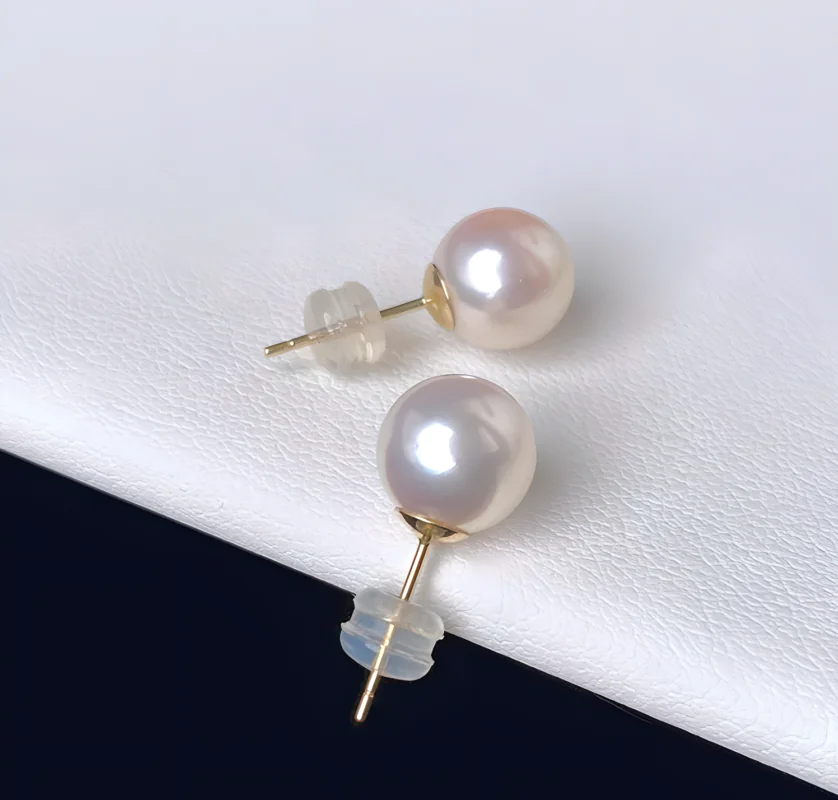
Akoya Pretreatment (Maeshori): What Luster Enhancement Can—and Cannot—Do
Maeshori is a post-harvest pretreatment closely associated with Akoya cultured pearls. It can make a pearl appear cleaner, brighter, and more reflective, but it does not create new nacre or erase weaknesses that were formed during cultivation. That distinction matters: luster enhancement can improve how an Akoya pearl presents, while the underlying nacre still sets an important limit on how good—and how durable—the pearl can ultimately be.
What Is Maeshori?
The Japanese term maeshori literally refers to a preliminary treatment. Historically, it was used before bleaching Akoya cultured pearls to help the subsequent bleaching process work more effectively. Traditional descriptions commonly involve immersion in an organic solvent followed by water treatment.
The meaning has broadened over time. Today, maeshori is better understood as an umbrella term covering several post-harvest protocols intended to improve luster or brightness. The exact procedure is not necessarily identical from one processor to another, and some methods may involve combinations of solvents, heat, light, water, or other processing steps.
This is why it is misleading to describe maeshori as one fixed chemical recipe. The important concept is its purpose: it modifies the appearance of a pearl after harvest, particularly the way light is returned from the surface or near-surface nacre.
If you are unfamiliar with the steps that occur between harvesting and finished jewelry, our pearl processing workflow provides the broader context.
How Can Maeshori Improve Akoya Pearl Luster?
Pearl luster is not simply “shininess.” High-luster pearls return bright, sharp reflections, while lower-luster pearls produce softer, hazier, or more diffuse reflections. Akoya pearls are especially valued for the crisp, mirror-like character that high-quality specimens can display.
Maeshori can improve the visible result by cleaning or modifying the surface and near-surface condition of the nacre. Depending on the protocol, a pearl may appear brighter, whiter, more transparent in its reflection, or more consistent in tone after treatment.
It is safer, however, not to rely on simplified explanations such as “maeshori tightens the nacre crystals.” Processing methods vary, and the exact physical or chemical changes depend on the procedure used. From a buyer's perspective, the practical point is simpler: maeshori can improve the appearance of existing nacre, but it cannot replace nacre that was never formed.
The Critical Difference: Enhancing Luster vs. Creating Pearl Quality
A harvested Akoya pearl already carries the structural result of its time inside the mollusk. Its nacre thickness, continuity, surface features, shape, and much of its optical character were produced during cultivation. Post-harvest treatment begins only after that biological growth has ended.
| Maeshori may influence | Maeshori cannot create |
|---|---|
| Apparent surface brightness | Additional nacre thickness |
| Sharpness or clarity of existing reflections | New layers of nacre grown by the oyster |
| Cleanliness of the surface or near-surface appearance | Repair of fundamentally poor or discontinuous nacre |
| Perceived brightness of the color tone | Removal of deep structural surface defects |
| A more attractive finished appearance | Shape, nacre quality, surface quality, and matching as a complete quality package |
This is the most useful way to understand the limits of luster enhancement. Processing can improve the optical presentation of what is already there. It cannot go back into the cultivation stage and rebuild the pearl.
Why Luster Enhancement Has a Ceiling
1. The underlying nacre still matters
Nacre is built from microscopic layers of aragonite platelets combined with organic material. Its structure contributes to the optical effects seen in nacreous pearls, and nacre condition is closely related to luster.
A pearl with healthy, well-formed nacre therefore has a better foundation for high luster than a pearl with weak, chalky, damaged, or highly irregular nacre. Treatment may improve the second pearl's initial appearance, but it cannot supply the structural foundation of the first.
For a broader explanation of how luster fits together with nacre, surface, color, shape, and other factors, see our guide to evaluating pearl value.
2. Maeshori cannot add nacre
This is the clearest physical limit. Once an Akoya pearl has been harvested, post-harvest processing cannot increase the thickness of the nacre that the oyster deposited around the bead nucleus.
If nacre is extremely thin or its structure gives the pearl a chalky appearance, making the surface temporarily brighter does not change that underlying condition. Nacre quality can also affect durability, so apparent brilliance should not automatically be interpreted as evidence of substantial nacre.
3. Surface defects do not simply disappear
Pits, wrinkles, bumps, growth marks, and other surface characteristics originate in the pearl itself. Cleaning and finishing can make a surface look more attractive, but maeshori alone does not rebuild damaged nacre or fill substantial depressions.
Other procedures—such as polishing, working, coating, or more aggressive surface modification—should not be confused with maeshori merely because they can also change the way a pearl reflects light.
4. The improvement should not automatically be assumed to be permanent
CIBJO's pearl terminology specifically describes maeshori as a treatment that temporarily enhances luster, and its trade guidance describes luster enhancement as non-permanent. This does not mean that every treated Akoya pearl will suddenly become dull after a fixed period. It means that enhanced appearance should not be treated as an irreversible structural upgrade to the pearl.
Maeshori Is Not the Same as Bleaching
Maeshori and bleaching are closely associated in traditional Akoya processing, but the terms should not be used interchangeably.
| Process | Main purpose | Important distinction |
|---|---|---|
| Maeshori | Improve luster or brightness and prepare pearls for later processing | Methods vary; historically used before bleaching |
| Bleaching | Reduce stains, pigments, or unwanted coloration | Uses a bleaching agent and primarily addresses color or organic discoloration |
| Optical brightening | Make light-colored pearls appear optically brighter | May use fluorescent brightening agents to counter yellowish appearance |
| Polishing | Physically improve the finish of the pearl surface | Classified separately from luster enhancement in some industry standards |
| Coating or waxing | Add a surface layer that may improve apparent shine or disguise defects | A materially different surface treatment, not simply ordinary maeshori |
The boundary can become complicated because commercial processing protocols are not always neatly separated. The Japan Pearl Promotion Society's 2025 guidance specifically notes that when a maeshori-type solvent system contains bleaching agents such as hydrogen peroxide, the process is in fact performing bleaching and should be described accordingly.
Readers interested in the broader treatment landscape can continue with our guide to pearl color enhancement treatments.
Can Maeshori Turn a Low-Grade Akoya Into a High-Grade Pearl?
Not in the simple way the question is sometimes framed.
Maeshori can improve a visible quality factor—luster—and the improvement may be commercially significant. A pearl can therefore look better after processing than it did immediately after harvest. But overall pearl quality is not determined by luster alone.
Akoya evaluation also considers factors such as nacre condition, surface, shape, color, size, and, for strands or pairs, matching. Processing does not manufacture all of those characteristics.
This leads to an important distinction:
- A naturally well-formed pearl can be made to present its existing beauty more effectively through skilled processing.
- A structurally mediocre pearl may also look better after enhancement.
- But a brighter finished surface does not prove that the two pearls have equivalent nacre quality.
For this reason, “strong luster” and “strong underlying pearl quality” are related ideas, but they should not automatically be treated as synonyms.
What Does This Mean for Hanadama or Other Certified Akoya Pearls?
A quality certificate should be read according to what the laboratory actually examined. A certificate describing luster, surface, nacre, shape, or matching tells you about those evaluated characteristics; it should not automatically be interpreted as proof that no post-harvest treatment occurred.
For example, some laboratory services classify the quality of known cultured pearls without performing a separate treatment-identification service. The scope of the report matters.
Likewise, maeshori alone cannot establish the other characteristics required by a high-quality Akoya selection. It cannot create thicker nacre, improve roundness, remove every surface feature, or match a necklace strand. Those characteristics must still be judged independently.
How Should Buyers Judge Luster After Processing?
Because most buyers encounter Akoya pearls after processing rather than immediately after harvest, the practical goal is not to guess what each pearl looked like before maeshori. It is to evaluate the finished pearl intelligently.
- Look at reflection sharpness, not brightness alone. A high-luster Akoya should produce relatively crisp reflections rather than only a white glare.
- Rotate the pearl. Check whether strong reflection continues around a meaningful part of the surface or exists only in one favorable viewing position.
- Watch for chalky or hazy areas. Extremely bright photography can hide differences in nacre condition.
- Evaluate surface and nacre separately. Excellent shine does not automatically mean a clean surface or excellent nacre.
- Compare pearls under the same light. Luster differences are much easier to judge when lighting, distance, and background remain consistent.
- For strands, inspect consistency. One exceptional pearl does not make an exceptional necklace if the remaining pearls have weaker reflections.
- Read certificates for scope. Check whether a document is describing quality, identifying pearl type, testing treatments, or combining several services.
If you are still building a foundation in Akoya characteristics, our Akoya pearl guide explains how this pearl type differs from other cultured pearls.
Is Maeshori a Red Flag?
Maeshori by itself should not be treated as evidence that an Akoya pearl is fake or fraudulent. The pearl remains a cultured Akoya pearl. Post-harvest processing has long been part of bringing many light-colored cultured pearls to market.
The more useful question is whether the processing is being described accurately and whether sellers are making claims that go beyond what the finished pearl can support.
Statements deserve more scrutiny when they imply that:
- an enhanced mirror-like surface automatically proves thick or exceptional nacre;
- post-harvest treatment can permanently transform fundamentally poor nacre into premium nacre;
- one visual feature alone establishes overall pearl grade;
- a quality certificate automatically proves that no treatment has occurred; or
- terms such as “unprocessed,” “natural white,” or “no treatment” are being used without a clear definition of what processing steps are excluded.
In technical pearl buying, precise terminology is more useful than emotionally loaded labels such as “treated is bad” or “untreated is always better.”
The Most Important Limit of Maeshori
The easiest way to remember maeshori is this: it can improve how existing nacre presents light, but it cannot create nacre that the oyster did not grow.
That is why exceptionally lustrous Akoya pearls should still be evaluated as complete pearls. Luster matters greatly, but nacre quality, surface, shape, color, matching, and the scope of any laboratory report remain important. Skilled finishing can reveal and refine beauty. It does not eliminate the importance of the pearl's original biological structure.
FAQ
What does maeshori mean in Akoya pearls?
Maeshori is a Japanese term for pretreatment. It originally referred to a step performed before bleaching Akoya cultured pearls, but today the term is also used more broadly for several processes intended to improve pearl luster or brightness.
Is maeshori the same as bleaching?
No. Maeshori is primarily associated with pretreatment and luster enhancement, while bleaching is intended to reduce stains or pigments. The processes may occur in sequence, and some modern protocols can overlap. If a bleaching agent is incorporated into the procedure, the treatment should be regarded accordingly.
Is maeshori luster enhancement permanent?
CIBJO describes maeshori as temporarily enhancing luster and categorizes luster enhancement as non-permanent. There is no universal timetable for a visible change because treatment methods, pearl condition, storage, wear, and care vary.
Can maeshori create high-quality nacre?
No. Post-harvest treatment cannot add nacre or reproduce the biological growth process. It can improve appearance, but nacre thickness, continuity, and structural quality originate during cultivation.
Can you identify maeshori just by looking at an Akoya pearl?
Appearance alone is not a reliable way to reconstruct the exact processing history of a pearl. Naturally high-luster Akoya pearls can already show very sharp reflections, while maeshori protocols vary. Buyers who require treatment information should rely on clear supplier disclosure and, where appropriate, laboratory services designed for the relevant type of testing.