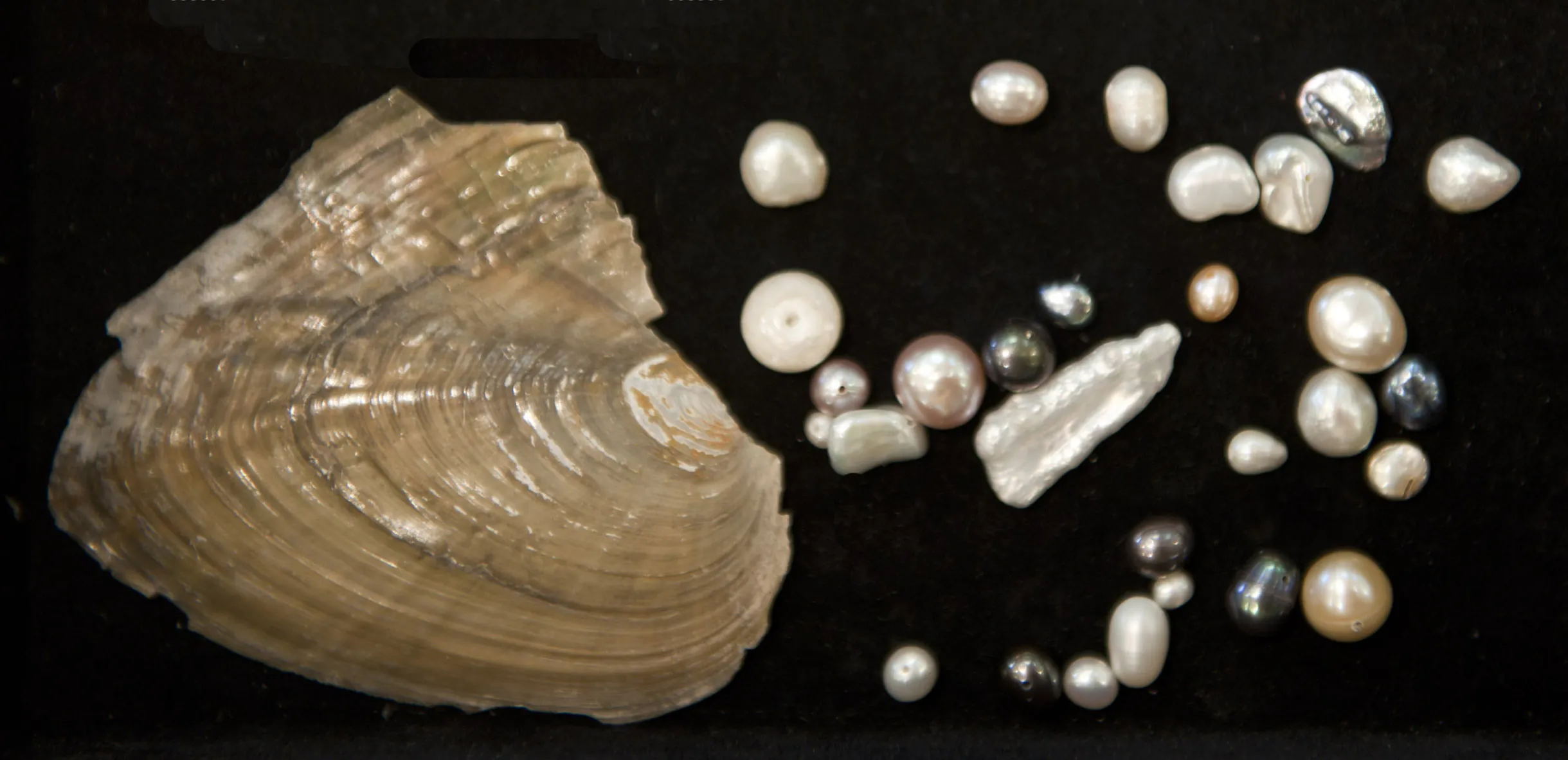
Blue Akoya is the broad category; Aurora Madama is a much narrower designation within it. A blue Akoya pearl is an Akoya pearl with a blue, silver-blue, gray-blue, or related cool appearance. Aurora Madama, by contrast, is a special designation used by Japan’s Pearl Science Laboratory (PSL) for qualifying blue-series Akoya pearls in its highest-quality category.
So the difference is not simply “ordinary blue” versus “better blue.” The two terms answer different questions. Blue Akoya tells you what the pearl looks like. Madama tells you that a particular blue-series Akoya has met a defined certification standard.
Akoya Madama vs Blue Akoya at a Glance
| Point of Comparison | Blue Akoya | Aurora Madama |
|---|---|---|
| What the term means | A broad description of Akoya pearls with blue, gray-blue, silver-blue, or related cool coloration | A specific PSL special designation for qualifying blue-series Akoya pearls |
| Separate pearl species? | No. It is still Akoya | No. It is still Akoya |
| Natural color automatically proven? | No. The phrase “blue Akoya” alone does not establish treatment status | The designation is associated with the natural, non-artificially treated blue-series category described by PSL |
| Quality threshold | None inherent in the color name | Must fall within PSL’s highest-quality category |
| Laboratory designation required? | No | Yes, if the item is being represented specifically as Aurora Madama |
| Does darker blue mean better? | No | No. Madama is not awarded simply for stronger blue saturation |
| Size terminology | Blue Akoya can occur in different Akoya sizes | PSL uses Aurora Saiundama for its highest-quality blue-series Akoya below 6 mm |
Blue Akoya Describes a Color Family, Not a Grade
Akoya pearls are famous for white bodycolor and sharp luster, but blue Akoya pearls also occur naturally. GIA notes that some Akoya pearls naturally show a rare blue bodycolor and often appear silvery gray with cool overtones.
That color can range from pale silver-blue to gray-blue, steel blue, blue-green, or a cooler gray that shifts noticeably under different lighting. The phrase blue Akoya is therefore mainly descriptive. It does not automatically tell you how clean the surface is, how strong the luster is, how well matched a strand is, or whether a laboratory has graded the pearls.
It also does not, by itself, prove that the blue appearance is natural. GIA has documented irradiated and dyed Akoya pearls with gray, bluish, and greenish appearances. If color origin matters to the purchase, “blue Akoya” should be followed by a second question: natural color or treated color?
For the broader background on the pearl type itself, see our Akoya pearl guide.
Madama Adds a Certification and Quality Boundary
PSL currently lists Aurora Madama among its special names for the highest-quality Akoya series and identifies it specifically with blue-series Akoya pearls. PSL also explains that its highest-quality mark is issued when all five evaluated quality components fall within the laboratory’s highest evaluation range.
That makes Madama fundamentally different from a color nickname. A pearl does not become Madama because it photographs blue, because a seller thinks it looks exceptional, or because it resembles another certified strand.
For a fuller explanation of the designation itself, including how it differs from Hanadama and other PSL terms, see what Akoya Madama pearls are.
The Most Important Difference Is Scope
A useful way to picture the relationship is:
Akoya pearls → blue-series Akoya pearls → qualifying highest-quality blue-series Akoya → Aurora Madama
This means Madama is a subset, not a competing pearl type.
A natural blue Akoya can be genuine, attractive, strongly lustrous, and valuable without being Madama. It may not meet every required quality criterion, or it may simply not have been submitted for the relevant certification. In either case, the absence of a Madama designation does not automatically make the pearl poor quality. It only means the Madama claim should not be assumed.
Conversely, a seller should not use “Madama” as shorthand for any attractive silver-blue Akoya. When the special name is part of the price premium, the exact report matters.
Natural Blue and Madama Are Not the Same Claim
This is where many listings become confusing.
Natural blue Akoya is a claim about color origin. It says the blue or gray-blue appearance is naturally associated with the pearl rather than created by a color-changing treatment.
Aurora Madama goes further. It combines the blue-series category with PSL’s highest-quality designation and its specific treatment-related concept. PSL’s own explanation of Madama connects the name with blue-series pearls that have not received artificial treatment after harvest.
So a natural blue Akoya is not automatically Madama. Natural color answers only one part of the question. Overall quality and the actual certification designation still matter.
If you want to understand why visual color alone can be misleading, our guide to pearl color enhancement treatments explains common treatment concepts in more detail.
Madama Does Not Mean “The Bluest Akoya”
One of the easiest mistakes is to compare two strands and assume the darker or more saturated one must be the Madama.
That is not how the designation works. Blue-series Akoya can vary from subtle silver-gray to stronger blue-gray, and lighting can change how cool or vivid a strand appears. A certified Madama strand may look relatively silver in one photograph, while a non-Madama or treated strand may look dramatically blue.
Color also cannot replace the other quality factors. Strong luster, suitable nacre quality, surface condition, shape, and matching all influence how fine an Akoya strand appears. If you are comparing pearls by overall quality rather than by certificate name alone, our pearl grading guide is a better framework than simply ranking them from lightest to darkest blue.
The 6 mm Rule Changes the Name
Size creates another practical difference that buyers often miss.
PSL’s published grading system lists Aurora Saiundama as the highest-quality special designation for blue-series Akoya pearls below 6 mm. PSL’s own explanation of Saiundama states that the name was created because Aurora Madama applies to the 6 mm-and-above category under the current convention.
In other words, an exceptional 4 mm or 5 mm natural blue Akoya should not simply be described as a “small Madama” if the seller is referring to PSL terminology. The relevant highest-quality designation is different.
What About Aurora Blue Rose?
Blue Rose is another reason not to treat every blue Akoya certificate as the same thing.
PSL currently places Aurora Blue Rose in its strongest-luster series for blue-series Akoya, while Aurora Madama is in the highest-quality series. Those are related but different evaluation concepts.
Therefore, Blue Rose should not be described casually as “another name for Madama” or as a universal grade immediately above or below it. The safest approach is to reproduce the exact designation shown on the report.
Does Madama Certification Automatically Make a Strand More Beautiful?
Not necessarily for every buyer.
Certification answers a technical quality question; personal preference answers an aesthetic one. One buyer may prefer a pale silver-blue Madama strand with extremely crisp luster, while another may prefer a more irregular natural blue Akoya strand with stronger orient or a more unusual color.
This distinction matters because a certificate should not replace looking at the actual pearls. Even within a high-quality category, strands can differ in overtone, color balance, matching, and visual character.
When comparing two purchases, separate the decision into two parts:
- Verify what the seller is claiming. Is it simply blue Akoya, natural blue Akoya, or specifically Aurora Madama?
- Decide which pearls you actually prefer. Compare luster, surface, color, matching, size, and overall appearance.
If a certificate is central to the price, our pearl grading certificate guide explains how to read grading documents without treating the certificate as a substitute for the pearl itself.
How to Compare a Madama Listing with a Blue Akoya Listing
If two products look similar online but one is labeled Madama and the other only blue Akoya, compare them in this order:
- Confirm both are actually Akoya pearls.
- Check whether the blue color is stated as natural or treated. Do not infer this from photographs.
- For the Madama item, ask for the exact PSL designation and report details.
- Match the certificate to the exact strand or pair. Check size, quantity, report number, photographs, and identifying information.
- Compare quality separately. Look at luster, surface, nacre, roundness, matching, and visible defects.
- Compare the actual appearance you prefer. A certificate does not tell you whether you will prefer silver-blue, gray-blue, stronger green overtone, or a softer neutral tone.
- Compare the premium. Ask whether the higher price is paying for objectively better pearls, certification, rarity, or simply a stronger marketing label.
For a deeper look at the factors that can change the price of this color family, see our guide to blue Akoya value factors and key risks.
The Difference in One Sentence
Blue Akoya describes a broad Akoya color category; Aurora Madama identifies a certified highest-quality subset of blue-series Akoya under PSL’s system.
If you remember that distinction, most of the confusing terminology becomes easier to sort out. “Blue,” “natural blue,” and “Madama” are not three ways of saying the same thing: one describes appearance, one describes color origin, and one describes a specific certification status.
FAQ
Are Madama pearls a different type of pearl from blue Akoya?
No. Madama pearls are Akoya pearls. Aurora Madama is a special designation within the blue-series Akoya category, not a separate pearl species.
Can a natural blue Akoya be higher quality than a certified Madama?
A non-certified natural blue Akoya can certainly be very fine, but without the relevant certification you should not describe it as Aurora Madama. When comparing actual beauty or value, judge the individual pearls rather than assuming the label alone settles every comparison.
Can a treated blue Akoya look like Madama?
It can overlap visually. GIA has documented irradiated and dyed Akoya pearls with gray, bluish, and greenish appearances. This is why appearance alone cannot establish natural-color Madama status.
Is a darker blue Madama pearl better?
Not automatically. Madama is not defined by maximum blue saturation. Luster, nacre, surface, shape, matching, and the laboratory designation matter alongside color.
What is the Madama equivalent for blue Akoya under 6 mm?
Under PSL’s current terminology, the highest-quality designation for blue-series Akoya below 6 mm is Aurora Saiundama.