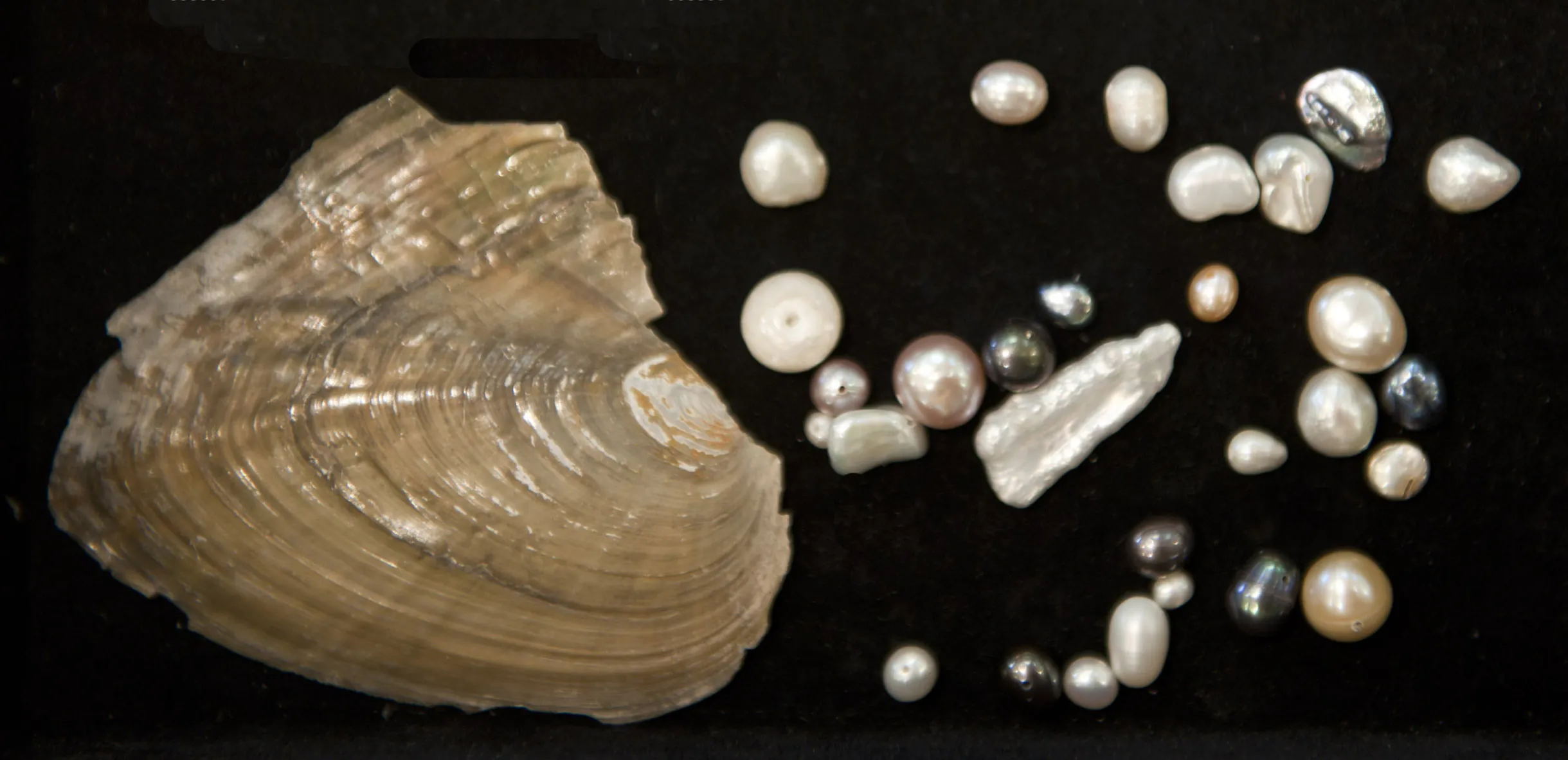
Most freshwater cultured pearls sold in the modern jewelry market are produced in China. China has dominated large-scale freshwater pearl cultivation for decades and now supports not only pearl farms, but also mussel breeding, processing, sorting, drilling, matching, jewelry production, and wholesale trade.
But “made in China” is only the first layer of the answer. Freshwater pearl farming is spread across several Chinese provinces, while places such as Zhuji in Zhejiang are especially important as processing and trading centers. Japan also has an important historical role and still produces small quantities of specialty freshwater pearls. Other countries have natural freshwater pearl histories or smaller-scale cultivation, but they do not approach China’s commercial volume.
Where do most freshwater pearls come from today?
For a buyer looking at ordinary commercial freshwater pearls, the answer is overwhelmingly China. The Gemological Institute of America (GIA) describes China as the world’s leading producer of freshwater cultured pearls by volume, industry scale, and supply-chain integration.
You will often see figures saying that China supplies around 95% or more of the world’s freshwater cultured pearls. The exact percentage varies by source, year, and how production is counted, so it is better to treat that number as an indication of dominance rather than a permanent fixed statistic.
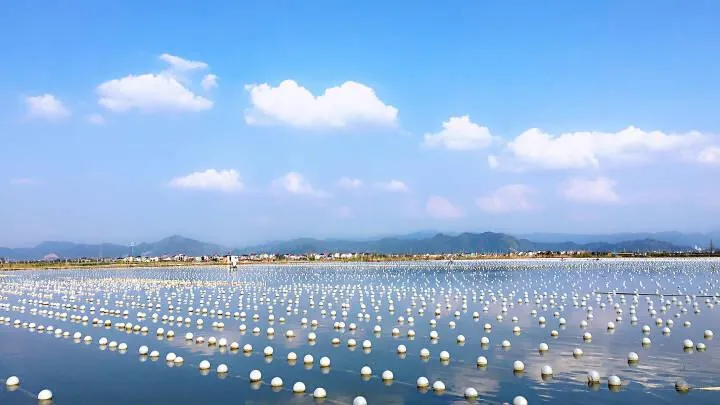
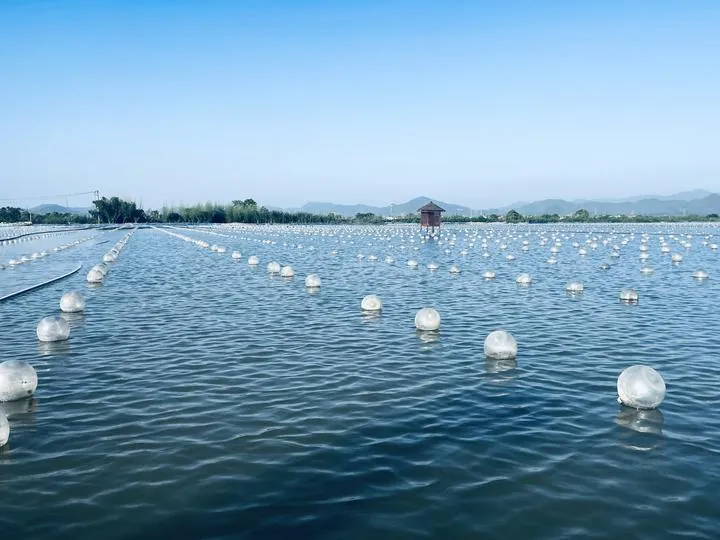
Freshwater cultured pearls are generally grown in freshwater mussels, not marine oysters. Farms may use purpose-built ponds or other controlled freshwater environments. This makes the production system quite different from Akoya, Tahitian, or South Sea pearl farming.
Which parts of China produce freshwater pearls?
China’s freshwater pearl industry developed mainly around the Yangtze River basin and other regions with suitable freshwater aquaculture conditions. Historically, six provinces became especially important:
- Jiangsu
- Zhejiang
- Anhui
- Jiangxi
- Hunan
- Hubei
Production geography is not static. Environmental regulation, water-use restrictions, changing farming practices, and the move toward more controlled aquaculture have shifted where pearls are actually cultivated. A 2026 GIA review notes that Zhejiang and Hubei lost much of their earlier production after stricter environmental measures, while Anhui and Jiangsu became leading producers during the restructuring. By 2024, cultivation had spread across ten Chinese provinces.
This matters because a pearl may pass through several places before reaching the buyer. Mussel spat may be bred in one area, the pearl may be cultured in another province, and the harvested pearls may then be transported to a major market for sorting, processing, drilling, matching, and sale.
So when someone says a pearl is “from Zhuji,” that can refer to the commercial supply chain as much as the exact pond where the mussel was raised.
Why is Zhuji so closely associated with freshwater pearls?
Zhuji, especially Shanxiahu in Zhejiang Province, is one of the best-known centers of the global freshwater pearl trade. It has an unusually complete industry cluster: cultivation knowledge, processing, sorting, trading, design, e-commerce, and wholesale distribution are all concentrated there.
That does not mean every freshwater pearl sold in Zhuji was cultured inside Zhuji itself. In practice, harvested pearls can arrive from farms in several provinces and then enter the Zhuji market because that is where buyers, processors, manufacturers, and traders are concentrated.
This distinction between production origin and trading hub is easy to miss. It also explains why reports about “how much Zhuji produces” can look inconsistent: some statistics refer to local cultivation, while others refer to pearls processed, traded, or distributed through the Zhuji industry.
Are freshwater pearls still produced in Japan?
Yes, but on a much smaller scale than in China.
Japan has a major place in freshwater pearl history. Lake Biwa in Shiga Prefecture became famous for cultured freshwater pearls during the twentieth century. Production later declined sharply because of environmental problems, changes in mussel populations, and other pressures.
Freshwater pearl cultivation also developed at Lake Kasumigaura in Ibaraki Prefecture. GIA has documented large nucleated cultured freshwater pearls from this area, but the output is small compared with China’s industrial-scale production. Today, Japanese freshwater pearls are better understood as a limited specialty source rather than a major contributor to global supply.
This is also why the word Biwa should not be used casually as a generic name for any elongated freshwater pearl. Genuine Biwa provenance refers to freshwater cultured pearls from the Japanese lake region, not simply to a shape.
What about the United States and other countries?
Freshwater pearls can occur naturally in rivers and lakes in many parts of the world, and several countries have histories of collecting them. That is different from supplying today’s mass market with cultured freshwater pearls.
There have also been freshwater pearl cultivation projects outside China and Japan. Bangladesh, for example, has developed freshwater pearl culture research and pilot activity using local mussel species. Similar small-scale or experimental work exists elsewhere.
For an ordinary jewelry buyer, however, these sources represent only a tiny share of what is encountered commercially. If you see a modern strand of freshwater cultured pearls in a jewelry store, there is a strong probability that its pearls were cultured in China unless the seller provides a specific alternative origin.
Why did China become the main freshwater pearl producer?
China’s position is not the result of one single advantage. It comes from an entire production system that has developed over decades.
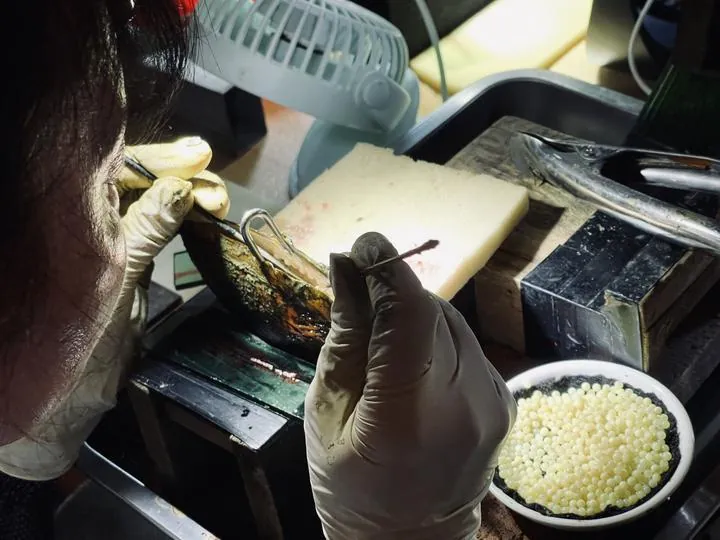
Suitable freshwater aquaculture areas allowed large-scale mussel farming. Breeding programs improved the availability of pearl-producing mussels. Farmers refined both tissue-nucleated and bead-nucleated freshwater pearl techniques. Processing centers became increasingly specialized in cleaning, sorting, drilling, matching, and treatment. Large trading markets then connected this production base with domestic and international buyers.
The result is a supply chain capable of producing an unusually wide range of freshwater pearls—from inexpensive small baroque pearls to large, round, high-luster bead-nucleated pearls.
This is one reason older assumptions about Chinese freshwater pearls can be misleading. “Chinese freshwater pearl” does not describe one uniform quality level.
Does country of origin determine freshwater pearl quality?
No. Origin gives useful background, but it does not tell you whether an individual pearl is good.
Within China alone, freshwater pearls can vary enormously in luster, surface condition, shape, size, color, matching, and internal structure. Two strands from the same producing region may look completely different in quality. Conversely, a fine Chinese freshwater pearl can be much more attractive than a poorly selected pearl carrying a more exotic geographic story.
When evaluating a pearl, it is more useful to look at visible quality factors first. Our Pearl Grading Guide explains how luster, surface, shape, color, size, and matching work together. If you want to understand why geographic origin still matters without treating it as a quality grade, see Why Pearl Origin Matters.
What should a buyer ask instead of only asking “Where is it from?”
Origin is useful, but it should lead to better questions rather than end the evaluation. For freshwater pearls, ask:
- Is the pearl tissue-nucleated or bead-nucleated?
- Is the color natural or treated?
- How strong and sharp is the luster?
- How clean is the surface at normal viewing distance?
- Is the stated shape accurate from more than one angle?
- How well are pearls matched in a pair or strand?
- Is the seller using a meaningful grading standard, or only a grade label?
If you are comparing pearls for a purchase, the Pearl Buying Guide gives a broader framework. For makers, designers, or buyers sourcing loose pearls and strands, our Wholesale Pearls section shows the range of freshwater and saltwater materials we handle.
Freshwater pearl production at a glance
| Region | Role today | What to know |
|---|---|---|
| China | Dominant global producer | Supplies the overwhelming majority of commercial freshwater cultured pearls. |
| Jiangsu, Zhejiang, Anhui, Jiangxi, Hunan and other Chinese provinces | Important cultivation regions | Actual farming locations have shifted over time with environmental policy and aquaculture changes. |
| Zhuji / Shanxiahu, Zhejiang | Major processing and trading hub | Not every pearl traded there was necessarily cultured locally. |
| Japan | Historic and limited specialty production | Lake Biwa is historically important; Lake Kasumigaura has produced small quantities of modern cultured freshwater pearls. |
| Other countries | Natural-pearl history, research, or small-scale cultivation | Commercial volumes are minor compared with China. |
FAQ
Where are most freshwater pearls produced?
Most freshwater cultured pearls in the modern jewelry market are produced in China. Exact market-share estimates vary, but China overwhelmingly dominates commercial supply.
Are all freshwater pearls from Zhuji?
No. Zhuji and Shanxiahu are major pearl-industry hubs, but freshwater pearls are cultivated across several Chinese provinces. Pearls grown elsewhere may be brought to Zhuji for processing, sorting, matching, and trade.
Does Japan still produce freshwater pearls?
Yes, in limited quantities. Japan is historically important because of Lake Biwa, and specialty freshwater pearl production has also taken place at Lake Kasumigaura. Its present scale is very small compared with China.
Are Chinese freshwater pearls low quality?
No. China produces an extremely broad quality range. Country of origin is not a grade. Fine Chinese freshwater pearls can show strong luster, clean surfaces, round shapes, large sizes, and excellent matching.
Are freshwater pearls found only in China?
No. Freshwater pearls can occur naturally in mollusks in many regions, and cultured freshwater pearl projects exist outside China. But China supplies the overwhelming majority of freshwater cultured pearls encountered in today’s jewelry market.
Conclusion
If you want the simplest answer, freshwater pearls are mainly produced in China. But the more useful answer is that China contains a network of farming regions, breeding centers, processing facilities, and trading hubs rather than one single “pearl city” doing everything.
Understanding that supply chain helps explain why a pearl’s stated origin is only part of its story. For buying or evaluating pearls, origin is useful context; luster, surface, shape, color, size, matching, treatment disclosure, and the reliability of the seller remain more important for judging the pearl in front of you.