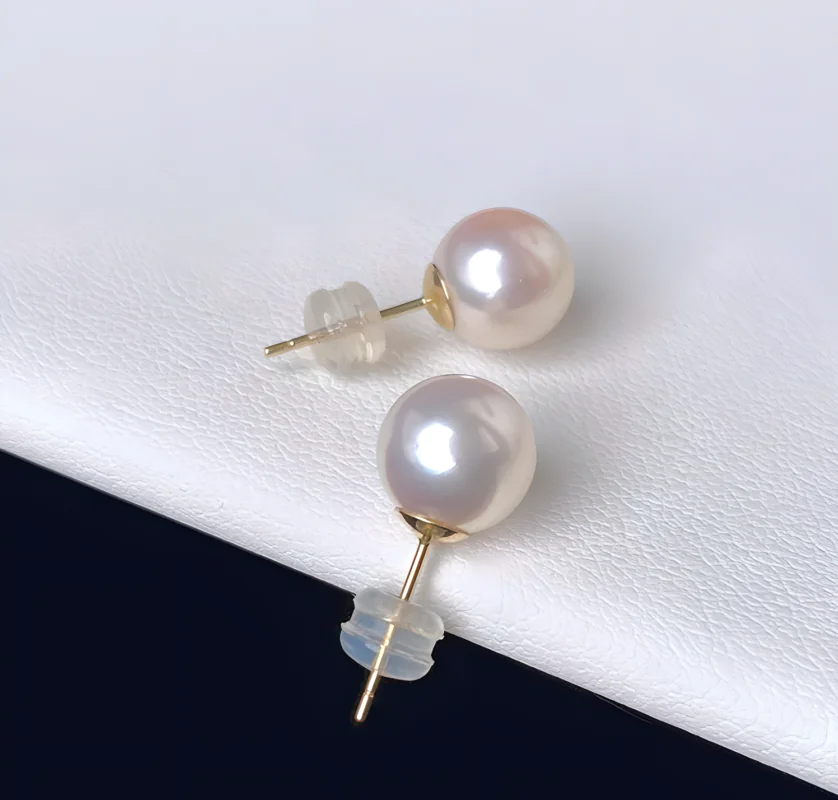
Laboratory testing is not necessary for every pearl purchase. It becomes most useful when a meaningful part of the price depends on a claim that you cannot reliably confirm from appearance, seller descriptions, or ordinary paperwork alone.
The simplest rule is this: the harder the claim is to verify and the more money depends on that claim, the stronger the case for independent laboratory testing.
What Can a Pearl Laboratory Actually Test?
A gemological laboratory does more than look at a pearl under magnification. Depending on the laboratory and the report ordered, testing may address questions such as:
- whether the specimen is a pearl rather than an imitation;
- whether a pearl is natural or cultured;
- whether a cultured pearl is bead-nucleated or beadless, when determinable;
- whether it formed in a saltwater or freshwater environment;
- the mollusk type or species, when the laboratory can determine it;
- whether detectable treatments or artificial color modifications are present;
- and, for some report types, visible quality factors such as luster, surface, nacre, and matching.
Laboratories may combine visual examination with methods such as X-radiography, microscopy, spectroscopy, fluorescence analysis, and other instruments. GIA, for example, states that digital X-radiography is central to examining a pearl's internal structure when distinguishing natural from cultured pearls.
That matters because some of the most important pearl-buying questions are internal or technical questions. They may not be answerable by photographs, touch tests, drill-hole inspection, or even an experienced visual examination alone.
If your concern is simply whether a low- or moderate-priced item appears to be a genuine cultured pearl rather than an imitation, start with our guide on how to tell if pearls are real or fake. Laboratory testing is the next step when the claim itself is too important to leave to visual clues.
Laboratory Testing Is Strongly Recommended When “Natural” Is a Major Part of the Value
This is one of the clearest cases.
Natural pearls and cultured pearls are both real pearls, but they form differently and can occupy very different market positions. A seller may describe an antique necklace, loose pearl, or estate jewel as “natural,” yet age, irregular shape, surface texture, or an old-fashioned mounting does not prove natural origin.
If a pearl is priced at a premium specifically because it is claimed to be natural, independent identification should normally be treated as part of the purchase decision rather than as an optional extra.
This is especially important for:
- valuable antique or estate pearl jewelry;
- auction purchases;
- loose pearls represented as rare natural specimens;
- historic strands whose value changes substantially depending on natural-versus-cultured status;
- and private transactions where the seller's documentation is limited.
A good report can address pearl identity. It does not automatically authenticate the historical story attached to the jewel. A laboratory may determine that the pearls are natural, but that does not prove who owned the necklace, which estate it came from, or whether a claimed nineteenth-century provenance is genuine.
Testing Is Recommended When Natural Color or Treatment Status Affects the Price
Color can carry a significant premium in pearls, especially when a seller is making a specific claim about natural color or the absence of treatment.
Pearls may be dyed, irradiated, bleached, optically brightened, or subjected to other post-harvest processes. Some treatments are easy to suspect visually; others are much harder to establish confidently without laboratory equipment. Modern treatment detection can involve spectroscopy and fluorescence techniques in addition to routine gemological examination.
Laboratory testing becomes more valuable when:
- an unusual color is a major reason for the price;
- a seller claims the color is natural and untreated;
- the pearl is unusually expensive for its type;
- the appearance is inconsistent with what you would normally expect from that pearl category;
- or the treatment history is unknown.
It is important to read report language carefully. Reputable laboratories commonly refer to detectable treatments, which is more precise than claiming that a pearl has never undergone any process whatsoever. For a broader explanation of common post-harvest methods, see our guide to pearl treatments and enhancements.
Testing Makes Sense for High-Value Purchases Where Independent Documentation Matters
Even when you already believe the seller's description, an independent laboratory report can be useful when the transaction value is high enough that third-party documentation has practical value.
This may apply when a pearl or pearl jewel is being purchased for:
- a major collection;
- insurance documentation;
- future resale or auction consignment;
- inheritance or estate planning;
- or a transaction between parties who want an independent record of what was sold.
The relevant question is not simply, “Is this expensive?” It is, “Would independent identification materially reduce a risk that matters later?”
A laboratory report should still not be confused with an appraisal. Identification tells you what the pearl is within the scope of the report; an appraisal addresses value for a specific purpose. Likewise, a laboratory report does not tell you whether the asking price is fair. You still need to judge luster, surface, size, matching, design, condition, market demand, and overall desirability.
Estate, Antique, and Auction Pearls Deserve Extra Caution
Older jewelry creates a common reasoning trap: buyers assume that because the setting is old, the pearls must also be rare natural pearls. That conclusion is unsafe.
Cultured pearls have been commercially important for more than a century, and jewelry can also be restrung, repaired, replaced, or assembled from components of different ages. A vintage clasp and old thread do not establish the identity of every pearl on a strand.
For an expensive estate or auction piece, laboratory testing is particularly useful when the catalog description contains claims such as “natural pearl,” “untreated,” or another technical statement that materially influences the estimate.
For multi-pearl pieces, also check the scope of testing. Was every pearl examined? Was only a sample tested? Does the report describe a mixture? A report covering a strand should be read as carefully as a report covering a single loose pearl.
Online or Private Purchases May Justify Testing When Inspection Is Limited
Buying remotely does not automatically mean you need a laboratory report. Many ordinary cultured-pearl purchases can be made safely from a transparent seller with clear specifications, close-up images, videos, return rights, and consistent disclosure.
But independent testing becomes more useful when all three of the following are true:
- you cannot inspect the pearl in person;
- the purchase is financially significant;
- and the price depends on a technical claim that photographs cannot verify.
In that situation, the safest arrangement is often to obtain the laboratory report before the sale becomes final, or to make the purchase subject to an inspection or return period long enough for verification.
If a report already exists, verify the report number through the issuing laboratory when that service is available, and compare the report photograph, dimensions, quantity, and other identifying details with the actual item. A real report belonging to a different pearl is not useful evidence.
When Laboratory Testing Is Usually Not Necessary
Most buyers do not need to send every cultured pearl to a laboratory.
Testing is often unnecessary when you are buying a clearly disclosed, ordinary cultured-pearl product from a reputable seller and:
- the price is proportionate to the item;
- there is no unusual natural-pearl claim;
- there is no important untreated-color claim;
- the seller provides accurate size, type, and treatment information;
- you can inspect the item or have reasonable return rights;
- and the cost and delay of testing would be disproportionate to the purchase.
For example, a normal freshwater cultured pearl bracelet or a standard Akoya cultured pearl necklace does not automatically need an independent lab report simply because it contains real pearls.
In these cases, your buying decision should focus more on visible quality and suitability: luster, surface condition, shape, size, matching, workmanship, and price. Our pearl buying guide explains these practical checks in more detail.
Choose the Report That Answers Your Actual Question
“Laboratory certificate” is too broad a phrase. Different reports answer different questions.
An identification report may address whether a pearl is natural or cultured, its formation environment, and detectable treatments. A classification or grading report may focus more heavily on visible quality factors. Some classification services are intended for pearls already known to be cultured and may not include full identification or treatment testing.
Before paying for a report, write down the question you actually need answered:
- Is it natural or cultured?
- Is the color natural or modified?
- Are detectable treatments present?
- Is it saltwater or freshwater?
- Do I need an independent quality classification?
- Do I need documentation for insurance, resale, or an auction?
Then choose a laboratory and report type that explicitly covers that question. Our pearl grading certificate guide explains what different documents can and cannot prove, while seller grading versus laboratory grading explains why a seller's AAA label and an independent gemological report are not the same thing.
A Practical Decision Rule Before You Buy
Ask these four questions:
- What claim is increasing the price? Natural origin? Untreated color? Rare type? Exceptional quality?
- Can that claim be verified reasonably without a laboratory? If the answer depends on internal structure or advanced treatment detection, ordinary inspection may not be enough.
- How much money or future value depends on being right? The larger the financial consequence of a wrong description, the more useful independent testing becomes.
- Will the report actually answer that question? Read the report scope before assuming that any “certificate” is sufficient.
If the answer is “the claim is difficult to verify, financially important, and covered by a reputable laboratory's testing,” laboratory examination is usually a sensible part of the purchase.
What Laboratory Testing Cannot Tell You
Even an excellent laboratory report has limits. It should not be treated as a substitute for the entire buying process.
A pearl report generally cannot tell you:
- whether the asking price is fair;
- whether you personally prefer the pearl's luster, color, or shape;
- whether the jewelry design is well made;
- whether a seller's historical provenance story is genuine;
- the exact farm or geographic source unless the laboratory specifically supports such a conclusion;
- or whether the pearl will remain in the same condition after future wear, storage, repair, or chemical exposure.
Laboratory testing is best understood as a tool for reducing a specific kind of uncertainty. It is most valuable when that uncertainty concerns pearl identity, formation, or detectable treatment—not when the real question is taste, price negotiation, or jewelry condition.
Bottom Line
You do not need laboratory testing simply because you are buying real pearls. You need it when an important part of the purchase depends on a technical claim that cannot be established confidently by ordinary inspection.
For routine cultured pearls from a transparent seller, clear disclosure and normal quality evaluation are often enough. For natural-pearl claims, valuable estate pieces, unusual colors, treatment-sensitive purchases, or high-value transactions where independent documentation matters, a reputable gemological laboratory can provide evidence that visual inspection cannot.
Think of the report as a way to answer a defined question—not as a universal stamp saying that a pearl is “good,” “valuable,” or worth whatever price is being asked.
Frequently Asked Questions
Do expensive pearls always need laboratory testing?
No. Price alone is not the deciding factor. Testing is most useful when the price depends on a claim—such as natural origin or untreated color—that is difficult to verify without laboratory methods.
Can a laboratory tell whether a pearl is natural or cultured?
Reputable gemological laboratories can usually distinguish natural from cultured pearls using methods that include X-radiography and other gemological testing. Difficult cases may require additional analysis.
Can laboratory testing detect dyed pearls?
Laboratories can detect many color treatments using visual, spectroscopic, fluorescence, and other analytical methods. Reports should be read according to their exact wording and scope, because laboratories generally report treatments they can detect with the methods used.
Does a pearl laboratory report tell me what the pearl is worth?
Not necessarily. Identification and classification reports describe tested characteristics; they are not automatically market-value appraisals. Price still depends on quality, rarity, condition, design, market demand, and the transaction itself.
Should testing be done before or after buying?
When the result could change your decision or the price, testing is best completed before the sale is final. If that is not possible, use a written inspection or return period that allows enough time for independent verification.