A pearl is not ready for a necklace the moment it comes out of the mollusk. Harvest day is the beginning of another careful stage: removal, cleaning, screening, sorting, grading, and deciding what each pearl is actually suitable for.
If you have only seen finished pearl jewelry, harvest can look like the final step: open the shell, find a pearl, and the job is done. In practice, a fresh harvest is a mixed biological batch. Pearls from the same farm—and even from the same group of mollusks—can differ sharply in size, shape, color, luster, surface condition, and commercial usefulness.
The first hours and days after harvest are therefore less about making pearls look “finished” and more about turning an unpredictable harvest into groups that can be evaluated consistently.
One terminology note before we begin: marine cultured pearls are commonly grown in pearl oysters, while freshwater cultured pearls are grown in mussels. Both are bivalve mollusks, so this article uses mollusk when discussing the process in general.
The post-harvest sequence at a glance
- The mollusk is opened and the pearl is removed.
- The pearl is cleaned so its actual surface can be inspected.
- An initial screening separates obviously damaged or low-utility material.
- The harvest is sorted into comparable groups, often by size, shape, color, and appearance.
- Those groups are graded more carefully for quality factors such as luster and surface condition.
- Pearls are then matched or directed toward later processing, wholesale lots, or jewelry production.
This sequence is not universal. Different pearl types, farms, processors, and markets may change the order or repeat certain steps. The important idea is that harvest, sorting, grading, and later processing are separate decisions.
Step 1: Opening the mollusk and removing the pearl
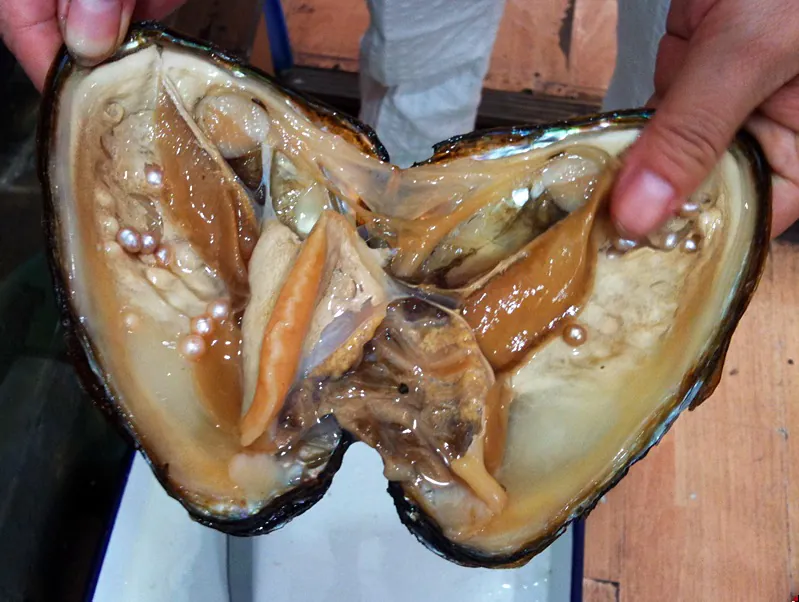
At harvest, the mollusk is opened so the pearl can be recovered from the tissue or pearl sac in which it formed. For bead-nucleated saltwater pearls, removal can be delicate because a healthy, productive oyster may sometimes be used for another culture cycle. In such cases, the existing pearl sac can make re-nucleation possible with another bead nucleus.
That does not mean every oyster is automatically returned to the water. Whether re-nucleation is practical depends on pearl type, farm method, oyster health, harvest quality, and the producer's operating system. Freshwater mussel harvesting also follows different biological and commercial practices from marine bead-cultured production.
An older but still useful FAO technical manual on pearl culture describes manual harvesting by opening the shell and carefully removing the pearl, while also noting that oysters intended for reuse require less damaging extraction. The exact method has evolved across modern farms, but the principle remains: harvesting is a biological operation, not simply opening a jewelry box.
If you want the earlier part of the story—how a pearl develops before harvest—see our guide to pearl formation.
Step 2: Cleaning reveals the pearl you actually harvested
A newly removed pearl may carry mucus, tissue residue, mineral deposits, or other surface material from the mollusk and harvesting environment. That residue can interfere with visual inspection, so the first practical job is cleaning.
The method varies. Some farms and processors use water and gentle mechanical cleaning; some traditional workflows use salt or other controlled cleaning methods. What matters is that the pearl's nacre is not treated as if it were a hard, inert stone. Aggressive abrasion or poorly controlled chemicals can damage the surface.
Cleaning is also not automatically the same thing as treatment. Cleaning removes harvest residue so the existing surface can be seen. Bleaching, dyeing, irradiation, coating, and other appearance-changing processes belong to a different discussion. For the full downstream sequence—including optional enhancement, drilling, polishing, and preparation for sale—see our pearl processing workflow.
Step 3: The first screening removes obvious problems
Before a worker spends time making fine quality distinctions, the mixed harvest usually needs a broad first pass. Pearls with severe structural damage, extremely poor surfaces, broken areas, or other major problems may be separated from material suitable for normal commercial use.
This is better understood as screening than final grading. The goal is efficiency: do not compare a severely damaged pearl with a clean, high-luster pearl as if they belong in the same quality conversation.
There is also an important market nuance. An irregular pearl is not necessarily a reject. A strongly baroque pearl with good luster and an attractive shape may be commercially desirable, while a poorly formed pearl with weak luster and serious surface problems may have little jewelry use. Shape alone does not decide quality.
Step 4: Sorting creates comparable groups
This is where many explanations become too vague. Sorting is not the same as grading. Sorting is the process of dividing a mixed harvest into groups whose members are similar enough to compare meaningfully.
A large batch may first be sorted by factors such as:
- size — often into millimeter ranges;
- shape — round, near-round, button, drop, oval, baroque, circled, or other families;
- bodycolor — broad color families before finer matching;
- luster range — separating obviously bright pearls from duller material;
- surface condition — broadly cleaner versus more heavily marked pearls;
- intended use — for example, strand material, pairs, focal pearls, loose lots, or lower-grade applications.
Some modern operations use mechanical or optical equipment to help sort measurable characteristics such as size or color. Human judgment still matters, especially once the differences become subtle and several visual factors have to be considered together.
Why sort first? Imagine trying to grade a 6 mm near-round freshwater pearl, a 12 mm baroque freshwater pearl, and a 10 mm Tahitian pearl on one simple “good-to-bad” line. They are different products. A useful grade only makes sense after the pearls have been placed in a relevant comparison group.
For a closer look at the shape categories used when pearls are separated and sold, see the pearl shape guide.
Step 5: Grading asks a different question—how good is this pearl within its group?
Once comparable pearls have been grouped together, grading becomes more meaningful. Now the question is not merely “What type of pearl is this?” but “How does its quality compare with other pearls of the same relevant type and range?”
The Gemological Institute of America describes pearl quality through its seven pearl value factors:
- size,
- shape,
- color,
- luster,
- surface,
- nacre, and
- matching.
At the loose-pearl stage, matching is not yet a quality characteristic of a single pearl. It becomes important when pearls are assembled into pairs, strands, or multi-pearl jewelry. That is why post-harvest grading and final jewelry matching are related, but not identical, jobs.
Luster
Graders look at the strength and sharpness of reflected light. Strong luster can make a pearl look lively and three-dimensional; weak luster can make the surface appear dull or chalky. Luster is one reason two pearls of the same size and general shape can have very different commercial value.
Surface
Most cultured pearls show some surface characteristics. Grading considers how many are visible, how severe they are, where they occur, and whether they affect appearance or durability. A small mark near a future drill hole is not always equivalent to a prominent defect on the face of a pearl.
Shape
Shape is both a classification factor and a value factor. Perfect roundness can be rare and valuable in categories where round pearls are the goal, but high-quality baroque pearls are judged on different visual expectations. This is another reason grading only works well after sorting.
Color
Graders consider bodycolor and, where relevant, overtone and orient. Desirability is not simply “whiter is better” or “darker is better.” Natural color ranges differ among Akoya, Tahitian, South Sea, and freshwater pearls, and market preferences vary.
Nacre
Nacre quality influences appearance and can affect durability. The way nacre is assessed also depends on the pearl type and production method. It should not be reduced to one universal thickness number for every cultured pearl.
Our pearl grading guide goes deeper into how these quality factors interact when buyers compare pearls.
Why there is no universal “AAA” pearl grade
After grading, many sellers simplify their quality groups into labels such as A, AA, AAA, or AAAA. Those labels are convenient, but they are not one worldwide grading language.
The CIBJO Pearl Commission has explicitly discussed why pearl classification and grading differ across pearl sectors, origins, and trading systems. Different parts of the industry have developed different methods because pearl types and market needs are not identical.
So a grade label should be treated as a seller's shorthand, not as a substitute for the underlying factors. If two companies both sell “AAA” pearls, the letters alone do not prove the pearls were selected to the same standard.
For a buyer, the more useful questions are:
- How strong is the luster?
- How clean is the visible surface?
- How consistent is the shape?
- What size range is actually supplied?
- How are color and matching handled?
- Does the seller explain what its grade means?
Sorting may happen several times, not just once
A harvest is rarely sorted once and then left untouched. The groups can be refined as the pearls move toward a specific product.
For example, a processor may first separate a batch by size and broad shape, then divide it again by luster and surface quality. Later, when making a strand, the same pearls may be re-sorted for finer color harmony and visual progression. For earrings, the task changes again: the goal is to find two pearls that look like a deliberate pair.
This repeated selection is one reason a matched strand can require far more labor than its pearl count suggests. The work is not only finding “good pearls.” It is finding pearls that are good together.
What happens after sorting and grading?
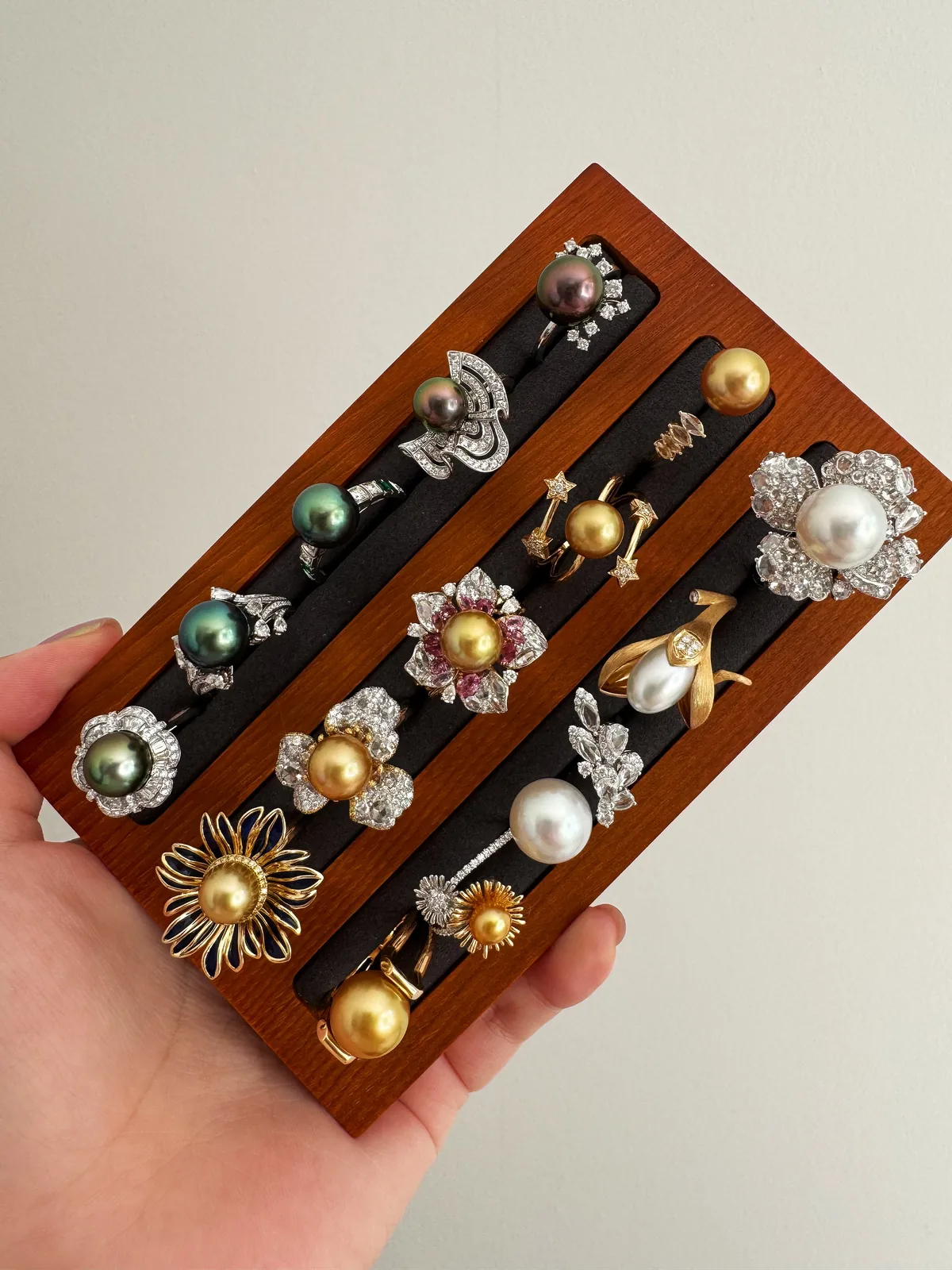
Once the first commercial sorting and grading are complete, pearls can take different paths. Some are sold as loose pearls or wholesale lots. Some are reserved for matched strands or pairs. Some go to drilling and jewelry manufacturing. Others may receive additional processing or appearance-related treatment depending on pearl type, market, and disclosure requirements.
For makers, designers, and buyers sourcing material, this is the point where a mixed farm harvest begins to become a usable inventory. If you are comparing lots for production rather than finished jewelry, browse our wholesale pearls by pearl type, shape, and intended use.
The main takeaway: harvest reveals the pearl, but sorting creates the product
Opening the mollusk reveals what nature and cultivation produced. It does not yet produce a consistent commercial lot.
The post-harvest work is what turns thousands of individual biological outcomes into something buyers can understand: clean pearls, comparable groups, quality grades, matched sets, and clearly defined uses.
The most useful distinction to remember is simple: sorting tells you which pearls belong together; grading tells you how those pearls compare in quality. Everything after that—matching, drilling, treatment, jewelry making, and final sale—builds on those first decisions.
FAQ
Are pearl oysters killed when pearls are harvested?
Not always. Practices vary by pearl type and farm. Some bead-cultured saltwater oysters that are healthy and have produced a desirable pearl may be carefully harvested and re-nucleated for another culture cycle. Other harvest systems are destructive, and freshwater mussel production follows different practices.
Are pearls washed immediately after harvest?
They are generally cleaned soon after removal so organic residue and surface material do not interfere with inspection. The exact cleaning method varies by producer and pearl type.
What is the difference between sorting and grading pearls?
Sorting divides a mixed harvest into comparable groups, such as similar sizes, shapes, or colors. Grading evaluates quality within those groups using factors such as luster, surface condition, nacre, and overall appearance.
Is AAA the highest universal pearl grade?
No. A, AA, AAA, and AAAA systems are commercial grading scales used by individual sellers or sectors of the trade. There is no single worldwide AAA standard, so buyers should look at the actual quality criteria behind the label.
Do pearls go straight from harvest to jewelry?
Usually not. After harvesting, pearls are cleaned, screened, sorted, and graded. Depending on their intended use, they may then be matched, drilled, processed, strung, set into jewelry, or sold as loose or wholesale material.