A Complete Guide to Styling Pearls: Age, Skin Tone, Occasion, and Clothing
There is no single age, skin tone, or dress code that determines who can wear pearls. The most useful way to style them is to think about the effect you want: subtle or noticeable, classic or modern, harmonious or contrasting. Pearl color, size, shape, jewelry form, clothing neckline, and occasion usually matter more than age alone.
Quick answer: how should you choose and style pearls?
If you are unsure where to begin, use these five decisions in order:
- Choose the mood: delicate, classic, modern, romantic, dramatic, or artistic.
- Choose the visual weight: smaller pearls disappear more easily into an outfit; larger pearls become a stronger focal point.
- Choose harmony or contrast: pearl color can blend with your skin and clothing or deliberately stand apart from them.
- Match the jewelry form to the occasion: studs and pendants are easy to dress down, while large drops and full strands usually create more presence.
- Check the clothing: neckline, fabric, color, and pattern can change the effect of the same pearl jewelry completely.
This is also why the same white pearl strand can look conservative with a tailored dress, relaxed with denim, or fashion-forward when layered with a metal chain. Pearls do not have a fixed dress code; the rest of the styling gives them one.
How to style pearls by age without turning age into a rule

One of the least useful pearl rules is that younger people should wear tiny pearls while older people should wear large ones. Age by itself does not determine what looks good. What often changes over time is lifestyle, wardrobe, confidence with jewelry, and the occasions for which the jewelry is being worn.
It is more useful to think in terms of life stage and styling goal.
| Situation | Easy pearl choices | Why they work |
|---|---|---|
| First pearl jewelry | Small-to-medium studs, a single pendant, slim bracelet | Easy to combine with an existing wardrobe and unlikely to feel overly formal. |
| Casual or fashion-focused wardrobe | Baroque pearls, mixed chains, asymmetrical earrings, pearl hoops | Irregular shapes and mixed materials make pearls feel less traditional. |
| Professional wardrobe | Medium studs, simple drops, short strand, single pendant | Creates polish without becoming the dominant feature of the outfit. |
| Milestone or formal dressing | Larger pearls, matched strand, prominent drops, South Sea or Tahitian pearls | Greater scale and visual presence suit outfits that can support stronger jewelry. |
| Minimalist wardrobe at any age | One high-luster stud, pendant, ring, or clean single strand | Keeps the pearl as one controlled focal point. |
A young wearer can look excellent in oversized baroque pearls. Someone decades older can look equally convincing in tiny pearl studs. The question is not “Am I old enough for this pearl?” but “Does this scale and design fit the way I dress?”
How to choose pearl colors for your skin tone
Skin undertone can be a useful starting point, but it should not become a restriction. There are two equally valid styling strategies: harmony, where the pearl echoes your natural coloring, and contrast, where the pearl intentionally stands out.
That distinction matters because advice such as “warm skin must wear golden pearls” is too rigid. A warm golden pearl may blend beautifully with warm skin, but a cool silver-white pearl can create a brighter, more dramatic contrast on the same person.
| Undertone | For a harmonious effect | For stronger contrast | Metal direction to try |
|---|---|---|---|
| Warm | Cream, ivory, champagne, peach, golden pearls | Silver-white, gray, or dark Tahitian pearls | Yellow gold or warm rose gold |
| Cool | Silver-white, rosé, pale pink, gray, blue-green or cool dark pearls | Golden or warm cream pearls | White gold, platinum, or silver tones |
| Neutral | Most white, cream, pink, gray, and golden families | Choose according to clothing contrast and personal preference | Both warm and cool metals can work |
Also remember that “white pearl” is not one exact color. Some white pearls appear cooler or more silver, while others show cream or pinkish nuances. Dark pearls can shift through gray, green, blue, bronze, or purple effects depending on the pearl and lighting. If color is important to you, compare the actual jewelry near your face rather than choosing only from a color name.
For example, classic white Akoya pearls, naturally dark Tahitian pearls, and white or golden South Sea pearls create very different visual effects even when the jewelry design is otherwise simple.
The best real-world test is simpler than an undertone quiz
Whenever possible, hold two or three pearl colors near your face in neutral daylight. Ignore the label for a moment and look at what happens visually:
- Does your complexion look brighter or duller?
- Does the pearl disappear into your coloring or create useful contrast?
- Does the metal setting work with the pearl and your usual jewelry?
- Does the color coordinate with the clothes you actually wear?
Your wardrobe may ultimately matter more than your undertone. A person who wears navy, black, gray, and white every day may prefer a completely different pearl palette from someone with the same skin tone who lives in camel, cream, olive, rust, and brown.
How to style pearls for different occasions

The pearl itself does not determine formality. Jewelry form, pearl size, quantity, matching, and the clothing around it determine how formal the final look becomes.
| Occasion | Easy pearl choice | Styling direction |
|---|---|---|
| Everyday casual | Studs, small pendant, baroque pearl, simple ring | Use one pearl element with denim, cotton, knitwear, sneakers, or relaxed tailoring. |
| Office or meeting | Medium studs, restrained drops, pendant, simple strand | Choose a clean design that adds light near the face without competing with the outfit. |
| Date or dinner | Drop earrings, visible pendant, medium-to-large pearl | Add movement or a stronger focal point while keeping the rest of the jewelry controlled. |
| Wedding guest | Drops, strand, pendant, colored pearls | Coordinate with the dress rather than automatically choosing a traditional matching white set. |
| Bridal | Studs, drops, classic strand, delicate bracelet | Match the pearl color, metal, neckline, and overall level of dress detail. |
| Black tie or formal event | Larger pearls, full strand, statement drops, South Sea or Tahitian pearls | Allow more scale and visual weight because formal clothing can support stronger jewelry. |
How to match pearls with clothing
For most people, clothing is where pearl styling becomes much easier. Instead of asking whether pearls are “too formal,” look at four things: neckline, fabric, color, and visual complexity.
1. Match the pearl necklace to the neckline
| Neckline | Pearl styles to try | Why |
|---|---|---|
| Crew neck | Short strand, collar-length necklace, studs | A defined necklace can sit clearly above the clothing rather than disappearing into the neckline. |
| V-neck | Pendant or shorter strand | A pendant can follow the downward direction of the neckline, while a short strand creates deliberate contrast above it. |
| Button-down shirt | Studs, drops, pendant inside an open collar | Works with both professional and relaxed styling. |
| Turtleneck | Long necklace, larger pendant, statement earrings | More length or scale keeps the jewelry visible against a high neckline. |
| Strapless or off-shoulder | Choker, princess-length strand, prominent drops | The open neck and shoulder area gives the pearl more visual space. |
| Decorative or heavily detailed neckline | Pearl earrings or ring instead of a necklace | Prevents the jewelry and clothing from fighting for the same visual area. |
2. Use fabric to make pearls feel more casual or more formal
Pearls beside denim, cotton, linen, chunky knitwear, leather, or an oversized blazer create contrast between a refined surface and a relaxed material. This is one of the easiest ways to make traditional pearl jewelry feel contemporary.
Silk, satin, fine wool, lace, structured tailoring, and evening fabrics move the same pearls in the opposite direction. The result becomes more polished and formal without changing the jewelry.
3. Coordinate pearl color with clothing color
You do not have to match pearl color exactly to the outfit. In many cases, contrast is more useful.
- Black or navy: white and cream pearls create clean contrast; gray or Tahitian pearls give a darker, more tonal effect.
- White or ivory: white pearls create a soft monochromatic look, while dark or golden pearls become the focal point.
- Beige, camel, brown, or olive: cream, champagne, peach, and golden pearls can reinforce the warm palette.
- Jewel tones: white pearls keep the look clean; Tahitian or golden pearls can create a richer color relationship.
- Busy prints: simpler pearl jewelry is usually easier because the clothing is already carrying substantial visual information.
Pearl size changes the look more than many people expect
Pearl size is one of the fastest ways to change the visual impact of an outfit. The following ranges are not age rules or quality grades; they are simply a rough guide to how round pearls often read when worn near the face.
| Approximate size | Typical visual effect | Common styling use |
|---|---|---|
| 4–6 mm | Delicate and discreet | Small studs, fine strands, layered jewelry, understated daily wear |
| 6–8 mm | Balanced and versatile | Everyday studs, office wear, classic necklaces, gifts |
| 8–10 mm | Clearly visible | Statement studs, drops, pendants, more noticeable strands |
| 10 mm and above | Strong focal point | Statement earrings, South Sea and Tahitian looks, formal or fashion-focused styling |
A 10 mm stud does not simply look like a slightly larger 7 mm stud. Because the visible surface area increases quickly, the larger pearl can feel substantially more prominent. If you are deciding between sizes, compare them on the ear or near the face rather than judging millimeter numbers alone.
Round, baroque, drop, or button: pearl shape changes the style language
Shape is another way to control whether pearls feel traditional or contemporary.
- Round pearls: the clearest route to a classic, orderly look, especially in matched strands or symmetrical studs.
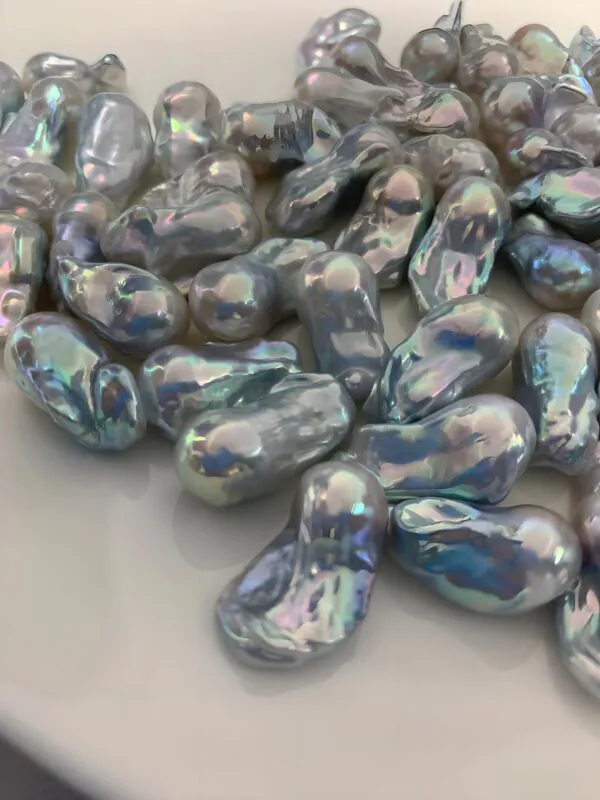
- Baroque pearls: irregular outlines make the jewelry feel more organic, artistic, and less conventional.
- Drop pearls: especially effective in earrings and pendants because their vertical shape creates movement.
- Button pearls: their lower profile can work well in studs, rings, and designs where a pearl should sit closer to the setting.
- Oval and irregular pearls: useful when you want something recognizable as pearl jewelry without the strict formality of a perfectly matched round strand.
This distinction can be more important than age. If a traditional round strand feels too formal, you may not need to abandon necklaces—you may simply prefer baroque pearls, a pendant, or a mixed-material design.
Choose the jewelry form before worrying about the “rules”
A pearl necklace is not the only way to wear pearls. Changing the jewelry form can solve many styling problems immediately.
- Stud earrings: easiest all-purpose choice and especially useful when clothing already has a strong neckline or pattern.
- Drop earrings: add movement and become more visible with tied-back hair or open necklines.
- Pendants: one of the easiest bridges between casual and polished clothing.
- Short strands: more visually recognizable as classic pearl jewelry, but easy to modernize with casual clothing or another chain.
- Long strands: useful over knitwear, dresses, or higher necklines and can create more vertical movement.
- Rings: make the pearl feel more like a design object than a traditional pearl accessory.
- Bracelets: easy to combine with watches and other jewelry, although wrist jewelry experiences more everyday contact than earrings or pendants.
You can compare these formats through the finished pearl jewelry collection, but the key styling lesson is simple: if one type of pearl jewelry feels wrong with your wardrobe, try changing the form before changing the pearl.
Six pearl outfit formulas that are difficult to get wrong
1. White T-shirt + jeans + pearl studs
This is the lowest-risk way to make pearls feel casual. Keep the rest of the jewelry light and let the pearls add one polished detail.
2. Button-down shirt + pearl pendant
Open one or two buttons and allow the pendant to sit inside the neckline. The result can move easily between relaxed office wear and weekend dressing.
3. Blazer + simple top + pearl drops
The tailoring gives structure while the drops add movement. This works particularly well when you want more personality than a traditional stud.
4. Knitwear or turtleneck + long pearl necklace
The fabric provides a continuous background, making a longer pearl necklace easier to see. A larger pendant can create a similar effect.
5. Minimal black dress + one strong pearl piece
Use either prominent earrings, a larger strand, or a statement ring. The simple clothing provides enough visual space for the pearl to become the focal point.
6. Casual basics + baroque pearls + metal chain
Mixing an organic pearl shape with a plain chain is an easy way to reduce the traditional feeling of pearls. Keep the lengths different enough that the necklaces do not visually merge into one crowded line.
Common pearl styling mistakes
Treating age as a dress code
Age can provide context when buying a gift, but it should not dictate pearl size or design. Personal style and wardrobe are better indicators.
Trying to match everything perfectly
A necklace, earrings, bracelet, ring, bag hardware, and clothing details do not all need to match. In casual styling, too much coordination can make the look feel more formal than intended.
Ignoring the neckline
A beautiful necklace can still look awkward if it ends exactly where a complicated neckline begins. Change the necklace length or move the pearl focal point to the ears instead.
Choosing pearl color from a chart without trying it near the face
Undertone charts are useful for generating options, not eliminating them. Real pearls also vary in overtone, luster, and intensity, so two pearls with the same basic color name may look different when worn.
Using too many statement elements at once
If the pearls are large, colorful, layered, or unusually shaped, they may already provide enough visual information. Let either the clothing or the jewelry lead.
Forgetting that everyday wear also means everyday contact
If you want to wear pearls frequently, consider where the piece sits. Earrings and pendants are generally easier to protect from repeated rubbing than rings and bracelets. For cleaning, cosmetics, storage, and routine wear guidance, see our guide to caring for pearls.
A 30-second pearl styling framework
When you are standing in front of the mirror and cannot decide whether the pearls work, ask four questions:
- What is the focal point? If the clothing is already dramatic, reduce the jewelry. If the outfit is simple, the pearls can become stronger.
- Do I want harmony or contrast? Decide whether the pearl should blend with your coloring and clothes or deliberately stand out.
- Is the scale right? Look at the pearl on your body, not just in the jewelry box. Size, strand length, and earring drop all change once worn.
- Does the design match the mood? Round and matched can feel classic; baroque, asymmetric, layered, or mixed-material designs can make the same gemstone feel much more contemporary.
If those four answers make sense together, the styling usually works regardless of age.
FAQ
Do pearls make you look older?
No. Pearls can look traditional when they are combined with traditional clothing, a perfectly matched strand, and a full matching jewelry set, but that is a styling choice rather than an inherent property of pearls. Studs, baroque pearls, pendants, mixed chains, and casual clothing can produce a completely different effect.
What pearl color is most flattering?
There is no universally most flattering color. Warm cream and golden tones may harmonize with warm coloring, while silver-white, pinkish, gray, or cool dark pearls may harmonize with cooler coloring. The opposite choice can be used deliberately for contrast. Comparing actual pearls near your face in neutral light is more reliable than following a color chart alone.
Can you wear pearls with casual clothes?
Yes. Try pearl studs with a T-shirt and jeans, a pendant with a button-down shirt, baroque pearls with knitwear, or a pearl necklace layered with a simple metal chain. Casual fabrics and silhouettes naturally reduce the formal effect of traditional pearls.
Should pearl earrings match a pearl necklace?
They can, but they do not have to. A closely matched set creates a more coordinated and traditional look. Using different sizes, shapes, or even wearing only one pearl piece generally feels more relaxed and contemporary.
What pearl size is best for everyday wear?
There is no single best size, but approximately 6–8 mm round pearls are a versatile reference point for many everyday earrings and necklaces. Smaller pearls appear more discreet, while 8–10 mm and larger pearls become progressively more noticeable. Always judge the size while worn because proportions vary from person to person.
Final takeaway
The best pearl styling does not begin with an age chart. Start with the person, the clothing, and the effect you want to create. Use skin tone to explore color rather than restrict it, use pearl size to control visual presence, use shape to move between classic and contemporary, and let the occasion determine how much pearl you want to show.
Once you think in those terms, pearls become much easier to wear. A pearl can be understated with a work shirt, casual with denim, dramatic against black, romantic with a dress, or highly modern in an irregular design. The pearl stays the same; the styling changes the message.