If pearls feel too mature on you, the problem is usually not the pearls themselves. It is the styling around them. A perfectly matched white strand, matching studs, a formal blouse, and a very symmetrical outfit all point in the same classic direction. Change only one or two of those signals and the same pearls can look relaxed, graphic, playful, minimal, or fashion-forward.
The easiest rule is: keep one classic element and add one modern contrast. Pair a traditional strand with denim. Mix pearls with a plain metal chain. Wear pearl drops with a T-shirt. Choose an irregular shape with a tailored jacket. Or keep the pearls round and polished, but skip the matching set.
“Younger” here does not mean that one age group owns a certain style. It simply means a look that feels less ceremonial and more connected to contemporary everyday dressing.
A 30-Second Test: What Is Making the Pearls Feel Too Mature?
Before buying new jewelry, look at the whole outfit. If several of the following appear together, the result will naturally read as more traditional:
- a uniform strand of round white pearls;
- matching pearl earrings, necklace, and bracelet;
- a high, neat neckline;
- formal tailoring or occasionwear;
- perfect symmetry;
- little visible metal or texture;
- every accessory chosen from the same style family.
None of these is a mistake. Together, however, they create a strongly polished and conventional visual language. If your goal is a younger or more contemporary style, do not change everything. Break one part of the pattern.
| If the look feels too traditional | Change this first | Easy example |
|---|---|---|
| Matching pearl set | Number of pearl pieces | Keep the necklace, switch to plain hoops |
| Uniform pearl strand | Surrounding jewelry | Add one simple gold or silver chain |
| Very formal outfit | Clothing context | Wear the pearls with a T-shirt, knit, denim, or relaxed shirt |
| Everything is symmetrical | Silhouette | Choose a drop, hoop, baroque pearl, or asymmetrical detail |
| Pearls dominate the neckline | Proportion | Use a pendant, shorter strand, or more open neckline |
1. Wear One Pearl Piece Instead of a Complete Matching Set
This is often the fastest change. A pearl necklace with matching studs and a matching bracelet creates a very coordinated finish. If you like the necklace but the total look feels too formal, keep it and remove the other pearl pieces.
Try a strand with small metal hoops, or pearl earrings with no necklace at all. A pearl bracelet can sit beside a watch or a simple metal bangle rather than being repeated elsewhere.
The goal is not to make pearls less elegant. It is to let them function as one part of your normal jewelry wardrobe instead of as a complete “pearl outfit.”
2. Mix Pearls with Metal, Chains, or Cleaner Hardware
Pearls are visually soft: rounded surfaces, reflected light, and usually gentle color. Metal introduces a different texture and gives the eye something sharper to read.
That contrast is one reason pearl-and-chain combinations feel so easy in contemporary styling. A thin gold chain beside a short pearl strand can be enough. You can also pair pearl earrings with stacked metal rings, a cuff, or a watch rather than trying to match every accessory.
Recent fashion coverage has leaned heavily into this kind of contrast. ELLE has highlighted pearl designs paired with gothic and industrial details, while Who What Wear has pointed to mixed metals, irregular forms, and unexpected silhouettes as part of the current pearl look.
You do not need to follow a trend literally. The useful principle is simply soft pearl + harder element = more visual tension.
3. Let the Clothing Make the Pearls Less Formal
A classic pearl necklace does not have to be redesigned to look current. Often, the easiest update is the outfit underneath it.
Pearls can work naturally with:
- a plain white or black T-shirt;
- denim and a simple knit;
- an oversized shirt with an open collar;
- a blazer over a tank or crew-neck top;
- a slip dress with restrained jewelry;
- a leather or structured jacket for stronger contrast.
If your pearls already feel visually polished, casual clothing keeps the outfit from becoming too ceremonial. If the pearls are irregular or bold, simple clothes give them room to become the focal point.
This is also a useful way to wear inherited pearls. You may not need to alter or restring them at all. Try changing the clothes and the accompanying jewelry before changing the original piece.
4. Use Shape to Change the Mood, Not to Follow an Age Rule
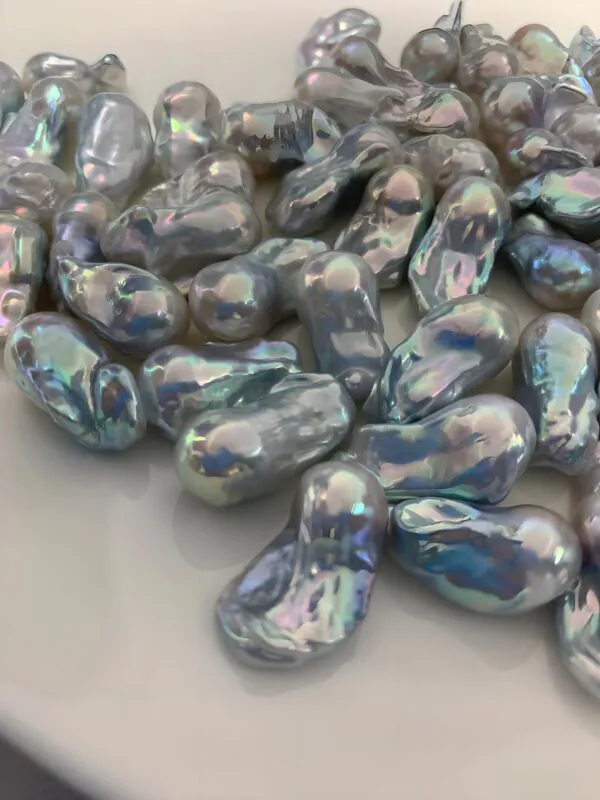
Baroque and irregular pearls often feel more relaxed because their shapes introduce texture and asymmetry. Drops add movement. Buttons sit close to the ear and can feel cleaner than an ornate dangling design. Round pearls look the most orderly, especially when they are highly matched.
But none of these shapes belongs to a particular age group. A perfectly round pearl can look extremely modern as a single pendant or on a geometric hoop. A baroque pearl can look romantic, artistic, rustic, or luxurious depending on the setting.
The Gemological Institute of America describes shape as one of the major characteristics used to evaluate pearls and recognizes forms ranging from round to oval, drop, button, and baroque. If you want to compare how those shapes change the visual character of jewelry, see the MJ Pearls pearl shape guide.
5. Choose Size by Visual Presence, Not by Your Age
“Small pearls are young and large pearls are mature” is too simplistic to be useful.
Size changes presence. A 5–6 mm pearl can feel delicate. A 7–8 mm pearl often gives a balanced everyday scale. A 9 mm or larger pearl becomes more noticeable. But design changes the result just as much as diameter.
One large pearl on a clean pendant can look lighter and more contemporary than a full matched strand of smaller pearls. Large baroque drops can feel sculptural. Small pearls can look highly traditional when they appear in a perfectly coordinated set.
When choosing size, ask:
- Do I want the pearl to be an accent or the main feature?
- How large is the jewelry I normally wear?
- Is this one pearl or many pearls together?
- Will it sit close to my face or lower on the neckline?
For side-by-side millimeter examples and practical buying context, use the pearl size guide.
6. Add Movement, Space, or Asymmetry
Traditional pearl styling often emphasizes regular spacing and close matching. A younger-feeling look can come from doing the opposite in a controlled way.
Consider:
- one pearl hanging from a hoop;
- a drop earring that moves rather than a fixed stud;
- pearls separated by visible chain;
- a necklace with one off-center pearl;
- mixed pearl sizes used intentionally;
- one statement earring paired with a simpler companion piece.
The empty space is important. When every centimeter is filled with pearls, the effect is rich and continuous. When pearls are spaced apart, each pearl becomes more graphic.
7. Pay Attention to the Neckline
A necklace is always read together with the neckline behind it. This is one of the most overlooked reasons a pearl strand can feel more formal than expected.
With crew-neck T-shirts and knits
A short pearl strand can sit cleanly above the fabric, or you can add a thin chain to make the combination feel more layered and everyday.
With open shirts and V-necks
A single pearl pendant or a slightly longer pearl necklace often works better than a tight, full strand because the jewelry follows the open space of the neckline.
With high necklines
If a pearl necklace starts to feel overly formal, skip the necklace and use pearl drops, hoops, or a bracelet instead. You do not have to force pearls into the same position every time.
If you are choosing a new piece specifically for your wardrobe, browse by format first—such as pearl necklaces, earrings, pendants, or bracelets—rather than beginning with an age category.
8. Do Not Be Afraid of Color
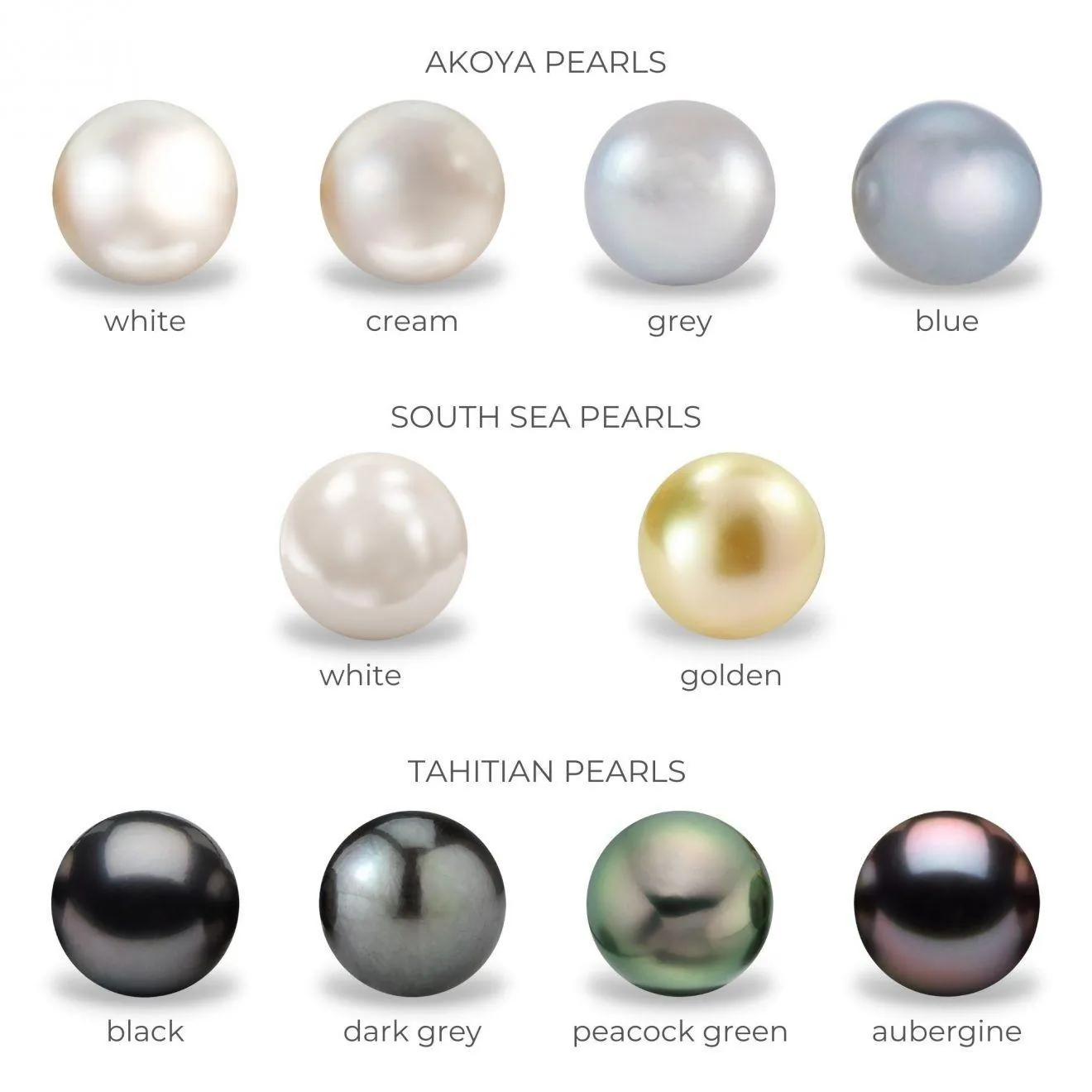
White pearls are the most culturally familiar, but pearls also occur in cream, pinkish, golden, gray, greenish, dark, and multicolored appearances depending on pearl type and other factors.
Darker Tahitian colors can work beautifully with black, gray, denim, or silver-toned jewelry. Warm cream or golden pearls can feel rich with earthy clothing. Pastel freshwater pearls can create a softer and more playful effect.
Color is not automatically “younger” or “older.” Use it as you would any other jewelry color: think about contrast with your wardrobe, skin, hair, metal preferences, and the mood you want.
Three Easy Outfit Formulas
Formula 1: Classic pearls + casual clothes
White pearl strand + plain T-shirt + jeans + metal hoops. Keep the pearls traditional and let the clothing do the modernizing.
Formula 2: Minimal clothes + expressive pearls
Black knit + baroque pearl drops + simple ring stack. The outfit becomes a neutral background for shape and movement.
Formula 3: Tailoring + one pearl focal point
Blazer + open-neck top + single pearl pendant. The pearl adds polish without turning the whole outfit into formal jewelry.
If you are experimenting, start with the formula closest to clothes you already own. A good modern pearl look should still feel like your wardrobe, not like a costume assembled around the jewelry.
What If You Love a Classic Pearl Strand?
Then wear it. A younger style does not require baroque pearls, oversized hardware, or deliberately unconventional jewelry.
A classic strand can look clean and current when it is treated as the only polished element in an otherwise simple outfit. You can also wear it with plain earrings, layer it next to a fine chain, or combine it with a more relaxed neckline.
The important distinction is between classic and over-coordinated. Classic can be minimal. Over-coordinated means every element repeats the same formal message.
If You Are Buying New Pearls, Start with Style Before Pearl Type
For a younger or less formal look, choosing the jewelry format first is usually more useful than asking which pearl species looks youngest.
- Choose the format: studs, drops, pendant, strand, bracelet, or ring.
- Choose the visual scale: subtle, balanced, bold, or statement.
- Choose the design language: polished, organic, geometric, asymmetrical, or mixed-material.
- Then choose pearl type, color, and budget.
- Finally compare quality: especially luster, surface, shape, condition, and matching where relevant.
GIA's pearl value framework separates size, shape, color, luster, surface, nacre, and matching into distinct factors. That is useful because style and quality are not the same question. A baroque pearl may give you the exact design you want, but you should still judge whether the pearl itself has attractive luster and acceptable surface quality.
For a broader buying framework, see the MJ Pearls pearl buying guide or browse the pearl jewelry collection by the kind of piece you actually want to wear.
Frequently Asked Questions
How can I make a pearl necklace look younger?
Change one traditional styling signal around it. Wear the necklace with casual clothing, pair it with plain metal jewelry, skip matching pearl earrings, or layer it with a simple chain. You usually do not need a completely different necklace.
Do small pearls look younger than large pearls?
Not automatically. Small pearls feel more delicate, while large pearls have more visual presence. The final impression depends on jewelry format, setting, clothing, matching, and how many pearls are used together.
Are baroque pearls better for a youthful style?
Baroque pearls often feel less formal because their irregular shapes add texture and asymmetry, but they are not inherently younger. Round pearls can look equally modern in pendants, hoops, drops, geometric settings, or simple strands worn with contemporary clothing.
Can I wear pearls with jeans and a T-shirt?
Yes. Casual clothes are one of the easiest ways to make classic pearl jewelry feel more relaxed. A short strand, pearl pendant, studs, or drops can all work with denim and a simple top.
Can I mix pearl jewelry with gold or silver chains?
Yes. Mixing pearls with plain metal jewelry creates contrast and helps them fit into an everyday jewelry collection. Use the metal tone you already wear most often rather than treating pearls as a separate category.
Do I need to restring inherited pearls to make them look modern?
Not necessarily. First try styling the original strand with casual clothing, different earrings, or a simple chain. If the strand itself needs repair or you want a permanent redesign, have its condition and construction checked before altering it.
Final Takeaway
Pearls look more mature when many traditional signals appear at the same time—not because pearls belong to a mature age group.
If you want a younger style, make one deliberate contrast. Remove the matching set. Add metal. Change the neckline. Use movement or asymmetry. Put a classic strand over a T-shirt. Or keep the outfit minimal and let one unusual pearl become the statement.
The best result is not the outfit that looks “youngest.” It is the one where the pearls feel natural with the way you already dress.