Men do not need a special category of “men’s pearls.” The more useful question is what kind of visual effect you want: subtle, polished, textured, or deliberately bold. Pearl size, necklace length, shape, color, and the amount of pearl visible in the design usually matter more than whether a piece is labeled for men or women.
If this is your first pearl purchase, start with the jewelry format you already know you will wear. A single pearl pendant feels familiar if you normally wear chains. A bracelet keeps the pearls away from the face and is easy to combine with a watch. A full strand makes the clearest style statement. Once you choose the format, you can make the remaining decisions much more logically.
Quick guide: choosing pearls for men
| Desired look | Good starting format | Pearl scale | Shape direction | Color direction |
|---|---|---|---|---|
| Quiet and easy to wear | Single pendant, slim bracelet, small stud | Small to medium | Round or near-round | White, cream, silver-gray |
| Modern everyday | Short full strand or pearl-and-chain design | Medium | Round, near-round, or lightly baroque | White, gray, soft natural tones |
| Textured and less traditional | Baroque strand or bracelet | Medium to large | Baroque or irregular | White, cream, gray, multicolor |
| Strong statement | Large strand, large single pendant, bold earring | Large | Round or dramatic baroque | Tahitian dark tones, high-contrast white, or golden |
These are starting points, not gender rules. A small dark pearl can be quieter than a large white one, and a perfectly round strand can look more contemporary than an irregular strand if the proportions and clothing are right.
1. Choose the jewelry format before choosing the pearl
The same pearl can feel completely different depending on how much of it appears in the design. That is why choosing “white or black?” is usually not the best first question.
Full pearl necklace
A full strand puts pearls at the center of the look. It works especially well with simple clothing because the repeated pearls create their own texture and rhythm. If you want pearls to be clearly visible rather than just an accent, start by comparing different pearl necklace styles.
Single pearl pendant
A pendant is often the easiest transition for someone who already wears a metal chain. Because there is only one focal pearl, you can choose a slightly larger size, stronger color, or more unusual shape without making the entire outfit feel dominated by pearls. Browse pearl pendants to compare how the pearl, chain, bail, and metal change the overall impression.
Pearl bracelet
A bracelet is visually quieter than a necklace and combines naturally with watches, cuffs, and other wristwear. A full pearl bracelet looks polished; pearls mixed with metal links or other materials feel more casual and less like a traditional matched set.
Pearl earring
A single stud or drop can be minimal even when the pearl itself is noticeable. The important variables are scale and setting. A small round stud is restrained, while a larger baroque pearl or long drop design becomes an obvious style choice.
2. Pearl size changes the look more than the gender label
Pearl diameter is measured in millimeters, and a difference of only one or two millimeters can noticeably change how a strand reads. For a full necklace, increasing pearl size also increases the total visual mass because every pearl becomes larger.
As a practical styling guide for a full strand:
- About 5–7 mm: light and relatively subtle. Useful if you want the necklace to behave more like a fine chain.
- About 7–9 mm: a balanced middle range with enough presence to look intentional without automatically becoming a statement piece.
- About 9–11 mm: visibly bolder, especially in a short full strand.
- Above roughly 11 mm: increasingly statement-oriented in a full necklace, although a single pendant can carry this scale much more quietly.
These ranges describe visual effect, not rules about who should wear which size. Your neck, frame, clothing, necklace length, pearl shape, and even the clasp can make the same millimeter size look different. If you are comparing proportions online, the pearl size guide gives more context for how millimeter differences appear in jewelry.
3. Do not buy a “men’s standard length” without checking your neck
Many styling guides recommend one fixed necklace length for men, but exact fit depends on neck circumference and where you want the necklace to land. An 18-inch necklace can sit comfortably below the collarbone on one person and feel much closer to the neck on another.
The simplest method is to measure a chain you already like. Lay it flat, measure it end to end, and note where it sits when worn. Then decide whether you want the pearl necklace at the same position, slightly higher, or lower.
As a general visual reference:
- 16–18 inches (about 41–46 cm): usually creates a close, collarbone-focused look, but may sit quite high on a broader neck.
- 18–20 inches (about 46–51 cm): gives more breathing room and often works well over a T-shirt or with an open collar.
- 20–24 inches (about 51–61 cm): creates a lower, more relaxed drop and gives more space for a pendant or layered chain.
Use the exact measurement rather than relying only on names such as “choker” or “princess,” because retailers do not always use those labels in exactly the same way. If possible, compare the pearl necklace with the neckline you expect to wear most often.
4. Round and baroque pearls create different moods
Baroque pearls are often marketed as the automatically “masculine” option. That is too simple. Shape changes the style, but it does not assign a gender to the jewelry.
Round and near-round pearls create repetition, symmetry, and a cleaner line. In a minimal design they can look sharp and graphic, especially against a plain black, white, gray, or navy top.
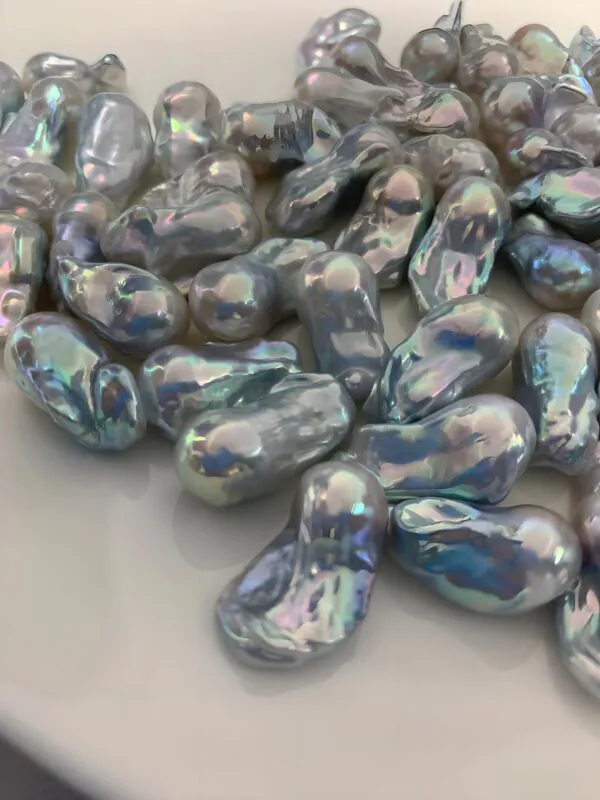
Baroque pearls introduce irregular outlines, surface variation, and a more organic rhythm. They are useful when you want the necklace to feel less formal or less associated with a perfectly matched traditional strand. Large baroque pearls can also be more visually dramatic than small round pearls.
Neither choice is inherently more appropriate for men. Choose the shape according to whether you prefer precision or texture. The pearl shape guide explains how round, near-round, oval, drop, button, and baroque forms differ.
5. Men can wear white pearls—dark pearls are not automatically better
Another common shortcut is that men should choose black, gray, or dark pearls. Dark pearls can work extremely well, but white pearls are often just as effective because they create clear contrast against common menswear colors.
White and cream pearls
White pearls are the most recognizable choice. Against black, charcoal, navy, denim, or a dark jacket, they create a crisp point of contrast. If a full white strand feels too formal for your wardrobe, reduce the visual intensity with smaller pearls, an irregular shape, a mixed-chain design, or a single white pendant.
Gray and dark pearls
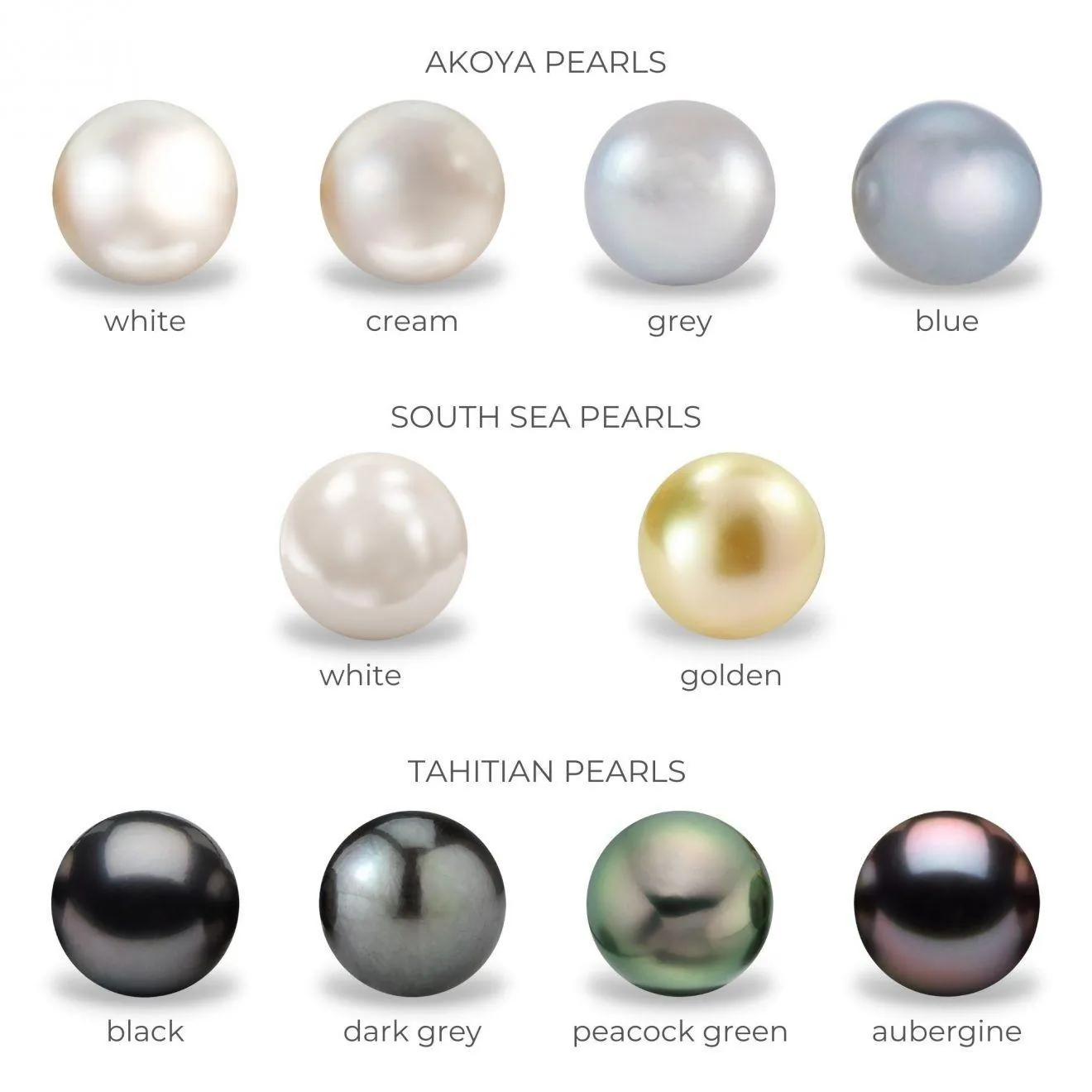
Gray, green-gray, and darker pearls can blend more naturally with black, silver, denim, and neutral clothing. Tahitian pearls are particularly useful when you want dark bodycolors with green, blue, purple, bronze, or other overtones rather than a flat black appearance. You can compare this palette in the Tahitian pearl jewelry collection.
Golden and pastel colors
Golden, pink, lavender, and other pearl colors are not off-limits. They simply create a different color relationship with your skin, clothing, and metal jewelry. A golden single pearl on a dark shirt may look cleaner and more architectural than a multicolor baroque strand. Judge the complete design rather than the color name alone.
6. Choose pearl type for the look and budget you actually want
The major cultured pearl types do not belong to different genders. They give you different combinations of size, color, shape, price, and visual character.
- Freshwater pearls: available in a wide variety of shapes and colors. They are especially useful for first purchases, baroque styles, mixed designs, and buyers who want more size or texture without moving immediately into higher saltwater-pearl prices.
- Akoya pearls: known for the classic white-to-cream round pearl look and often chosen when a clean, refined strand or stud is the goal. Their polished appearance can work very well with tailored or minimalist clothing.
- Tahitian pearls: naturally occur in darker bodycolors and can show green, blue, purple, gray, and bronze overtones. They often create a distinctive single-pearl pendant, bracelet, stud, or full strand.
- South Sea pearls: generally give you larger scale and strong visual presence. White and golden South Sea pearls work best when the larger pearl itself is meant to be a focal point.
Do not assume that one pearl type is automatically higher quality than another. Quality varies within every category. Pearl type tells you what range of appearance and size is possible; it does not replace evaluation of the individual pearls.
7. Metal, clasp, and construction can change the result as much as the pearls
If you already wear silver-colored chains, a white-metal clasp or mixed silver-tone chain can make pearls integrate more naturally into your existing jewelry. Yellow gold creates warmer contrast and can make white, green, or dark pearls feel richer. Neither metal is automatically more appropriate for men.
Construction also changes how “pearl-heavy” the piece feels. Compare these three designs:
- a continuous full strand of matching pearls;
- pearls spaced along a metal chain;
- a single pearl suspended from a chain or cord.
All three can use the same pearl color, but they create very different levels of formality and visual density. If you are new to pearls, reducing the number of pearls can be more effective than trying to find a supposedly masculine pearl color.
8. Do not sacrifice pearl quality just to get a larger size
Styling determines whether a piece fits your wardrobe, but the pearls themselves still need to look good. The Gemological Institute of America evaluates pearl appearance and value through factors including size, shape, color, luster, surface quality, nacre quality, and matching for pieces with multiple pearls. See the GIA pearl buyer's guide for the full framework.
For a first purchase, do not let size dominate every other decision. A smaller pearl with strong, lively reflections can look more deliberate than a larger pearl that appears dull. On a full strand, also look at how well the pearls work together. They do not have to be perfectly identical, especially in baroque jewelry, but the variation should look intentional rather than accidental.
If you want a broader checklist for comparing quality and price, use our pearl buying guide before focusing on one style.
9. A simple decision order for a man's first pearl purchase
If too many options are making the choice harder, use this order:
- Choose the jewelry format. Full necklace, pendant, bracelet, or earring?
- Choose the visual strength. Do you want the pearls to be a quiet detail or the main feature?
- Set the exact fit. Measure an existing necklace or your preferred drop instead of buying by a generic “men's length.”
- Choose pearl size. Increase size when you want more presence; decrease it when you want the piece to behave more like a fine chain.
- Choose shape. Round for a cleaner rhythm, baroque for more texture and irregularity.
- Choose color and pearl type. Base this on your wardrobe and desired contrast, not on gender stereotypes.
- Check quality. Compare luster, surface, nacre, and matching as appropriate for the piece.
- Check it with real clothing. A pearl that looks impressive in a jewelry box may not be the pearl you will wear most often.
Three common mistakes when men buy pearls
Buying dark pearls only because they seem safer
If you actually like the contrast of white pearls, choosing dark pearls to make the piece feel “more masculine” solves the wrong problem. Adjust size, shape, necklace length, or construction instead.
Copying someone else's necklace length
Two people can wear the same 18-inch strand at very different positions. Fit is a measurement problem, not a gender problem.
Choosing the largest pearl within the budget
Larger is not automatically better. Size should serve the desired look. Once the scale is appropriate, compare the actual pearl quality rather than treating millimeters as the main measure of value.
FAQ
Can men wear white pearl necklaces?
Yes. White pearls can look especially clean against black, navy, charcoal, denim, and other simple clothing. If a classic full strand feels too formal, try smaller pearls, baroque shapes, a mixed-chain design, or a single white pearl pendant.
What pearl size is best for men?
There is no universal best size. For a full strand, roughly 7–9 mm is a useful middle starting point, while smaller pearls look more restrained and larger pearls create more visual presence. A single pendant can use a larger pearl without feeling as bold as a full strand of the same size.
What pearl necklace length should a man choose?
Choose by neck circumference and desired placement rather than gender. Measure a necklace you already like, then decide whether the pearls should sit at the same point, higher, or lower. Around 16–20 inches covers many short-necklace looks, but the same length will fit different bodies differently.
Are baroque pearls better for men?
Not necessarily. Baroque pearls create more texture and irregularity, which can make a piece feel less traditional. Round pearls create a cleaner, more graphic line. The better choice depends on your style, not your gender.
Are Tahitian pearls a good choice for men?
They can be an excellent choice if you like gray, green, dark, or multicolor overtones and want more visual depth than a classic white pearl. They are not automatically the best men's pearl, however. White freshwater, Akoya, and South Sea pearls can work equally well in the right size and design.
The simplest rule: choose the pearl for the look, not the label
The best pearl for a man is not defined by one color, one millimeter size, or one necklace length. Start with how much pearl you want to see, where you want the piece to sit, and how it should work with clothing and jewelry you already wear. Then choose the pearl type, shape, and quality that produce that result.
If you want a quiet entry point, begin with one pearl or a smaller-scale strand. If you want texture, compare baroque shapes. If you want a strong graphic contrast, white pearls can be more effective than dark ones. If you want depth and changing color, Tahitian pearls may be the better fit. The useful question is not “Which pearls are for men?” but “Which pearls create the look I will actually wear?”