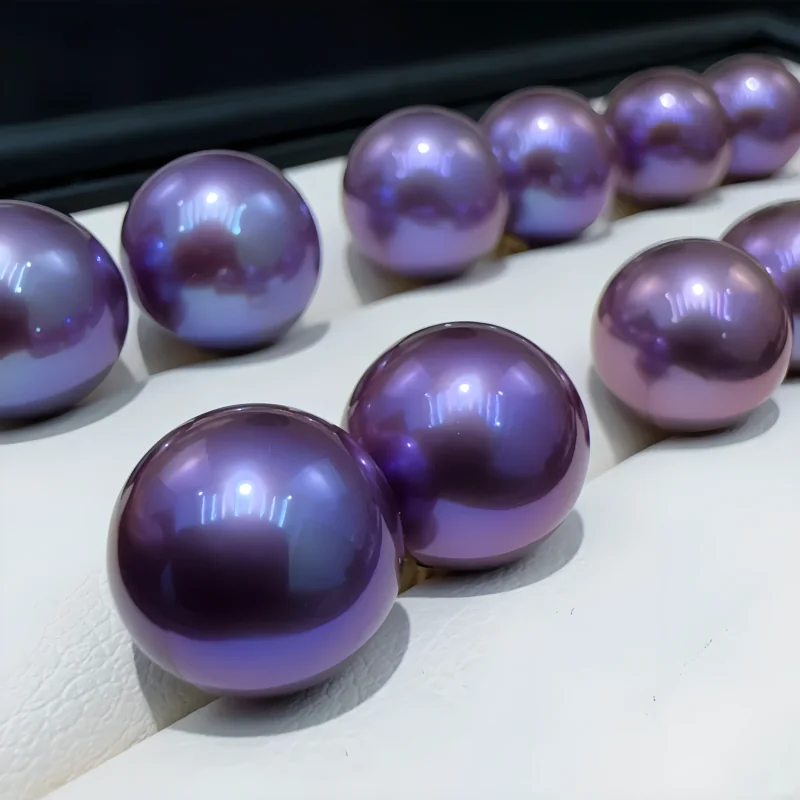
If you are unsure what kind of pearls you want, Freshwater pearls are usually the easiest first category to explore. They offer a broad range of sizes, shapes, colors, and price points, so you can learn what you actually like without paying mainly for rarity.
But Freshwater is not automatically the best answer for everyone. Choose Akoya if the classic bright, round white-pearl look is the reason you want pearls. Choose Tahitian if naturally dark colors and strong overtones are the attraction. Choose South Sea if you specifically want larger white, silver, or golden pearls and are comfortable entering a more premium category.
The most important beginner rule is this: pearl type is not a quality ranking. A beautiful Freshwater pearl can be a better purchase than a dull or poorly matched pearl from a more expensive category. First choose the type that gives you the look you want; then compare quality within that type.
Quick Answer: Which Pearl Type Fits Your First Purchase?
| If your priority is... | Start with | Why |
|---|---|---|
| Good value, variety, and a low-risk first purchase | Freshwater | You get many shapes, colors, and sizes across a wide price range. |
| The classic round white pearl look | Akoya | Akoya pearls are strongly associated with roundness, white-to-cream colors, and bright, crisp luster. |
| Naturally dark gray, green, peacock, or other cool-toned colors | Tahitian | The color itself is the main reason to choose the category. |
| Large white, silver, or golden pearls | South Sea | South Sea pearls are generally the largest of the four major cultured pearl types and occupy a premium price tier. |
If you already know which visual direction you prefer, browse the corresponding finished-jewelry category: Freshwater pearl jewelry, Akoya pearl jewelry, Tahitian pearl jewelry, or South Sea pearl jewelry.
First, Do Not Treat the Four Pearl Types as Four Quality Grades
Freshwater, Akoya, Tahitian, and South Sea are different cultured pearl categories. They come from different mollusks and growing environments, and they tend to produce different combinations of size, color, shape, luster, availability, and price.
They are not a ladder that runs from “cheap” to “good.”
This matters because first-time buyers often make one of two mistakes. The first is assuming that a more expensive pearl type must look better in every situation. The second is buying the least expensive category without asking whether its visual character is actually the one they want.
Instead, separate the decision into two levels:
- Category decision: Which pearl type gives you the color, size, luster character, and overall style you want?
- Quality decision: Within that category, how good are the luster, surface, shape, nacre, and matching for the price?
GIA uses seven value factors—size, shape, color, luster, surface, nacre, and matching—to describe pearl quality and appearance. That framework is useful precisely because the name of the pearl type alone does not tell you whether an individual pearl or finished piece is excellent.
Freshwater Pearls: The Easiest Starting Point When You Are Still Exploring
Freshwater pearls are usually the most flexible first category. They are available in many shapes and sizes, and their natural color range can include white, cream, pink, peach, and lavender tones. Modern Freshwater production also includes very round, highly lustrous pearls as well as deliberately organic baroque styles.
That variety is useful for a beginner because you can decide what you value before paying a strong premium for rarity. You might discover that you prefer a slightly irregular pearl with lively luster to a perfectly round one. You might prefer a soft pink overtone to bright white, or a larger pearl to a smaller, more traditional size.
Choose Freshwater first if:
- you want to keep the first purchase relatively accessible;
- you are still deciding what pearl size, shape, or color suits you;
- you like modern, casual, baroque, or mixed-shape jewelry;
- you want to put more of your budget into visible quality rather than species rarity;
- you want larger-looking pearls without immediately moving into South Sea pricing.
What should a beginner watch for?
Do not assume “Freshwater” means one specific look or quality level. The category is extremely broad. Very inexpensive pearls may have weaker luster, more obvious surface features, poorer matching, or less refined finishing, while better Freshwater pearls can look dramatically more polished.
For a first purchase, it is usually smarter to protect luster and overall appearance before chasing the largest possible diameter or the most perfectly round shape.
Akoya Pearls: The Better First Choice When You Already Want the Classic Look
If the image in your mind is a neat pair of white pearl studs or a traditional round white strand with crisp reflections, Akoya may be a more satisfying first purchase than Freshwater.
Akoya cultured pearls are saltwater pearls and are typically smaller than Tahitian and South Sea pearls. They are known for white-to-cream body colors, often with pink, silver, or greenish overtones, and fine examples can show very bright, mirror-like luster.
Choose Akoya first if:
- you specifically want classic white round pearls;
- sharp, bright luster matters more to you than large size;
- you want traditional studs, a refined pendant, or a matched strand;
- you already know that organic or strongly irregular shapes are not what you want.
What should a beginner watch for?
Do not pay for the word “Akoya” while accepting dull luster, weak matching, or an appearance you do not love. Akoya has its own quality range. Two Akoya pieces can differ substantially in luster, surface condition, matching, size, and overall refinement.
Also remember that a high-quality Freshwater pearl can overlap visually with the classic white-pearl look. If your budget is fixed, compare what you can actually see rather than assuming the category name settles the decision.
Tahitian Pearls: Start Here Only If Dark Color Is Part of the Goal
Tahitian pearls are not simply a more expensive alternative to white pearls. They solve a different aesthetic problem.
They are produced by black-lipped oysters and are best known for naturally dark body colors. Depending on the individual pearl, you may see gray, green, silver, brown, blue, purple, or peacock-like color effects. GIA notes that Tahitian pearls commonly fall around the 8–14 mm range, although pearls can occur outside typical ranges.
Choose Tahitian first if:
- you are attracted to dark or cool-toned pearls rather than traditional white;
- you want a pearl that looks more graphic, modern, or distinctive;
- color and overtone are central to the purchase;
- you prefer a stronger visual presence from a single pendant, ring, or pair of earrings.
What should a beginner watch for?
Do not shop for Tahitian pearls by the word “black” alone. Many of the most interesting Tahitian pearls are not literally black. Compare the actual body color, overtone, luster, and how the color changes under different lighting.
A first-time buyer who really wants a green-gray or peacock pearl should not buy white pearls merely because they seem more conventional. The first purchase is easier when the category already matches your taste.
South Sea Pearls: Best for a Deliberate Luxury First Purchase
South Sea pearls are generally the largest of the four major cultured pearl categories. Their natural color families include white, silver, champagne, and golden tones, and their luster is often described as broad and satiny rather than as sharply mirror-like as fine Akoya.
Because large size, rarity, growing conditions, and other production factors contribute to their value, South Sea pearls usually sit at the premium end of the market.
Choose South Sea first if:
- large pearl size is part of the look you specifically want;
- you prefer white, silver, or golden pearls with a softer glow;
- the purchase is a milestone piece rather than an experiment;
- you have enough budget to compare quality instead of buying the cheapest example of the category.
What should a beginner watch for?
Do not stretch into South Sea pearls simply because they are positioned as luxurious. If the budget forces you to compromise heavily on luster, surface, shape, matching, or workmanship, a stronger pearl from another category may give you more visual satisfaction.
South Sea makes sense as a first purchase when you already know that large scale and that specific white, silver, or golden look are the point.
A Side-by-Side Beginner Comparison
| Pearl type | Typical visual character | Common size direction | Budget direction | Best first-purchase fit |
|---|---|---|---|---|
| Freshwater | Broadest variety of shapes and pastel colors; soft to high luster | Wide range, including many small-to-large options | Usually the most accessible | Exploring, everyday jewelry, value, shape variety |
| Akoya | Classic white or cream; round profile; often crisp luster | Generally smaller than Tahitian and South Sea | Mid-range to high depending on quality and size | Classic studs, pendants, bridal or traditional strands |
| Tahitian | Naturally dark gray, green, silver, brown, and colorful overtones | Often medium-to-large | Mid-range to high | Distinctive dark color, statement jewelry, modern styling |
| South Sea | Large white, silver, or golden pearls with broad satiny glow | Generally the largest | Usually the highest | Luxury purchases, large focal pearls, milestone pieces |
These are category tendencies, not hard boundaries. Individual pearls can fall outside the size, shape, color, and luster patterns most commonly associated with their type.
The Most Useful First-Purchase Question Is “What Look Am I Buying?”
A beginner can make the four-category decision much faster by answering five questions in order.
- Do I want white/light pearls or naturally dark pearls?
If dark color is essential, Tahitian moves to the front immediately. If you want white or light pearls, compare Freshwater, Akoya, and South Sea. - Do I want a subtle size or a visibly large pearl?
If very large scale is central to the look, South Sea or larger Freshwater options deserve attention. If you prefer a neat classic scale, Akoya may be more natural. - Do I want mirror-like crispness or a softer glow?
Fine Akoya is known for sharp luster, while South Sea often shows a broader satiny glow. Freshwater and Tahitian can show strong luster too, but judge the individual pearls rather than the label. - How much am I comfortable spending while I am still learning my preference?
If you are genuinely experimenting, Freshwater usually gives you more room to learn without putting most of the budget into rarity. - Do I care about category prestige, or only about how the jewelry looks on me?
There is nothing wrong with wanting a specific pearl origin or category. Just make sure you are paying for something you actually value.
If you need a broader sequence for evaluating the entire purchase after choosing a category, see our pearl buying guide.
What If Your Budget Fits One Category Better Than Another?
Budget should change how you balance the quality factors, not force you into a pearl type you do not like.
For example, suppose you want a classic white look but your budget does not comfortably reach the Akoya quality you find attractive. A better solution may be to compare high-quality Freshwater pearls rather than buying lower-quality Akoya solely for the category name.
Likewise, if you love the scale of South Sea pearls but the price feels too high, larger bead-nucleated Freshwater pearls may give you some of that visual presence at a different cost structure. They are not the same pearl type, but they may solve the same styling goal.
When the budget is tight, protect the features you will see every time you wear the piece—especially luster and overall harmony—before paying extra for size, perfect roundness, or a more prestigious category. Our guide to what changes at different pearl budgets explains this trade-off in more detail.
What About Edison, Baroque, Keshi, or Other Pearl Names?
Beginners often encounter names that do not fit neatly beside Freshwater, Akoya, Tahitian, and South Sea.
Some terms describe a more specific pearl type or production method. Others describe shape, formation, trade categories, or special pearl varieties. For example, baroque primarily describes an irregular shape rather than a fifth major cultured pearl family. Edison is associated with bead-nucleated Freshwater pearls, not a separate saltwater family equivalent to Akoya or Tahitian.
This is another reason to ask what the label actually describes before treating it as a quality tier.
For a first purchase, you do not need to memorize every pearl term. Start with the major category, then learn the narrower labels only when they affect the look you are considering.
Can a Freshwater Pearl Be “Better” Than an Akoya, Tahitian, or South Sea Pearl?
Yes, depending on what you mean by better.
If you mean “more expensive on average” or “rarer,” the answer may favor another category. But if you mean brighter luster, cleaner appearance, better matching, more useful size, or a style you enjoy more, a well-selected Freshwater pearl can absolutely be the better purchase for you.
The same logic works in every direction. A fine Akoya may be a better choice than a larger South Sea pearl if you want sharp reflections and classic scale. A Tahitian pearl may be the obvious winner if you want natural dark color. A South Sea pearl may be worth the premium if the large white or golden look is exactly what you want.
Category tells you what kind of pearl you are comparing. Quality tells you how good that pearl is within its context. Personal preference tells you whether it is the right pearl for you.
A Simple First-Purchase Decision Tree
You have no strong preference yet: start with Freshwater and learn what size, shape, and color you actually wear.
You picture pearls as small-to-medium, bright, round, and white: compare Akoya with high-quality white Freshwater pearls, then decide whether the Akoya look is worth the premium to you.
You want dark gray, green, peacock, or other naturally dark colors: start with Tahitian.
You want large white, silver, or golden pearls and the purchase is intentionally premium: start with South Sea.
You want something organic, casual, or unconventional: focus on Freshwater and baroque options rather than paying for roundness you do not want.
You want a large pearl look but South Sea pricing is uncomfortable: compare larger Freshwater options before compromising heavily on the quality of a South Sea piece.
So, Which Pearl Category Should a Beginner Choose?
For the undecided first-time buyer, Freshwater is usually the safest starting category because it offers the most flexibility at the widest range of price points.
But the moment your preference becomes specific, the answer can change:
- Akoya for the classic bright round white-pearl look;
- Tahitian for naturally dark colors and distinctive overtones;
- South Sea for large white, silver, or golden luxury pearls;
- Freshwater for versatility, value, experimentation, and the widest shape/color range.
Your first pearl purchase does not need to prove that you chose the “highest” category. It should teach you something useful about your own taste while giving you a piece you actually want to wear.
Frequently Asked Questions
What is the best pearl type for a first-time buyer?
Freshwater pearls are often the easiest starting point because they cover a wide range of styles and prices. However, a buyer who already wants classic round white pearls may be happier starting with Akoya, while someone who wants naturally dark pearls should consider Tahitian first.
Are Akoya pearls better than Freshwater pearls?
Not automatically. Akoya and Freshwater are different pearl categories, not adjacent quality grades. Fine Akoya are prized for classic roundness and crisp luster, while Freshwater pearls offer broader shape, color, and price variety. Compare actual luster, surface, shape, matching, and workmanship within the pieces you are considering.
Should a beginner avoid Tahitian or South Sea pearls?
No. They simply make more sense when their defining look is what you actually want. Tahitian is a logical first choice for naturally dark colors. South Sea can be a rational first purchase when large white, silver, or golden pearls are the goal and the budget allows meaningful quality comparison.
Which pearl type gives the best value?
Freshwater pearls often provide the most flexibility for a limited budget because commercial availability is broad and there are many size, shape, and color options. “Best value,” however, depends on whether the category produces the appearance you want. A cheaper pearl you rarely wear is not better value than a more expensive one that fits your style.
Should I choose pearl type before pearl size?
Usually yes, because the major pearl types naturally occupy different size, color, and style ranges. First decide the overall pearl look you want, then choose an appropriate size within that category. If size itself is the main goal, compare the categories that naturally offer the scale you want.