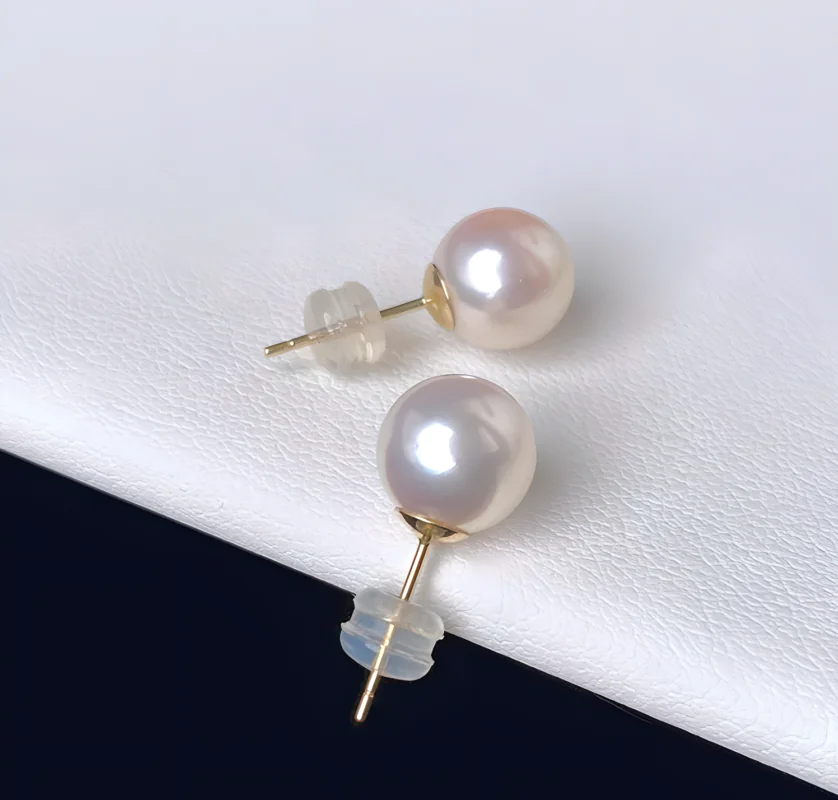
This page explains how MJ Pearls sorts and grades pearls, so the quality labels shown on our products are easier to understand. Pearl grading is not governed by one universal A/AA/AAA/AAAA standard, so the most useful question is not simply “What grade is this?” but what does that grade mean in this seller's system?
At MJ Pearls, our grade is a practical trade classification built from hands-on sorting. For comparable pearls, we focus first on luster and overtone, surface quality, and shape/roundness. Size, pearl type, nacre, color, and matching also affect value and product selection, but they should not be confused with a universal grade scale.
1. What our grading system is for
Pearls are organic gems. Two strands can share the same nominal size and pearl type while looking noticeably different in luster, surface cleanliness, roundness, color, and overall harmony. A grading system helps us divide those pearls into usable quality ranges and helps buyers understand what to expect.
Our A / AA / AAA / AAAA labels are therefore MJ Pearls quality ranges. They are most meaningful when you compare pearls within the same pearl type, a similar size range, and a similar shape category.
Important: do not assume an AAA pearl from one seller is automatically equivalent to an AAA pearl from another seller. The letters only become useful when the seller explains how they are assigned.
2. How MJ Pearls sorts pearls
Our commercial sorting is primarily done by experienced graders comparing pearls directly. This is not presented as laboratory grading. It is a trained visual and practical evaluation built through repeated side-by-side comparison of large quantities of pearls.
Different stages of sorting may focus on different jobs. Pearls are first separated by characteristics such as type, size and shape; quality grading then compares pearls within a more comparable group. This matters because it prevents an 8 mm near-round freshwater pearl from being judged as though it belonged to the same rarity structure as a 10 mm round saltwater pearl.
The purpose is consistency: when a customer orders within one of our quality ranges, the label should communicate a repeatable expectation rather than a decorative marketing term.
3. The three core factors we use most when assigning quality ranges
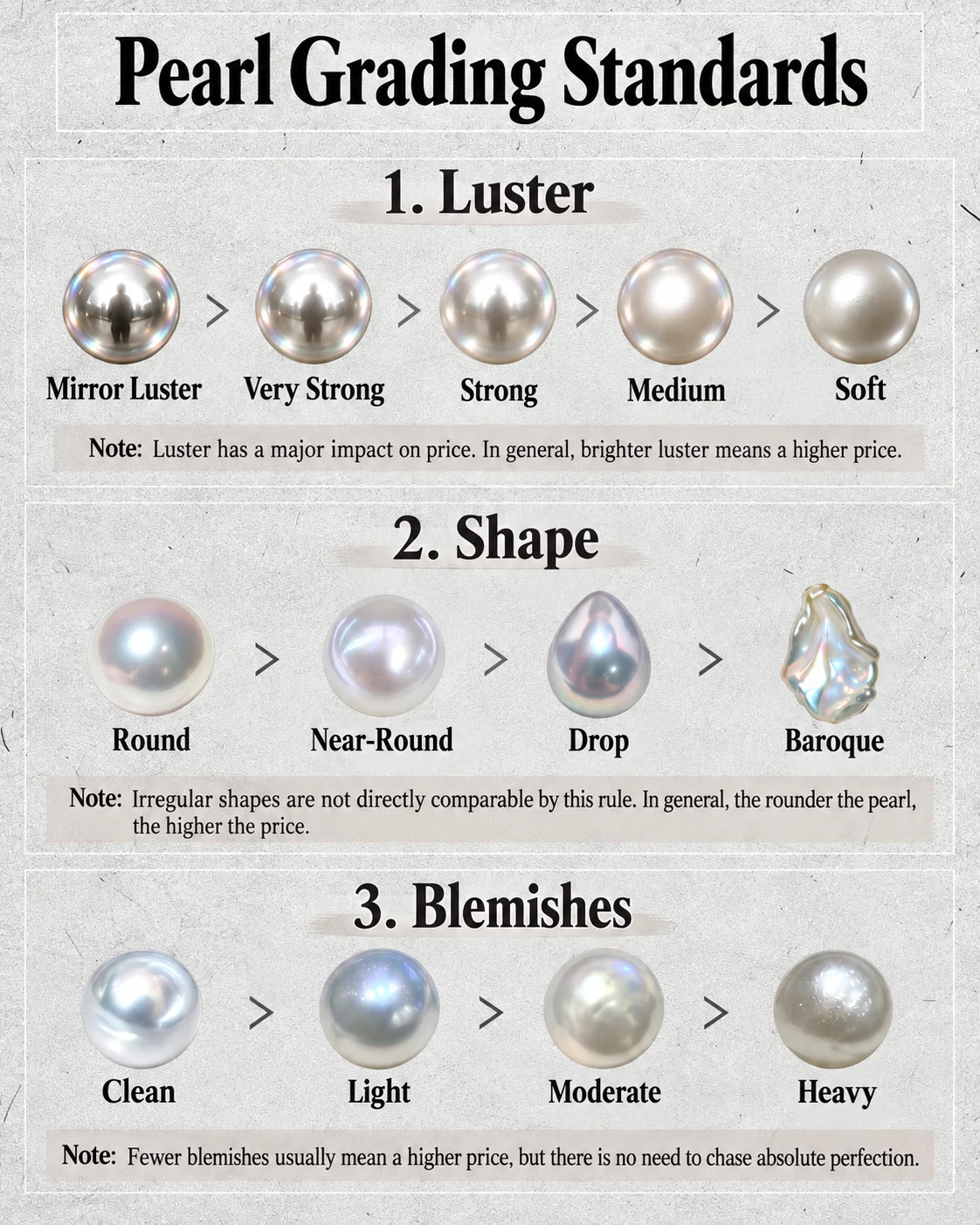
Luster and overtone
Luster is the first quality we look at because it strongly affects the pearl's face-up appearance. We compare how bright and sharp the reflections are, how lively the pearl looks as it moves, and—when relevant—whether the overtone appears clean and attractive.
A pearl with crisp reflections generally presents as higher quality than one with a soft, flat or chalky appearance, even when their size and shape are similar.
Surface quality and blemishes
Pearls are natural products, so small marks are normal. We judge how visible a mark is, where it is located, how deep or serious it is, and how much it affects the overall appearance.
Light pinpoints or small marks are different from prominent pits, cracks, peeling nacre or other structural concerns. A mark hidden near a drill hole may matter much less than the same mark on the main visible face of a pendant or earring.
Shape and roundness
For pearls sold as round, roundness is a major sorting factor. We look at whether the pearl remains visually round from different angles and whether a strand or pair looks consistent as a whole.
For baroque, drop, oval, button and other intentionally non-round categories, we do not treat “not round” as a defect. Instead, we judge whether the shape is attractive and appropriate for that category and whether the lot is well matched for its intended use.
4. What A / AA / AAA / AAAA mean at MJ Pearls
The descriptions below are practical quality ranges, not laboratory grades. They should be read together with the product's pearl type, size, shape and photographs.
AAAA — top-tier, rare lots
- Luster / overtone: very strong, crisp and lively.
- Surface: extremely clean, with only minimal non-distracting marks.
- Shape: near-perfect roundness when the product is sold as round, or exceptional shape quality for its stated category.
- Overall: unusually strong combination of the major visible quality factors.
These lots are genuinely uncommon and represent the narrowest quality selection.
AAA — high-end core quality
- Luster: strong and clearly above ordinary commercial quality.
- Surface: very clean overall, with limited minor natural marks.
- Shape: very close to round in round categories, or well formed and consistent in other shape categories.
AAA is a strong premium range for buyers who want refined appearance without requiring the rarity of the very top lots.
AA — strong value and practical quality
AA allows more tolerance in one of the three main dimensions—luster, surface or shape—while the overall pearl still presents well. In many lots, two of the three core dimensions remain noticeably strong.
This can be an especially useful range for design-led jewelry, wholesale production and buyers who would rather accept a few visible natural characteristics than pay the premium for an exceptionally clean or exceptionally round lot.
A — entry / production range
A allows broader variation in two or more of the core visual factors. Pearls may show more surface marks, softer luster, or greater shape variation, depending on the product.
This range is intended for price-sensitive production and designs where small imperfections are less important than achieving the required size, color, shape or overall cost.
5. Grade is not the whole price: other factors still matter
Two pearls can fall into a similar MJ Pearls quality range and still have different prices. Grade describes visible quality within a comparable group; price also reflects rarity and product characteristics.
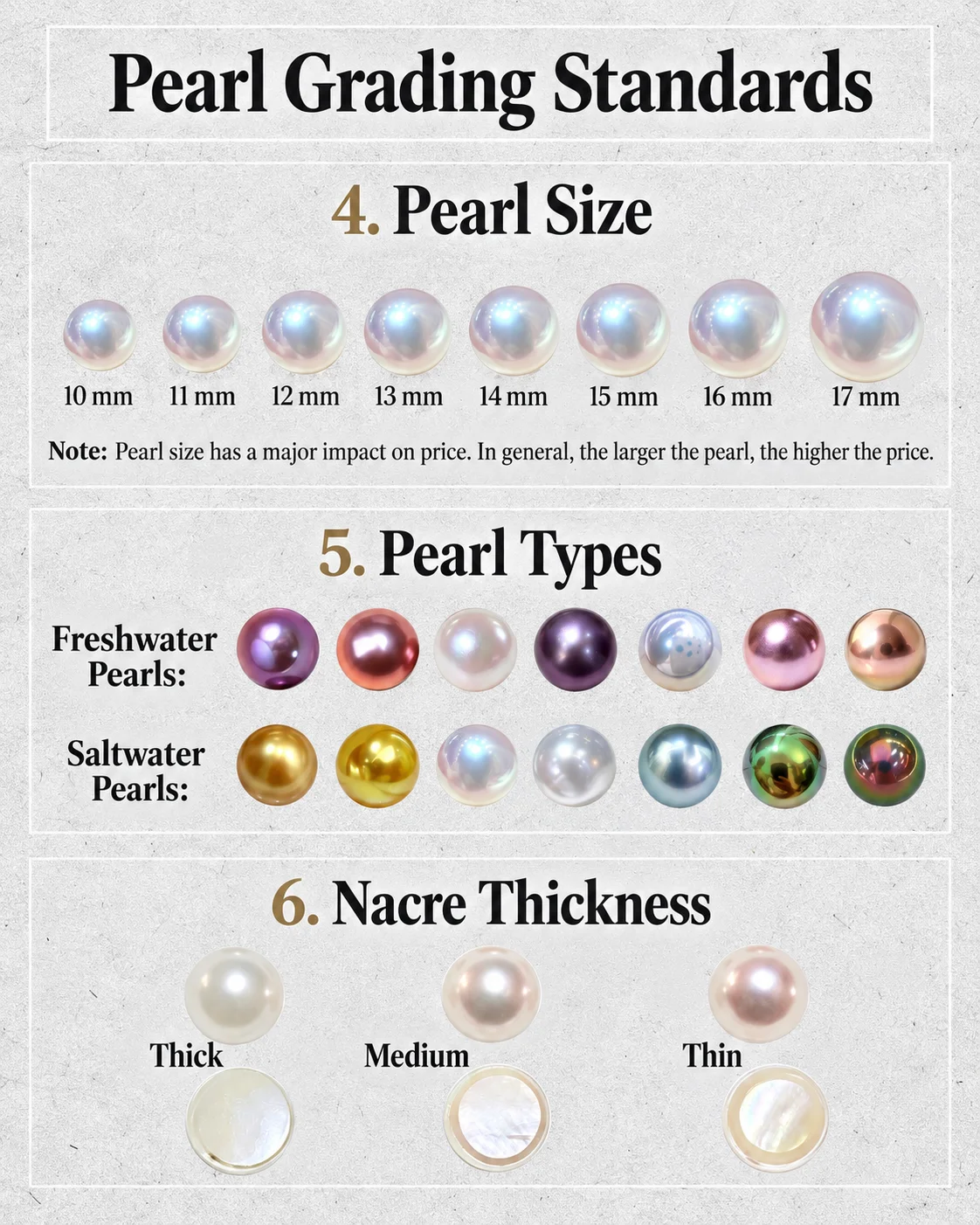
Size
Larger pearls are generally rarer within the same pearl type and comparable quality. A 10–11 mm lot therefore should not be compared with a 7–8 mm lot by grade label alone.
Pearl type and nacre
Freshwater, Akoya, Tahitian and South Sea pearls have different cultivation structures, normal size ranges and market expectations. Nacre quality also matters, especially for bead-cultured pearls, but its interpretation depends on pearl type. One simplified nacre rule should not be applied to every category.
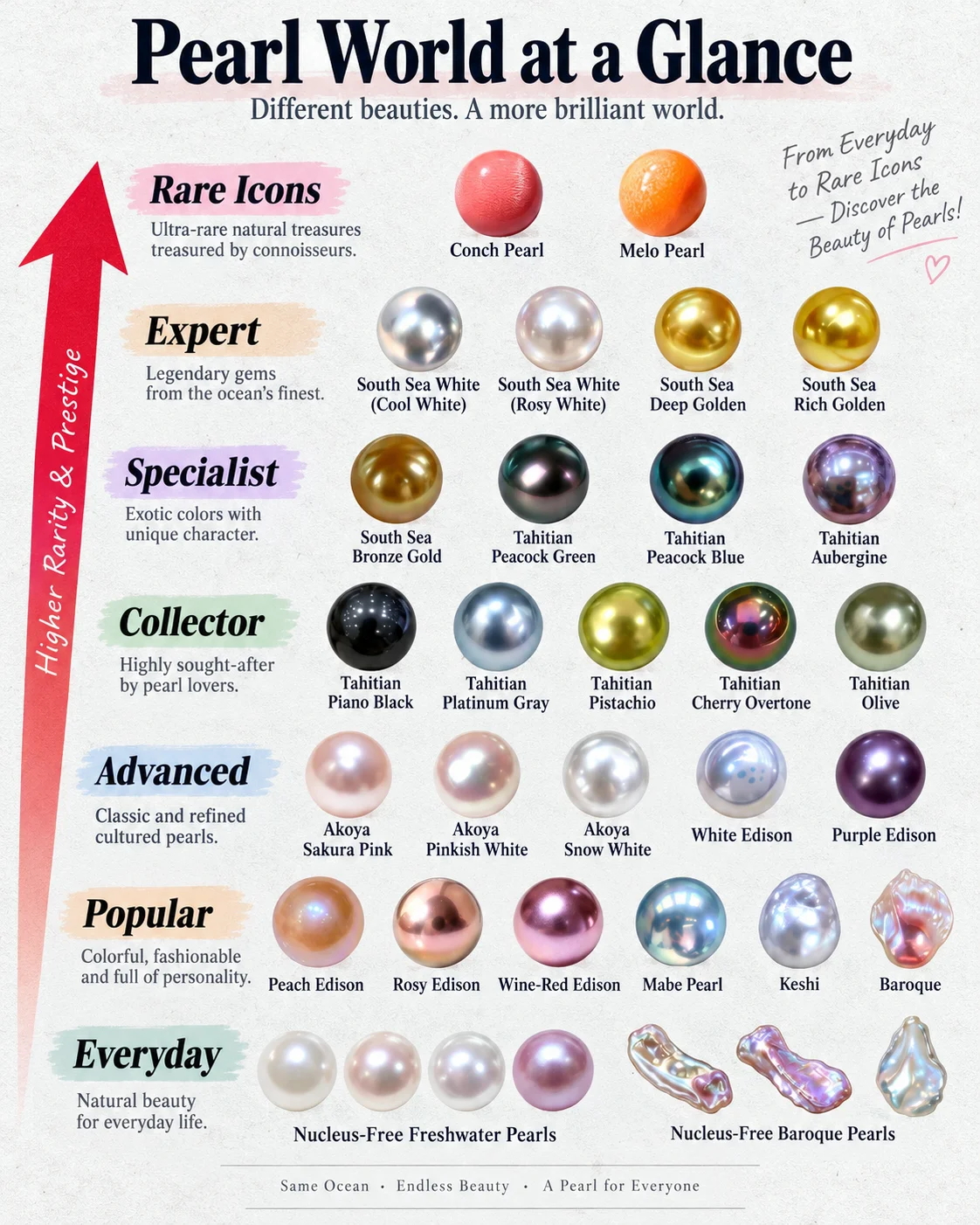
Color
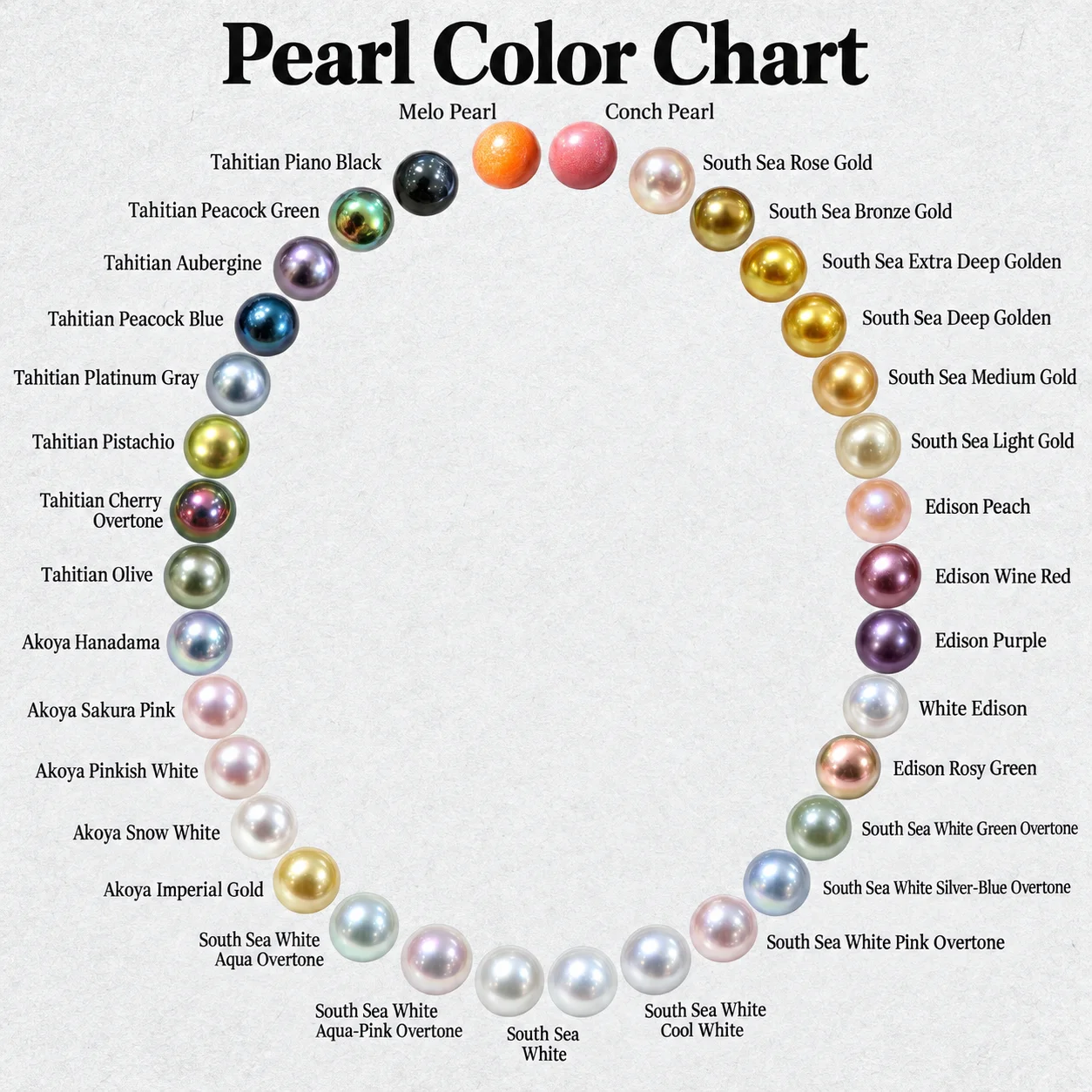
Color can influence rarity and desirability, but it is not a simple good-to-bad ladder. Bodycolor, overtone, treatment status and the normal color range of the pearl type all matter.
Matching
For earrings, strands and matched sets, the group must also be judged as a whole. Similar size, shape, luster, color and surface appearance can require substantial sorting work. A well-matched strand can therefore cost more than a collection of individually similar pearls.
6. How to use our grade when choosing a product
Use the grade as a fast quality filter inside MJ Pearls, then look at the other attributes that matter to your project.
- First compare products of the same pearl type or a genuinely comparable category.
- Check the stated size and shape; these are separate from the quality grade.
- Use A / AA / AAA / AAAA to understand the expected visual quality range.
- Look at the actual photographs or video, especially for baroque pearls and color-sensitive products.
- For pairs and strands, pay attention to matching as well as the individual pearls.
- For a large wholesale order, sample first when the exact appearance is important to your collection.
A higher grade is not automatically the better commercial choice. AAAA may make sense for a premium classic line, while AA may be more appropriate when design, size or price matters more than near-perfect roundness and surface cleanliness.
7. Our seller grade is different from a laboratory certificate
MJ Pearls grading is our commercial sorting system. It communicates the visual quality range we use when selling and matching pearls. A laboratory report serves a different purpose and may provide additional documented observations or measurements depending on the report and the item.
For selected products, NGTC or GUILD certification can be arranged upon request. A certificate does not replace the need to understand the seller's quality range, and our A / AA / AAA / AAAA label should not be presented as a laboratory grade.
FAQ
Is MJ Pearls AAA the same as every other seller's AAA?
No. There is no single universally enforced A/AA/AAA/AAAA pearl grading scale. Our grades describe our own sorting ranges, so cross-seller comparisons should be based on the actual criteria and pearls rather than the letters alone.
What matters most in your grading?
For comparable pearls, we focus first on luster/overtone, surface quality, and shape or roundness. Other factors such as size, pearl type, nacre, color and matching also influence value and product selection.
Does AAAA mean the pearl is flawless?
No. Pearls are organic gems and tiny natural characteristics may still exist. AAAA means the pearl falls into our narrowest top quality range, not that it is a mathematically perfect object.
Are baroque pearls automatically lower grade?
No. Baroque is a shape category. When we grade baroque pearls, we judge the quality of the luster, surface, color and the attractiveness/consistency of the intended baroque form rather than penalizing the pearl simply for not being round.
Should I always buy the highest grade?
Not necessarily. Choose the grade that fits the product and budget. A lower grade with the right size, shape and color may be the better material for a particular design, while premium classic strands or earrings may justify paying for tighter quality and matching.
Do I need a certificate if the pearl already has an MJ Pearls grade?
Not for every purchase. The two serve different functions. Our grade communicates our commercial quality range; a laboratory certificate may be useful when additional documentation is important for the specific item or transaction.