Yes. A pearl necklace is entirely appropriate for a wedding—for a bride, bridesmaid, mother of the bride or groom, or wedding guest. The more useful question is whether a necklace improves the particular outfit. An open, simple neckline may look finished with a pearl strand or pendant, while a high, heavily beaded, halter, or already detailed neckline can look better with no necklace at all.
Instead of starting with “Which pearl type should I buy?”, start with the space around the neck. Then decide how much visual weight the necklace should add. A classic strand, a single pearl pendant, a choker, and an irregular baroque necklace can all work at a wedding, but they create very different effects.
Quick Answer: When Does a Pearl Necklace Work Best?
| Wedding outfit | Easy pearl necklace choice | Why it works |
|---|---|---|
| Strapless or sweetheart dress | Short strand, choker, or pendant | The open neckline leaves clear space for a necklace |
| Square or scoop neckline | Princess-length strand or centered pendant | Creates a clean shape inside the neckline |
| V-neck | Pendant, Y-style design, or restrained short strand | Can follow or balance the direction of the neckline |
| Off-the-shoulder dress | Short strand, choker, or simple pendant | Keeps attention around the collarbone without crowding the shoulders |
| High neck or halter | Usually skip the necklace | The neckline already occupies the same visual area |
| Heavy lace, beading, or statement bodice | Very simple pendant or no necklace | Prevents the jewelry from competing with dress detail |
| Minimal satin or clean modern dress | Classic strand, larger pendant, or sculptural baroque necklace | The simple dress can support more jewelry presence |
The guiding principle is simple: use a pearl necklace to fill visual space, not to fill a checklist. A wedding outfit does not automatically need something at the neck.
First Decide Whether You Should Wear a Necklace at All
Wedding jewelry is often chosen piece by piece: necklace, earrings, bracelet, hair accessory. That can lead to an outfit in which every item is beautiful on its own but too many elements are competing in the same small area.
Before choosing a pearl necklace, put on the dress and look only at the neckline, shoulders, veil, and planned hairstyle. Ask three questions:
- Is there open space between the neckline and the face? If yes, a necklace has room to contribute.
- Does the dress already have decoration near the neck? Lace, crystals, embroidery, bows, flowers, illusion mesh, or a dramatic collar may already be doing the necklace's job.
- Will another accessory be the focal point? Large drop earrings, a jeweled veil, or a statement hairpiece may look stronger if the neck is left clean.
This is why “pearls are appropriate for weddings” and “you should wear a pearl necklace” are not the same statement. Pearls may suit the occasion perfectly while earrings, a bracelet, or a hair detail is the better way to wear them.
Choose the Necklace Form Before the Pearl Type
For wedding styling, necklace structure often changes the overall impression more than whether the pearls are freshwater, Akoya, Tahitian, or South Sea.
Classic full pearl strand
A matched single strand gives the strongest traditional pearl-necklace look. It works especially well with strapless, sweetheart, scoop, square, and other open necklines. Rounder pearls and even matching create a cleaner and more formal effect; irregular pearls soften that formality.
If you are deciding whether you want this continuous pearl look or something lighter, see our guide to when a full pearl necklace is appropriate.
Single pearl pendant
A pendant is easier when you want pearls without making the necklace a major feature. It works well with minimalist dresses, V-necks, softer sweetheart necklines, civil ceremonies, and bridesmaid or guest outfits. Because only one pearl is carrying the visual emphasis, the pearl itself can often be somewhat larger without creating the weight of a full large-pearl strand.
Choker or collar-length pearls
A short necklace keeps the jewelry close to the face and can look either very classic or very fashion-forward depending on the design. It is especially effective when the neckline is open enough to leave a clean band of skin beneath the necklace. With high necklines, however, it can make the upper body look crowded.
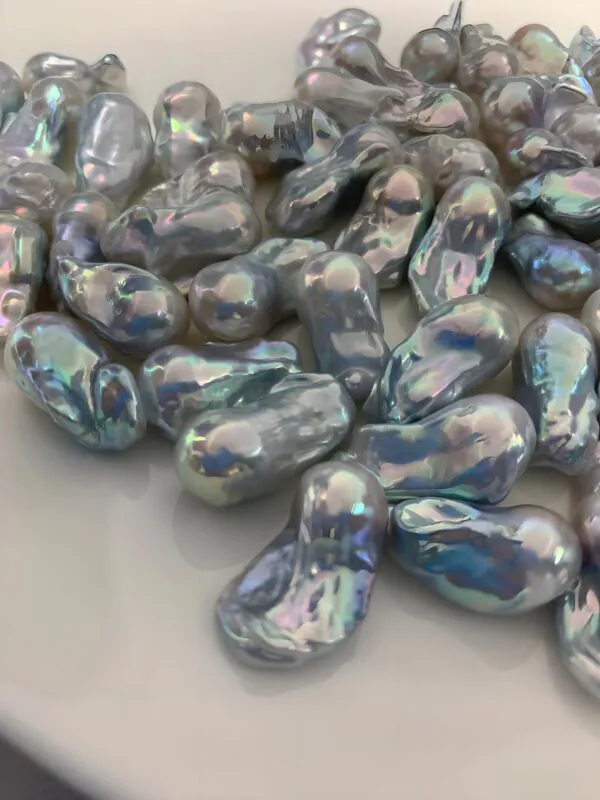
Baroque or irregular pearl necklace
Baroque pearls can make wedding jewelry feel less conventional. Their uneven shapes introduce texture and individuality, which can suit modern, artistic, garden, coastal, or less traditional weddings. They are still real cultured pearls; the irregularity is a shape characteristic, not a sign that they are lower quality by definition. If you are considering this look, our baroque pearl guide explains the shapes and buying considerations in more detail.
Multi-strand or graduated necklace
Multiple strands, larger center pearls, or elaborate clasps add visual weight quickly. They can be beautiful with a very simple gown or a deliberately vintage look, but they are harder to combine with detailed bodices, large earrings, and ornate veils. If the necklace is the statement, let it be the statement.
Match the Pearl Necklace to the Wedding Dress Neckline
Bridal styling sources consistently treat the neckline as one of the most important guides for necklace choice. The reason is practical: a necklace and a neckline create two shapes in the same area, and those shapes either work together or compete with each other.
Strapless and sweetheart
These are among the easiest necklines for pearl necklaces because the upper chest is open. A short strand creates a classic frame around the collarbone. A single pendant keeps the look lighter. A choker can make the styling more deliberate and fashion-led.
With a very clean strapless gown, you can also use larger pearls or a stronger strand because the dress provides enough negative space. With heavy corset beading or embroidery, scale the necklace back.
V-neck
A pendant or Y-shaped design can echo the direction of a V-neck, but it is not the only option. A short strand sitting clearly above the V can create contrast instead. What matters is that the necklace does not land awkwardly on the edge of the neckline or disappear into an illusion panel.
Try the necklace at the exact length you intend to wear. On a V-neck, a difference of a few centimeters can determine whether the pendant sits neatly inside the neckline or collides with the dress.
Square and scoop necklines
These shapes give a necklace a clearly defined area. A princess-length pearl strand or centered pendant often feels balanced because it sits inside the neckline rather than crossing it. If the square neckline is already architectural and dramatic, a very simple necklace may be stronger than an ornate one.
Off-the-shoulder
Because the shoulders and collarbones are already emphasized, a short necklace can reinforce that horizontal line. A single strand, choker, or restrained pendant can work well. Large statement earrings plus a substantial necklace, however, may create too many focal points around the face.
Bateau, high neck, halter, or heavily embellished illusion neck
These are the situations where the best pearl necklace may be no necklace. If fabric, lace, or straps already extend high around the neck, pearl earrings usually have more room to be seen. This is not a rule against necklaces; it is simply a useful test of whether the necklace has a clear place to exist.
How Long Should a Wedding Pearl Necklace Be?
Necklace length should be judged on the wearer, not from the product label alone. The same 18-inch necklace can sit differently depending on neck circumference, shoulders, dress structure, and clasp design. Still, conventional length categories provide a useful starting point:
| Approximate length | Typical effect | Wedding use |
|---|---|---|
| 14–16 in / 36–41 cm | Choker to very short necklace | Open necklines; modern or deliberately classic styling |
| 17–19 in / 43–48 cm | Collarbone / princess area | Versatile starting point for many strands and pendants |
| 20–24 in / 51–61 cm | Longer, more vertical line | Useful with some V-necks, simple dresses, and less traditional designs |
| Longer than 24 in / 61 cm | Matinee to long statement styling | More fashion-specific; best tested with the full outfit |
Do not choose length by number alone. The most important test is where the necklace ends relative to the dress. It should usually sit clearly above the neckline, clearly inside an open neckline, or intentionally over the fabric. Landing exactly on a seam or decorative edge often looks accidental.
What Pearl Size Looks Best for a Wedding Necklace?
Pearl diameter changes the necklace's visual weight, but larger does not automatically mean better. A well-matched, high-luster 7–8 mm strand can look more refined than a larger strand with weaker visible quality.
As a practical visual guide for full strands:
- 5–6 mm: fine, delicate, easy to layer.
- 6–7 mm: restrained and clearly visible without becoming dominant.
- 7–8 mm: a classic middle ground for a traditional pearl strand.
- 8–9 mm: more presence and a stronger formal effect.
- 9 mm and above: increasingly statement-oriented, especially when the entire necklace uses larger pearls.
These are style descriptions, not wedding rules. A large baroque pearl necklace can look intentionally contemporary, while a small perfectly matched round strand can look very traditional. For on-body comparisons and a fuller explanation of how diameter changes a necklace, see the pearl size guide.
Which Pearl Type Works Best for a Wedding Necklace?
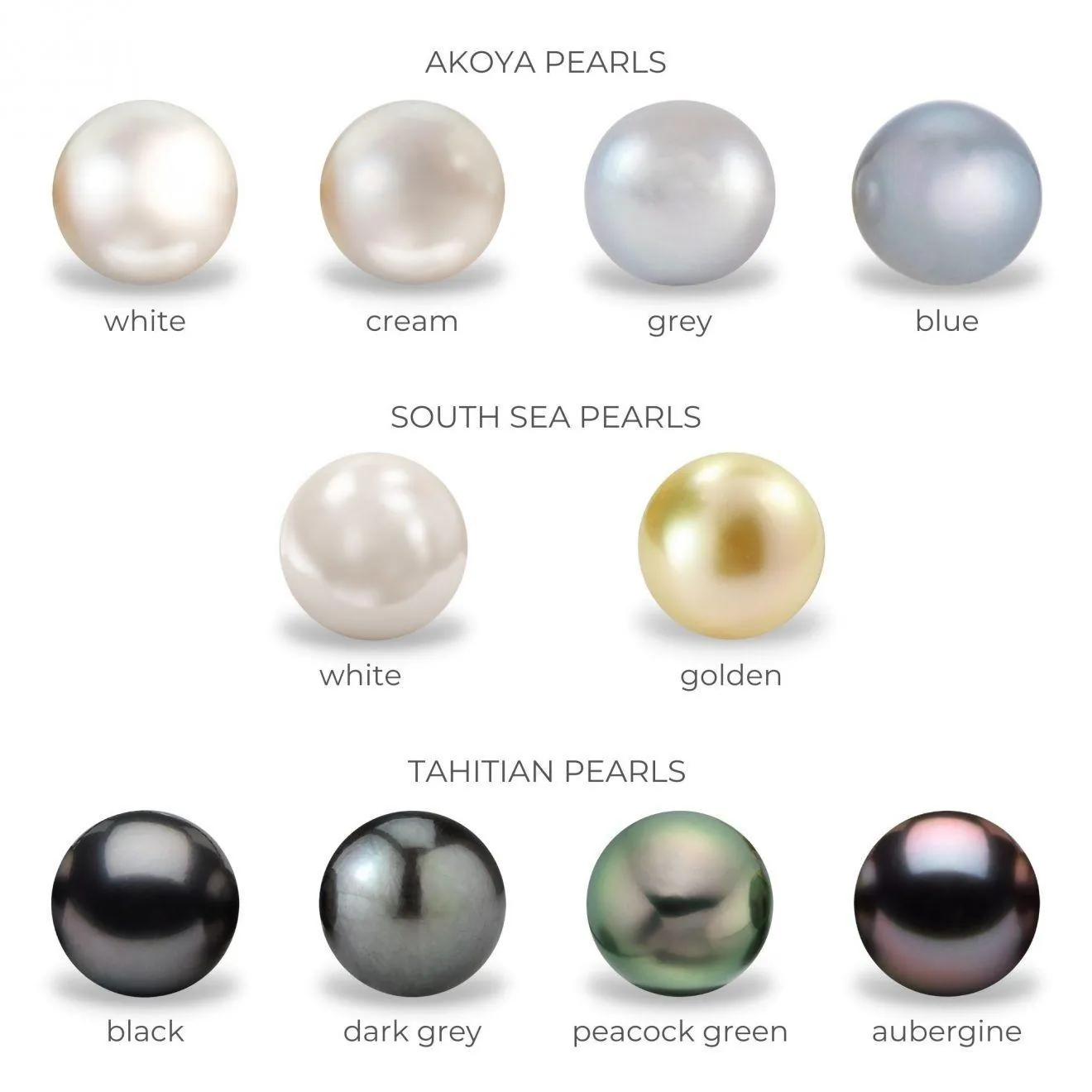
There is no universally best pearl type for weddings. GIA evaluates pearls through factors including size, shape, color, luster, surface, nacre quality, and matching; the pearl variety alone does not determine whether a necklace is beautiful or appropriate.
- Akoya pearls: a natural fit for a crisp, classic white-pearl look. Their typically round appearance and bright luster suit traditional strands particularly well. For a broader comparison of pearl types for brides, see our bridal pearl jewelry guide.
- Freshwater pearls: offer a broad range of shapes, sizes, colors, and price levels, making them useful for everything from small classic strands to baroque designs.
- White South Sea pearls: generally create more scale and presence. They are especially effective when the design is simple enough to let the pearls themselves lead.
- Tahitian pearls: introduce gray, green, peacock, and other dark tones. They can work beautifully for evening weddings, darker wardrobes, menswear, or deliberately nontraditional bridal looks.
If you are comparing quality and budget rather than styling alone, use the pearl buying guide before deciding that one pearl variety is automatically superior to another.
Should the Pearls Be White, Ivory, or Another Color?
Do not rely too heavily on color names. “White” pearls can show silver, cream, rose, or other nuances, and wedding fabrics described as white, ivory, champagne, or blush also vary significantly in real life.
The most reliable method is to compare the necklace with the actual dress in neutral daylight or another consistent light source. You are not necessarily trying to make the pearl disappear into the fabric. A small amount of contrast can help the necklace remain visible. What you want to avoid is a color relationship that looks accidental when the full outfit is seen together.
Colored pearls can also work. Peach or lavender freshwater pearls, golden South Sea pearls, dark Tahitian pearls, or multicolor designs can be more personal than a traditional white strand. The wedding setting does not require every pearl necklace to look bridal-white.
Do the Necklace and Earrings Have to Match?
No. They should usually look intentional together, but they do not need to use identical pearl sizes or be sold as a set.
If the pearl necklace is the focal point, small studs or restrained earrings often create better balance than equally large pearl drops. If the earrings are dramatic, a pendant may work better than a full strand—or you may skip the necklace entirely.
Think in terms of hierarchy:
- One lead piece: necklace or earrings.
- One supporting piece: smaller, simpler, or less visually dense.
- Everything else: quiet enough that the outfit still has a focal point.
This approach is especially useful when the dress already has strong details or when a veil, tiara, comb, bow, or floral accessory is also near the face.
Can a Wedding Guest Wear a Pearl Necklace?
Yes. A pearl necklace is generally a normal and appropriate choice for a wedding guest. The key is the same as with any other formal-event jewelry: match the scale and formality of the piece to the dress code and outfit.
A simple strand with a cocktail dress, a small pendant with a daytime outfit, or dark or baroque pearls with an evening look can all work. In traditions where guests avoid looking overtly bridal, you may prefer not to combine a white dress, white pearl strand, white pearl earrings, and other bridal-coded details all at once. That is a styling and cultural-etiquette consideration rather than a rule about pearls themselves.
Five Mistakes to Avoid When Choosing a Wedding Pearl Necklace
- Buying the necklace before considering the dress. A beautiful strand can still sit badly against the neckline.
- Assuming a wedding requires a necklace. Some high or embellished necklines are stronger without one.
- Choosing size only by millimeter. Shape, luster, length, setting, and whether the pearls form a full strand all change apparent scale.
- Trying to make every pearl item equally important. Necklace, earrings, hair pearls, bracelet, and dress embellishment can overwhelm each other.
- Testing the necklace only in a mirror. Take full-body and portrait photos in lighting similar to the venue. Jewelry can read differently in photographs than it does from a few inches away.
A Simple Way to Choose Your Wedding Pearl Necklace
If you want a straightforward decision process, use this order:
- Put on the dress. Decide whether the neckline actually needs a necklace.
- Choose the necklace form. Full strand, pendant, choker, baroque design, or multi-strand.
- Set the length. Make sure the necklace lands deliberately relative to the neckline.
- Choose visual weight. Decide whether you want delicate, classic, bold, or statement scale.
- Then compare pearl type and quality. Look at luster, surface, shape, color, matching, nacre, and overall construction—not just the pearl name.
- Test the complete look. Add earrings, hairstyle, veil, and other accessories, then remove anything that competes unnecessarily.
If you are ready to compare finished pieces, browse pearl necklaces by design and imagine each one against the actual neckline rather than viewing it as an isolated product.
FAQ
Is a pearl necklace too traditional for a modern wedding?
No. A perfectly matched round strand can look traditional, but a single pearl pendant, short choker, baroque necklace, mixed-material design, or darker pearl can create a much more contemporary effect. The design language matters more than the fact that the necklace contains pearls.
What is the safest pearl necklace style for a bride?
If the dress has an open neckline and you want a classic look, a simple single strand around the collarbone is an easy starting point. If the gown is detailed or the bride prefers minimal jewelry, a single pearl pendant is usually lighter. The safest choice is the one that sits cleanly within the neckline and does not compete with other focal details.
Should a pearl necklace match the wedding dress exactly?
No. Exact color matching is not required. Compare the pearls with the real dress under consistent light and look for a deliberate relationship. A slight contrast can help the necklace remain visible.
Are 7–8 mm pearls good for a wedding necklace?
They are a versatile middle ground for many classic strands, but they are not a universal ideal. Smaller pearls create a more delicate effect, while larger pearls add stronger visual presence. Pearl type, neckline, necklace length, and personal style all matter.
Can I wear a pearl necklace as a wedding guest?
Yes. Pearl necklaces are suitable for guests at many wedding dress codes. Choose the scale and design to fit the outfit and event, and avoid creating an intentionally bridal-looking combination if local etiquette makes that inappropriate.
Final Takeaway
A pearl necklace is appropriate for a wedding when it has a clear job in the outfit. It may frame an open neckline, soften a structured dress, add polish to a simple gown, or become the main jewelry statement. But if the neckline is high, heavily decorated, or already competing with statement earrings and a veil, leaving the neck bare can be the better choice.
Start with the dress, not the pearl category. Choose the necklace form and length first, then decide how much pearl size, symmetry, color, and luster the look needs. That order makes it much easier to find a necklace that looks intentional rather than simply “wedding appropriate.”