Pearls do not make you look older by themselves. What can make a pearl outfit feel more traditional is the combination around them: a very uniform strand, matching pearl studs, matching bracelet, formal clothing, symmetrical styling, and no contrasting element.
If that is the elegant look you want, there is nothing wrong with it. But if you want pearls to feel more relaxed, contemporary, or closer to the jewelry you normally wear, you usually do not need different pearls. You only need to change one or two parts of the styling formula.
The simplest rule is this: keep the pearls, but break one traditional signal. Mix in metal. Change the silhouette. Add movement. Pair the pearls with casual clothing. Wear one pearl piece instead of a complete set. Even a perfectly round white strand can look current when its context changes.
The Main Idea: Pearls Look Traditional When Too Many Traditional Signals Appear at Once
When people say pearls make them look “older,” they are usually reacting to an overall visual language rather than to the gemstone itself. A round white pearl can look formal, minimal, romantic, sharp, artistic, or even slightly edgy depending on how it is used.
Think of pearl styling as a group of variables:
- format: full strand, pendant, stud, drop, hoop, ring, or bracelet;
- shape: round, near-round, oval, drop, button, baroque, or another irregular form;
- scale: delicate, medium, or statement-size;
- matching: perfectly coordinated or intentionally mixed;
- metal and setting: pearl-only, gold, silver, geometric, sculptural, or minimal;
- clothing context: ceremonial, businesslike, casual, sporty, romantic, or minimalist.
If every variable points toward “classic and formal,” the finished look will naturally feel more traditional. If even one or two variables introduce contrast, the same pearls can feel much more contemporary.
This matters because it avoids an unhelpful rule such as “small pearls look young” or “large pearls look mature.” Size changes visual presence, but styling context determines the character of the piece.
Quick Fixes: How to Make Pearls Look More Modern
| If your pearls feel too traditional... | Try changing... | Example |
|---|---|---|
| Full matching pearl set | Number of pearl pieces | Keep the necklace, switch the earrings to simple metal hoops |
| Uniform round strand | Surrounding jewelry | Layer it with one plain gold or silver chain |
| Classic pearl studs | Clothing context | Wear them with denim, a T-shirt, knitwear, or a relaxed blazer |
| Very symmetrical jewelry | Silhouette | Add a drop, hoop, asymmetrical detail, or irregular pearl |
| Large pearls feel too formal | Format | Use one large focal pearl instead of a complete large-pearl strand |
You do not need to apply every idea at once. In many outfits, one change is enough.
1. Wear One Pearl Piece Instead of a Complete Matching Set
A necklace, earrings, bracelet, and ring made from closely matched white pearls can create a very polished and coordinated impression. That can be beautiful for formal dressing, but it is also one of the easiest ways to make pearls feel ceremonial.
For a lighter everyday look, choose one pearl focal point. Wear the strand with metal earrings. Wear pearl drops with a plain necklace. Wear a pearl ring with no other pearls at all.
This does not make the jewelry less elegant. It simply gives the eye more space and makes the pearl feel like part of your outfit rather than a complete “pearl look.”
2. Mix Pearls with Plain Gold or Silver Jewelry
Metal is one of the easiest ways to change the visual language of pearls. A pearl necklace layered beside a plain chain immediately becomes less uniform. Pearl drops attached to hoops feel different from conventional button studs. A single pearl on a sculptural metal setting can look almost architectural.
This approach also works well when pearls are new to you because you can combine them with jewelry you already wear. You do not need to build a separate pearl wardrobe.
Current fashion coverage continues to show pearls in mixed-metal, layered, irregular, oversized, and unexpected settings rather than treating them only as formal matching jewelry. The useful lesson is not to chase every trend; it is that pearls are flexible enough to share space with other materials and silhouettes.
3. Pair Classic Pearls with Casual or Minimal Clothing
A classic pearl strand changes immediately when the clothing underneath it becomes simpler. Instead of reserving pearls for a formal dress or highly coordinated suit, try them with:
- a plain T-shirt;
- denim;
- a simple crewneck knit;
- an open-collar shirt;
- a relaxed blazer;
- a clean black top;
- a simple slip dress without other elaborate jewelry.
The contrast is useful because the clothing prevents the pearls from carrying the whole outfit toward a formal direction. This is also why you can often modernize inherited or older pearl jewelry without changing the piece itself.
4. Use Shape to Change the Mood — but Do Not Assume Round Pearls Are “Old”
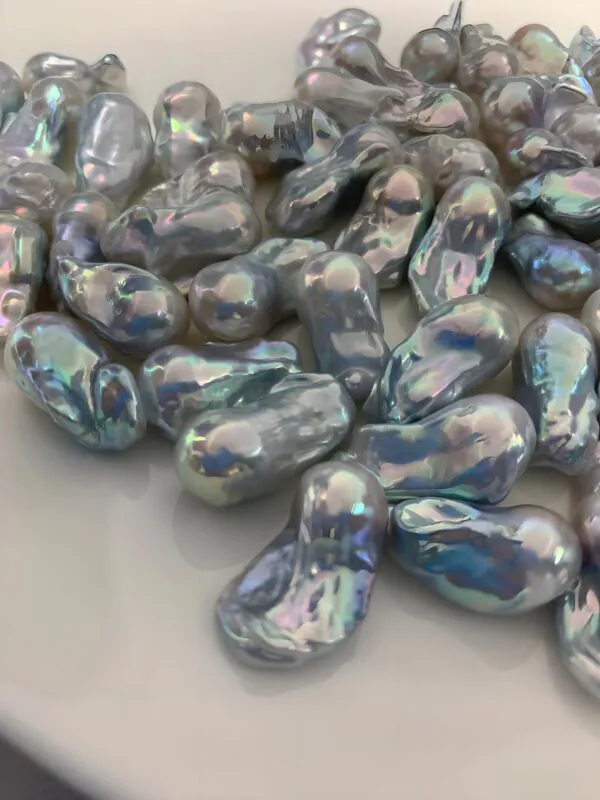
Baroque and irregular pearls are often recommended for a more contemporary look, and there is a practical reason: asymmetry introduces texture and reduces the sense of perfect coordination. Current jewelry coverage also frequently highlights irregular forms and unexpected silhouettes.
But that does not mean round pearls are automatically old-fashioned. A round pearl can look extremely modern as a single pendant, on a small hoop, in a geometric setting, or as part of an intentionally sparse necklace.
The more useful distinction is:
- round and highly matched tends to look polished, orderly, and classic;
- baroque or irregular tends to look organic, individual, and less formal;
- drops and ovals add movement and sit between those two moods.
GIA recognizes shape as one of the major characteristics used to describe and evaluate pearls, and cultured pearls occur in many forms beyond the perfect sphere. If you want to compare these shapes visually, see the MJ Pearls pearl shape guide.
5. Choose Pearl Size by Visual Scale, Not by Age
Another common shortcut is to say that smaller pearls look younger and larger pearls look older. That is too simple.
A small, perfectly matched strand worn with matching studs can look more traditional than one large baroque pearl on a fine chain. An oversized pearl drop can look sculptural. A medium round stud can look clean and minimal. A tiny pearl can even look ornate if the setting around it is elaborate.
Instead of asking, “What size will make me look younger?” ask:
- Do I want the pearl to be a quiet accent or the focal point?
- How large is the jewelry I normally wear?
- Is this one pearl or a whole row of pearls?
- Will the piece be worn near the face, at the neckline, or farther from it?
The number of pearls matters as much as the millimeter measurement. One larger pearl often feels visually lighter than an entire strand of smaller pearls. For practical size comparisons across earrings, necklaces, and pendants, use the pearl size guide.
6. Add Movement, Space, or Asymmetry
Traditional pearl jewelry often emphasizes repetition and symmetry: pearl after pearl at regular intervals, two identical studs, a perfectly centered necklace. Contemporary designs frequently do the opposite by introducing movement or empty space.
That can mean:
- a pearl suspended below a hoop;
- a long drop earring instead of a button stud;
- one pearl placed off-center on a chain;
- uneven spacing between pearls;
- mixed pearl sizes;
- an asymmetrical pair;
- one sculptural baroque pearl used as a focal point.
Movement is especially useful around the face because it makes the jewelry feel less static. If earrings are your easiest everyday piece, compare different pearl earring styles rather than assuming that pearl studs are the only classic option.
7. Do Not Be Afraid of Dark, Colored, or High-Contrast Pearls
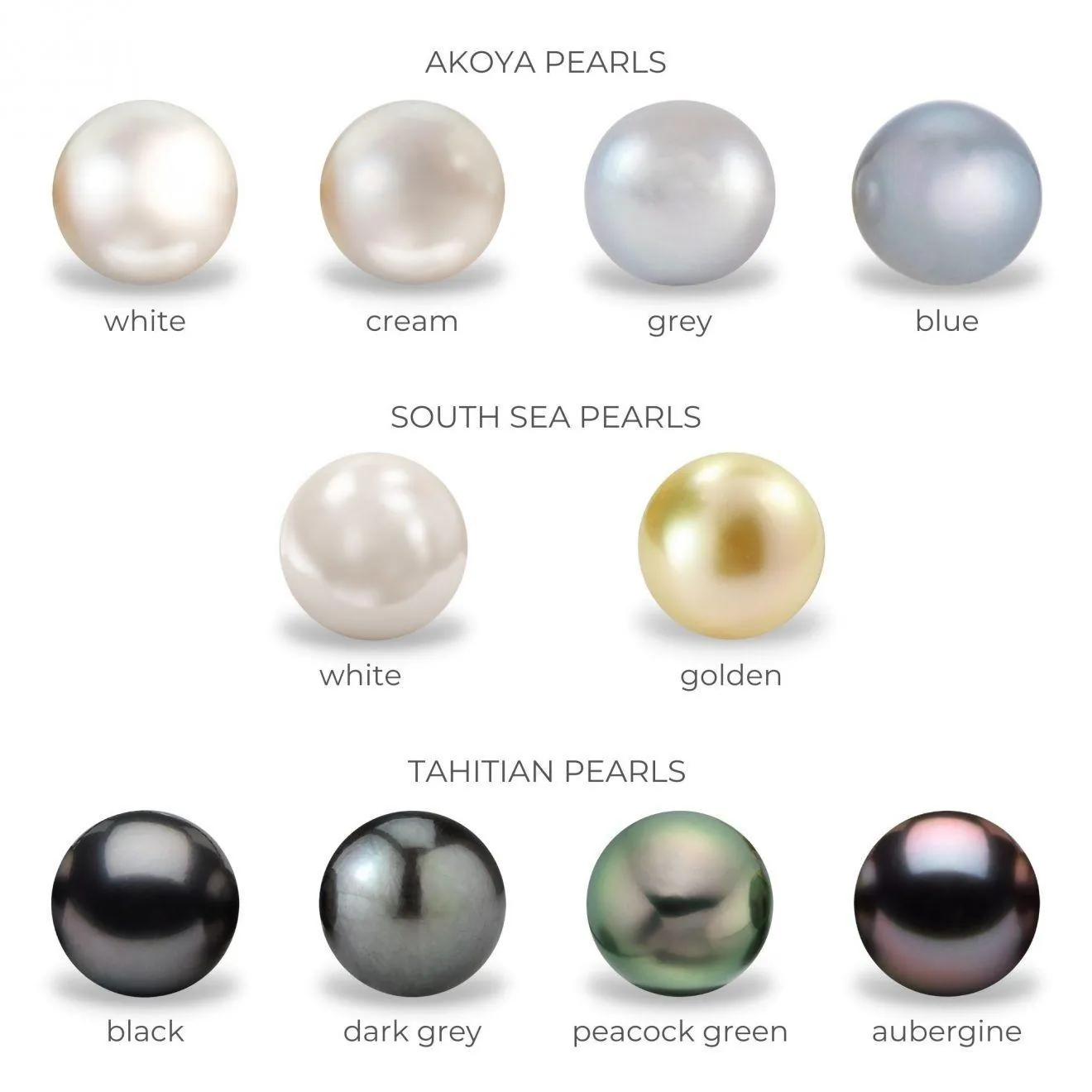
White pearls are the most familiar, but pearls can appear in a broad range of body colors and overtones. GIA notes that cultured pearls occur in many colors, including warm and cool hues, and that color is one of the major pearl value factors.
If white round pearls feel too conventional for your wardrobe, a darker Tahitian pearl, soft pink or lavender freshwater pearl, or warm golden pearl may fit more naturally. Color changes the contrast against clothing and skin, which can make the same basic jewelry format feel completely different.
Tahitian pearls are particularly useful if you like gray, black, green, blue, or other darker tones. They are not inherently “younger,” but they often create a less conventional first impression than a classic white strand. For more examples, see how Tahitian pearls can be styled.
Avoid rigid skin-tone rules. Lighting, clothing, metal color, makeup, hair color, pearl overtone, and personal preference all affect the result. If possible, judge color near the face or from realistic on-body photographs.
8. If You Own a Classic Pearl Strand, Modernize the Styling Before Replacing It
A good pearl strand does not become obsolete simply because your current wardrobe is less formal. Before buying something new, try changing how you wear the strand.
Wear it with one plain chain
Use different textures rather than adding another pearl strand. A simple metal chain provides enough contrast to break the uniform look.
Wear it over a simple top
A plain black knit, white T-shirt, tank, or open shirt gives the pearls a cleaner background than an already dressy neckline.
Skip the matching earrings
Try small metal hoops, sculptural studs, or no earrings. The strand remains the focal point.
Change the length relationship
If you layer necklaces, make the lengths visibly different instead of letting two pieces sit on top of each other. The negative space helps each piece read separately.
Use the strand as contrast
Do not try to make every part of the outfit equally elegant. The pearl necklace can be the refined element against denim, leather, relaxed tailoring, or a minimal monochrome outfit.
Five Easy Pearl Outfit Formulas
Casual
Plain T-shirt + denim + pearl strand + metal hoops. The pearls provide polish while the clothes keep the outfit relaxed.
Minimal
Black or neutral top + single pearl pendant + one simple ring. Leave plenty of empty space around the pearl.
Office
Relaxed blazer + knit or shirt + pearl drops + plain chain necklace. Use the earrings for movement instead of wearing a complete pearl set.
Evening
Simple dress + one statement pearl piece. This could be an oversized baroque pendant, large drops, or a bold strand—but not necessarily all three.
Classic but Current
Round pearl necklace + clean modern neckline + minimal metal jewelry. You can keep the traditional pearl shape while simplifying everything around it.
What Should You Avoid If Your Goal Is a More Contemporary Look?
You do not need a list of forbidden pearl styles. The better rule is to avoid stacking too many signals you personally associate with formal or traditional dressing.
For example, if your goal is relaxed and modern, you may want to avoid combining all of the following at once:
- a perfectly matched white round strand;
- matching pearl button studs;
- a matching pearl bracelet;
- a highly conservative or ceremonial neckline;
- symmetrical jewelry everywhere;
- no contrasting metal, texture, or casual element.
Any one of these can work beautifully. The issue is cumulative. If you like the necklace, keep it and change the earrings. If you love the matching set, wear it with a simpler outfit. If your clothing is formal, choose a more unexpected pearl shape.
The goal is not to avoid looking “older.” It is to make the jewelry communicate the style you actually want.
When Buying New Pearls, Choose the Design Before You Obsess Over the Pearl Type
If you are shopping specifically for a contemporary everyday piece, start with the jewelry format first:
- Choose where you will wear the pearl. Earrings, pendant, strand, ring, or bracelet.
- Choose the design language. Minimal, classic, organic, sculptural, asymmetrical, or bold.
- Choose the visual scale. Delicate, medium, or statement.
- Then choose pearl shape, color, and type.
- Finally compare quality. Luster, surface, nacre, matching, construction, and overall appearance still matter once the style is right.
This order prevents a common mistake: buying a “young” or “modern” pearl based on a single label and then discovering that the actual piece does not fit your wardrobe.
If you are comparing finished pieces, browse pearl jewelry by format and design first. If you also want a more systematic explanation of luster, surface, size, shape, color, nacre, and matching, the pearl buying guide is the better next step.
Frequently Asked Questions
Do pearl necklaces make you look older?
Not automatically. A pearl necklace can look classic, minimal, casual, artistic, or bold depending on its length, pearl size and shape, setting, clothing, and other jewelry. A very coordinated formal combination tends to read as more traditional than the pearl necklace by itself.
How do you make a classic pearl necklace look modern?
Try changing one surrounding element: wear it with a T-shirt or knit, layer it with a plain metal chain, skip matching pearl earrings, or combine it with a cleaner neckline. You usually do not need to replace the necklace.
Are baroque pearls more youthful than round pearls?
Baroque pearls often feel less formal because their irregular shapes introduce texture and asymmetry, but they are not inherently more youthful. Round pearls can look equally contemporary in minimal, geometric, mixed-metal, or single-pearl designs.
Do large pearls make you look older?
No. Large pearls simply have more visual presence. One large focal pearl can look sculptural and modern, while a smaller highly coordinated set can look more traditional. Judge size together with jewelry format and styling.
Can you wear pearls with gold or silver chains?
Yes. Mixing pearls with plain metal jewelry is one of the easiest ways to create contrast and integrate pearls into an everyday jewelry collection. Choose the metal you already wear rather than treating pearls as a separate category.
Can you wear pearls casually?
Yes. Pearls can work with denim, T-shirts, knitwear, relaxed shirts, blazers, simple dresses, and other everyday clothes. Keeping the rest of the outfit relatively simple often makes the pearls easier to wear.
Final Takeaway
If pearls seem to make an outfit look older than you want, do not start by blaming the pearls. Look at the whole combination.
A matched strand, matching studs, formal clothing, and perfect symmetry all point in the same traditional direction. Change one variable—metal, shape, scale, movement, clothing, or the number of pearl pieces—and the impression can change immediately.
The best modern pearl styling is not about making pearls look younger. It is about making them look like they belong to you.