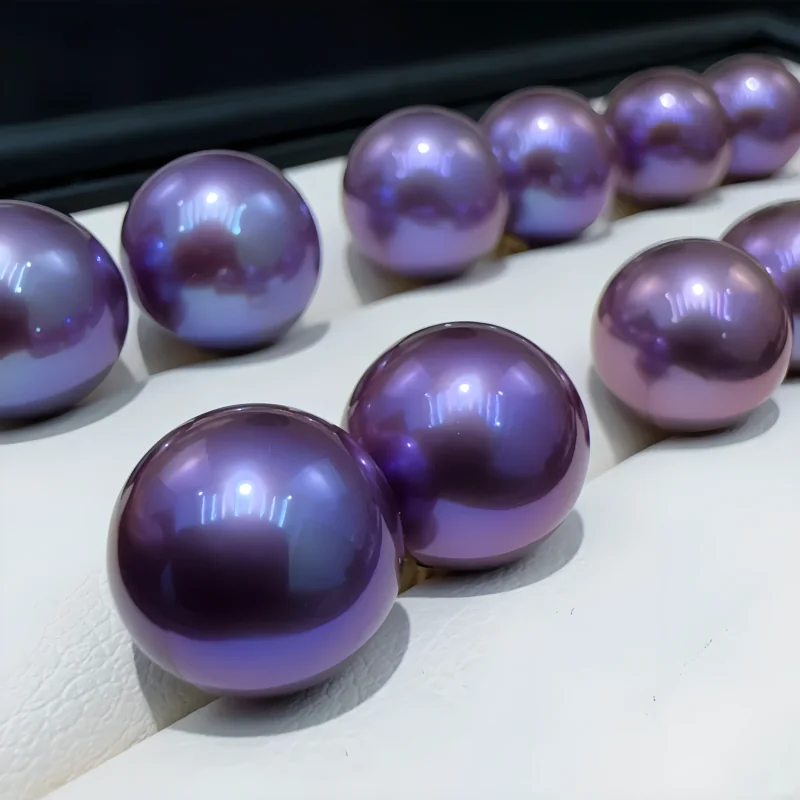
Drop-shaped pearls can be inexpensive or very expensive—the shape name alone does not determine the price. A small freshwater drop with moderate luster may be quite accessible, while a large, clean, highly lustrous South Sea or Tahitian drop can be valuable. A well-matched pair of fine drops can cost substantially more than a comparable single pearl because the seller must find two pearls that match in size, taper, color, luster, surface, and visual balance.
The most useful rule is simple: first compare pearl type and quality, then judge the drop shape. Do not assume “drop” means cheap because it is not round, and do not assume it means expensive because a teardrop silhouette looks rare.
Quick Answer: What Makes a Drop Pearl Expensive?
| Price factor | How it affects a drop-shaped pearl |
|---|---|
| Pearl type | Freshwater, Akoya, Tahitian, and South Sea pearls occupy different size, rarity, and market ranges. |
| Drop symmetry | A smooth, balanced taper with no obvious flat side or off-axis tip is usually more desirable than an irregular drop. |
| Size | Within the same pearl type and quality level, larger drops are generally rarer and more valuable. |
| Luster | Strong, sharp, lively reflections can raise desirability significantly; a dull pearl is not rescued by a perfect drop outline. |
| Surface quality | Cleaner visible surfaces usually command more, especially when the blemish sits on the broad front of the drop. |
| Color | Natural bodycolor, overtone, saturation, and market preference can create premiums within particular pearl types. |
| Nacre quality | Good nacre supports beauty and durability; poor nacre can lower quality even if the shape looks attractive. |
| Matching | A convincing pair or multi-pearl set can carry a meaningful premium because several characteristics must match at once. |
| Jewelry construction | Gold, diamonds, craftsmanship, brand positioning, and design affect the finished jewelry price separately from the pearl itself. |
Are Drop-Shaped Pearls Usually More Expensive Than Round Pearls?
Usually not when you compare truly similar pearls. GIA notes that perfectly spherical pearls are generally the most valuable shape when other factors are equal, while symmetrical drops are also highly valued. That distinction matters: roundness often carries the strongest shape premium, but a fine drop is not automatically a lower-grade pearl.
In practice, the comparison only makes sense when the pearls are alike in type, size, luster, surface, color, and nacre quality. Comparing a 9 mm freshwater round pearl with a 14 mm South Sea drop tells you almost nothing about the effect of shape because several much larger price variables changed at the same time.
If you want the broader shape context first, see our guide to drop-shaped pearls and their best jewelry uses and our pearl shape guide.
The First Price Question Is Not “Is It a Drop?” but “What Kind of Pearl Is It?”
The word drop describes geometry. It does not tell you whether the pearl is freshwater or saltwater, which mollusk produced it, whether it is cultured or natural, or what quality level it reached.
This is why two pearls with nearly identical teardrop silhouettes can have very different prices.
Freshwater drop pearls
Freshwater cultured pearls cover a very wide range of sizes, shapes, luster levels, and price points. Drop-like freshwater pearls can therefore provide an accessible way to get the teardrop look, but fine bead-nucleated or unusually large, lustrous, symmetrical examples can move into much higher price territory.
Tahitian drop pearls
Tahitian pearls are valued not only for shape but also for their naturally dark bodycolors and overtones. A large symmetrical drop with strong luster, an attractive natural color, and a clean visible surface may be much more expensive than a modest freshwater drop even if both are simply labeled “drop pearl.”
South Sea drop pearls
South Sea pearls commonly occupy larger size ranges, so fine white or golden drops can become expensive when large size is combined with smooth symmetry, strong luster, clean surface quality, and desirable color. Again, the price is not created by the word drop alone—it is created by the complete package.
Akoya drop pearls
Akoya is best known for round and near-round pearls with sharp luster, but non-round forms also occur. When comparing an Akoya drop, judge it within the Akoya category rather than against a visually similar freshwater or South Sea pearl.
The practical lesson is to compare like with like. Establish the pearl type first, then evaluate why one drop within that type costs more than another.
1. Symmetry Is the Main Shape-Specific Price Factor
Once you know the pearl type, the quality of the drop shape becomes important. A fine drop is not merely “longer than round.” It should look balanced around its long axis.
Look for:
- a smooth transition from the narrow end to the fuller body;
- a tip or narrow end that does not lean strongly to one side;
- balanced shoulders rather than one side appearing swollen;
- no obvious flat face that becomes distracting when the pearl rotates; and
- a proportion that looks intentional rather than accidentally elongated.
GIA groups pearl shape into spherical, symmetrical, and asymmetrical categories and specifically recognizes drop forms as symmetrical shapes. Its pearl buyer's guide notes that symmetrical drops are among the most valued pearl shapes.
This does not mean there is one perfect length-to-width ratio. A short rounded drop and a long slender drop can both be attractive. What matters is whether the silhouette is visually coherent and suited to the intended design.
2. Size Can Change Price Faster Than the Shape Label Suggests
When the pearl type and overall quality are comparable, larger pearls are generally rarer and more valuable. This is one reason a large drop can become expensive even if a round pearl would still command a higher shape premium in a strict like-for-like comparison.
For non-round pearls, do not rely on one millimeter number. Ask for length × width, and when the profile matters, depth as well. A pearl described casually as “12 mm” could mean a 12 mm width, a 12 mm length, or an approximate seller shorthand. Those are not equivalent.
This matters especially when comparing earrings. Two drops can share the same maximum length while looking obviously different because one is much wider or fuller.
3. Luster Can Matter More Visually Than Perfect Symmetry
A beautifully tapered pearl with weak, chalky luster will usually be less compelling than a slightly less perfect drop with lively reflections. Luster is one of the strongest contributors to how a pearl looks in real life because it controls the sense of brightness, depth, and sharpness on the surface.
When shopping online, do not judge luster from a single bright highlight. Strong lighting can make almost any glossy object look shiny. Compare reflection sharpness, contrast, and how the pearl looks while rotating. Our pearl luster guide explains a practical comparison method.
A useful budget trade-off is often to accept a small, low-visibility surface mark before sacrificing strong luster. That is not a universal rule, but it frequently produces a more attractive pearl than choosing a visually dull pearl simply because its surface looks cleaner in a still photograph.
4. Surface Quality Matters Most Where the Eye Actually Looks
Drop pearls are usually worn vertically, so some areas receive more visual attention than others. A blemish on the broad front of the pearl may be far more noticeable than a similar mark near the top, drill area, or mounting point.
This means two drops with the same number of surface characteristics can have different practical desirability. Location, size, severity, and visibility all matter.
Do not confuse a natural change in the pearl's contour with a surface defect. A slightly uneven taper is a shape issue; a pit, wrinkle, scratch, crack, peeling area, or chalky patch is a surface or condition issue. Keeping those categories separate makes price comparisons much clearer.
5. Color Can Add or Remove a Premium Depending on Pearl Type
Color should be judged within the pearl category rather than through a universal “rare color equals expensive” rule.
For Tahitian pearls, bodycolor and overtone can have a strong effect on desirability. For golden South Sea pearls, richer natural gold can command more than paler tones when other factors are comparable. For white pearls, subtle overtones and the way color interacts with luster can affect buyer preference even when the bodycolor seems similar.
Treatments also matter. If a color premium is a major part of the seller's price, ask whether the color is natural for that pearl type or whether enhancement is known or disclosed. A premium should be tied to what the pearl actually is, not simply to a dramatic photograph.
6. A Matched Pair Can Be Much Harder to Find Than One Beautiful Drop
This is the pricing point that many simple “pearl shape” guides miss.
A pendant requires one attractive drop. A pair of earrings requires two pearls that look convincingly related when placed side by side and when worn on opposite ears.
Matching can involve:
- length and width;
- overall taper and shoulder shape;
- visual weight;
- bodycolor and overtone;
- luster strength and character;
- surface cleanliness and the location of marks; and
- drilling or mounting orientation.
A dealer may have many individually attractive drops but only a few that form convincing pairs. As size and quality rise, this matching problem can become more significant. That is why a fine matched pair should not be priced by simply doubling the cost of one loose pearl.
The same logic applies even more strongly to a necklace or multi-pearl design where many drops must harmonize. GIA includes matching as one of its seven pearl value factors for jewelry containing more than one pearl.
7. Nacre Quality Still Matters Even When the Shape Looks Perfect
Pearls are not cut into their final shape the way many gemstones are. The visible pearl surface is the product of biological growth and, in cultured pearls, the structure created during cultivation.
Nacre quality therefore remains part of the value assessment. Poor nacre can make a pearl look dull or chalky and, in serious cases, affect durability. A highly symmetrical outline should not distract you from how well the pearl itself developed.
This is one reason the most reliable way to evaluate a drop pearl is not to rank shape first and everything else second. Use a complete framework. Our pearl grading guide explains how shape, luster, surface, size, color, nacre, and matching work together.
8. Finished Jewelry Price Is Not the Same as Pearl Price
A common source of confusion is comparing loose pearls with finished earrings or pendants.
The retail price of drop-pearl jewelry may include:
- gold or platinum weight;
- diamonds or other gemstones;
- custom findings and secure mounting;
- labor and matching time;
- design complexity;
- brand and retail positioning; and
- certification or laboratory reporting in higher-value cases.
A $2,000 pair of pearl drop earrings is therefore not evidence that the pearls themselves are worth $2,000. Conversely, an inexpensive setting does not tell you that the pearl is low quality. Separate the gem from the jewelry construction before comparing prices.
Why Generic Online Price Ranges Are Often Misleading
Search results frequently offer ranges such as “drop pearls cost $X to $Y.” Those figures can be useful as retail snapshots, but they are weak as valuation rules because the category is too broad.
A single range may mix:
- freshwater and South Sea pearls;
- small and very large sizes;
- loose pearls and finished jewelry;
- single pearls and matched pairs;
- moderate and exceptional luster;
- treated and natural colors; and
- commercial-grade and collector-grade material.
A better comparison is narrower: same pearl type, similar size, similar luster, similar surface quality, similar color, and the same sales format. Only then does the shape premium become meaningful.
A Practical Price-Comparison Method
If you are comparing two drop pearls or two pieces of drop-pearl jewelry, work through the questions in this order:
- Confirm the pearl type. Freshwater, Akoya, Tahitian, South Sea, or another category?
- Confirm whether you are comparing loose pearls, single jewelry pieces, or matched pairs.
- Compare actual dimensions. For drops, use length × width rather than one vague millimeter number.
- Judge luster under comparable lighting. Reflection sharpness is more useful than one bright spot.
- Inspect the most visible surface. Note both the number and location of blemishes.
- Judge the drop silhouette. Look for smooth taper, balance, and symmetry when the pearl rotates.
- Check color and treatment disclosure. Especially when unusual color is part of the premium.
- For pairs, judge matching as a separate value factor. Do not assume two similar measurements create a good pair.
- Separate setting cost from pearl cost. Metal, diamonds, labor, and branding can change the final ticket dramatically.
This sequence prevents one attractive feature—usually size or shape—from dominating the entire buying decision.
When Is a More Expensive Drop Pearl Actually Worth Paying For?
A higher price makes the most sense when you can identify what you are getting for the extra money.
Paying more can be rational when the pearl offers one or more difficult-to-combine qualities: large size within its type, excellent luster, clean visible surface, highly balanced symmetry, desirable natural color, strong nacre quality, or unusually good matching.
Paying more makes less sense when the premium is justified only with vague labels such as “perfect teardrop,” “AAAAA,” “top grade,” or “rare” without clear photographs, measurements, comparison, or a seller-defined grading standard.
If you are new to evaluating pearls, our pearl value evaluation guide gives a broader framework for separating intrinsic quality from market price.
So, Are Drop-Shaped Pearls Expensive?
They can be, but “drop-shaped” is not a price category.
A drop pearl becomes expensive when multiple desirable traits converge: the right pearl type, larger size, attractive natural color, strong luster, clean surface, good nacre, smooth symmetry, and—if more than one pearl is involved—difficult matching.
The most important distinction is this:
- one attractive drop may be relatively easy to source;
- one exceptional large drop can be rare;
- two exceptional drops that match each other can be much harder to source; and
- a whole set or strand of well-matched drops adds another layer of selection difficulty.
So do not ask only, “Is this a drop pearl?” Ask, “What exactly am I paying for?” That question will tell you far more about value than the shape name alone.
FAQ
Are drop-shaped pearls rare?
Drop pearls are not uniformly rare. Availability depends on pearl type, size, quality, and how strictly the shape is defined. Highly symmetrical large drops with strong luster and clean surfaces are much harder to find than ordinary drop-like pearls.
Are drop pearls more valuable than baroque pearls?
All else equal, a well-formed symmetrical drop will often carry a stronger conventional shape premium than an irregular baroque pearl. But a fine baroque pearl with exceptional size, luster, color, or rarity can still be more valuable than a weak-quality drop. Shape cannot be isolated from the other value factors.
Are drop pearls cheaper than round pearls?
Often, yes, when the pearl type, size, luster, surface, color, nacre, and sales format are genuinely comparable. Perfect roundness usually carries the strongest shape premium. Symmetrical drops, however, are also highly valued and should not be treated as a low-quality category.
Why are matched drop pearl earrings expensive?
Because the seller needs two pearls that match not only in dimensions but also in taper, visual weight, color, luster, surface quality, and orientation. Finding a convincing pair can require sorting through many individually attractive pearls.
Is a teardrop pearl the same as a drop-shaped pearl?
Usually the terms overlap. Teardrop and pear-shaped are common descriptive terms for drops that narrow toward one end. Terminology can vary between sellers, so actual dimensions and photographs are more useful than the label alone.
What should I ask a seller before buying an expensive drop pearl?
Ask for the pearl type, length × width measurements, natural-light video, luster and surface details, color-treatment disclosure when relevant, and side-by-side views if buying a pair. For expensive jewelry, also separate the pearl's qualities from the cost of metal, diamonds, design, and brand.