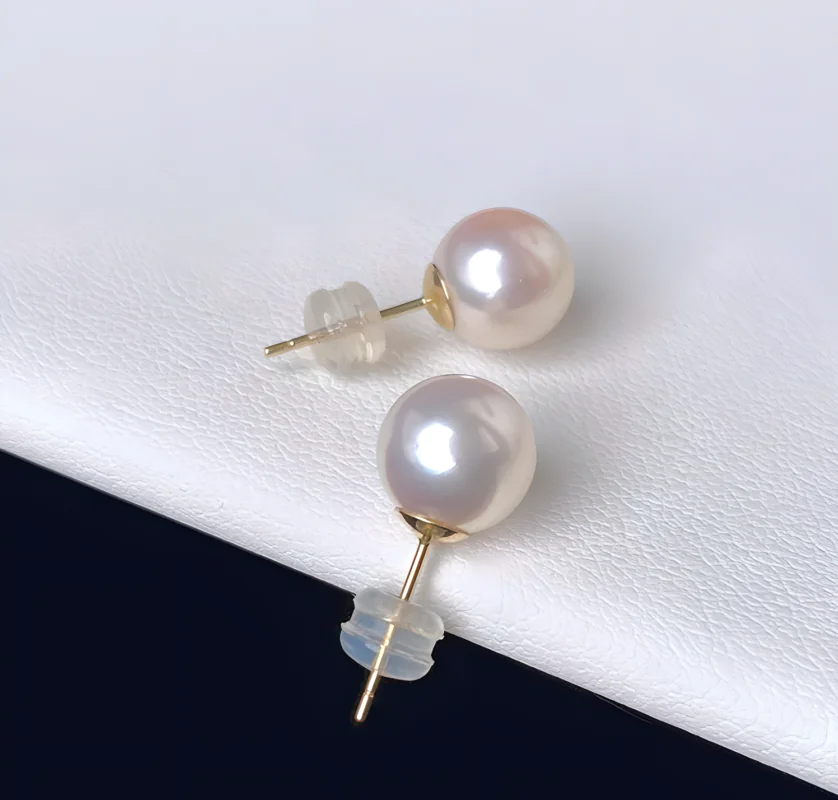
Why Are Pearls Sensitive to Acid, Perfume, and Chemicals?
Pearls are chemically sensitive because their surface is made largely of calcium carbonate arranged in delicate layers of nacre. Acids can react directly with that calcium carbonate, while perfume, hairspray, cosmetics, perspiration, and household chemicals can expose the surface to substances that may etch it, leave dulling residues, or gradually affect its structure. This is why pearl care is not only about preventing scratches—it is also about protecting the pearl's surface from chemical attack.
The Short Answer: Pearl Nacre Is Chemically Reactive
A pearl may look solid and stone-like, but its surface is very different from a diamond, sapphire, or many other gemstones. Nacre is a biological composite consisting mainly of calcium carbonate, together with a much smaller organic component and water. GIA describes pearls as containing calcium carbonate along with organic substances such as conchiolin and a small amount of water.
That composition is the key to understanding pearl sensitivity. Calcium carbonate is vulnerable to acids. When acid reaches the pearl surface, it can react with the carbonate rather than simply sitting harmlessly on top of it. With sufficient exposure, microscopic surface material can be lost.
This also explains an important distinction: scratch resistance and chemical resistance are not the same property. A pearl's low Mohs hardness explains why it scratches easily, while its calcium-carbonate composition explains why acids and certain chemicals are a separate concern. GIA gives pearl a Mohs hardness of about 2.5 and separately warns that pearls can be damaged by acids and many chemicals.
For a deeper look at these two ideas, see our guide to the physical and chemical properties of pearls.
What Does Acid Actually Do to a Pearl?
The chemistry is straightforward. Calcium carbonate reacts with acids to form dissolved calcium species, carbon dioxide, and water. OpenStax uses calcium carbonate as a standard example of the reaction between carbonates and acids.
A simplified ionic version of the reaction is:
CaCO3 + 2H+ → Ca2+ + CO2 + H2O
On a pearl, this reaction matters because the outermost nacre layers are responsible for the smooth optical surface that helps produce luster. Acid exposure does not merely make the pearl “dirty.” It can physically alter or remove some material from that surface.
With strong acid or prolonged exposure, the effect can be dramatic. Under normal jewelry use, however, the more realistic concern is repeated mild exposure: small amounts of acidic perspiration, cosmetics, food, beverages, or chemical products contacting the pearl again and again.
The result may develop gradually as reduced luster, a less crisp reflection, a rougher-looking surface, or localized dull areas. Once nacre has actually been chemically etched, cleaning cannot simply rebuild the material that has been lost.
Why Is Perfume Bad for Pearls?
Perfume deserves a little more explanation than the common rule “alcohol damages pearls.” Perfume is not one single chemical. Different fragrances contain different combinations of solvents, fragrance compounds, oils, water, and other ingredients, so not every perfume interacts with nacre in exactly the same way.
The practical recommendation, however, is clear. GIA specifically lists perfume, hairspray, cosmetics, and even perspiration among substances that can damage pearls and recommends applying perfume and cosmetics before putting pearl jewelry on.
There are two useful ways to think about perfume exposure:
- Chemical exposure: depending on the formulation, the pearl may contact ingredients that are not friendly to nacre.
- Surface buildup: fragrance oils and other residues can remain on the pearl and make its reflection appear less clean and bright.
These are not necessarily the same type of damage. A removable surface film may improve after careful cleaning, whereas chemically etched nacre represents an alteration of the pearl surface itself.
This is also why accidentally passing through a small cloud of perfume should not be treated as though the pearl had been immersed in laboratory acid. The concentration, formulation, amount, and contact time all matter. The sensible rule is simply to avoid making direct perfume exposure a habit.
Which Everyday Chemicals Should Be Kept Away from Pearls?
Rather than memorizing every chemical name on a label, it is more useful to recognize common exposure situations.
| Substance or situation | Main concern | Practical rule |
|---|---|---|
| Vinegar, lemon juice, acidic foods and drinks | Acids can react directly with calcium carbonate | Avoid contact and wipe accidental splashes promptly |
| Perfume and cologne | Variable chemical formulation plus possible surface residue | Apply before putting pearls on and allow it to dry |
| Hairspray | Chemical exposure and surface film | Finish styling hair before wearing pearls |
| Makeup, skincare and lotions | Residue, oils and formulation-dependent chemical exposure | Apply first; put pearls on afterward |
| Perspiration | Repeated contact can expose nacre to acidic components and salts | Wipe pearls after wearing them |
| Household cleaners | May contain strong acids, alkalis, oxidizers or other reactive chemicals | Remove pearl jewelry before cleaning |
| Swimming pools and hot tubs | Chemical exposure plus possible effects on thread and metal components | Remove pearls before swimming |
| Jewelry dips and strong cleaners | Products designed for harder gems or metals may not be pearl-safe | Do not assume a general jewelry cleaner is suitable for pearls |
GIA's care guidance is deliberately broad: pearls can be damaged by many chemicals and all acids. A 2026 study presented through the Gemmological Society of Japan likewise identifies exposure to acids and alkalis among factors associated with pearl deterioration.
Does Sweat Really Damage Pearls?
Perspiration is one reason wiping pearls after wear is worthwhile. GIA specifically includes perspiration among chemical exposures capable of damaging pearls.
This does not mean ordinary skin contact immediately ruins pearl jewelry. The more useful distinction is between occasional exposure and repeated residue left on the surface. A necklace worn against the neck for hours may collect perspiration, skin oils, cosmetics, and fragrance residue. Leaving that mixture on the pearls after every wear increases unnecessary long-term exposure.
A gentle wipe after use removes much of this material before it accumulates.
Are All Pearls Equally Sensitive to Acid?
The familiar nacreous cultured pearls—including Akoya, Tahitian, South Sea, and many freshwater cultured pearls—contain calcium-carbonate-based pearl material and therefore share the fundamental problem of acid sensitivity. Cultured and natural pearls are not protected from acid simply because their growth histories differ.
Individual pearls can nevertheless respond differently to wear and environmental exposure. Nacre structure, surface condition, age, previous processing, treatments, and the severity of exposure can all matter. GIA also notes that dyed, impregnated, or coated pearls may contain treatments whose appearance can change with time.
For that reason, statements such as “freshwater pearls are safe around chemicals because they have more nacre” are misleading. More pearl material does not change the underlying chemistry of calcium carbonate.
Does One Accidental Splash Permanently Ruin a Pearl?
Not necessarily.
Chemical damage depends on factors such as the substance involved, its concentration, the amount that reached the pearl, how long it remained there, and the condition of the surface beforehand. A brief trace of perfume is very different from soaking a pearl in vinegar or exposing it to a strong cleaning chemical.
If a pearl has had minor accidental contact with perfume, perspiration, cosmetics, or food residue, the important step is to remove the residue rather than panic or try an aggressive cleaning treatment.
What Should You Do If Chemicals Get on Your Pearls?
- Remove the jewelry from further exposure. Do not continue spraying perfume or working with the chemical while wearing it.
- Gently wipe the pearl with a very soft, clean cloth. A slightly damp cloth can help remove surface residue.
- Do not scrub. Pearls are also relatively soft, so aggressive rubbing introduces a second form of damage.
- Do not try to neutralize the chemical with another chemical. Household acids, baking-soda mixtures, ammonia, metal cleaners, and improvised jewelry dips are unnecessary risks.
- If the piece is strung, avoid prolonged soaking. Allow the strand to dry fully and flat before storage.
- For valuable pearls exposed to a strong cleaner or acid, seek professional advice if the surface develops visible dullness, roughness, discoloration, or other changes.
GIA recommends routine wiping with a very soft clean cloth and says warm, soapy water can be used for occasional thorough cleaning, while ultrasonic and steam cleaners should not be used for pearls.
The Easiest Pearl-Care Rule: Last On, First Off
The chemistry may be detailed, but the daily routine is simple:
Apply skincare, makeup, hairspray, and perfume first. Put your pearls on last. When you return home, take the pearls off early and wipe them gently before storage.
This sequence minimizes direct spray, wet cosmetics, perspiration residue, and unnecessary chemical contact without making pearls impractical to wear.
For a complete routine covering wearing, cleaning, drying, and storage, continue with our guide to caring for pearls.
Why Chemical Damage Affects Pearl Luster
Pearl luster depends on light interacting with a finely structured surface and layers beneath it. A clean, well-preserved surface produces sharper reflections. When the surface becomes coated with residue, light is scattered differently and the pearl may temporarily look dull. When the nacre itself is etched or roughened, the optical surface has actually changed.
This gives pearl owners an important diagnostic distinction:
- Residue-related dullness may be removable.
- Chemically etched nacre may represent permanent surface alteration.
That is why prevention is much safer than repeatedly polishing or aggressively cleaning a pearl that has lost some shine.
What Should You Remember?
Pearls are sensitive to chemicals for a structural reason, not simply because jewelers call them “delicate.” Their beauty comes from a calcium-carbonate-based pearl structure, and that same material is vulnerable to acids. Perfumes, cosmetics, hairsprays, perspiration, and household products add further chemical and residue exposure, so minimizing direct contact helps protect the surface over time.
You do not need to avoid wearing pearls. The practical goal is to reduce unnecessary exposure: finish applying personal-care products before putting pearls on, remove them for cleaning or swimming, and wipe them gently after wear. Small habits protect nacre much more effectively than aggressive cleaning later.
FAQ
Can perfume permanently damage pearls?
Repeated or substantial exposure can contribute to pearl surface damage, and GIA specifically recommends keeping pearls away from perfume. A single light accidental exposure does not automatically mean permanent damage; gently remove any residue and avoid repeated direct spraying.
Can I clean pearls with vinegar?
No. Vinegar contains acetic acid, and acids react with the calcium carbonate that makes up most pearl material. Acid-based cleaning is therefore fundamentally unsuitable for real pearls.
Is sweat harmful to pearls?
Perspiration is among the substances GIA advises pearl owners to remove after wear. Normal wear does not mean pearls must be kept away from skin, but wiping them afterward reduces prolonged exposure to perspiration, oils, and cosmetic residues.
Can I use alcohol wipes on pearls?
They are best avoided as a routine cleaning method. Pearl care does not require aggressive disinfectants or solvent-based wipes. Use a soft clean cloth for routine care and follow pearl-specific cleaning guidance instead.
Is plain water harmful to pearls?
Brief contact with water is not the same as acid exposure. GIA permits warm, soapy water for occasional careful cleaning. However, pearl strands should not remain wet unnecessarily, and the string should be completely dry before the jewelry is worn or stored.