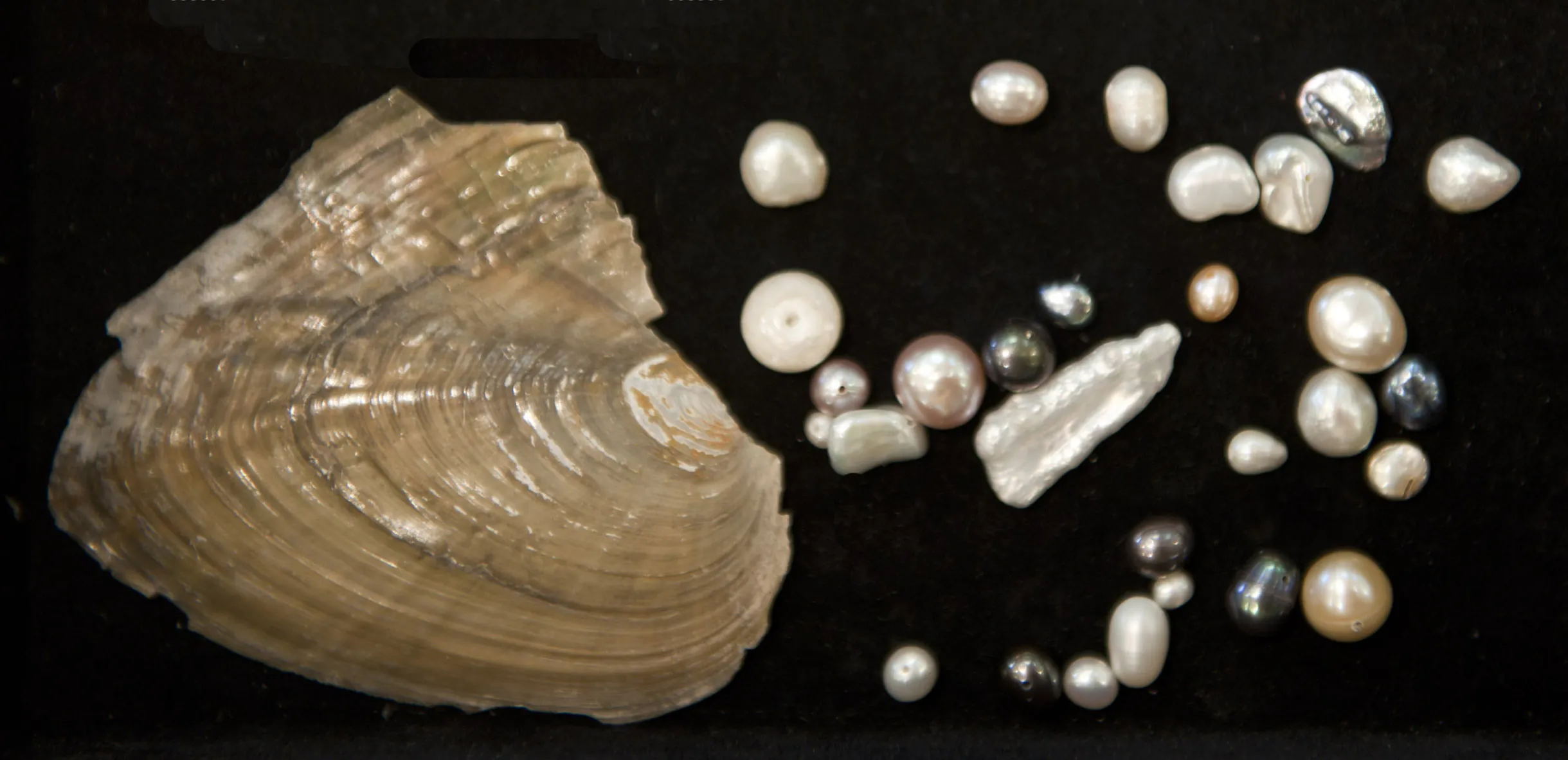
Japanese Akoya pearls are famous because Japan did more than produce an attractive pearl: it helped build the modern cultured-pearl industry around Akoya. Over more than a century, Japanese producers developed cultivation techniques, refined sorting and matching, created recognizable quality traditions, and introduced the classic bright white pearl strand to international jewelry markets.
That reputation is reinforced by the material itself. Fine Akoya pearls can show unusually crisp, mirror-like luster, strong roundness, and delicate white, silver, cream, and rosé appearances. But one distinction matters from the beginning: “Japanese” is an origin, not a quality grade. A Japanese Akoya can be excellent, average, or poor. Its fame comes from the history and production system behind the category, not from a guarantee that every pearl grown in Japan is superior.
The Short Answer: Japanese Akoya Became the Reference Point for the Classic Cultured Pearl
Several factors came together in Japan that are rarely explained as one system:
| Why Japanese Akoya became famous | What it means in practice |
|---|---|
| Early cultured-pearl breakthroughs | Japan became the historical center of commercial pearl cultivation and helped make cultured pearls available to a much wider market. |
| A distinctive Akoya appearance | Fine Akoya pearls are known for compact size, high roundness, and especially sharp luster. |
| Seasonal marine conditions | Japan's seasonal waters influence nacre formation and allow farmers to time cultivation and harvest around changing temperatures. |
| Specialized farming and matching skills | Nucleation, oyster care, harvest timing, sorting, color matching, and strand assembly all affect the finished result. |
| A long quality-control tradition | Japan built formal inspection systems and industry standards that strengthened confidence in exported pearls. |
| Global promotion | Japanese companies, most famously Mikimoto, helped turn cultured pearls into an internationally recognized fine-jewelry category. |
The reputation therefore comes from biology + environment + technique + selection + market history. Reducing the answer to “Japanese water makes better pearls” misses most of the story.
1. Japan Is Closely Linked to the Birth of the Modern Cultured-Pearl Industry
Before cultured pearls became commercially viable, pearls used in jewelry were mainly natural pearls found by chance. Supply was unpredictable, and fine matched strands were extraordinarily difficult to assemble.
Japan changed that relationship between rarity and supply. Kokichi Mikimoto's experiments in the late nineteenth century became the most famous public symbol of cultured-pearl development. In 1893, he succeeded in producing cultured blister pearls. The later development of practical methods for producing whole round cultured pearls involved several Japanese pioneers, including Tatsuhei Mise and Tokichi Nishikawa, whose work helped establish the bead-and-mantle-tissue technique that became fundamental to modern saltwater pearl culture.
This history is worth stating carefully. It is common to see the entire invention of round cultured pearls attributed to one person, but the technical story was more collaborative. What is not disputed is the larger outcome: Japan became the first major center where pearl culturing, farming, processing, grading, jewelry production, and international marketing developed into a modern industry.
For a broader explanation of how Akoya fits among pearl types, see our Akoya pearl guide.
2. Fine Akoya Pearls Have a Very Recognizable Type of Luster
If there is one visual reason Japanese Akoya pearls became famous, it is luster.
High-quality Akoya pearls can show a bright, crisp reflection that looks more mirror-like than the softer glow commonly associated with some other pearl types. When the luster is strong, reflected light has clear edges rather than appearing hazy or chalky. In the Japanese pearl trade, this quality is often discussed through the idea of teri—the lively optical appearance created by good nacre structure and strong reflection.
Akoya pearls are also produced outside Japan, including in Vietnam and China. The word Akoya therefore describes a pearl type, not an automatic Japanese origin. But Japanese production became so closely associated with the classic round, bright white saltwater pearl that “Japanese Akoya” developed its own reputation in the market.
If you want to judge this characteristic rather than rely on a country name, compare how sharply each pearl reflects a light source. Our pearl luster guide explains what to look for.
3. Japan's Seasons Matter, but They Are Not a Magic Formula
Japanese Akoya farming takes place in coastal environments with clear seasonal temperature changes. Industry guidance from the Japan Pearl Promotion Society notes that lower winter water temperatures can influence the formation and arrangement of aragonite crystals in Akoya nacre, which is one reason harvest timing is traditionally important.
This is often simplified online into a rule such as “cold water always produces better pearls.” That is too absolute. Pearl oysters are living animals, and the final pearl is affected by many interacting variables: oyster health, water quality, food availability, nucleus size, grafting technique, cultivation duration, disease pressure, seasonal stress, and the farmer's decisions throughout the cycle.
Cooler late-season conditions may help create the crisp optical character associated with good Akoya, but they cannot rescue poor farming, unhealthy oysters, weak nacre, or bad harvest timing. The environment creates an opportunity; cultivation skill determines how well that opportunity is used.
4. Japanese Akoya Reputation Was Built as Much by Selection as by Cultivation
Growing a pearl is only the first half of the story. After harvest, producers and dealers still need to sort pearls by size, shape, luster, surface condition, color, nacre quality, and compatibility with other pearls.
This matters especially for Akoya strands. A necklace can contain dozens of individual pearls, and the strand looks convincing only when adjacent pearls belong together visually. Strong matching requires judgment: two pearls may have the same diameter but differ in brightness, overtone, surface texture, or apparent depth of color.
Japan developed a highly specialized pearl-processing and trading ecosystem in which farming, sorting, drilling, matching, strand assembly, laboratory services, wholesalers, and jewelry manufacturers became closely connected. Over generations, this accumulated skill helped make Japanese Akoya not merely a farm product, but a finished visual standard.
This is also why buyers should separate origin from quality. Two pearls can both be Japanese Akoya and still differ dramatically once you compare them side by side. For the larger framework, read why pearl origin matters.
5. Japan Built an Institutional Reputation for Pearl Quality
One underappreciated reason Japanese pearls gained trust overseas is that quality control became institutionalized.
The Japan Pearl Exporters' Association records that Japan operated a national export inspection system beginning in 1952. Pearls were evaluated using factors including nacre, shape, luster, surface condition, staining, and finishing. That compulsory state system ended in 1998, and the association introduced a voluntary export quality inspection program in 1999.
This does not mean every Japanese pearl on the market today has passed a government inspection. It means Japan's pearl industry spent decades formalizing the vocabulary and practice of quality control for an export business. That history helped create buyer expectations around consistency, inspection, disclosure, and sorting.
For an individual purchase, the better approach is still to judge the pearl itself using observable factors. Our pearl grading guide explains the main quality criteria without treating a country name as a grade.
6. Mikimoto Helped Turn Japanese Cultured Pearls into a Global Luxury Symbol
Technical success alone does not make a product famous. It also has to become culturally visible.
Mikimoto played an enormous role in that part of the story. The company promoted cultured pearls through international exhibitions, overseas expansion, jewelry design, and a strong luxury identity. In doing so, it helped move cultured pearls from an experimental aquaculture achievement into the global fine-jewelry market.
The effect reached beyond one brand. As Japanese cultured pearls became accepted internationally, the small, round, white, highly lustrous Akoya strand became one of the defining images of twentieth-century pearl jewelry. Japan was no longer known simply as a place where pearls were farmed; it became associated with what a classic cultured pearl was supposed to look like.
7. Why “Japanese Akoya” Still Carries Weight Today
Today, buyers have far more choices. Fine freshwater pearls can be remarkably round and lustrous. Akoya pearls are cultivated in more than one country. South Sea and Tahitian pearls occupy their own strong luxury categories. Modern laboratories can also describe pearl quality with much more precision than a country label alone.
Yet Japanese Akoya still carries weight because the name combines several signals at once:
- a direct connection to the history of modern cultured pearls;
- a long-established farming tradition centered on the Akoya oyster;
- a recognizable preference for crisp luster and careful matching;
- a mature network for sorting, processing, grading, and export;
- more than a century of global consumer familiarity.
That combination is difficult to reproduce with marketing alone. Reputation compounds over time when a product repeatedly reaches the market in a recognizable form.
8. Famous Does Not Mean Automatically Better
This is the most important buying point in the article.
A Japanese origin can be meaningful, but it should never replace inspection. A pearl with weak luster, a heavily blemished surface, poor matching, or inadequate nacre does not become top quality merely because it was cultured in Japan. Likewise, a well-grown Akoya from another producing country should not be dismissed simply because its origin is less famous.
When comparing Akoya pearls, check these questions in order:
- Is it actually Akoya? Akoya is a saltwater cultured-pearl type, not a marketing synonym for any small round white pearl.
- Is the claimed Japanese origin documented? If origin matters to the price, the seller should be able to explain the supply chain rather than relying only on appearance.
- How strong is the luster? Look for sharp, lively reflections rather than surface shine alone.
- How clean is the surface? Small natural growth features can be acceptable, but severity and location matter.
- How good is the nacre? Nacre quality influences both appearance and durability.
- How well are multiple pearls matched? For pairs and strands, consistency is part of quality.
- Have treatments been disclosed? Color adjustment and other post-harvest processing should be understood separately from origin.
If your goal is finished jewelry rather than loose material, you can apply the same framework while browsing pearl jewelry: judge the pearl first, then consider origin, design, and price together.
So, Why Are Japanese Akoya Pearls Famous?
Japanese Akoya pearls are famous because Japan became the historical, technical, and commercial reference point for the modern cultured pearl. The country's producers helped establish round cultured-pearl techniques, refined Akoya farming over generations, learned to work with seasonal marine conditions, built sophisticated sorting and matching practices, and developed formal systems for export quality control. Companies such as Mikimoto then carried that reputation into international jewelry culture.
Fine Japanese Akoya pearls deserve attention for their own visual qualities—especially their crisp luster and classic proportions—but the strongest reason for their fame is larger than any single pearl. It is the result of an entire industry learning how to cultivate, select, present, and explain a difficult biological gem consistently for more than a century.
That is also the right way to buy them: respect the reputation, but evaluate the individual pearl.
FAQ
Are all Akoya pearls from Japan?
No. Japan is the country most strongly associated with Akoya pearls, but Akoya pearls are also cultivated in other countries, including Vietnam and China. “Akoya” identifies the pearl type; “Japanese Akoya” adds a geographic-origin claim.
Are Japanese Akoya pearls always higher quality?
No. Japan has a strong reputation for high-quality Akoya production, but origin alone does not determine the quality of an individual pearl. Luster, surface, nacre, shape, color, size, and matching still need to be evaluated.
Why are Japanese Akoya pearls known for strong luster?
Akoya pearls can develop very crisp reflections because of their nacre structure. In Japanese production, seasonal water-temperature changes and harvest timing are among the factors that can influence nacre formation, but farming skill, oyster health, and other environmental conditions also matter.
Is Hanadama the same as Japanese Akoya?
No. Japanese Akoya is an origin-and-type description. Hanadama is a quality-related term used for qualifying Akoya pearls under specific laboratory or trade criteria. It should not be used as a synonym for every Japanese Akoya pearl.
Why can Japanese Akoya pearls cost more?
Price can reflect pearl quality, matching difficulty, production risk, labor, selection standards, certification, brand positioning, and origin reputation. A higher price should still be justified by the actual pearl quality and the transparency of the seller's description.
References
- GIA — History of Cultured Pearls, Part 1
- GIA — Historical Reading List: Japanese Cultured Pearls
- GIA — Different Pearl Types Explained
- Japan Pearl Exporters' Association — Quality Assurance
- Japan Pearl Exporters' Association — Pearl Details
- Japan Pearl Promotion Society — Pearl Standards
- MIKIMOTO — Brand Story